What a 2026 Textile Wastewater Plant Is Actually Protecting
A textile wastewater plant runs as a combined train — bar screen → grit removal → equalization → coagulation/DAF → hydrolysis-acidification → aerobic or UASB → MBR or clarifier → optional AOP/adsorption polishing → disinfection — and operation and maintenance is the discipline that keeps variable, high-COD, dye-laden influent inside the design envelope of every unit. In a well-maintained 2026 plant the equalization tank holds pH 6–9 across at least one full dye-batch cycle, the combined biological plus physicochemical stages deliver above 90% COD removal, and Fenton or AOP polish at pH 2–3 removes more than 70% of residual dye COD when biology is overwhelmed. The cheapest cubic meter of effluent is the one that never fails consent, never blows a membrane, and never hauls wet cake — and that is a maintenance outcome.
Textile effluent is a maintenance engineer's worst-case influent: it is hot, colored, salty, and arrives in shock loads that track the dye-house production schedule rather than any hydraulic profile. The textile industry is responsible for roughly 20% of global water pollution, and within a single mill, pre-treatment contributes about 45% of total wastewater volume while dyeing contributes 50–55% (Textile Dyeing Wastewater Treatment, 2024-09; Sustainability, 2024-01). Influent COD reaches 3,000 mg/L and certain process streams can exceed 60,000 mg/L; azo dyes alone make up over 60% of the industry's dye usage, and 10–50% of those dyes are discharged unfixed because the dye-fibre fixation step is inherently inefficient (Sustainability, 2024-01).
Each unit in the train has a defined job and protects the next one. Screening protects pumps. An oversized equalization tank flattens flow, pH, and color shocks. Coagulation/DAF strips the bulk of suspended solids, fibers, and dispersed color before biology. Hydrolysis-acidification breaks recalcitrant auxiliaries into short-chain organics and lifts BOD₅/COD so the downstream aerobic stage can finish the job. The aerobic or MBR stage removes the bulk of soluble COD and BOD; an MBR membrane bioreactor for textile wastewater adds a physical solids barrier that protects polishing and discharge limits. Optional AOP and adsorption handle residual color that biology cannot. What maintenance is really protecting is the consequence chain: a drifted pH probe, a DAF chemistry drift, or a foaming aerobic tank is a consent, ESG, and community-relations event because azo dye breakdown products are toxic, mutagenic, and capable of bioaccumulating in aquatic organisms (Ecotoxicological review, ScienceDirect, 2021-12).
KPI Bands the Shift Team Should Log Against Design Intent
Equalization tank pH must be controlled to 6–9 before any downstream biology, and the regulating tank itself must be oversized — a point repeatedly demonstrated in engineering practice — so that flow, quality, and color reach a relatively uniform state against changeable dyeing wastewater (Textile Dyeing Wastewater Treatment, 2024-09). Realistic 2026 design targets for a well-maintained combined train are COD removal above 90% across the biological plus physicochemical stages, and enzymatic or AOP polishing of residual color up to 90% (Sustainability, 2024-01). The fastest way for a textile ETP to fail compliance is for an operator to lose track of one of the upstream parameters; the table below is the minimum set the shift team should log against design intent, and drift outside these ranges is a maintenance trigger, not a wait-and-see item.
| Parameter | Operating band | Maintenance trigger |
|---|---|---|
| Equalization pH | 6–9 | Inhibits biomass; risks foaming and deflocculation downstream |
| Equalization retention | ≥ 1 full dye-batch cycle (oversized) | Color and pH shocks pass through to biology |
| DAF effluent turbidity / color | Per design; verify coagulant dose | High SS and color loading to biology |
| Aeration F/M ratio | ≥ 0.3, ideally higher after acidification | Aerobic stage cannot finish COD removal |
| Aerobic MLVSS | 3,000–8,000 mg/L (design-dependent) | Loss of treatment capacity or foaming |
| Dissolved oxygen | 1.5–2.5 mg/L (≥ 2.0 for color co-oxidation) | Poor nitrification and color breakdown below ~1.5 mg/L |
| Aerobic SRT | Within design band; trend, not single reading | Washout of slow-growing dye-degrading organisms |
| MBR TMP | Within design band; trend, not single reading | Rising TMP on constant flux = fouling; schedule CIP |
| Final effluent COD / color | Per local consent; COD often ≤ 100–200 mg/L | Consent violation, effluent surcharge |
The Routine: Per-Shift, Weekly, Monthly, and Quarterly Tasks
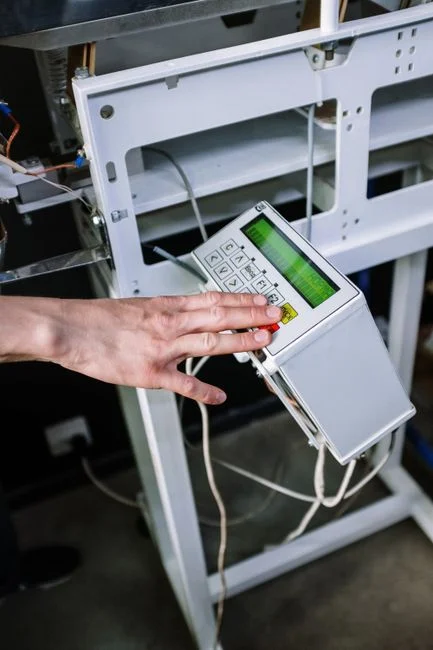
Maintenance is cheapest when it is a checklist. The frequencies below assume a continuously operated plant; lower-frequency tasks (bearing changes, anchor inspections) are handled on a separate annual schedule. Two non-negotiables deserve emphasis: the equalization tank must be oversized by design and protected by maintenance because it is the only unit that absorbs a midnight pH or color surge, and MBR maintenance is a trend discipline where rising MBR TMP trend is the earliest warning of membrane fouling. For related hands-on detail on dissolved air flotation, the field guide to DAF common problems and solutions 2026 pairs directly with the DAF rows below.
| Frequency | Equalization / headworks | DAF / physicochemical | Biological | MBR / dewatering |
|---|---|---|---|---|
| Per-shift | Check mixer operation; skim floating fibers and scum; log pH and color trend | Verify coagulant and polymer dose; inspect skimmer wipers; check effluent color and SS | Profile DO at multiple points; log MLSS trend; observe foam type and color | Log dewatering cake solids and filtrate quality; check polymer dose at the press |
| Weekly | Clean and calibrate pH probe; inspect mixer seal and gearbox oil | Inspect saturator pressure and micro-bubble nozzles; clean sight glasses; jar-test revalidation | Check scum layer and gas release; log pH and VFA smell profile | Inspect filter press cloth condition and wash sequence; check feed pressure |
| Monthly | Drain and sludge-out settled grit and fiber mats; inspect baffles and corroded steel | Descale saturator and recycle pump; replace nozzle check-valves; inspect flight scrapers | Measure VFA/alkalinity ratio; verify sludge return rate; check feed distribution | Inspect plates, hydraulic rams, and feed pump; review TMP trend vs design |
| Quarterly | Full structural and corrosion inspection | Full saturator teardown; verify recycle pump performance | Inspect UASB/IC internals where accessible; desludge dead zones | Clean MBR modules via CIP; verify aerator diffuser performance; air-hold membrane integrity test; replace cloths on condition, not calendar |
Filter press cloths are a condition-based replacement line, not a calendar line. Inspect the cloth weekly, log cake solids and filtrate quality, and replace when blinding or tearing is visible — pricing that decision against current filter press cloth replacement cost in 2026 guidance rather than a fixed interval. The same logic applies to the MBR: schedule CIP on a rising TMP trend, not on a fixed date, so chemistry is paid for only when fouling is actually developing.
Instrumentation and Calibration: The Layer Most Plants Under-Staff
Calibration is the maintenance task that fails silently. The instrumentation stack below is the minimum that ties each reading to the specific failure mode it prevents, and the rule is to calibrate against the failure you are trying to stop, not against a generic schedule.
pH probe on equalization: weekly clean and calibrate with two-point buffer; drift outside ±0.2 pH is a recalibration trigger because downstream biology is pH-sensitive and a midnight pH surge is the most common way a textile train takes a hit (Textile Dyeing Wastewater Treatment, 2024-09). DO probe in aeration: air-calibrate weekly, verify membrane and electrolyte; a drifting DO probe is the single most common cause of false foaming and washout alarms. MLSS/MLVSS: weekly laboratory correlation against the in-reactor probe; surrogate sensors (turbidity, TSS) need a monthly grab-sample regression. VFA/alkalinity ratio on the anaerobic or hydrolysis stage: weekly titration; a rising ratio is the earliest warning of organic overload before pH collapses. MBR TMP: log daily at a stable flux, trend against the design band; rising TMP on constant flux is the first signal of fouling and the trigger for CIP scheduling. Upstream of all of this, automatic coagulant and pH dosing for textile ETP feed rates is the 2026 normalization in large mills that prevents most downstream symptoms before they form — for dosing-pump selection criteria, see the 2026 metering-pump efficiency guide.
Symptom-to-First-Action Troubleshooting Matrix
When a textile ETP goes off-spec, the symptom almost always points to a specific unit. The rule of thumb is to walk the flow from inlet to outlet and check the most upstream suspect first: most textile ETP problems originate in equalization or chemical dosing, not in the biological reactor. The matrix below maps the symptoms a shift operator will actually see to first-action fixes, all drawn from the 2026 engineering reference (Textile Dyeing Wastewater Plant Maintenance, 2026).
| Symptom | Most likely cause | First action |
|---|---|---|
| Off-spec color and COD at outlet | Equalization pH out of band; DAF chemistry drift; dye-house surge | Recalibrate pH probe; jar-test coagulant/polymer; verify automatic dosing |
| Loss of nitrification or color breakdown in aeration | Low DO; SRT too short; toxic surge; sludge loss | Check DO profile and aerator performance; verify wasting rate; inspect for foaming/scum toxicity |
| Foaming or scumming in aeration | F/M imbalance; high sludge age; surfactant/dye toxicity | Adjust wasting direction by F/M; add antifoam; identify offending dye-house stream |
| Rising MBR TMP | Membrane fouling; aeration scour loss; CIP overdue | Schedule CIP; verify air-scour blower output; check upstream upset feeding biomass to membranes |
| Residual color that biology will not remove | Recalcitrant azo/sulfur dyes; biology not degrading specific structures | Deploy Fenton or AOP polishing at pH 2–3, expecting >70% dye COD removal; polish on activated carbon or chitosan bio-adsorbent if needed |
| Wet cake or high polymer demand at the press | Chemical conditioning drift; high color-bound water in sludge | Re-jar-test polymer; increase dose; check filter press cloth condition and feed pressure |
When Fenton and AOP Are Worth the Reagent and Sludge Cost
Fenton and AOP polishing are often mis-applied. They are not biological replacements and they should not run by default. Fenton oxidation at pH 2–3 can remove more than 70% of dye COD, but reagent and sludge handling dominate 2026 operating cost, so it is a polish step, not a default stage (Textile Dyeing Wastewater Treatment, 2024-09). The honest test is: is biology overwhelmed, or has biology failed? When the failure is in biology itself — usually upstream — no amount of polish will hold consent. When the dye COD is genuinely recalcitrant (azo, sulfur, vat residuals that the biomass cannot crack), Fenton pays back; when it is just biology that is upset, dosing iron is a band-aid over a probe drift.
AOP selection depends on the target: Fenton for COD/color, ozone for color and refractory organics, UV/H₂O₂ and peroxone for trace organics, electrochemical AOPs where conductivity is high (Water Environment Research, 2026-07). For sizing and selection, the AOP system design guide 2026 walks the decision. Polishing on activated carbon or chitosan-based bio-adsorbents is rarely the rate-limiting step in a well-designed plant — template cross-linked chitosan on Reactive Black 5 reaches about 2,941 mg/g (Sustainability, 2024-01). Emerging technologies — nanofiltration, microbial fuel cells, nanobubble AOPs — are real but remain longer-horizon upgrades rather than 2026 maintenance reality (Water Environment Research, 2026-07).
The Cost of Poor Maintenance: Sludge, Energy, and Consent
Textile ETP sludge is a maintenance liability that quietly becomes the largest OPEX line item. Combined biological waste sludge and chemical sludge from coagulation are high in solids, color, and metals, and without effective dewatering, hauling costs dominate. Physicochemical methods are cost-effective on the water side, but they produce secondary waste that has to be pressed, hauled, and disposed of (Water Environment Research, 2026-07). A plate and frame filter press for textile sludge dewatering is the workhorse, and a high-efficiency sedimentation tank ahead of it improves both sludge concentration and downstream filter-press performance. The other half of the cost-of-poor-maintenance story is energy: rising MLSS in an MBR or persistent foaming in an aerobic tank translates directly into higher aeration energy and chemical consumption. Track sludge yield, not just effluent quality, to close the loop — and use the polymer consumption in dewatering 2026 guide to set the dose correctly the first time.
| Maintenance miss | Technical symptom | Cost outcome |
|---|---|---|
| Equalization pH out of band | Deflocculation in DAF, inhibition in aeration | Consent violation; surfactant/azo load to receiving water |
| DAF chemistry drift | High SS and color to biology | Higher aeration energy; surfactant carryover foaming |
| MBR TMP trend ignored | Fouling crosses design band | Module replacement instead of planned CIP |
| Filter press cloth on calendar, not condition | Blinding, tearing, wet cake | Higher polymer dose; wet-cake hauling surcharge |
| Foaming / sludge loss in aeration | F/M imbalance, toxic surge | Loss of nitrification; color breakthrough to consent |
The maintenance budget defends itself once it is framed this way. A drifted pH probe, a DAF chemistry drift, or a foaming aerobic tank is a compliance event because azo dye breakdown products are toxic and mutagenic (ScienceDirect, 2021-12). The cheapest cubic meter of textile effluent is the one that doesn't fail consent, doesn't blow a membrane, and doesn't haul wet cake — and that is a maintenance outcome, not a process-design outcome. For a more detailed maintenance blueprint, the textile dyeing wastewater plant maintenance 2026 engineering guide covers the unit-by-unit depth.
Frequently Asked Questions
What is a realistic 2026 budget benchmark for filter press cloth replacement on a textile ETP?
Benchmarks vary sharply with cloth material, press size, and dye-stream solids load, so a defensible 2026 budget needs a current quote from your equipment supplier based on your cake solids, filtrate quality, and cycles per shift. Use the weekly cloth inspection log — cake solids, filtrate quality, blinding, tearing — to set the replacement trigger on condition rather than calendar, and request per-cloth pricing in writing so the maintenance line item can be defended against production pressure (Textile Dyeing Wastewater Plant Maintenance, 2026).
How do I select an MBR or DAF supplier for a textile ETP in 2026 without over-specifying?
Ask each shortlisted supplier for three things in writing: influent characterization matched to your actual dye-house streams (peak COD, color, salinity, surfactant), reference plants running comparable influent, and a guaranteed performance curve — not a brochure — for flux versus TMP, and for DAF saturator pressure versus effluent color/SS. The decision is which supplier will hand you a defensible operating envelope for your worst-case stream, not who has the largest DAF system for textile effluent color and suspended-solids removal on paper. Insist on a pilot or a reference site visit before signing.
When should Fenton polishing be deployed instead of activated carbon or chitosan adsorption?
Use Fenton at pH 2–3 when biology is overwhelmed by recalcitrant dye COD and you need more than 70% removal of dye COD in a single step. Use activated carbon or chitosan bio-adsorbent for the final color polish on already-biologically-treated effluent, where the rate-limiting step is rarely adsorption capacity (template cross-linked chitosan on Reactive Black 5 reaches about 2,941 mg/g per Sustainability, 2024-01). The honest test is whether the failure is recalcitrant chemistry or upstream biology; if it is upstream biology, no polish will hold consent (Textile Dyeing Wastewater Treatment, 2024-09).
What is the single highest-leverage maintenance task to add to the routine in 2026?
Trend MBR TMP daily and treat the trend as a leading indicator, scheduling CIP before the design band is crossed rather than on a fixed date. This one discipline turns a planned chemical clean into a routine task and converts a likely module replacement into a consumable cost. The same logic applies to the equalization tank pH probe: weekly two-point calibration with ±0.2 pH drift as the recalibration trigger is the cheapest insurance against a midnight dye-bath release reaching the aeration tank intact (Textile Dyeing Wastewater Plant Maintenance, 2026).
Related Equipment
- rotary mechanical bar screen for textile headworks — specifications, capacity range, and technical data