What 'Most Efficient' Actually Means for a Chemical Metering Pump in 2026
"Most efficient" in a 2026 U.S. wastewater context is not a single number on a brochure; it is the pump whose repeatable dosing accuracy, chemical compatibility, and 20-year total cost of ownership all line up with the duty. Reframing the term this way is what lets a procurement manager walk into a capital-approval meeting with a defensible spec instead of a marketing sheet.
The three axes that matter in 2026 are: (1) repeatable dosing accuracy, which directly drives both chemical cost and compliance risk; (2) compatibility with the chemistry being pumped, including off-gassing, viscosity, abrasiveness, and corrosion; (3) lifecycle cost over a 20-year design life, covering energy, diaphragms, seals, calibration labor, and chemical over-feed. S3 frames hydraulically actuated diaphragm pumps as "a low-maintenance pump designed for 20 years of service," which makes that 20-year horizon an explicit engineering baseline for the hydraulic-diaphragm family rather than an aspirational number.
On the accuracy axis, S3 publishes three industry bands: hydraulically actuated diaphragm at ±1%, mechanically actuated diaphragm at ±2%, and solenoid (electronic) at ±3%. Peristaltic accuracy is not stated as a single percentage in S3 and should be treated as application-dependent. On the scale axis, the most recent published U.S. national estimate (USGS Circular 1405, 2010 data) puts total withdrawals at 355 Bgal/d, with public supply at 42.0 Bgal/d and self-supplied industrial at 15.9 Bgal/d — the throughput envelope that any metering-pump efficiency argument must serve. Note explicitly: the 2010 USGS figures are the most recent national estimate in the supplied research and should be read as the documented baseline, not a 2026 number.
The Four Metering Pump Technologies a U.S. Buyer Must Compare
There is no single pump family that wins every U.S. dosing duty. S3 makes this explicit: "there is no 'one-size-fits-all' solution," and a properly optimized plant typically runs more than one technology. The four families below are the baseline a U.S. buyer must compare before any selection discussion.
Mechanically actuated diaphragm metering pumps. The diaphragm is attached directly to a spring-loaded piston, which gives these pumps their signature suction-lift performance. S3 notes they "offer excellent suction-lift capabilities and can handle liquids that off-gas, such as sodium hypochlorite, and more viscous chemicals." Trade-offs: discharge pressure is "somewhat limited…with many being around 100 to 150 pounds per square inch (psi) (7 to 10 bar) max," repeatable accuracy is "typically about ±2 percent," and they are "generally not offered with an on-board relief valve, so an external relief valve is usually required." S3 also flags a lower initial cost — "especially at higher flow rates" — but a higher operating cost.
Hydraulically actuated diaphragm metering pumps. The piston pushes hydraulic oil against the back of the diaphragm; the process chemical never touches the piston. S3 ties this design to a 20-year service life and the lowest maintenance burden of the four families: "most of their moving parts are submerged in a bath of hydraulic fluid and… the diaphragm is hydraulically balanced." These pumps "are capable of pumping against extremely high pressures, so long discharge lines are not a problem," carry an adjustable internal relief valve, and deliver "a repeatable dosing accuracy of ±1 percent." This is the family a U.S. plant typically anchors its high-pressure, high-duty municipal and industrial dosing around.
Solenoid-actuated (electronic) metering pumps. S3 positions them as "an economical option in wastewater treatment operations for low-flow/low-pressure chemical-dosing applications," with a published ceiling of "20 gallons per hour (gph) (76 liters per hour)" and "maximum pressures… about 30 psi (2 bar)" at that flow. At lower flows the envelope widens: "100 to 150 psi with low flows (less than 1 gph) to more than 200 psi (14 bar)." Repeatable accuracy is "±3 percent," and they "are normally provided with an on-board relief valve."
Peristaltic metering pumps. A rotor with shoes or rollers compresses a hose or tube to move liquid. S3 highlights three structural advantages: "peristaltic pumps are able to run dry," they "do not have valves that can become clogged," and they "do not have valves" — making them "ideal for handling abrasive or corrosive chemicals" and for fluids that "will solidify or become gelatinous when resting." This is the family a U.S. plant typically uses for polymers, flocculants, and other viscous or shear-sensitive chemistries.
| Technology | Repeatable Accuracy (S3) | Pressure Envelope (S3) | Flow Ceiling (S3) | Relief Valve (S3) |
|---|---|---|---|---|
| Mechanically actuated diaphragm | ±2% | 100–150 psi (7–10 bar) max | Request from vendor based on model | External relief valve usually required |
| Hydraulically actuated diaphragm | ±1% | Extremely high pressures; long discharge lines supported | Request from vendor based on model | Adjustable internal relief valve |
| Solenoid (electronic) | ±3% | ~30 psi (2 bar) at 20 gph; 100–150 psi at low flow; 200+ psi (14 bar) at sub-1 gph | ~20 gph (76 L/h) | On-board relief valve |
| Peristaltic | Application-dependent; request linearity/steady-state accuracy curve from vendor | Application-dependent; request vendor curve | Request from vendor based on model | Depends on model / consult vendor |
Head-to-Head Parameter Comparison (2026 Selection Matrix)
The matrix below is the print-friendly version of the technology baseline, structured so a procurement manager can hand it to a vendor and force a line-by-line answer. Only the values S3 actually publishes are shown as numbers; every other cell is flagged as a vendor data request, which is the honest move when the research is silent.
| Parameter (2026 Selection) | Hydraulic Diaphragm | Mechanical Diaphragm | Solenoid | Peristaltic |
|---|---|---|---|---|
| Repeatable accuracy | ±1% (S3) | ±2% (S3) | ±3% (S3) | Application-dependent — request linearity/steady-state accuracy curve |
| Discharge pressure envelope | "Extremely high pressures" — request vendor curve, no specific psi cited in S3 | 100–150 psi (7–10 bar) (S3) | ~30 psi (2 bar) at 20 gph; 200+ psi (14 bar) at sub-1 gph (S3) | Application-dependent — request vendor curve |
| Maximum flow | Request from vendor based on model | Request from vendor based on model | ~20 gph (76 L/h) (S3) | Request from vendor based on model |
| Relief-valve location | Adjustable internal (S3) | External usually required (S3) | On-board (S3) | Depends on model — consult vendor |
| Design-life claim | 20 years (S3) | Not stated in S3 | Not stated in S3 | Not stated in S3 |
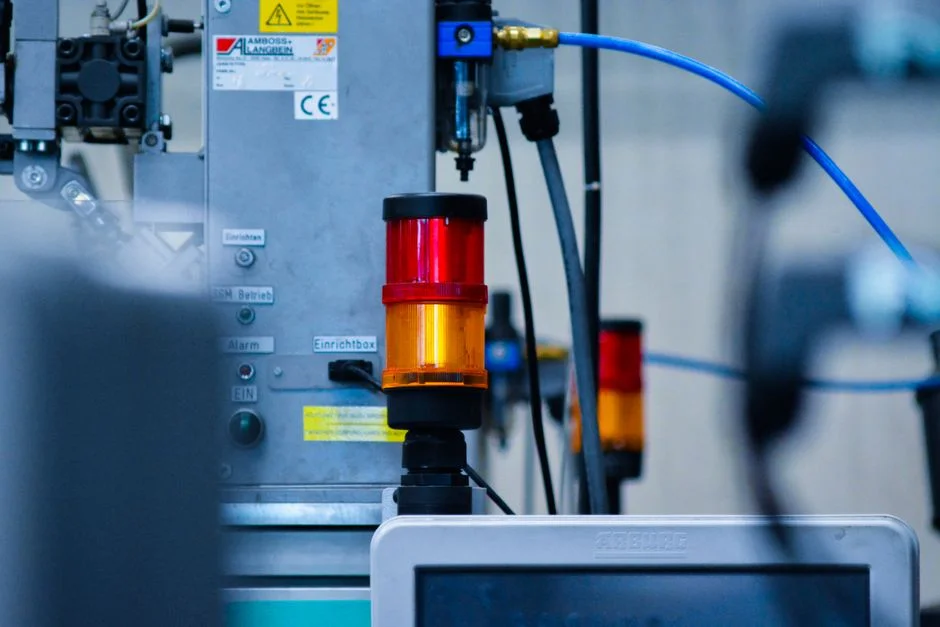
When the cell says "request from vendor," that is a procurement action item, not a guess. A defensible 2026 spec forces the supplier to put a number — and a calibration certificate — against every empty cell, especially accuracy under the actual chemical, viscosity, and back-pressure of the duty. A complete skid-mounted PLC-controlled automatic chemical dosing system should ship with those numbers already proven in the factory acceptance test.
Matching Pump Technology to Chemical and Compliance Duty in the U.S.
The technology baseline only becomes useful when it is mapped to the chemicals a U.S. plant actually doses. The duty-by-pump recommendations below are anchored in S3's explicit chemistry callouts and paired with the compliance risk a U.S. plant carries under EPA categorical pretreatment standards (40 CFR 405–471) and state POTW discharge permits.
| U.S. Dosing Duty | Recommended Pump Family | S3 Basis | Compliance / Operating Note |
|---|---|---|---|
| Sodium hypochlorite (off-gassing) | Mechanically actuated diaphragm; peristaltic also viable | "Excellent suction-lift capabilities… can handle liquids that off-gas, such as sodium hypochlorite" (S3) | Off-gas at the suction side causes vapor lock in pump types without positive suction lift; size relief line and consider pulsation dampener |
| Polymers / flocculants (viscous, shear-sensitive) | Peristaltic | No valves to clog; can run dry; handles viscous liquids and fluids that "solidify or become gelatinous when resting" (S3) | Avoid high-shear pumps that degrade polymer chain length and waste activated flocculant |
| Caustic, acids, ferric chloride (corrosive) | Hydraulically actuated diaphragm; peristaltic also viable | Hydraulically balanced design isolates process fluid; "low-maintenance pump designed for 20 years of service" (S3) | Match wetted-end material to the chemical using the manufacturer's compatibility chart for the exact concentration and temperature |
| Low-flow polish dosing (pH trim, trace hypochlorite) | Solenoid (electronic) | "Economical option… for low-flow/low-pressure chemical-dosing applications" up to ~20 gph (76 L/h) (S3) | Confirm the on-board relief-valve setpoint against actual line pressure; ±3% accuracy means a tighter setpoint may be needed for tight permit windows |
| Long discharge runs, high-pressure dosing | Hydraulically actuated diaphragm | "Capable of pumping against extremely high pressures, so long discharge lines are not a problem" (S3) | Use the adjustable internal relief valve to protect the line during a deadhead event |
Under-dosing and over-dosing are not just cost problems — they are excursion events a plant is responsible for under 40 CFR 405–471 categorical pretreatment standards and individual state POTW permits, as illustrated in the U.S. chemical-plant pretreatment compliance playbook and the food & beverage pretreatment playbook. A pump that drifts off its calibration curve is the most common root cause of those excursions, which is why ±1% versus ±3% is not an abstract spec line.
Lifecycle Cost: Why the Cheapest Pump Is Rarely the Most Efficient

Procurement managers are paid to defend total cost of ownership, and S3 gives the engineer a clean opening. The article is explicit that mechanically actuated diaphragm pumps "typically have a lower initial cost than other motor-driven metering pump designs, especially at higher flow rates, but they can have higher operating costs." Hydraulically actuated diaphragm pumps sit at the other end of that trade: higher initial cost, but S3 ties the design to "20 years of service" with "most of [the] moving parts… submerged in a bath of hydraulic fluid."
Three lifecycle-cost drivers a U.S. plant should model in 2026:
- Maintenance driver. Hydraulic-diaphragm design submersion of moving parts is the mechanism S3 cites for the 20-year life. Mechanical-diaphragm and solenoid-driven diaphragm pumps require more frequent diaphragm and seal replacement. S3 does not publish a specific replacement interval or cost, so the engineer must request mean-time-between-diaphragm-replacement and diaphragm unit cost from the vendor before signing the PO.
- Chemical over-feed cost. The same ±1% hydraulic-diaphragm accuracy and ±3% solenoid accuracy that look like a small spec difference compound across a year of sodium-hypochlorite or polymer dosing. S3 does not publish a $/lb chemical cost, so the engineer should plug the plant's own unit cost into the 1% vs. 3% accuracy band to size the annual waste stream; the qualitative point is that a tighter-accuracy pump typically pays back its premium on chemical alone.
- Spare-parts and training commonality. S3 recommends integrating the metering pump into a complete chemical-feed system — relief and backpressure valves, calibration columns, tanks, mixers, injection quills, control panels — so spares and operator training are shared across the skid. A skid-mounted PLC-controlled automatic chemical dosing system delivered as a single factory-tested package is the cleanest way to capture this commonality, and metering pumps, calibration columns, and dosing accessories sourced from one vendor streamline the spares list.
The honest TCO conclusion in 2026 is that "most efficient" almost always means the pump with the lower 20-year cost, not the lower invoice.
2026 Buyer's Checklist: What to Ask Your U.S. Metering Pump Supplier
The checklist below turns the framework into a printable RFQ. Every line is a question a U.S. supplier should be able to answer with a certificate, a curve, or a written warranty — not a brochure sentence.
| # | Question to Ask the Supplier | Why It Matters in 2026 |
|---|---|---|
| 1 | What is the pump's repeatable dosing accuracy under our specific chemical, viscosity, and back-pressure — and can you provide a calibration curve, not just a brochure ±%? | S3 publishes ±1% / ±2% / ±3% as the three industry bands; the supplier must match or beat the band for the actual duty |
| 2 | Can you provide a wetted-end material compatibility statement for our exact chemical, concentration, and temperature? | Generic "chemical resistance" tables do not defend a failure; concentration and temperature are the variables that change the answer |
| 3 | Is the relief valve internal (adjustable) or external, and what is the maximum continuous duty pressure for our discharge run? | S3 flags long discharge lines and high-pressure capability as a hydraulic-diaphragm strength; the relief-valve location is a piping-design decision, not an accessory |
| 4 | Can the pump be delivered as part of a factory-tested, PLC-controlled skid so dosing accuracy, relief, and backpressure setpoints are verified before shipment? | A skid-level Factory Acceptance Test is the cleanest way to prove the published accuracy and protect the commissioning schedule |
| 5 | What is the current U.S. lead time, and what bonded spare-parts kit ships with the pump? | Lead time and spare-parts availability drive realized uptime as much as the pump's published MTBF; a skid-mounted PLC-controlled automatic chemical dosing system should include a documented spares list |
For a wider look at how metering-pump efficiency sits inside a full plant energy-efficiency comparison of broader wastewater pump solutions, the rest of the system — blowers, mixers, transfer pumps — should be audited on the same 20-year TCO basis.
Frequently Asked Questions
Which chemical metering pump type is most efficient for sodium hypochlorite in a U.S. wastewater plant?
S3 explicitly recommends mechanically actuated diaphragm pumps for sodium hypochlorite because they "offer excellent suction-lift capabilities and can handle liquids that off-gas, such as sodium hypochlorite." Peristaltic pumps are the second common choice on the same duty because they have no valves to clog and can run dry. Solenoid pumps are typically reserved for low-flow polish dosing on the same chemical. Ask the vendor for a calibration curve under your actual concentration and a suction-side piping layout that handles off-gas.
How much does a chemical metering pump cost in 2026, and what drives the price?
S3 does not publish a price, and a defensible 2026 quote has to be built line by line. The published drivers in the research are: pump family (mechanical diaphragm has a "lower initial cost… especially at higher flow rates," while hydraulic diaphragm is the 20-year-service design), flow and pressure envelope, wetted-end material for chemical compatibility, and whether the pump ships as a standalone unit or as part of a factory-tested skid. The buying move is to request a written quote that itemizes pump, spare-parts kit, calibration certificate, and skid integration separately so the TCO comparison across vendors is apples-to-apples.
How do I size a chemical metering pump for polymer or flocculant duty?
S3 does not publish a sizing formula, so the sizing has to be done against the specific polymer, concentration, viscosity curve, and required dry-feed or emulsion-feed rate. The family choice is clear: peristaltic pumps are the standard for polymers because they have no valves to clog, can run dry, and handle viscous liquids and fluids that "solidify or become gelatinous when resting" (S3). Request the vendor's selection software output — a curve of flow versus speed at your viscosity and back-pressure — and confirm hose/tube material compatibility with the specific polymer chemistry.
What is the typical lead time for a U.S. wastewater chemical metering pump in 2026?
S3 does not publish a lead time, and lead time in 2026 varies materially with pump family, wetted-end material, and skid integration. The buying move is to request a written lead time, a bonded spare-parts quote, and a factory acceptance test window before signing the PO, then hold the supplier to those three numbers in the contract. For complex multi-pump skids, also request a hold-harmless clause for component-level delays so a single slow instrument does not push the entire skid past its commissioning date.
Can one metering pump technology handle every chemical in a treatment plant?
No. S3 is explicit: "there is no 'one-size-fits-all' solution," and an optimized wastewater operation typically uses more than one pump family. The defensible 2026 design pairs a hydraulically actuated diaphragm pump for the high-pressure, high-accuracy duties (caustic, ferric chloride, long discharge runs) with a peristaltic pump for polymers and a mechanically actuated diaphragm or solenoid pump for off-gassing or low-flow polish duties, all delivered as one skid-mounted PLC-controlled automatic chemical dosing system so the spares list, training, and calibration workflow stay common.