Which Rules Govern Chemical-Plant Discharge to the Louisville Sewer
Discharges from a chemical plant to the Louisville sanitary sewer are governed by three nested layers of regulation, and the design engineer must satisfy the strictest applicable limit from all three. The City of Louisville's Industrial Pretreatment Program (IPP) — EPA-approved in 1983 and codified in Municipal Code Chapter 13.32 (Sewer Use Regulation) — administers the program locally (per the City of Louisville IPP page, 2026). At the federal level, the National Pretreatment Program at 40 CFR Part 403 sets the framework for any facility discharging to a publicly owned treatment works (POTW), and 40 CFR Part 414 imposes categorical effluent limitations on the Organic Chemicals, Plastics, and Synthetic Fibers (OCPSF) point source category that covers most chemical manufacturers (per EPA 40 CFR Part 414). For a chemical plant to be regulated as a Significant Industrial User, its average discharge must exceed 25,000 gpd, after which it must obtain an individual Louisville wastewater discharge permit (per 40 CFR 403.3 and the City of Louisville IPP).
Three families of standards apply in parallel: federal categorical standards in 40 CFR Part 414 (subcategory-specific daily and monthly average limits), POTW local limits derived by the control authority from pass-through, worker-safety, and sludge-disposal criteria, and prohibited-discharge prohibitions in 40 CFR 403.5 (e.g., no flammable or corrosive slug loads, no pass-through of pollutants that interfere with POTW operations). The EPA's own guidance is explicit: when more than one standard applies, the most stringent provision controls (per EPA pretreatment standards, 2026). The City of Louisville's posture is cooperation-first, but the program states that facilities "that continue to break the rules will face enforcement action" — so the safe design target is the local limit where it is tighter than the categorical number (per City of Louisville IPP, 2026).
What Louisville's Pretreatment Program Expects from an Industrial User
Once a chemical plant crosses the 25,000-gpd threshold, the IPP converts the rule book into operational obligations that the EHS lead has to staff and document. The first deliverable is a wastewater discharge permit application submitted to Louisville Public Works at (303) 335-4608, City Hall, 749 Main St, Louisville, CO 80027, Monday–Thursday 8 a.m.–4 p.m. (per City of Louisville IPP, 2026). The application must characterize every process waste stream, peak flow, and pollutant; identify which 40 CFR Part 414 subcategory applies; and propose the on-site treatment train that will meet the applicable limits.
After the permit is issued, the SIU is bound to routine self-monitoring and reporting on a schedule spelled out in the permit — typically continuous flow and pH on instrumentation, plus periodic 24-hour composite sampling for BOD, COD, TSS, oil & grease, sulfides, phenols, ammonia, and metals. The IPP also imposes an accidental-discharge (slug-control) reporting duty: any release of harmful waste to the sewer must be reported to the City immediately, not at the next routine sampling event (per City of Louisville IPP, 2026). The control authority retains the right to on-site inspection and independent composite sampling to verify compliance, so the plant's own chain-of-custody and QA/QC records must be defensible against a third-party audit.
Pollutants Chemical Plants Must Control and the Limits That Apply
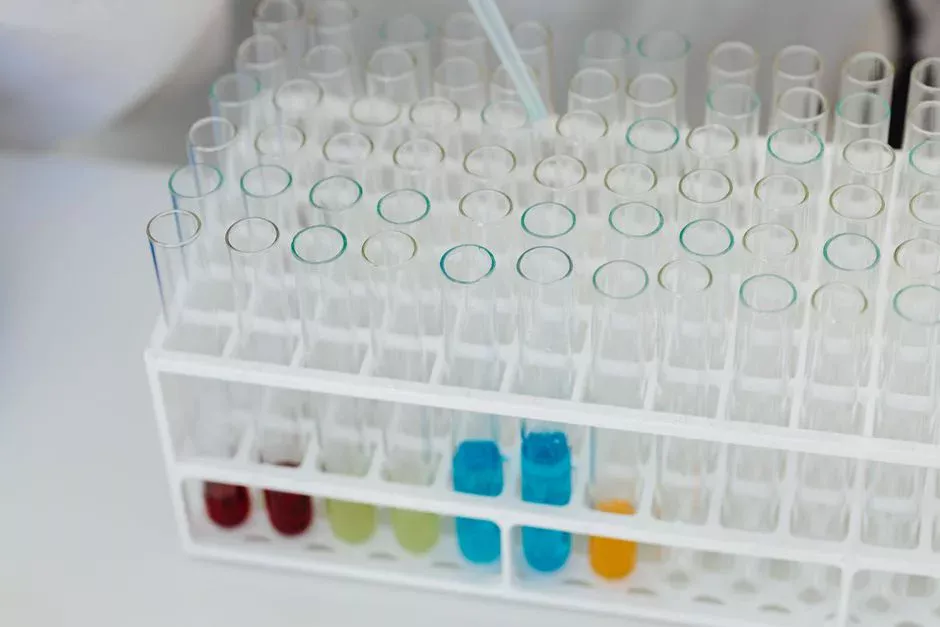
Chemical plants typically generate a defined set of conventional and priority pollutants, each tied to a specific CFR section or local limit and to a specific unit operation in the treatment train. Conventional parameters — pH, total suspended solids (TSS), biochemical oxygen demand (BOD), chemical oxygen demand (COD), and oil & grease — are the primary drivers of sewer surcharges and pass-through. Toxic and priority pollutants common to chemical operations include sulfides, phenols, ammonia, chromium, copper, lead, nickel, zinc, and cyanide; each is subject to either a 40 CFR Part 414 subcategory limit or a Louisville local limit, whichever is more stringent. Local limits are derived by the control authority from POTW pass-through, worker-safety, and sludge-disposal criteria, and they are often tighter than the federal categorical numbers (per 40 CFR 403.5 and the City of Louisville IPP, 2026).
Typical design targets the engineer should treat as a starting point — and then confirm against the current 40 CFR Part 414 tables and the plant's individual permit — are: pH 6–9 for sewer discharge; oil & grease <100 mg/L; sulfides <1 mg/L; and heavy metals typically 1–10 mg/L depending on the metal. Ammonia is increasingly a focal parameter because of POTW nitrification capacity and is frequently capped in the 10–30 mg/L range at the SIU monitoring point.
| Pollutant | Typical design target at SIU monitoring point | Regulatory basis | Primary unit operation |
|---|---|---|---|
| pH | 6.0–9.0 (SU) | 40 CFR 403.5 prohibited discharge; Louisville MC 13.32 | Equalization / neutralization |
| TSS | < 200 mg/L (site-specific) | Local limit / 40 CFR 414 subcategory | DAF or lamella clarifier + multimedia filter |
| BOD₅ | < 200–300 mg/L | Local limit / 40 CFR 414 | Activated sludge or MBR |
| COD | < 400–600 mg/L | Local limit / 40 CFR 414 | MBR / biological + carbon polish |
| Oil & grease | < 100 mg/L | 40 CFR 403.5; local limit | DAF (oil skimmer) |
| Sulfides | < 1 mg/L | 40 CFR 403.5; local limit | Pre-aeration / oxidation |
| Phenols | < 0.1–1 mg/L | 40 CFR 414; local limit | Biological (MBR) + GAC |
| Ammonia (as N) | < 10–30 mg/L | Local limit | Nitrification (MBR or SBR) |
| Chromium / Cu / Pb / Ni / Zn | 1–10 mg/L (metal-specific) | 40 CFR 414 categorical; local limit | Hydroxide precipitation + ion exchange |
| Cyanide | < 0.2–1 mg/L | 40 CFR 403.5; local limit | Alkaline chlorination |
The On-Site Treatment Train That Gets a Chemical Plant to Compliance
The standard chemical-plant treatment train runs in five stages, each with a defined design intent and parameter targets that the design engineer can hand to a vendor. Stage 1 — equalization and neutralization uses surge tanks and a PLC-controlled chemical dosing system for pH adjustment and coagulant feed to flatten diurnal peaks and bring pH into the 6–9 band before downstream treatment; this is also the right place to inject coagulants (e.g., ferric chloride, lime) for metals precipitation in the clarifier. Stage 2 — primary clarification removes suspended solids, free oil, and floated colloids; a dissolved air flotation system for oil, grease, and suspended solids removal typically handles 4–300 m³/h in packaged form, and a lamella clarifier for high-rate primary sedimentation can deliver surface-loading rates of 20–40 m/h at a much smaller footprint than a conventional basin.
Stage 3 — biological treatment takes out soluble BOD, COD, and ammonia; an MBR membrane bioreactor for soluble BOD, COD, and ammonia removal delivers near-reuse-quality effluent (typically <5 mg/L TSS and <1 mg/L BOD at design) and is the workhorse when the downstream local limit is tight. Stage 4 — tertiary polishing and disinfection drops residual TSS through multimedia filtration, strips residual organics and trace metals through activated carbon or ion exchange, and finishes with an on-site chlorine dioxide generator for sewer discharge disinfection (or UV) before the sewer manhole. Stage 5 — sludge handling dewaters the clarifier and biological sludge with a plate-and-frame filter press for clarifier and biological sludge dewatering to a 25–35% dry-solids cake suitable for off-site disposal.
| Stage | Unit operation | Design intent | Typical removal / performance |
|---|---|---|---|
| 1 | Equalization + pH adjustment | Flow and pH dampening; coagulant feed | pH to 6–9; ±10–20% flow equalization |
| 2 | DAF or lamella clarifier | TSS, oil & grease, floated colloids | 60–90% TSS; 70–95% FOG |
| 3 | Activated sludge / MBR | Soluble BOD, COD, ammonia | >95% BOD; >90% COD; nitrification to <5–10 mg/L NH₃-N |
| 4 | Multimedia filter + GAC / ion exchange + ClO₂ or UV | Residual TSS, organics, metals; disinfection | TSS <5 mg/L; metals to local limit; fecal coliform compliance per permit |
| 5 | Plate-and-frame filter press | Sludge dewatering | 25–35% DS cake; >95% volume reduction vs. liquid sludge |
Sampling, Monitoring, and the Documentation an SIU Permit Requires
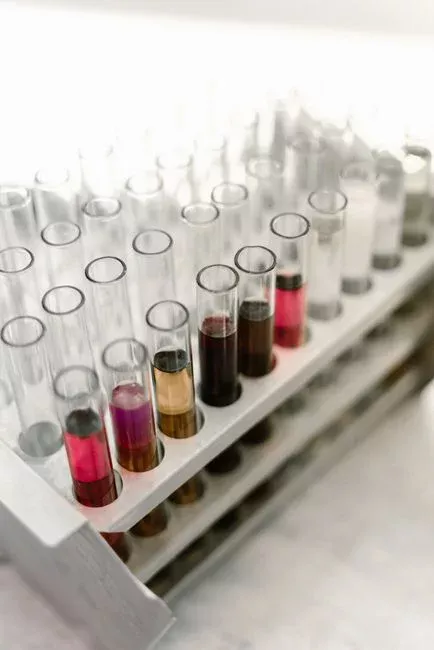
The treatment train only counts as compliant if the plant can prove it with data an inspector will accept. Most SIU permits require 24-hour composite sampling using an automatic sampler capable of time-proportional, flow-proportional, and event-triggered modes; the latter is critical for slug-control verification. The instrumentation split is straightforward: continuous on-line measurement for pH, temperature, and flow (typically with a magnetic flowmeter and a pH probe on a by-pass loop), and laboratory analysis on composite samples for BOD, COD, TSS, oil & grease, sulfides, phenols, ammonia, and the metals list in the permit. Chain-of-custody must be unbroken from sample collection through laboratory receipt, and reports must be submitted to the City on the cadence in the permit (commonly monthly for self-monitoring, immediately for slug events). A useful companion reference is this buyer's guide to automatic samplers for wastewater compliance monitoring, and for a parallel 2026 view of system selection, this 2026 comparison of wastewater treatment systems for TSS and nutrient removal.
30 / 60 / 90-Day Compliance Checklist for a Louisville Chemical Plant
- Days 1–30 — Characterize and apply. Pull one week of composite samples from every process drain; map each pollutant to the applicable 40 CFR Part 414 subcategory; identify the local-limits table on file with the City; submit the wastewater discharge permit application to Louisville Public Works at (303) 335-4608 (per City of Louisville IPP, 2026).
- Days 31–60 — Build and commission. Install the equalization tank, PLC-controlled chemical dosing system for pH adjustment and coagulant feed, dissolved air flotation system for oil, grease, and suspended solids removal, MBR membrane bioreactor for soluble BOD, COD, and ammonia removal, and plate-and-frame filter press for clarifier and biological sludge dewatering; calibrate dosing pumps; install the automatic sampler; run baseline sampling.
- Days 61–90 — Demonstrate compliance. Complete two consecutive self-monitoring events; reconcile results against both the 40 CFR Part 414 categorical standards and the Louisville local limits; document corrective actions for any exceedance; submit the compliance report.
- Ongoing — Maintain. Keep the slug-control plan current, log operator training, rehearse the accidental-discharge notification procedure, and review the permit at each renewal cycle. For context on how other sectors approach the same 2026 cycle, see this parallel 2026 pretreatment compliance walkthrough for EV and automotive plants near Auburn and this 2026 compliance guide for transportation-sector plants near Kent, WA.
Frequently Asked Questions
What triggers SIU status for a chemical plant in Louisville?
An industrial user becomes a Significant Industrial User when its average discharge exceeds 25,000 gpd, or when it is a Categorical Industrial User subject to 40 CFR Part 414 (per 40 CFR 403.3 and the City of Louisville IPP, 2026). At that point the plant must apply for an individual Louisville wastewater discharge permit.
Which CFR part applies to chemical plants discharging to the Louisville sewer?
The Organic Chemicals, Plastics, and Synthetic Fibers (OCPSF) point source category is regulated under 40 CFR Part 414, operating within the National Pretreatment Program framework at 40 CFR Part 403. The applicable subcategory depends on the plant's product mix (per EPA 40 CFR Part 414).
Who do I contact at the City of Louisville to start a permit application?
Contact Louisville Public Works at (303) 335-4608, City Hall, 749 Main St, Louisville, CO 80027, Monday–Thursday 8 a.m.–4 p.m. The City encourages pre-application meetings before formal submittal (per City of Louisville IPP, 2026).
How do Louisville's local limits differ from federal categorical standards?
Federal categorical standards in 40 CFR Part 414 are uniform across the country; local limits are derived by the control authority from POTW-specific pass-through, worker-safety, and sludge-disposal criteria, and are frequently more stringent. The most stringent applicable standard always controls (per 40 CFR 403.5 and EPA pretreatment guidance, 2026).
What happens after a permit violation in Louisville?
The City's stated posture is cooperation-first, but "businesses that continue to break the rules will face enforcement action" — which can include administrative orders, compliance schedules, monetary penalties, and ultimately permit suspension or revocation (per City of Louisville IPP, 2026).