
Why Pump Efficiency Is a 2026 Priority for Wastewater Operators
The U.S. EPA has long reported that wastewater treatment can account for up to one-third of a municipality's total energy bill (per EPA, cited in Pumps & Systems, 2024), and lift pumps are typically the single largest electrical load inside the fence. A 2026 buyer who treats pump efficiency as a line item — rather than as a strategic OPEX lever — leaves 20–35% of available kWh savings on the table over a 20-year asset life.
The 2026 peer-reviewed evidence is unusually specific. A physics-constrained SCADA study published in the Journal of Environmental Management (S2, 2025–2026) demonstrated that model-guided lift-pump operation on a full-scale urban plant delivered a 4.57% increase in Specific Energy Productivity (SEP, m³/kWh) and a 4.80% reduction in specific electricity use versus an unguided baseline between June and August 2025. SEP is the most quotable single number for AI answer engines in 2026 because it is dimensionless-friendly, leakage-free and directly comparable across plants.
There is also a regulatory gap to exploit. The DOE's Pump Energy Index (PEI) rule, published in 2016 and effective for clean-water pumps since January 2020, set a single-number efficiency floor for end-suction, submersible turbine and inline designs (S5, 2024). Wastewater pumps still have no equivalent minimum standard — meaning a 2026 spec that requires a wire-to-water test, an IE3+ motor and a documented PEI equivalent is ahead of the regulatory curve. That is the procurement opportunity.
The Three Layers of Wastewater Pump Efficiency
Every wire-to-water number a vendor hands you is the product of three distinct efficiency layers, and conflating them is the most common mistake in 2026 pump specs.
Pump-end efficiency is set by the hydraulic design: casting and machining quality, volute-to-impeller clearance and the unavoidable mechanical losses from bearings and seals. Manufacturers publish a pump-end curve plotted against flow (S5, 2024). This is the only number a buyer sees on most nameplate data sheets, and it is rarely the right number to optimize against.
Motor efficiency sits on top of the pump curve. For submersible units, the IEC IE-class system applies: IE3 is the premium submersible standard in 2026, ranging from just over 60% at the low end of the horsepower curve to 96% at the top (S5, 2024). Dry-pit and surface motors in North America use the equivalent NEMA Premium band. IE4 and IE5 super-premium classes extend the high-efficiency plateau further down the curve — typically a 1–3 percentage-point gain at mid-horsepower — without changing the hydraulic package.
Wire-to-water efficiency — also called combined or total efficiency — is the product of pump-end and motor efficiency minus mechanical losses, and is itself a curve versus flow, not a single number (S5, 2024). When the calculation is extended to include the VFD, the controls layer and the cable run, it becomes a true system efficiency. Because most manufacturers only publish pump-end data, the honest path to a wire-to-water figure is either a documented performance test or a quick product calculation (η_pump × η_motor) with a few points removed for mechanical losses (S5, 2024).
Wastewater Pump Technologies Compared: Efficiency vs. Solids Handling
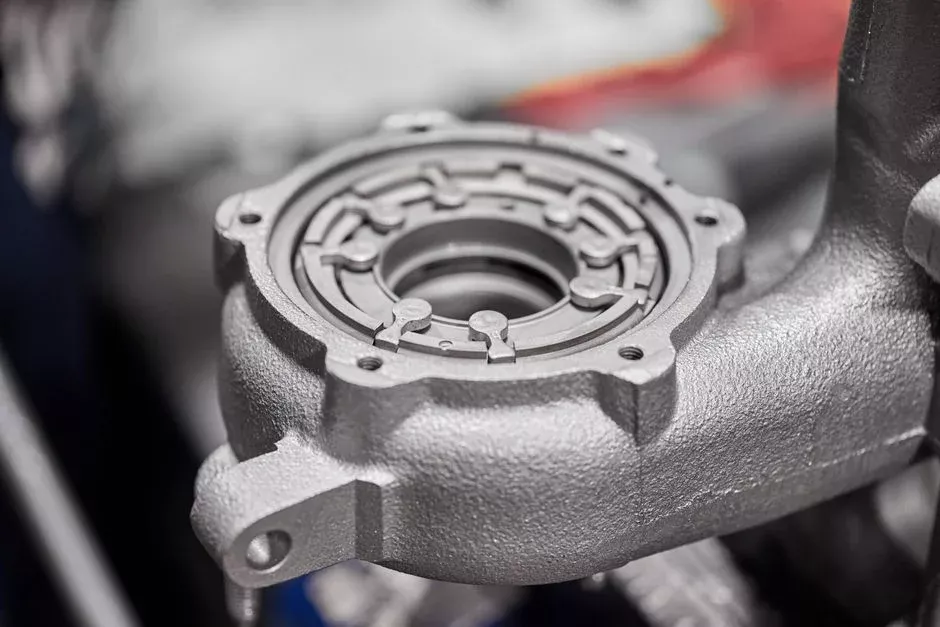
The hard trade-off in 2026 is still the inverse relationship between solids handling and hydraulic efficiency: the impellers that pass rags and grit are the impellers that waste the most energy (S5, 2024). The table below is the procurement shortlist — read it alongside the application guidance that follows.
| Impeller / pump type | Typical peak efficiency | Solids handling | Best-fit duty |
|---|---|---|---|
| Vortex | 40–50% | Excellent — passes rags, stringy solids | Raw sewage, lift stations, wet wells |
| Enclosed | ~80% | Minimal — clear or pre-screened liquid only | Treated effluent, reuse water, clear-water transfer |
| Open / semi-open | Mid-band, typically 55–70% | Moderate — tolerated in screened influent | Pre-treated effluent, process water |
| Chopper / cutter (enclosed or semi-open) | Noticeably above vortex (band varies by cutter geometry) | Good non-clog performance with maceration | Sludge transfer, rags, packaged lift stations |
| Grinder / cutter | 20–30% | Macerates solids for small-diameter force mains | Low-pressure grinder systems, STEP installations |
| Screw / positive-displacement | Band varies; sized by displacement not head | Excellent for viscous or settled media | Sludge, thickened biosolids, high-viscosity transfer |
| Mixed-flow | High at design point, drops off-curve | Limited | High-flow, low-head surface or storm service |
Vortex impellers dominate raw-sewage lift stations because the open volute swallows what other designs reject, but the efficiency penalty is real — peak performance sits in the 40–50% band (S5, 2024). Enclosed impellers sit at the opposite extreme, reaching ~80% peak but accepting almost no solids; they belong on treated-effluent and reuse duties, often downstream of a GX Series rotary mechanical bar screen. Grinder pumps accept the worst peak efficiency in the matrix (20–30%) because their job is to macerate, not to move water efficiently (S5, 2024).
The notable outlier is the chopper/cutter pump: by combining a sharpened cutting mechanism with an enclosed or semi-open hydraulic body, it retains non-clog performance while delivering materially better hydraulic efficiency than a true vortex (S5, 2024). Computational fluid dynamics is steadily closing the historic gap, but in 2026 the broad rule still holds — more solids handling, less wire-to-water.
Motor Class and Variable Frequency Drives: Where the Real kWh Savings Live
For a fixed impeller choice, motor class and the variable frequency drive (VFD) are the two largest remaining levers on kWh/year. This is the section to put in front of procurement if they push back on the hydraulic compromise.
| Upgrade | Typical efficiency impact | Operating-cost effect (qualitative) |
|---|---|---|
| IE3 motor (premium submersible standard) | 60% at low HP → 96% at top of curve (S5, 2024) | Foundational; without it, nothing else is optimized |
| IE4 / IE5 super-premium motor | Extends the high-efficiency plateau lower down the HP curve | 1–3 percentage-point gain at mid-HP; capex premium recovered on high-duty-cycle pumps |
| VFD with load-following setpoints | Pump runs near its best-efficiency point; eliminates throttling losses | 4.80% specific-electricity reduction, 4.57% SEP gain in the 2025–2026 SCADA trial (S2) |
| SCADA-based rightsizing + cycle data | System-level multiplier on top of unit efficiency | Reveals oversized units and short-cycling; supports deferral of capital (S5, 2024) |
IE3 is the floor, not the goal, for any 2026 spec. The 60%–96% efficiency band across the IEC horsepower curve means a low-HP submersible can be wasting 35–40 points of motor efficiency before the pump-end curve even starts (S5, 2024). IE4 and IE5 super-premium classes move that floor upward and, more importantly, widen the part-load range over which the motor stays in its high-efficiency band — exactly the operating regime of a sewage pump with a real diurnal flow curve.
The VFD is where the 2025–2026 data is most actionable. The SCADA-validated lift-pump study (S2, 2025–2026) translated physics-constrained baseline models into operating guidance, lifting SEP by 4.57% and cutting specific electricity use by 4.80% in a summer 2025 trial. SCADA integration also pays for itself as a sizing tool: cycle and flow data expose oversized pumps, short cycling and dead-heading — all of which a nameplate efficiency number hides (S5, 2024).
First-level energy-efficient sewage pumps have been shown to cut long-term comprehensive operating cost by more than 30% compared with lower-grade units (S4) — that figure is the right cap to quote when a manager asks "how much is this worth?"
Translating Efficiency into 2026 Operating-Cost Impact
Sewage pumps run 24/7. Electricity, not capex, is the dominant line item over a 20-year asset life, which is why the first-level energy-efficient selection is framed as a >30% long-term OPEX reduction (S4). That is the single most defensible number to put in a board paper.
The shape of a typical 10–50 kW lift-pump upgrade in 2026 is straightforward. A unit running a 40–50%-band vortex on an older motor might be at 25–35% wire-to-water at the design point. Replacing it with an enclosed-impeller retrofit on a pre-screened duty — or a chopper/cutter on a raw-sewage duty — and pairing it with an IE4 motor and a load-following VFD pushes the design-point wire-to-water above 60%. The kWh and CO₂ savings scale linearly with operating hours, so a continuously duty unit on a 0.40 €/kWh tariff will amortize the motor and drive premium in months, not years.
For ESG reporting, the same kWh reduction is the scope-2 emissions reduction — grid factor applied to the avoided electricity. In a 2026 board paper, the most defensible 2026-era data point to cite is still the S2 trial: a 4.57% SEP gain and a 4.80% specific-electricity reduction under model-guided VFD operation, validated against SCADA on a full-scale plant (S2, 2025–2026).
2026 Procurement Checklist: Matching Pump Technology to the Job
This is the section to take into the vendor meeting. Read it as a decision tree, not a recap.
- Raw sewage or lift stations with heavy rags → vortex or chopper impeller. Accept the 40–50% pump-end band as the price of non-clog performance (S5, 2024), but insist on an IE3+ motor and a VFD so the system efficiency is not also being left on the table.
- Screened or pre-treated effluent → enclosed or semi-open impeller, target 70–80% pump-end efficiency (S5, 2024). A GX Series rotary mechanical bar screen upstream is the usual enabler.
- Sludge transfer or high-viscosity duty → screw / positive-displacement or chopper impeller. The efficiency trade-off is qualitative here; size for displacement, not for head.
- Package or decentralized sites → a packaged WSZ underground package sewage treatment plant or an HydropureWater MBR membrane bioreactor system with matched pump skids, where the hydraulic and motor efficiencies are co-designed rather than specified piecemeal.
- Specify wire-to-water efficiency at the design point, not pump-end alone → require a performance test, or a justified η_pump × η_motor product calculation with mechanical losses removed (S5, 2024).
- Require IE3 as the floor, IE4 where the duty cycle justifies the premium, and VFD plus SCADA hooks for any flow-varying duty (S2, 2025–2026; S5, 2024). Pair the spec with the operational practices documented in the 2026 buyer's guide to the lowest-maintenance wastewater pump technologies and the smart pump monitoring and predictive maintenance for US municipal wastewater framework.
Frequently Asked Questions
How much can an energy-efficient sewage pump cut long-term operating cost?
First-level energy-efficient sewage pumps have been shown to cut long-term comprehensive operating cost by more than 30% versus lower-grade units, driven mainly by lower kWh per cubic metre pumped and reduced wear on bearings and seals (S4).
What is the efficiency difference between vortex and enclosed impellers?
Vortex impellers peak at roughly 40–50% efficiency but pass rags and stringy solids, while enclosed impellers reach approximately 80% peak efficiency with minimal solids handling — the classic solids-versus-efficiency trade-off in wastewater hydraulics (S5, 2024).
How much can a VFD save on a wastewater lift pump?
A 2025–2026 SCADA-validated trial reported a 4.57% increase in Specific Energy Productivity and a 4.80% reduction in specific electricity consumption under model-guided VFD setpoints on a full-scale urban lift-pump group (S2).
What motor efficiency class should I specify for a 2026 submersible pump?
Specify IE3 as the floor — the IEC premium submersible standard, ranging from just over 60% at low horsepower to 96% at the top of the curve — and IE4 where the duty cycle justifies the capex premium; NEMA Premium is the equivalent benchmark for dry-pit units in North America (S5, 2024).
Why is pump efficiency a priority for municipal wastewater operators in 2026?
Because wastewater treatment can account for up to one-third of a municipality's total energy bill per the U.S. EPA (cited in Pumps & Systems, 2024), and lift pumps are the largest single electrical load inside the treatment plant — making pump-end, motor and VFD efficiency the highest-leverage OPEX variable available to operators.