Why Vadodara's Sewage Problem Defines Your 2026 STP Decision
Vadodara's Vishwamitri clean-up is the most direct local justification for a private developer or society to install a compliant domestic sewage treatment plant in 2026. VMC's phase-1 programme cost about ₹195 crore and manages roughly 90 MLD of sewage, anchored by the 85 MLD Atladara plant (which intercepts about 60 MLD from the river) and the 13 MLD Vemali plant (which cuts another 2 MLD), per the Times of India (2025-12-24). The civic body's own data shows the river's BOD has dropped from a 2016–2018 baseline near 30 mg/L and a 2018–2023 band of 20–30 mg/L to 8 mg/L in November 2025, but about 16 MLD of untreated discharge still enters the river from roughly 12 outfalls, down from 23 earlier.
That residual load is the reason VMC is now shifting from trunk sewers to point-of-source treatment. Four pipeline projects worth ₹39.3 crore are under execution, and a further ~₹134 crore is earmarked for micro-STPs and additional sewerage along the river, per the same Times of India (2025-12-24) report. An environmental expert quoted in the same piece argued that "sewage should ideally be treated at the points where it enters the river, rather than being transported long distances through pipelines." For a new residential township, hotel, hospital, or factory, the same logic applies at plot scale: a packaged or skid-mounted STP that meets the discharge bar on site is now the lowest-risk path, as the parallel pressure on receiving groundwater is just as real. A 2026 Zenodo decadal study of Vadodara's urbanising semi-arid aquifer found COD at Gajrawadi rising to 45.50 mg/L and fluoride at Sama reaching 6.90 mg/L, both well above BIS drinking-water limits, confirming that the receiving environment is already stressed and any reuse plan needs polishing, not just biological treatment. A similar real-world failure of centralised pumping, where a single pump station outage released untreated wastewater into a residential street, is documented in this Fiji Suva wastewater pump-failure case, which is exactly the failure mode VMC's micro-STP push is designed to avoid.
Domestic Sewage Characteristics Your Vadodara STP Must Treat
Domestic sewage is the combined flow from toilets and kitchens (black water) plus bathing and laundry (grey water). Relative to most industrial streams it carries a high organic load per unit volume, but the variability is wide: occupancy, food habits, water-saving fixtures, and groundwater ingress in old sewers all swing the influent. Before sizing or pricing, a buyer should ask the supplier for site-specific sampling (composite 24-hour samples across at least two weekdays and one weekend) rather than relying on textbook defaults.
The closest public benchmark for Vadodara is the 66 MLD Gajarawadi STP designed by Chokhavatia Consulting for VMC, which uses a conventional activated-sludge train: inlet works, primary clarifier, aeration tank, secondary clarifier, sludge thickener, anaerobic sludge digester with gas mixing, and sludge drying beds. The plant is rated for 66 MLD and "got the treated sewage as per the norms of BOD 20 mg/L and SS 30 mg/L" from the first day of operation, per the consultancy's project record. That 20/30 envelope is the realistic private-STP target GPCB consent letters typically write into, and it is the number to design against, not to relax.
Reuse planning must also reflect the receiving-water stress. The Zenodo (2026) decadal study of Vadodara's aquifer reports fluoride at 6.90 mg/L at Sama (GW1) and 5.10 mg/L at Baroda Dairy (GW4), versus the BIS permissible limit for drinking water, TDS at 2,100 mg/L at Baroda Dairy, and severe hardness at Gotri, with COD at Gajrawadi climbing from 2.0 mg/L to 45.50 mg/L over the study period. These are not industrial-effluent numbers; they are the baseline any reuse stream will be compared to. A polishing step (filtration plus disinfection) is therefore part of a realistic reuse plan for flushing or gardening, not an optional extra. Buyers comparing biological and polishing stages can review the same principles in a Bhopal domestic sewage treatment guide, which uses an equivalent envelope.
| Parameter | Typical domestic sewage range (qualitative) | Regulatory / design benchmark relevant to Vadodara | Source |
|---|---|---|---|
| BOD (influent) | High relative to industrial streams; site-specific sampling required | Design to deliver effluent BOD 20 mg/L | Chokhavatia (66 MLD Gajarawadi design record) |
| SS (influent) | High relative to industrial streams; site-specific sampling required | Design to deliver effluent SS 30 mg/L | Chokhavatia (66 MLD Gajarawadi design record) |
| Receiving-water COD (groundwater at Gajrawadi, GW3) | — | 45.50 mg/L (2026 dataset, up from 2.0 mg/L baseline) | Zenodo (2026) |
| Receiving-water fluoride (groundwater at Sama, GW1) | — | 6.90 mg/L, above BIS permissible limit | Zenodo (2026) |
| Receiving-water TDS (groundwater at Baroda Dairy, GW4) | — | 2,100 mg/L | Zenodo (2026) |
| River BOD, Vishwamitri (Nov 2025) | — | 8 mg/L (down from 20–30 mg/L band, 2018–2023) | Times of India (2025-12-24) |
Process Options Compared: MBR vs MBBR/SBR vs Packaged WSZ
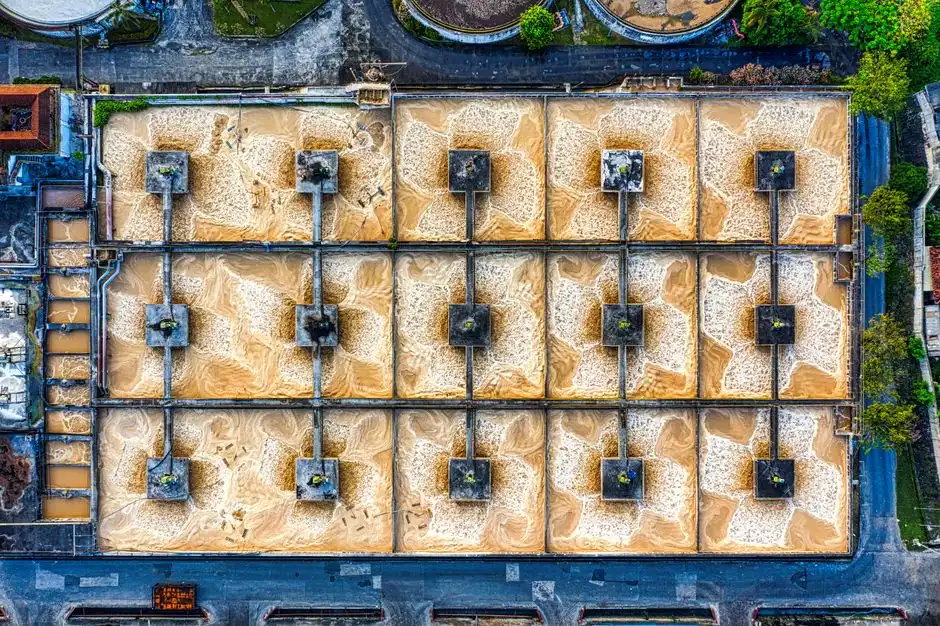
The three process classes a Vadodara buyer is most likely to be offered are not interchangeable. The choice is driven by reuse need, footprint, operator skill, and future scale-up, not by brand preference.
MBR (membrane bioreactor) couples an activated-sludge basin with submerged PVDF membranes rated below 1 μm. It produces the clearest effluent of the three, with very low BOD/SS and almost no suspended solids, which is why it is the default where reuse for flushing, gardening, or cooling is in scope, or where the discharge consent is tight. The trade-off is membrane aeration energy and periodic membrane replacement. The integrated MBR STP covers the 10–2,000 m³/day band, which maps to most mid-size hotels, hospitals, and larger residential developments.
MBBR (moving bed biofilm reactor) and SBR (sequencing batch reactor) are robust suspended- or attached-growth options for residential colonies and hotels with moderate, steady loads. They handle shock loads well, do not require membrane replacement, and have simpler sludge handling than MBR. They are the right answer when reuse is not planned and the operator is comfortable running a sequencing tank or a carrier-media reactor.
Packaged WSZ units are buried, fully automated A/O biological contact-oxidation packages. The buried packaged WSZ STP covers 1–80 m³/h, runs with no operator, and is sized for societies, hotels, hospitals, and factories that want a low-touch install. The 66 MLD Gajarawadi reference plant, with primary clarification, aeration, secondary clarification, sludge thickening, anaerobic digestion, and sludge drying beds, is the conventional activated-sludge benchmark these packaged and MBR systems are miniaturising, not replacing, per the Chokhavatia design record.
| Process class | Best-fit use case in Vadodara | Effluent envelope (design intent) | Operator skill needed | Footprint |
|---|---|---|---|---|
| MBR (submerged PVDF, <1 μm) | Hotels, hospitals, larger townships, any site with reuse or tight consent | BOD/SS well inside 20/30 mg/L; suitable for reuse after disinfection | Moderate (membrane maintenance) | Smallest for given load |
| MBBR / SBR | Residential colonies, hotels with steady load, no reuse plan | Comparable to conventional activated sludge, around the 20/30 mg/L band | Moderate | Medium |
| Packaged WSZ (A/O, buried, automated) | Societies, small hotels, hospitals, factories with limited operator staff | Designed to meet 20/30 mg/L envelope when correctly sized | Low (no operator required) | Compact, can be installed below grade |
Decision rule of thumb: pick WSZ when footprint is tight and operator skill is low, MBBR/SBR when flow is steady and reuse is not required, and MBR when reuse, tight BOD/SS, or future scale-up is the priority.
Sizing a Vadodara STP: A Worked Example for a 500-Unit Township
Before any supplier quotes, the buyer should compile four inputs: number of flats or keys, design occupancy, per-capita sewage flow, and peak factor. Influent BOD/SS should come from site sampling; if that is not possible, the design engineer should state the assumed values in writing so they can be compared across bids.
The arithmetic is straightforward: design population × per-capita flow (as supplied by the design engineer) × peak factor gives the design flow in m³/day. A 500-unit township at typical Indian occupancy and a standard per-capita flow is a small-to-mid residential plant, well inside the packaged WSZ envelope of 1–80 m³/h or the lower end of the MBR skid range. Once the design flow is fixed, the choice between an MBR skid and a packaged WSZ is governed by reuse, footprint, and operator availability, not by raw flow. A reuse-grade project for flushing or gardening should plan a polishing train, for example the MBR membrane module followed by UV disinfection for reuse loops.
Discharge-to-sewer projects should target BOD 20 mg/L and SS 30 mg/L, the same envelope the 66 MLD Gajarawadi plant meets, per the Chokhavatia design record. Receiving-water stress is the reason to plan for reuse rather than just disposal: the Zenodo (2026) study reports COD up to 45.50 mg/L at Gajrawadi, fluoride at 6.90 mg/L at Sama, and TDS at 2,100 mg/L at Baroda Dairy. Any reuse stream that bypasses polishing will, in effect, be moving these stress indicators into the building's toilet and garden loops.
CAPEX, OPEX, and the VMC Cost Benchmark
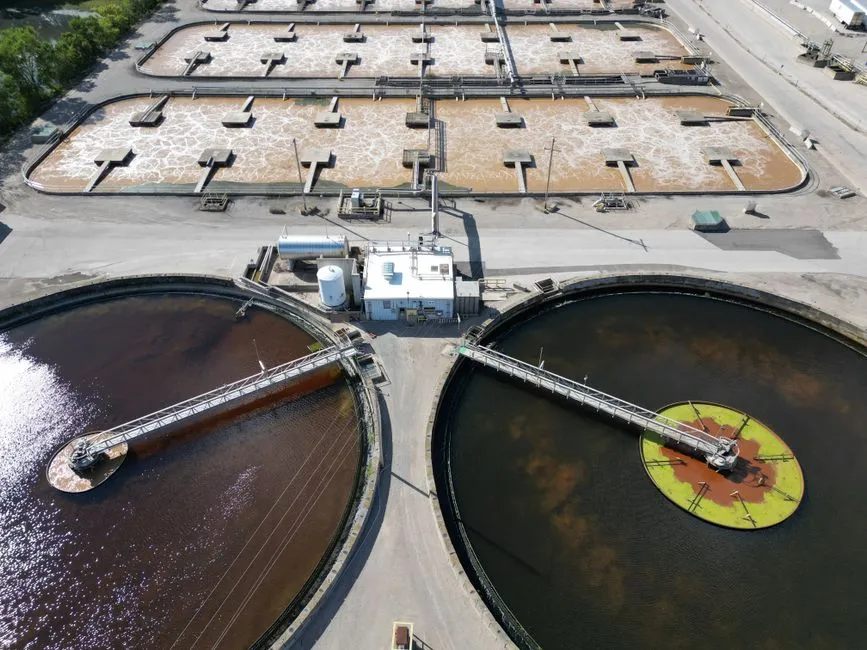
The only public-sector CAPEX anchor with a documented scope in Vadodara is VMC's phase-1 Vishwamitri spend: about ₹195 crore to manage roughly 90 MLD, per the Times of India (2025-12-24). That works out to roughly ₹2.2 lakh per m³/day of installed capacity, and it is useful only as a directional public-sector benchmark. A private packaged or MBR plant is built under different labour, land, and instrumentation costs and should not be benchmarked against that figure line by line.
More useful for a private buyer's planning is the VMC pipeline of work: four sewage-line projects worth ₹39.3 crore under execution, and a further ~₹134 crore earmarked for micro-STPs and additional sewerage along the Vishwamitri, per the same Times of India (2025-12-24) report. That second number is direct evidence that decentralised treatment is the local direction of travel, which is useful language in a society-committee approval.
OPEX for any private STP is dominated by aeration power, sludge handling, chemical dosing, membrane replacement (for MBR), and operator attendance. The buried packaged WSZ series is "fully automated with no operator required," which materially cuts OPEX for small sites, per the HydropureWater product catalog (WSZ series, 1–80 m³/h). An independent benchmark on aeration-tank energy and sludge economics for similar plants is laid out in this oxidation-ditch OPEX breakdown, which buyers can use to stress-test supplier quotes. Specific private CAPEX numbers for Vadodara in 2026 are not in the public record, so the right next step is a request-for-quote with the four inputs above fixed.
Compliance, Reuse, and the Vishwamitri Risk Lens
The GPCB consent letter is effectively a discharge contract, and the BOD 20 mg/L / SS 30 mg/L envelope that the 66 MLD Gajarawadi plant meets is the realistic private-STP target, per the Chokhavatia design record. Hitting that envelope is the cheapest compliance position, because it keeps the STP in the same consent class as VMC's own municipal plants and avoids bespoke limits that the regulator may revisit.
Reuse decisions have to be made in the light of receiving-water quality, not in the abstract. The Zenodo (2026) study records fluoride at 6.90 mg/L at Sama and 5.10 mg/L at Baroda Dairy, both above the BIS drinking-water limit, TDS at 2,100 mg/L at Baroda Dairy, and COD at 45.50 mg/L at Gajrawadi. Reuse for flushing or gardening should therefore be routed through a polishing step, typically filtration plus UV disinfection for reuse loops or, where residual biofilm control is a concern, a chlorine dioxide generator. Discharge-to-sewer only does not require the polishing step.
Finally, VMC's micro-STP plan, about ₹134 crore of decentralised capacity along the Vishwamitri, is itself a regulatory signal, per the Times of India (2025-12-24). Citing that figure in a committee or board paper frames a private STP as consistent with where the city is going, which is a softer but real form of compliance protection.
Frequently Asked Questions
What CAPEX and OPEX should I expect for a domestic STP in Vadodara in 2026?
VMC's public benchmark is about ₹195 crore for ~90 MLD, roughly ₹2.2 lakh per m³/day of installed capacity, per the Times of India (2025-12-24); treat this as a directional public-sector number, not a private quote. The main OPEX drivers for any private plant are aeration power, sludge handling, chemical dosing, membrane replacement if MBR, and operator attendance. A private CAPEX figure for 2026 is not in the public record, so request a site-specific quote with population, per-capita flow, peak factor, and influent BOD/SS fixed in writing.
How do I choose between an MBR, MBBR/SBR, and a packaged WSZ for a 500-flat township?
Route by flow, reuse need, and operator skill. If reuse for flushing or gardening is in scope or the consent is tight, pick an MBR skid from the integrated MBR STP range. If flow is steady and reuse is not planned, an MBBR or SBR is the robust, lower-maintenance option. If the site has tight footprint and limited operator staff, pick a buried packaged WSZ STP in the 1–80 m³/h range and plan for fully automated, unattended operation.
What BOD/SS targets does GPCB typically set for private domestic STPs in Vadodara?
The realistic target is the same envelope the 66 MLD Gajarawadi plant meets: BOD 20 mg/L and SS 30 mg/L, per the Chokhavatia design record. Designing to that envelope keeps the private plant in the same consent class as VMC's own STPs and avoids bespoke limits. Buyers should ask suppliers to demonstrate, with reference plant data, that the offered design meets this envelope at the design flow and peak factor.
How much of Vadodara's sewage is still untreated in 2026?
About 16 MLD of untreated discharge still enters the Vishwamitri from roughly 12 outfalls, down from 23 earlier, per the Times of India (2025-12-24). VMC is executing four pipeline projects worth ₹39.3 crore and has earmarked about ₹134 crore for micro-STPs and additional sewerage along the river to close that gap. A private STP that meets the 20/30 mg/L envelope on site is the lowest-risk way to stay ahead of this tightening enforcement direction.
Can STP water be reused for gardening or flushing in Vadodara given high fluoride and TDS?
Direct reuse without polishing is not advisable. The Zenodo (2026) decadal study reports fluoride at 6.90 mg/L at Sama and TDS at 2,100 mg/L at Baroda Dairy, both above BIS drinking-water limits, with COD at 45.50 mg/L at Gajrawadi. A realistic reuse plan routes STP effluent through filtration plus chemical metering for disinfection and UV or chlorine dioxide, and explicitly excludes potable use. For a comparable municipal benchmark on what "polishing" actually costs in OPEX, the same principles are covered in this Bhopal domestic sewage treatment guide.