Why Montrose Mines and Metals Shops Are Pretreatment-Regulated
Section 402(b) of the Clean Water Act requires State NPDES programs to include authority ensuring POTW permits require compliance with Section 307(b) pretreatment standards, which is the legal basis the City of Montrose uses to enforce its Industrial Pretreatment Program (Source: EPA, Local Limits Development Guidance, published 2021-06-25). EPA's same guidance frames local limits as the bridge between federal categorical standards and site-specific POTW protection, developed through the five-step MAHL process (Source: EPA, 2021-06-25).
Mining wastewater is generally highly acidic with high suspended solids, and the acidity increases as sulfate and metal concentrations increase — the exact signature that causes pass-through and interference at a POTW (Source: PMC review article, accepted 2024-01-12). The City of Montrose enforces pretreatment through an Industrial Wastewater Discharge Permit issued by the Industrial Pretreatment Program Coordinator, with the contact line for the Program shown on the City's own permit application (Source: City of Montrose Categorical or Suspected Categorical SIU Permit Application).
For a small mill or job shop, the practical consequence is that tapping the sanitary sewer is not a building-permit item — it is a regulated discharge. The City is acting as the control authority under 40 CFR Part 403, which means every applicable federal subpart, every prohibited discharge rule, and every local limit the City adopts flows downstream into the facility's permit. Skipping that step does not avoid the framework; it just means the framework arrives later as a significant noncompliance finding.
Which 40 CFR Subparts Apply to Montrose-Area Mining and Metals Operations
The City's Categorical or Suspected Categorical SIU Permit Application explicitly enumerates the subparts it screens against: 40 CFR 420 Iron & Steel Manufacturing; 421 Nonferrous Metals Manufacturing; 425 Leather Tanning & Finishing; 432 Meat Products; 433 Metal Finishing; 436 Mineral Mining and Processing; 440 Ore Mining and Dressing; 447 Ink Formulating; 460 Hospitals; 464 Metal Molding and Casting; 471 Nonferrous Metal Form & Powders (Source: City of Montrose SIU Permit Application). A Montrose hard-rock mine or aggregate washing operation typically maps to 40 CFR Part 436 Mineral Mining and Processing or 40 CFR Part 440 Ore Mining and Dressing, while a custom plating or anodizing job shop maps to Part 433 Metal Finishing (Source: City of Montrose SIU Permit Application). A foundry or die-cast operation maps to Part 464 Metal Molding and Casting; a powdered-metal parts producer maps to Part 471 Nonferrous Metal Form & Powders (Source: City of Montrose SIU Permit Application). The application also lists 40 CFR Part 435 Oil & Gas Extraction among the subparts the City screens (Source: City of Montrose SIU Permit Application).
Selecting the wrong subpart corrupts both the baseline analytical panel and the City's enforcement thresholds, so the application explicitly requires the discharger to list the specific Standard, Subpart, and applicable Section (Source: City of Montrose SIU Permit Application). A Categorical Pretreatment Standard is defined by the City as any regulation containing pollutant discharge limits promulgated by EPA under Section 307(b) and (c) of the Act, including prohibited discharge limits under 40 CFR 403.5 and the BMPs, local limits, and specific prohibitions established by the City (Source: City of Montrose SIU Permit Application).
| Montrose-area operation | Typical 40 CFR subpart | Why it matches |
|---|---|---|
| Hard-rock or aggregate mine with wash water | Part 436 — Mineral Mining and Processing | Crushing, screening, washing of mined material |
| Ore beneficiation / mill discharge | Part 440 — Ore Mining and Dressing | Beneficiation of ores for metal recovery |
| Plating, anodizing, printed circuit shop | Part 433 — Metal Finishing | Electroplating and allied metal-finishing operations |
| Iron or steel furnace, rolling, casting | Part 420 — Iron & Steel Manufacturing | Ferrous metallurgical process wastewater |
| Smelter, primary nonferrous plant | Part 421 — Nonferrous Metals Manufacturing | Primary nonferrous metallurgical operations |
| Foundry / die-cast shop | Part 464 — Metal Molding and Casting | Casting of metal parts |
| Powdered-metal parts producer | Part 471 — Nonferrous Metal Form & Powders | Forming and powder metallurgy of nonferrous metals |
| Oil & gas field in the County | Part 435 — Oil & Gas Extraction | Produced water and gas-plant condensate |
The Montrose SIU Permit Application: What the City Actually Requires
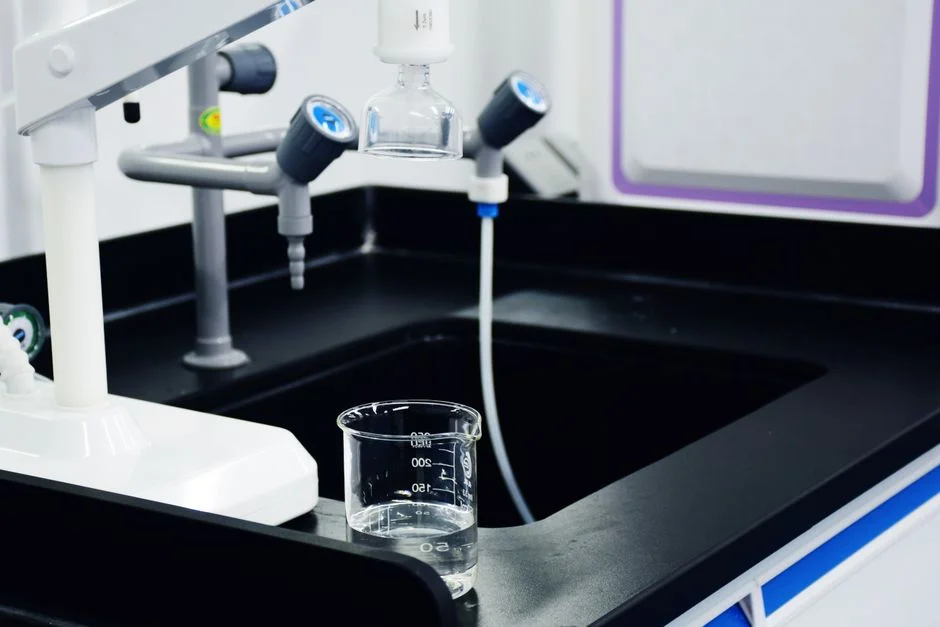
The City requires submittal to Hyrum Webb, Industrial Pretreatment Program Coordinator, at the address listed on the application, with a qualified professional signature certifying the review of additional pretreatment or O&M needed to meet the standards (Source: City of Montrose SIU Permit Application). Per 40 CFR 403.12(b)(5) as cited by the City, connecting categorical industrial users must collect at least one representative sample of their effluent and analyze for all regulated pollutants using methods at 40 CFR Part 136 prior to discharge (Source: City of Montrose SIU Permit Application). The application screens for a fixed pollutant panel: BOD5, TSS, ammonia, nitrate, nitrite, total inorganic nitrogen, phosphorus, BTEX, TKN, hexane extractable material (polar and non-polar), aluminum, antimony, barium, beryllium, boron, and hexavalent chromium (Source: City of Montrose SIU Permit Application).
The application also captures water supplier, sewer billing account, continuous vs. batch discharge, average and maximum gallons per batch, and any +/- 20% seasonal variation in production (Source: City of Montrose SIU Permit Application). Failure to file a complete application or to disclose known-present pollutants "may be used to avoid reporting" and is treated as a compliance defect by the City (Source: City of Montrose SIU Permit Application). The application asks for off-site disposal information for metal-bearing sludges, spent plating baths, and petroleum oils, which lets the City cross-check hauled-waste manifests against the on-site treatment claim (Source: City of Montrose SIU Permit Application). A compliance schedule may be required if the qualified professional's review identifies additional pretreatment or O&M actions before the permit is issued (Source: City of Montrose SIU Permit Application).
Engineering a Treatment Train That Clears the City's Local Limits
EPA's MAHL framework uses four allowable headworks loading bases — effluent-quality, sludge-quality, inhibition-based, and air-quality based AHLs — and conventional/non-conventional handling for BOD/TSS, ammonia, and oil & grease (Source: EPA, 2021-06-25). MAHL allocation to industrial users includes a safety factor and an expansion/growth allowance, and the remainder is divided among controlled sources — so the design margin is not optional (Source: EPA, 2021-06-25). A standard Montrose-area train for a 40 CFR Part 433/440/464 discharger is flow equalization → pH adjustment with lime or caustic → chemical precipitation of metals (including Cr(VI) reduction if hexavalent chromium is present) → DAF system for metal-bearing wastewater or lamella clarifier for metal hydroxide settling for suspended solids and FOG → multi-media filter as RO/UF pretreatment for residual TSS → filter press for metal-bearing sludge dewatering, with the chemistry line skidded on an automatic chemical dosing for pH and precipitant control (synthesized from EPA, 2021-06-25 and LiqTech commercial write-up).
Membrane filtration has been documented in commercial mining-water pilots as a polishing step that lets the operator recycle treated water and reduce freshwater draw, with silicon-carbide ceramic membranes cited as robust under harsh chemistry (Source: LiqTech commercial write-up). The City's application lists oil/grease interceptor, oil/grease separator, dissolved air flotation, chemical precipitation, neutralization/pH adjust, sedimentation, filtration, and ion exchange as recognized unit operations the discharger should select from (Source: City of Montrose SIU Permit Application). A mechanical bar screen upstream of equalization protects pumps and the chemistry line from rag and debris — a frequent cause of upsets at small plants. For a deeper comparison between DAF and a lamella clarifier specifically on mining streams, see the DAF vs clarifier selection for mining wastewater guide.
| Treatment step | Function in the train | Key design considerations |
|---|---|---|
| Mechanical bar screening | Remove rags, debris, large solids | Protect downstream pumps and DAF |
| Flow equalization | Buffer batch peaks, stabilize pH and flow | Minimum 8-24 hours of retention; aerated if odor-prone |
| pH adjustment | Raise pH for metal hydroxide precipitation | Lime (Ca(OH)2) or NaOH; control to target pH band |
| Cr(VI) reduction (if applicable) | Reduce hexavalent chromium to trivalent | Required for any operation on the City's Cr(VI) line |
| Chemical precipitation | Precipitate dissolved metals as hydroxides | Coagulant and flocculant dosing; rapid mix then slow mix |
| DAF or lamella clarifier | Remove suspended solids, FOG, and metal-hydroxide floc | Polymer selection; surface-loading rate |
| Multi-media / membrane filtration | Polish residual TSS before sewer or recycle | Backwash handling; SDI control for downstream RO/UF |
| Sludge dewatering | Reduce sludge volume for off-site disposal | Plate-and-frame press for high-solids metal-bearing cake |
Slug Discharge Control and 40 CFR 261 Notification: The Non-Negotiables
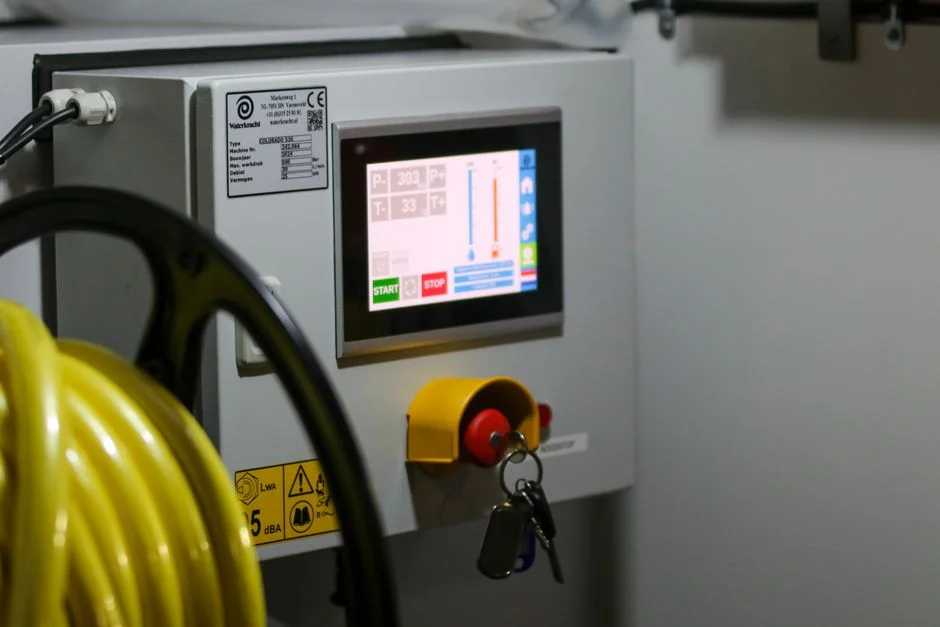
A Slug Discharge is defined by the City as any non-routine, episodic discharge, including accidental spills or non-customary batch discharges, that exceeds the hydraulic or design capacity of the Industrial User's treatment system or any part of it (Source: City of Montrose SIU Permit Application). The City requires a Slug Discharge Control Plan with detailed facility drawings showing raw materials, chemicals, wastes, floor drains, discharge points, outside exits, posted emergency contacts, and stormwater drains (Source: City of Montrose SIU Permit Application). A rotary mechanical bar screen at the head of the equalization basin is a practical first defense — it keeps a spill's gross solids from short-circuiting the chemistry line.
Per the City, the Industrial User must notify the City, the EPA Regional Waste Management Division Director, and State hazardous waste authorities in writing of any discharge into the sanitary sewer that would be a hazardous waste under 40 CFR Part 261 if otherwise disposed, with notification made immediately upon learning of the discharge (Source: City of Montrose SIU Permit Application). Reports under the Slug Discharge Control Plan go to the Industrial Pretreatment Program Coordinator at the address listed on the application (Source: City of Montrose SIU Permit Application). EPA's Local Limits Guidance explicitly flags prohibitions to protect the treatment works, collection system, and workers as a required input when selecting pollutants of concern — which is what slugs and 40 CFR 261 discharges trigger (Source: EPA, 2021-06-25). For a nickel-bearing plating line, this stack of rules is laid out in the nickel wastewater treatment engineering guide.
Operating Realities: Sampling, Pass-Through, and Tightening Limits
EPA's Local Limits Guidance specifies sampling locations at the POTW, in the collection system, and at industrial users, plus required sampling frequencies for initial program development and ongoing evaluation (Source: EPA, 2021-06-25). Local limits are designated when actual loadings approach the MAHL or when there is noncompliance due to pass-through or interference — i.e., the local limit is reactive as well as preventive (Source: EPA, 2021-06-25). Best Management Practices are part of the City's control mechanism stack alongside numeric limits, so plan for BMPs in the permit submittal (Source: EPA, 2021-06-25).
Mining wastewater is described in the academic literature as having acidity that increases with sulfate and metal concentrations, which means upset events (e.g., a heavy storm flushing the pit) can rapidly shift pH and load — exactly the slug condition the City requires to be controlled (Source: PMC review article, accepted 2024-01-12). Industry is moving toward stricter discharge limits, more water reuse, and recovery of valuable metals, which raises the engineering case for moving from simple precipitation to membrane-based polishing so the same plant can hit either sewer discharge or recycle targets (Sources: PMC review article, 2024-01-12 and LiqTech commercial write-up). For plants that need recycle-grade water, an ultrafiltration system ahead of an RO skid is becoming the default polishing block, and the chemical metering pump selection for U.S. wastewater guide covers the dosing side of that retrofit.
Frequently Asked Questions
How much does a Montrose-compliant pretreatment system cost for a small mining or metals plant?
The City of Montrose's permit application and EPA's Local Limits Guidance do not publish a cost figure for compliance; capital cost depends on the matched subpart, the baseline 40 CFR Part 136 panel results, and the MAHL allocation the City calculates. The actionable buyer step is to send the City's SIU Permit Application to three pretreatment EPCs and request a budget-range proposal tied to the specific subpart (e.g., 40 CFR 433 vs 440) and the local-limit numbers the City provides, rather than asking for a generic packaged price.
Which 40 CFR subpart should a custom plating job shop in Montrose list on the permit application?
Custom plating, anodizing, and printed-circuit shops discharging to the City of Montrose sewer are screened under 40 CFR Part 433 Metal Finishing, per the City's SIU Permit Application subpart list. The actionable step is to confirm with the Industrial Pretreatment Program Coordinator that the specific line (e.g., decorative vs hard-chrome) matches the subpart section, since the regulated-pollutant panel changes with the Section.
What sampling cadence does the City require after the permit is issued?
40 CFR 403.12(b)(5) requires a connecting categorical industrial user to collect at least one representative effluent sample and analyze it for all regulated pollutants using 40 CFR Part 136 methods prior to discharge, per the City's permit application. After permit issuance, the cadence is set by the permit's monitoring requirements (typically self-monitoring plus POTW compliance sampling); the actionable step is to confirm the exact frequency and parameter list in the draft permit before signing it.
What is the 40 CFR Part 261 notification trigger for a Montrose SIU?
The City's permit application requires the Industrial User to notify the City, the EPA Regional Waste Management Division Director, and State hazardous waste authorities in writing of any discharge into the sanitary sewer that would be a hazardous waste under 40 CFR Part 261 if otherwise disposed, made immediately upon learning of the discharge. The actionable step is to pre-build that notification contact list into the Slug Discharge Control Plan and to flag any process bath or spent solvent on-site that has an RCRA waste code before the City does.