Why the BDx Jatiluhur Suspension Reset Jakarta's 2026 Baseline
In October 2026, the West Java administration suspended construction of a 640 MW AI data centre campus near Jatiluhur Dam after the developer, Singapore-based BDx Data Centers, began building without a secured environmental impact assessment (Amdal) or building approval (PBG) (Jakarta Post, Oct 2026). Governor Dedi Mulyadi told a project consultant on camera that "if the permits are still being processed, then construction should not start yet" and called for the permit process to be expedited so the project would not be considered "problematic" (Jakarta Post, Oct 2026).
The campus sits roughly 5 km from the Jatiluhur Dam, which supplies the Greater Jakarta area and irrigation for rice fields across western West Java (Jakarta Post, Oct 2026). The data centre had secured 845 MVA of grid capacity from PLN, part of more than 1.2 GVA across BDx's Indonesian AI campuses, and the first 120 MW phase is targeted for early 2027 (Jakarta Post, Oct 2026). For a 2026 PFR or pre-FEED team, the precedent is unambiguous: a generic "treat-then-discharge" submission can no longer land on the regulator's desk once water stress and wastewater are framed as permitting-grade risks.
The 2026 Indonesian Compliance Stack for a Fab or Data-Hall Campus
Amdal is the binding environmental impact assessment under Indonesian law, and the BDx case confirms it must be in place before groundbreaking. The regulators that a 2026 consenting team walks are the Ministry of Environment and Forestry (KLHK) at the national level, the provincial environmental agency in West Java, and the city-level Dinas Lingkungan Hidup (DLH) for DKI Jakarta, with the AMDAL submission coordinated through the local one-stop service. The Purwakarta Regency Environmental Agency is currently reviewing BDx's AMDAL, and the governor's public call to expedite the process is being read in the market as a signal that a complete, water-stress-aware submission is the price of entry (Jakarta Post, Oct 2026).
Two open items shape the 2026 stack. First, the Walhi campaigner Wahyu Eka Styawan urged the government to "establish specific regulations and permitting requirements that take local environmental conditions and electricity supplies into account" and to involve public participation; until those land, "all such projects should be put on hold" (Jakarta Post, Oct 2026). Second, Alfons Tanujaya of APTIKNAS called for a one-stop permitting system that ensures AMDAL is completed before projects are launched — language the regulator will take as a tightening of the permit-to-groundbreaking sequencing (Jakarta Post, Oct 2026). For a PFR written in 2026, the practical move is to run the stream map, the AMDAL submission, and the equipment selection in parallel, with the stream map driving both. The scope of the BDx demand ramp — 6,000 m³/day initially, projected up to 384 L/s at maturity (Jakarta Post, Oct 2026) — is large enough to demand segregated treatment rather than a single blend submitted to DLH.
What the Wastewater Inventory Actually Looks Like in Jakarta
The global semiconductor industry consumes around 210 trillion litres of water per year, with almost half of that in areas facing higher-than-average water scarcity (TNFD, Feb 2026). A single fab can use around 14 billion litres of UPW per year, and for every unit of UPW, 1.4–1.6 units of municipal water are used (TNFD, Feb 2026). On the data-centre side, 45% of data centres globally sit in river basins at high risk of water-availability disruption, and hyperscale facilities can exceed 2 billion litres per year (TNFD, Feb 2026). Those global figures set the framing; the Greater Jakarta-specific frame is the BDx demand ramp of 6,000 m³/day at first phase, projected up to 384 L/s over five to ten years (Jakarta Post, Oct 2026).
Two waste inventories must be served in parallel, and they cannot be equalised into one tank. The fab side carries CMP slurry, HF-bearing etchant, TMAH developer, photoresist stripper, and copper-bearing polishing waste. The data-hall side carries cooling-tower blowdown (silica, hardness, biocides), humidifier drain, generator coolant, and episodic server-flush events. The HydropureWater 2026 Delhi guide documented that equalising these streams into a single biological step defeats downstream reuse targets and flattens the spike patterns that the upstream chemistries need to handle separately (HydropureWater, 2026). The stream map is the first deliverable for a Jakarta plant, written before any equipment is selected, and it should be the artefact the AMDAL reviewer sees first.
Matching Unit Processes to Each Segregated Stream
Pre-treatment starts with a DAF system for CMP and pre-treatment duty to remove suspended solids and CMP fines before any chemical or biological step. The HF-bearing etchant stream routes to chemical precipitation and/or electrocoagulation–electroflotation; CMP slurry goes to electrocoagulation–flotation with surfactant dosing; ammonia and TMAH loads go to biological nitrification with a UV/H₂O₂ or UV-LED/H₂O₂ polish; and the combined polish of advanced oxidation plus microfiltration plus RO, documented in the 2026 literature, is the closest published analogue to a hybrid reuse polish for combined fab and data-hall effluents (HydropureWater, 2026). For the design parameters behind the electrocoagulation step, the adjacent electrocoagulation system design parameters 2026 guide is a useful reference.
| Stream | Dominant Contaminants | Matched Unit Process |
|---|---|---|
| HF-bearing etchant | Fluoride, acidic pH | Chemical precipitation / electrocoagulation–electroflotation |
| CMP slurry | Silica fines, surfactants, copper | DAF → electrocoagulation–flotation with surfactant dosing |
| TMAH developer | Ammonia nitrogen, organics | MBR nitrification → UV/H₂O₂ polish |
| Photoresist stripper | Solvents, organics | Catalytic wet oxidation / adsorption / biological with AOP polish |
| Combined fab + data-hall polish | Mixed residual | AOP + microfiltration + RO |
| Cooling-tower blowdown | Silica, hardness, biocides | Lime/soda softening or side-stream RO |
The reuse backbone on the fab side is an MBR membrane bioreactor for the biological step, an industrial RO system for reuse polishing, and an EDI polishing stack for UPW-grade reuse. An automatic chemical dosing system for reagent control holds stoichiometry across variable feed. The AOP step is sized against the same framework as the standalone AOP system design guide 2026.
Cooling-Tower Blowdown and the Closed-Loop Question
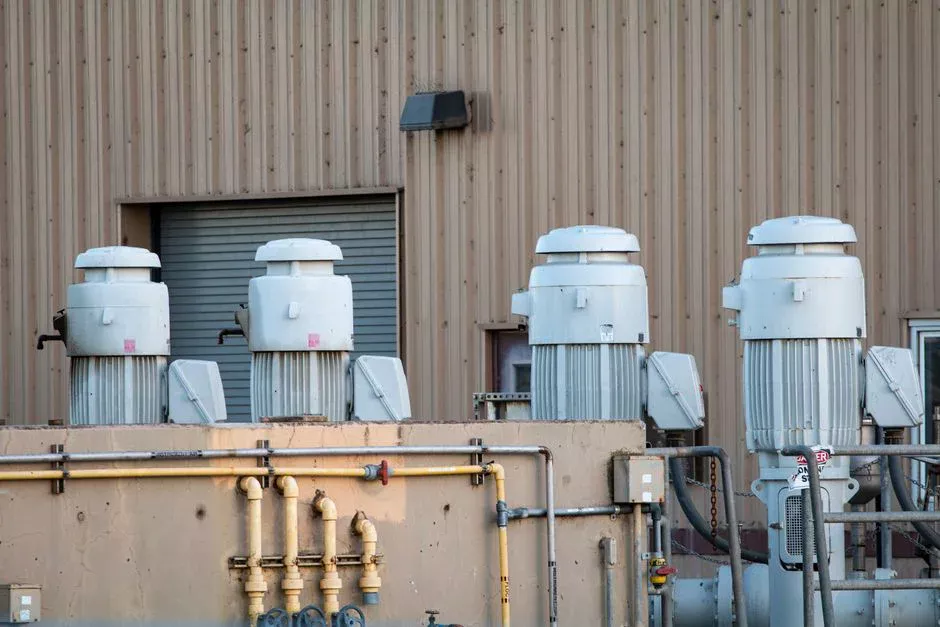
APTIKNAS's Alfons Tanujaya said the industry can "tolerate the development from the water-use perspective, but we have to make sure the data centre uses a closed-loop system" (Jakarta Post, Oct 2026). The blowdown from a closed-loop system still has to be treated before reuse or discharge, because it carries silica, hardness, and biocides. An industrial water softener for cooling-tower make-up is the standard guard, and a multi-media filter ahead of the RO membranes keeps the SDI in range and protects the membranes from fouling. Server-flush events are episodic and should be captured in a small equalisation tank rather than routed straight to the main biological step. The same segregated-train approach validated for fabs in the Pune semiconductor and data-hall 2026 guide applies to the data-hall side in Jakarta.
The 2026 Decision Matrix: Discharge, MLD, or ZLD
The global direction of travel is toward minimal or zero liquid discharge (TNFD, Feb 2026), and the BDx precedent tells a 2026 consenting team that a discharge-only submission will be the hardest to defend in front of DLH or KLHK. Three pathways sit on a spectrum, and each one should be priced for energy, capex, and the AMDAL risk of the receiving environment.
| Pathway | Scope | Site Fit in Greater Jakarta | Key Trade-off |
|---|---|---|---|
| A — Treat to consent and discharge | Physical-chemical + biological to DLH/KLHK limits | Rare after the BDx precedent; viable only where sewer capacity is uncontested and scrutiny is low | AMDAL review risk; consent-tightening exposure |
| B — MLD with ZLD-ready pretreatment | UF → RO → EDI; small brine line that can be routed to a thermal polisher if consent tightens | 2026 default for most Jakarta fabs and data halls | Brine consent line; RO recovery ceiling |
| C — Full ZLD | MLD plus crystalliser or brine concentrator; zero liquid effluent | Water-stressed sites adjacent to sensitive receptors; large wafer fabs with the highest regulator and public scrutiny | Energy cost, capex, thermal system complexity |
The recommended default for a 2026 Jakarta design is Pathway B, with the brine line sized to be ZLD-ready so a future tightening of KLHK or DLH effluent limits does not force a redesign. The cost trade-off between the three is the same one framed in the comparable Mumbai semiconductor and data-hall 2026 guide.
What to Request Before You Pick a Vendor
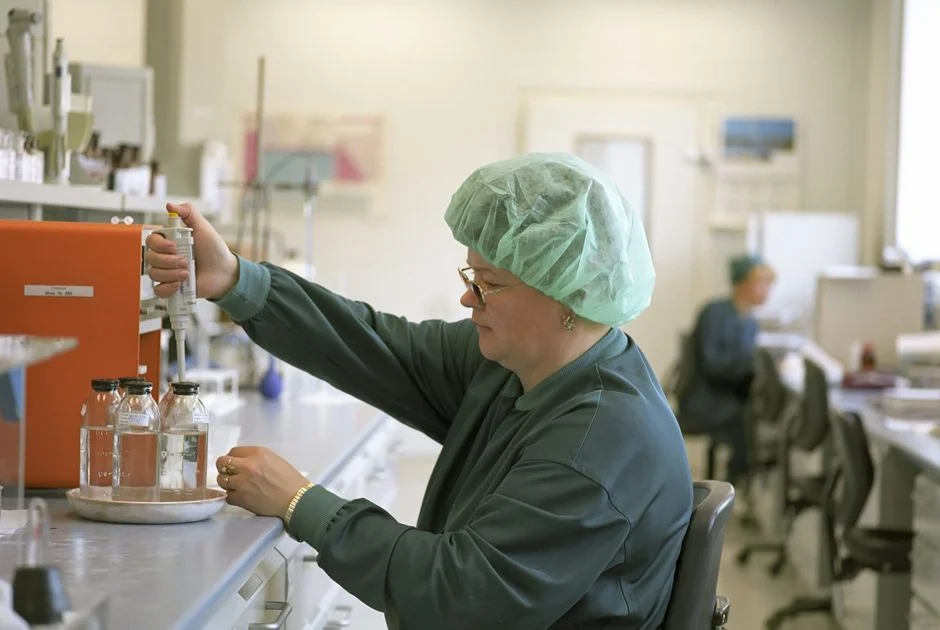
Three documents make vendor proposals comparable and AMDAL-defensible. First, a site-specific stream map with flow and load per segregated stream — not a generic "industrial wastewater" blend, because the AMDAL reviewer will ask for it. Second, the current DLH DKI or provincial environmental agency consent and Amdal conditions for the specific plot, since equipment configuration changes based on the discharge line. Third, a target RO and UF recovery in the ≥85–95% band, so vendor proposals can be compared on a like-for-like basis for water reuse rather than just capex. The membrane elements for that recovery band should be specified via RO and UF membrane elements. The stream-mapping deliverable mirrors what the Kolkata semiconductor and data-hall 2026 guide validated for the Indian consent stack.
Frequently Asked Questions
What budget envelope should a 2026 Jakarta fab or data-hall plan for the wastewater train?
The research does not provide a Jakarta-specific capex figure, and the BDx precedent is too recent for a published quotation. The defensible move is to price the train against the three pathways in the decision matrix and to request a 2026 vendor quotation that itemises the UF → RO → EDI backbone separately from the brine line and any thermal polish, so the capex delta between Pathway B and Pathway C is visible. For comparable sizing references outside Indonesia, the Pune, Mumbai, and Kolkata 2026 guides use the same recovery band (≥85–95%) as the budget anchor.
How do I shortlist a wastewater system supplier for a 2026 Jakarta campus?
Use the AMDAL submission as the filter. A 2026 supplier should be able to (
Frequently Asked Questions
What is the AMDAL process for a 2026 data-centre or fab project in Jakarta, and when does it have to be in place?
In 2026, the AMDAL (Analisis Mengenai Dampak Lingkungan) process is governed by the Risk-Based Licensing framework under Law No. 6/2023. For high-risk semiconductor or large-scale data hall projects, the AMDAL must be approved prior to the issuance of the PBG (Building Approval) and SLF (Certificate of Functionality). Proponents must submit the KA-ANDAL (Terms of Reference) to the Ministry of Environment and Forestry (KLHK) or the Jakarta Provincial Environmental Agency (DLH DKI) during the early pre-construction phase.
The process mandates a comprehensive assessment of water withdrawal impacts and wastewater discharge quality. Failure to secure the Environmental Approval (Persetujuan Lingkungan) before construction commencement results in mandatory work stoppages and potential permit revocation under current Jakarta regulatory enforcement.
How much water does a 640 MW AI data centre like BDx Jatiluhur actually need, and how does that affect wastewater design?
A 640 MW hyperscale AI data centre, depending on its PUE and cooling technology, typically requires between 2,000 and 4,000 cubic meters of water per day for cooling purposes. This massive withdrawal necessitates a wastewater design that prioritizes high-cycle-of-concentration (CoC) cooling tower management to minimize blowdown volumes and mitigate the strain on Jakarta’s municipal water grid.
Wastewater systems must be engineered to handle the concentrated mineral load resulting from high-efficiency cooling, which increases the Total Dissolved Solids (TDS) and silica levels in the effluent. Design capacities must account for peak seasonal evaporation rates, ensuring that the facility maintains compliance with local effluent discharge standards even during periods of maximum cooling load.
What treatment train is recommended for cooling-tower blowdown and humidifier drain at a hyperscale data-hall campus?
The recommended treatment train for high-density cooling systems involves primary neutralization to adjust pH, followed by membrane filtration such as Ultrafiltration (UF) to remove suspended solids, and Reverse Osmosis (RO) to reduce conductivity and hardness. For facilities aiming for water reuse, a secondary polishing stage utilizing Electrodialysis Reversal (EDR) or advanced oxidation processes is necessary to meet the stringent water quality parameters required for internal non-potable reuse.
Humidifier drains, which are generally lower in mineral content, should be collected separately and routed to the central treatment plant for blending. This strategy reduces the overall chemical dosing requirements and extends the lifespan of membrane components in the primary treatment circuit.
How does a 2026 Jakarta fab decide between MLD, ZLD, and direct discharge under KLHK and DLH DKI rules?
The decision is dictated by the facility's location within Jakarta’s specific zoning and the sensitivity of the receiving water body as defined by DLH DKI. Projects located in areas with high groundwater depletion risk or those categorized as high-impact industries are increasingly required to implement Zero Liquid Discharge (ZLD) to secure operational permits. Minimal Liquid Discharge (MLD) is often accepted as a transitional step if the facility can demonstrate a high water-recovery rate exceeding 80%.
Direct discharge is only permissible if the effluent quality consistently meets the criteria set out in Regulation of the Minister of Environment and Forestry No. P.16/2019. If the facility cannot guarantee the removal of heavy metals, fluorides, or specialized chemicals used in wafer fabrication, ZLD via thermal evaporation or crystallization becomes the only viable regulatory pathway to avoid heavy fines or discharge suspension.
What should a procurement team require from a wastewater-treatment vendor before signing a 2026 Jakarta contract?
Procurement teams must demand a performance guarantee that includes specific effluent quality benchmarks aligned with the 2026 local standards, backed by a bankable penalty clause for non-compliance. Vendors must provide a detailed lifecycle cost analysis covering energy consumption per cubic meter of treated water and the projected frequency of membrane replacement under Jakarta's specific influent water chemistry.
Furthermore, the vendor must provide proof of local technical support and a defined supply chain for critical spare parts to ensure the system remains operational 24/7. It is essential to require a documented commissioning plan that includes a trial run period where the system is tested against the maximum design load of the facility to verify its hydraulic and chemical treatment capacity before final payment.