Why San Diego Hotels Need a Different MBR Sourcing Logic in 2026
San Diego hotels in 2026 are no longer buying a sewage treatment plant — they are buying a compliance asset that has to clear three U.S. regulators in parallel. The San Diego County Water Authority, the San Diego Water Department, and the San Diego Regional Water Quality Control Board (Region 9) all sit on top of any discharge or reuse decision, and California's Title 22 recycled-water framework makes non-potable reuse a routine project requirement rather than a sustainability add-on.
On a tight Mission Valley, downtown or coastal lot, factory-built packaged MBR skids are the only architecture that removes the secondary clarifier a conventional activated-sludge, MBBR or SBR train still needs; an integrated MBR wastewater treatment system is documented at a roughly 60% smaller footprint than an equivalent conventional train (HydropureWater product data, 2026), and competing PVDF hollow-fibre MBRs are reported at a 40–50% footprint reduction versus conventional (Neya Memveins, 2025). The actual percentage will vary with influent strength and plant-room geometry, but the order of magnitude is consistent across both reference systems. Coastal Southern California also keeps mixed-liquor temperature in the 15–25 °C standard submerged-MBR window (HydropureWater, 2026), so no biological heating is required and the biological stage can be specified against a Mediterranean duty envelope.
Step 1 — Size the Plant from Room Count, Occupancy and Reuse Target
Anchor the design on a documented per-guest-night flow rather than a generic "hotel flow" assumption. The defensible band is 0.25–0.35 m³ per guest-night at average dry-weather flow (ADWF) (HydropureWater, 2026), and the design must be confirmed against a minimum two-week influent sampling campaign before the figure is locked into a purchase order. Peak factor then adds 1.5–2.0× on top of ADWF to absorb morning and evening room turnover plus the seasonal peaks a San Diego coastal property actually sees — summer coastal occupancy, Comic-Con, holiday weekends (HydropureWater, 2026).
Worked example for a 200-room property at 75% occupancy:
- Guest-nights: 200 × 0.75 = 150
- ADWF at 0.30 m³/guest-night: 150 × 0.30 = 45 m³/d
- Design capacity at 1.5× peak: ≈ 68 m³/d
- Design capacity at 2.0× peak: ≈ 90 m³/d
Specifying toward the upper end of the band — roughly 90–110 m³/d for a 200-room hotel — leaves operational headroom for backwash, CIP and seasonal surges without forcing the membrane flux outside its rated envelope. Add 4–6 h of flow equalisation to flatten the diurnal curve (HydropureWater, 2026); without it, the morning turnover spike will hammer the membranes and force premature CIP. If laundry is on-site, decide whether it routes to a separate greywater plant or pre-treats into the main MBR — both approaches are used in hospitality (Imemflo, 2026), but the second requires a fine pre-screen and tighter FOG control. The reuse target also drives the design: discharge-to-sewer and Title 22 non-potable reuse have different downstream trains, so the polishing section must be sized against the committed end-use, not a theoretical reuse case.
| Parameter | San Diego hotel benchmark | Source |
|---|---|---|
| Per-guest-night flow (ADWF) | 0.25–0.35 m³ | HydropureWater, 2026 |
| Peak factor (morning/evening + events) | 1.5–2.0× | HydropureWater, 2026 |
| 200-room × 75% design capacity (1.5× peak) | ≈ 68 m³/d | Derived from HydropureWater, 2026 |
| 200-room × 75% design capacity (2.0× peak) | ≈ 90 m³/d | Derived from HydropureWater, 2026 |
| Equalisation volume | 4–6 h of ADWF | HydropureWater, 2026 |
| Hotel kitchen FOG loading | 30–50 mg/L | HydropureWater, 2026 |
Step 2 — Match the Membrane Format to Hotel-Specific Wastewater
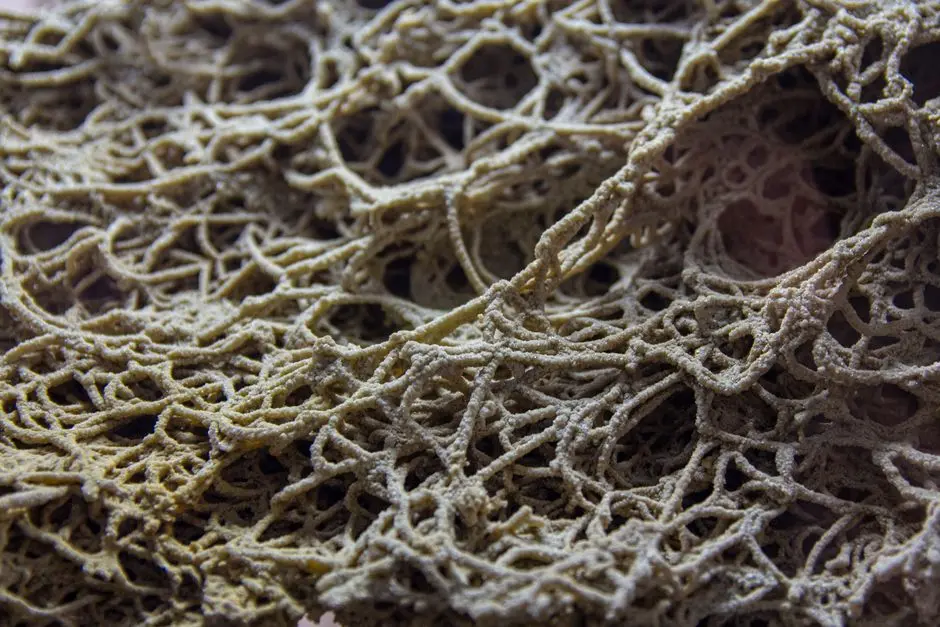
Both formats are submerged PVDF ultrafiltration; the decision is mechanical, not chemical. Flat-sheet (FS) PVDF cassettes run at a 0.1 µm nominal pore size with integrated coarse-bubble aeration scouring and individually replaceable elements, drawing 10–20× less energy than external cross-flow systems (HydropureWater product data, 2026). The DF series flat-sheet MBR module ships in 80–225 m² cassettes rated at 32–135 m³/day per unit, which matches a 200-room hotel at 90–110 m³/d with one operating cassette and one redundant. Hollow-fibre (HF) reinforced PVDF at 0.03 µm offers higher packing density and 99.99% physical-barrier removal (Neya Memveins, 2025), but is more sensitive to fouling from oil, grease and fibrous solids and reports a 3–5 year membrane life under hospitality duty (Neya Memveins, 2025) — verify the lifespan against the supplier's U.S. reference list, not catalogue claims alone.
Hotel kitchens contribute 30–50 mg/L of FOG (HydropureWater, 2026); without a DAF unit upstream, HF membranes foul faster and require more frequent CIP — specify DAF as part of the matched train, not an optional extra. The 15–25 °C MLSS operating window (HydropureWater, 2026) covers coastal San Diego year-round, so neither format needs biological heating. As a general rule for FOG-rich hotel duty, FS PVDF is the lower-risk choice because of mechanical robustness and integrated aeration scouring; HF is acceptable when a fine pre-screen and DAF FOG removal are both installed upstream.
| Parameter | Flat-sheet PVDF (FS) | Hollow-fibre PVDF (HF) |
|---|---|---|
| Nominal pore size | 0.1 µm | 0.03 µm |
| Pathogen / barrier removal | High (UF) | 99.99% physical-barrier removal |
| Membrane life (hospitality duty) | 5–8 years (HydropureWater, 2026) | 3–5 years (Neya Memveins, 2025) |
| FOG sensitivity | Lower — robust cassette construction | Higher — needs fine pre-screen and FOG removal |
| Aeration scouring | Integrated coarse-bubble | Module-specific air-scour design |
| Element replacement | Individual sheets within cassette | Module-level |
| DF series cassette output | 32–135 m³/day per unit (80–225 m²) | — |
Step 3 — Build the California Compliance Stack
The compliance stack a San Diego hotel actually has to clear is California-specific and must be confirmed against the live text of each instrument before procurement. California Title 22 governs recycled-water end-uses and quality tiers for non-potable hotel applications — toilet flush, landscape irrigation, cooling-tower make-up — and the current Title 22 chapter must be requested from the San Diego Water Department and the State Water Resources Control Board before the polishing train is specified. The San Diego Water Department Sewer Use Ordinance sets the trade-effluent discharge limits for any hotel discharging to the municipal sewer; the numeric thresholds are not contained in the supplied research and must be confirmed against the current ordinance, not assumed. The San Diego Regional Water Quality Control Board (Region 9) issues the discharge or reuse permit, and the project must clarify at the concept stage whether a Waste Discharge Requirements (WDR) order or a reuse permit applies — the answer changes the polishing train.
On effluent quality, submerged MBR delivers 90–95% contaminant removal (Imemflo, 2026) and meets the EU RD 1620/2007 lowest tier — ≤10 mg/L TSS, ≤25 mg/L BOD5, ≤125 mg/L COD, ≤2 NTU turbidity, ≤200 CFU/100 mL E. coli (HydropureWater, 2026). The analogous California Title 22 numbers must be confirmed against the current Title 22 text, because they are not in the supplied research. For higher-quality reuse end-uses (toilet flush, cooling-tower make-up at stricter tiers), the MBR→RO train is a proven combination on municipal and hotel wastewater (HydropureWater, 2026), and the MBR effluent is a viable RO feed — but RO is only justified when a Title 22 reuse end-use is actually committed.
Step 4 — Specify the Matched Auxiliary Train
The MBR skid is only as reliable as the equipment around it. Headworks should start with a rotary bar screen at 2–3 mm aperture to strip rags, plastics and food waste from kitchen flows before they reach the membranes (HydropureWater, 2026) — the GX series is a factory-built option, and the broader bar screen sizing and headloss guide covers hydraulic design. A DAF unit then removes the 30–50 mg/L of fats, oils and grease from hotel kitchens (HydropureWater, 2026); without it, FOG coats the membrane and shortens cleaning intervals — see the DAF troubleshooting reference for the failure modes that hit hotel duty.
MBR waste-activated sludge sits at 0.8–1.5% DS and is dewatered to ≥20% DS by a plate-and-frame filter press for off-site disposal (HydropureWater, 2026). Downstream of the MBR, a UV-C steriliser is the default polish for non-potable reuse because it is chemical-free and effective against chlorine-resistant organisms; chlorine dioxide is the practical alternative where a residual is required (HydropureWater, 2026). Procure the headworks, DAF, plate-and-frame press, UV or ClO₂ and MBR as a matched train from a single supplier wherever possible — single-source responsibility cuts integration risk on a hotel with a tight plant-room, and the engineering responsibility sits with one party.
Step 5 — Lock the CAPEX/OPEX Envelope and the Procurement Checklist
The packaged MBR skid CAPEX envelope for 100–300 m³/d is broadly in the order of €100,000–€250,000 (HydropureWater, 2026), and illustrative European packaged MBR CAPEX sits at €350–€700 per m³/d installed (HydropureWater, 2026). Convert to USD at the prevailing rate and treat the band as a tender-comparison reference, not a fixed quote; the same sizing logic is documented for the parallel Barcelona hotel MBR sizing reference, which uses the same EU band against an EU regulatory stack. RO polishing adds an estimated 25–40% to CAPEX and raises OPEX through membrane replacement and energy (HydropureWater, 2026); add RO only when a credible Title 22 reuse end-use exists.
OPEX drivers are membrane replacement every 5–8 years (HydropureWater, 2026), energy at 0.4–0.8 kWh/m³ for flat-sheet MBR (HydropureWater, 2026), sodium-hypochlorite for CIP, citric acid for scale control, and sludge disposal. Before signing a PO, demand a P&ID, hydraulic profile, electrical load list, control narrative, membrane warranty (typically 5 years), and U.S.-recognised conformity — for California projects, request documentation of California Title 22 compliance and NSF/ANSI certification status, since neither is contained in the supplied research and both are standard hotel-bid requirements. Lock in a maintenance contract covering remote monitoring, a quarterly membrane integrity test, and guaranteed flux recovery after CIP (HydropureWater, 2026), and for San Diego specifically, require a service partner within driving distance of the project site.
Frequently Asked Questions
How do I size a packaged MBR for a 200-room San Diego hotel?
Pull ADWF from 0.25–0.35 m³ per guest-night (HydropureWater, 2026) and apply a 1.5–2.0× peak factor for morning/evening turnover and seasonal events (HydropureWater, 2026). A 200-room hotel at 75% occupancy lands at roughly 45 m³/d ADWF and 68–90 m³/d design capacity. Do not commit the design figure without a minimum two-week influent sampling campaign on the actual site, and build 4–6 h of flow equalisation into the hydraulic profile (HydropureWater, 2026).
What CAPEX should I budget for a packaged MBR hotel STP in 2026?
Packaged MBR skid CAPEX for 100–300 m³/d is broadly in the order of €100,000–€250,000 (HydropureWater, 2026) and illustrative European packaged MBR CAPEX sits at €350–€700 per m³/d installed (HydropureWater, 2026). Convert the band to USD at the prevailing rate, treat it as a tender-comparison envelope, and add an estimated 30–50% for auxiliary equipment. Add RO polishing only when a Title 22 reuse end-use is committed — RO adds an estimated 25–40% to CAPEX (HydropureWater, 2026). Request fixed-price bids from at least three suppliers and ask each to break out skid, auxiliaries, RO (if any), installation and commissioning as separate line items.
What California permits does a San Diego hotel MBR have to clear?
The project must clear California Title 22 for any reuse end-use, the San Diego Water Department Sewer Use Ordinance for discharge to the municipal sewer, and the San Diego Regional Water Quality Control Board (Region 9) for the discharge or reuse permit. None of the exact U.S. numeric limits are contained in the supplied research, so the buyer must request the current text from each agency and the State Water Resources Control Board before signing the PO. Confirm at the concept stage whether a Waste Discharge Requirements (WDR) order or a reuse permit applies — the answer changes the polishing train.
Flat-sheet or hollow-fibre MBR for a San Diego hotel?
Flat-sheet PVDF is the lower-risk choice for FOG-rich hotel duty because of mechanical robustness and integrated aeration scouring; hollow-fibre is acceptable when a fine pre-screen and DAF FOG removal are installed upstream of the membrane tank (HydropureWater, 2026). HF reinforced PVDF at 0.03 µm offers higher packing density and 99.99% physical-barrier removal (Neya Memveins, 2025), but reports a 3–5 year membrane life under hospitality duty versus 5–8 years for FS (HydropureWater, 2026). Pick the format against the actual hotel influent — FOG loading, lint, surfactants — not the catalogue headline, and verify the membrane life against the supplier's U.S. reference list.