What an Effluent Treatment Plant Actually Does in an Industrial Context
Effluent is the wastewater discharged from industrial outfalls or sewers, either untreated or after treatment, into surface waters; in an industrial setting it carries pollutants such as fats, oils and grease, solvents, detergents, heavy metals, suspended solids, and food waste, depending on the source (Wikipedia, "Effluent"). An industrial effluent treatment plant, or ETP, is a dedicated facility that treats that wastewater to a quality the regulator will accept for discharge or reuse. In India, the operating frame is not the US NPDES regime cited in global references but the CPCB's industry-specific effluent standards combined with a state Pollution Control Board consent to establish and consent to operate — here, from the Uttar Pradesh Pollution Control Board (UPPCB).
Three terms are routinely confused and should not be used interchangeably. An ETP is built and operated by a single industry for its own wastewater. A CETP, or common effluent treatment plant, is a shared facility, typically anchored in an industrial cluster, that receives pre-treated effluent from multiple member units. An STP, or sewage treatment plant, is designed for domestic/municipal sewage. A Lucknow industry discharging trade effluent into a municipal drain will usually be required to pre-treat to a level the STP can accept, then negotiate the rest with UPPCB; this is the indirect-discharge model that Wikipedia also describes for US facilities under pretreatment requirements (Wikipedia, "Effluent").
The procurement consequence is direct: the same KLD number on a quotation can mean very different things depending on which of the three configurations is being supplied, and which regulator holds the consent.
Why Lucknow-Specific Siting and Compliance Matter
Lucknow industries typically discharge toward the Gomti river system, which puts them inside the Ganga basin regulatory frame and subjects consent conditions to inland surface water discharge standards and the minimum national effluent norms issued by CPCB. The general compliance architecture is well documented in the literature, but Lucknow-specific numeric discharge limits are not supplied in the research base for this guide; the buyer should request them from UPPCB and from the relevant CPCB industry-specific effluent standard schedule for the plant's product mix.
Two pieces of evidence confirm that wastewater research in this geography is active, and that the influent a Lucknow industry should expect is more complex than a textbook municipal stream. First, the 2021 study on Chlorella pyrenoidosa for CETP remediation was co-authored from the Department of Environmental Sciences at Babasaheb Bhimrao Ambedkar University, Lucknow 226025 (Kothari et al., Bull Environ Contam Toxicol, 13 Jul 2021), confirming local research activity. Second, bioremediation work on Cr(VI) from a Vishakhapatnam CETP (Water Science & Technology, 2023) shows that Indian CETPs commonly contain hexavalent chromium, dyes, and mixed heavy metals — exactly the kind of influent complexity that metal-finishing and textile units in Lucknow should design for, and that a generic ETP catalogue will not flag.
Before signing any vendor quote, a Lucknow buyer should have four documents in hand: the UPPCB Consent to Establish (CTE) for the proposed capacity, the Consent to Operate (CTO) template conditions for the relevant industry category, the applicable CPCB effluent standards for the plant's product line, and any treated-sewage/reuse notifications the state has issued. Without those, any KLD × INR quotation is just a number on paper.
Choosing the Right Treatment Train: Primary, Biological, and Polishing
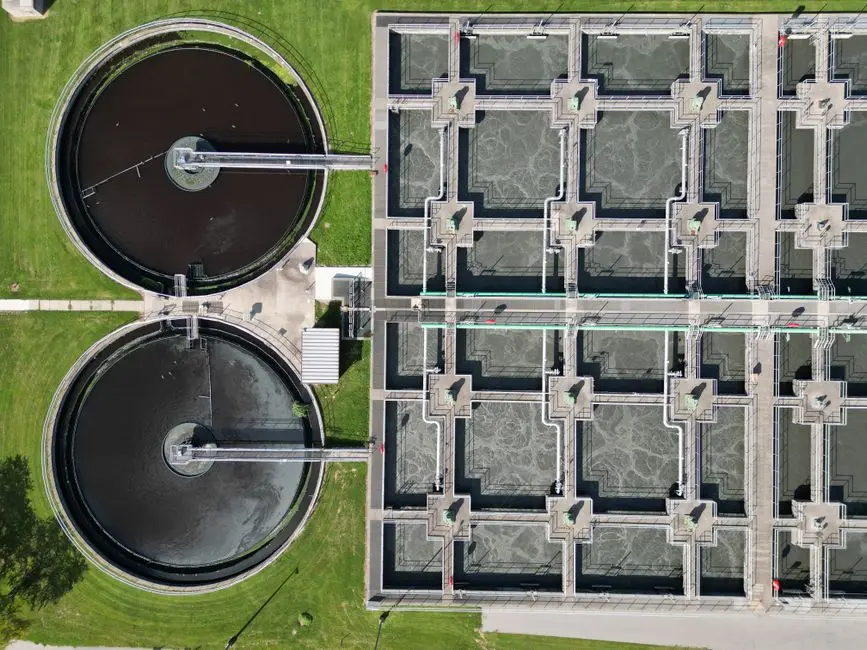
The engineering decision is not which brand to buy but which combination of unit operations matches the influent. Every credible ETP design is built in three blocks: primary conditioning, biological treatment, and polishing. The blocks are described below in the order wastewater meets them.
Primary conditioning always starts with a rotary mechanical bar screen for headworks screening, followed by flow equalization and pH correction. The screen protects downstream pumps and biological reactors from rags, plastics, and large debris — it is the cheapest insurance on the plant. If the stream is high in fats, oils and grease, or in colloidal and emulsified suspended solids — typical for dairy, edible oil, food processing, and textile desizing — a dissolved air flotation (DAF) system for FOG and TSS removal is typically added as a primary or pre-biological step, where micro-bubble flotation lifts the light fraction before it reaches the aeration tank.
Biological treatment is where the bulk of the dissolved organic load is removed. The four credible options are conventional activated sludge, SBR (sequencing batch reactor), MBBR (moving bed biofilm reactor), and MBR (membrane bioreactor). For reuse-grade effluent in a small footprint, the MBR membrane bioreactor system for near-reuse-quality effluent combines activated sludge with submerged PVDF membranes and is the standard configuration for industrial reuse projects in the 10–2,000 m³/day range. Polishing, where reuse targets or tight consent limits apply, is typically done with membrane technology; nanofiltration, for example, has been assessed for polishing WWTP effluent to a quality suitable for agricultural or potable reuse (Schrader, PhD Thesis, University of Twente).
Disinfection and sludge handling are not optional end-of-pipe items. UV is the standard chemical-free disinfection for chlorine-resistant organisms and avoids disinfection by-products; chlorine dioxide is the alternative for higher-volume industrial duty. Sludge generated across the train is normally dewatered on a plate and frame filter press for sludge dewatering, with filtration areas in the 1 m² to 500 m² range covering everything from a small dairy to a large municipal-industrial plant.
| Block | Unit operation | Function | Typical application |
|---|---|---|---|
| Primary | Rotary mechanical bar screen | Solids removal >3–6 mm | All flows |
| Primary | Equalization + neutralization | Flow and pH dampening | All flows |
| Primary / pre-biological | DAF | FOG, oil, colloidal TSS removal | Dairy, edible oil, food, textile, metalworking |
| Biological | Activated sludge / SBR / MBBR / MBR | Dissolved organics and ammonia | All biologically treatable flows |
| Polishing | Membrane (UF / NF / RO) | TSS, color, partial salinity removal | Reuse or tight consent limits |
| Disinfection | UV or ClO₂ | Pathogen kill, DBP control | All flows discharging to surface water or reuse |
| Sludge | Plate and frame filter press | Sludge volume reduction | All plants producing biological or chemical sludge |
Technology Comparison: MBR vs SBR vs Conventional ASP vs DAF-Plus-Biological
The four credible biological trains a Lucknow buyer will be offered differ in three things that matter at procurement: effluent quality, footprint, and shock-load tolerance. The matrix below is built from supplier specifications and the engineering logic each train implies, not from a specific site study.
Conventional activated sludge is the lowest-CAPEX option and the most forgiving on operator skill, but it has the largest footprint, the worst effluent quality of the four, and is the most sensitive to hydraulic and toxic shock loads — it fits high-flow, moderate-load, municipal-style streams. SBR compresses the activated-sludge process into a single timed tank, is flexible on influent variability, and is a common choice for smaller Lucknow units running batch operations. MBR combines activated sludge with submerged PVDF membranes at 0.1 µm pore size (DF series modules), delivers near-reuse-quality effluent, and occupies roughly 60% of the footprint of a conventional plant of the same capacity. DAF followed by biological treatment is the right choice when the influent is high in FOG, oil, or colloidal solids and where DAF micro-bubble flotation in the 4–300 m³/h range protects the downstream biology from being killed by grease overload.
The selection rule of thumb is straightforward: effluent quality target and reuse intent dominate, footprint and CAPEX are secondary, and sludge handling and disposal cost is often the deciding line at higher capacities. A vendor that opens the conversation with KLD and price per KLD, before asking for influent characterization, is selling a product, not engineering a plant.
| Train | Effluent quality | Footprint | Best fit | Key risk |
|---|---|---|---|---|
| Conventional ASP | Meets typical inland discharge consent | Largest | High-flow, moderate-load, stable streams | Shock-load sensitivity, bulking sludge |
| SBR | Comparable to ASP, with better TN control if configured | Moderate | Variable influent, batch operations | Timer / decanter maintenance |
| MBR | Near-reuse quality; tight TSS and turbidity | ~60% of conventional | Reuse, tight consent, footprint-constrained sites | Membrane fouling, membrane replacement cost |
| DAF + Biological | Dependent on downstream biology | Moderate | High-FOG, high-colloidal streams (dairy, edible oil, textile desizing) | Polymer / coagulant operating cost |
Capacity Sizing and Cost Drivers for a Lucknow ETP
Capacity is set by two independent variables: influent flow, expressed in KLD or m³/day, and pollutant load, expressed as BOD, COD, TSS, FOG, and any specific heavy metals. The same KLD with different loadings will require different reactor volumes, different blower duties, and different chemical consumptions — so a "100 KLD ETP" quote with no influent characterization is not a specification.
The CAPEX drivers a buyer should expect to see itemized are civil work and tankage, blower and pump sets, MBR membrane area where applicable, DAF capacity where applicable, the level of automation and SCADA, and the sludge dewatering footprint. The supplied research does not include any published rupee-per-KLD figures for the Lucknow market, and a defensible quotation cannot be built without the inputs above. A buyer should refuse any vendor quote that does not itemize these lines against a stated influent.
The OPEX drivers are dominated by power for blowers, pumps, and MBR aeration, by chemical dosing (coagulant, flocculant, pH adjustment) handled by a PLC-controlled automatic chemical dosing system, by periodic membrane replacement for MBR trains, and by sludge disposal. Sludge handling is consistently the largest single OPEX line in industrial ETPs, and a tight MBR train plus a small filter press will usually have a lower 20-year OPEX than an oversized clarifier with poor dewatering — even when CAPEX looks comparable. A comparable engineering logic is described in the MBR plant operation and maintenance guide for 2026.
Evaluating an ETP Supplier in Lucknow
A vendor shortlist in Lucknow is built on three checks that have nothing to do with the unit price on page one. The first is in-house design capability across civil, process, electrical, and instrumentation; Lucknow projects typically pair a local civil contractor with a remote process house, and that handover is where most commissioning delays originate. A one-stop EPC reduces that risk but should still be asked to name the process lead.
The second is reference plants in the same industry category under similar UPPCB consent conditions — dairy, distillery, pharma, textile, or metal finishing. A vendor with strong municipal STP references is not automatically strong on a high-FOG dairy or a high-Cr(VI) metal-finishing line. The third is after-sales: membrane replacement lead time, spare-part availability, on-call service, and operator training; the University of Twente thesis on direct nanofiltration (Schrader) treats membrane fouling and chemical consumption as the dominant long-term concerns, and a vendor that cannot speak to those is not qualified to supply an MBR.
Finally, ask for a documented performance guarantee tied to inlet load, with a defined test protocol and pass criteria. Generic KLD × INR quotes are not specifications, and a vendor that refuses to write a guarantee against a stated influent is signalling that they intend to argue about scope later. For context on how the same evaluation logic plays out in other Indian industrial cities, see the ETP in Ahmedabad buyer's guide for 2026 and the ETP in Pune 2026 engineering and buyer guide.
Frequently Asked Questions
What does an ETP actually cost in Lucknow, and what drives the price?
The supplied research does not include published Lucknow-specific rupee-per-KLD figures, so any vendor quotation should be built on stated inputs rather than a benchmark number. The drivers a buyer should expect to see itemized are influent flow, BOD/COD/TSS/FOG load, civil and tankage scope, blower and pump duty, MBR membrane area if applicable, DAF capacity if applicable, automation and SCADA level, and the sludge dewatering line. A quotation that does not separate these against a stated influent is a price list, not a specification, and should be sent back for re-issue.
How does UPPCB consent work, and what is the difference between CTE and CTO?
Consent to Establish (CTE) is the prior approval required before constructing or expanding an ETP at a given site and capacity; Consent to Operate (CTO) is the approval to actually run it. Both are issued by UPPCB and are tied to the CPCB industry-specific effluent standard for the plant's product category. A buyer should request and verify both documents at the quotation stage, because changing scope after a CTO is issued triggers a fresh consent cycle and project delay.
Should the plant be designed for reuse or for discharge?
If the site has a reuse loop — cooling tower make-up, boiler feed, gardening, toilet flushing, or process rinsing — designing for reuse typically reduces long-term freshwater cost and can also reduce consent risk if the receiving water body is sensitive. If there is no internal reuse loop, designing for discharge against the CPCB / UPPCB standard is usually the lower-CAPEX option, but the design should still allow a polishing step to be added later if reuse becomes attractive. Either way, the decision is made at design, not retrofit.
What is the single biggest recurring operating cost on an industrial ETP?
Sludge handling and disposal is consistently the largest single OPEX line on industrial ETPs, ahead of power and chemicals, because every kilogram of BOD removed becomes wet sludge that must be thickened, dewatered, transported, and either landfilled or incinerated. The cheapest way to control this line is upstream — by tightening primary and biological performance so less load reaches the clarifier — not downstream by buying a larger filter press. Maintenance and consumables planning for an MBR train, including membrane cleaning and replacement intervals, is covered in detail in the operation and maintenance guide for 2026.
Related Equipment
- PVDF flat sheet MBR membrane modules — specifications, capacity range, and technical data
- UV sterilizer for chemical-free disinfection — specifications, capacity range, and technical data