Why Membrane Fouling Defines Semiconductor Wastewater Economics
Membrane fouling cuts permeate flux, raises energy and chemical use, and shortens membrane life across long-term fab operation (Teow et al., 2022). The ROI on a semiconductor wastewater train lives in pretreatment, not in swapping membranes. Source water is unforgiving: semiconductor COD sits at 3000–5000 mg/L with nano- to micro-sized particulates spanning the size range that defeats both settling and coarse screening (Fatehah et al., 2013, as cited in Teow 2022).
The economic case has two sides. First, recoverable value: silicon particles at 500–2000 mg/L retained on the membrane surface can be recovered at 39.8 wt% purity without additional purification (Belongia et al., 1999, in Teow 2022). Second, compliance and corporate targets: Infineon's Kulim collaboration with UKM is built around ceramic UF plus pretreatment on the path to Carbon Neutral by 2030, with H2O2 reduction ahead of RO (Ovivo/Fsm-sic, 2021, in Teow 2022). Procurement teams should size the upstream train so the membrane skid runs at stable flux, not chase flux recovery with chemical cleans.
The Foulant Map: What Semiconductor Streams Carry to the Membrane
Three real fab streams dominate the literature. Diluted back grinding wastewater (DBGW) carries coarse silicon particulates and grinding slurry residues. Diluted chemical mechanical polishing wastewater (DCMPW) carries nano-silica, oxidizer residuals, and surfactants from slurry chemistry. Collection tank wastewater (CTW) is the combined 40/60 blend and is the worst case for fouling (Teow et al., 2022). Sim et al. (2023) add the cross-cutting contaminants that ride every stream: fluoride, ammonia, phosphate, TMAH, photoresist solvents, residual H2O2, and surfactants.
Map foulants to removal mechanism before picking equipment. Settleables and floatables (silica, grit, large CMP agglomerates) belong on coagulation or DAF. Colloidal and nano-silica below ~1 µm need UF as the absolute barrier. Dissolved organics (TMAH, photoresist solvents) require AOP because UF cannot reject them. Residual oxidants (H2O2) must be quenched or catalytically reduced before they reach a polymeric membrane. The silicon load on the membrane is the same number to remember for both the engineering case and the recovery case: 500–2000 mg/L feed, 39.8 wt% purity on the cake (Belongia 1999, in Teow 2022).
| Foulant class | Dominant fab stream | Particle / molecule size | Target barrier |
|---|---|---|---|
| Silicon particulates, grit | DBGW | 1–100 µm | Screening, coagulation, DAF |
| Nano-silica, CMP slurry solids | DCMPW | 50–500 nm | DAF + UF (ceramic preferred) |
| TMAH, photoresist solvents | CTW, lithography drain | Dissolved (molecular) | AOP (UV/TiO2, O3, UV/H2O2) |
| Residual H2O2 | DCMPW,清洗 rinse | Dissolved oxidant | Catalytic ceramic pre-filter or carbon |
| Fluoride, ammonia, phosphate | Etch drain, CTW | Dissolved ion | Chemical precipitation, ion exchange |
Pretreatment Method 1 — Equalization, Screening and pH/Temperature Conditioning
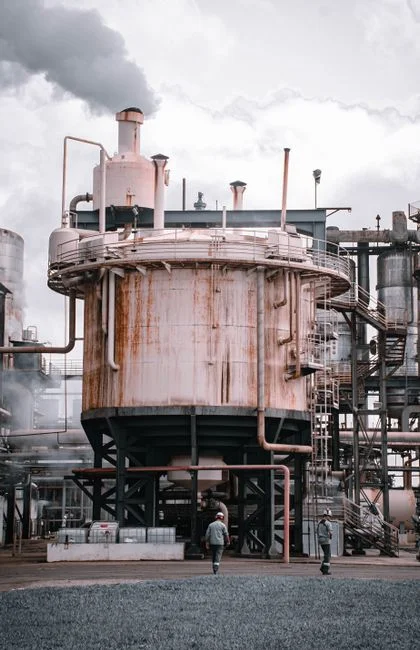
The unglamorous first barriers exist for one reason: they prevent shock loads from destroying downstream membranes. Install a rotary bar screen at headworks sized to capture rags, plastics, and fibrous debris that would snag UF hollow fibers and trigger a premature backwash cycle. Bar spacing should match the smallest expected debris, not the largest pipe in the line.
Equalization flattens the swings. Sim et al. (2023) document HF and TMAH spikes that arrive in slug flow from batch dumps, and Teow et al. (2022) show COD excursions in the 3000–5000 mg/L band that will compress a DAF air bubble blanket if the feed is not damped. Hold the equalization tank at a residence time long enough to attenuate the longest batch event in the fab — typically described in hours rather than minutes, since the published sources do not pin a single number. pH conditioning to a stable band (commonly 6.5–7.5 for downstream coagulation or DAF) is set by a dosing loop, not by hand.
Pretreatment Method 2 — Coagulation, Flocculation and DAF for Colloidal and CMP Solids
Coagulation-flocculation works on turbidity and COD but produces large sludge volumes, is hard to dose for nano-sized particles, and leaves residual coagulant that complicates downstream reuse (Teow et al., 2022). The honest takeaway is that jar tests give the engineer a quick read on TSS and bulk COD, but they under-predict nano-silica carryover that fouls UF. Treat coagulation as a polisher for a DAF or sedimentation stage, not as the primary barrier on CMP streams.
DAF is the upgrade path for colloidal and CMP solids. A DAF system for CMP solids and colloids in the 4–300 m³/h range with micro-bubble skimming is proven in metalworking and petrochemical pretreatment duty and is the right unit operation to lift nano-agglomerates that would otherwise blind a media filter. Pair it with a PLC-controlled coagulant and pH dosing skid for consistent performance, and consider a high-efficiency sedimentation tank upstream if grit load is high. The target downstream of DAF is a turbidity level the multi-media filter can polish to RO-grade SDI.
Pretreatment Method 3 — Media Filtration and Ultrafiltration as the Main Membrane Barrier
UF is the only barrier that physically rejects nano-silica. The cleanest fab data set is Teow et al. (2022), who tested a ceramic membrane and two polymeric membranes on DBGW, DCMPW, and CTW from a Malaysian wafer fab. Ceramic UF held flux at 131.23–308.98 L/m²h across all three streams, with a relative flux reduction of only 8.22–57.59% — the lowest of the three membranes tested. Polymeric PES spiral-wound pilot data hit 96–99% turbidity removal (Huang et al., 2011, in Teow 2022) but at higher fouling rates that translated to shorter chemical-clean intervals.
Why ceramic wins on CMP streams: higher hydrophilicity (smallest contact angle at 51.5° ± 11.8° in the Teow study), higher porosity, and tolerance for the high H2O2 that would oxidize a polymeric membrane (Ovivo/Fsm-sic, 2021, in Teow 2022). Where the feed is cooler, less oxidizing, and the budget tighter, a PVDF hollow-fiber ultrafiltration skid at 0.03 µm, 2000–40,000 L/h, with automatic backwash and air scour and an influent tolerance up to 300 ppm turbidity, is the standard polymeric option. Place a multi-media filter ahead of UF to extend backwash intervals and protect the membrane from tramp grit.
| Parameter | Ceramic UF (Teow 2022) | Polymeric PVDF UF (HydropureWater spec) |
|---|---|---|
| Permeate flux (L/m²h) | 131.23–308.98 | Application-dependent, typically 40–120 |
| Relative flux reduction | 8.22–57.59% | Higher under nano-silica load |
| H2O2 tolerance | High (per Ovivo/Fsm-sic 2021) | Limited — quench upstream |
| Pore size | UF-grade ceramic | 0.03 µm nominal |
| Backwash | Chemical-intensive CIP | Automatic backwash + air scour |
| Best-fit stream | DCMPW, CTW, harsh feeds | DBGW, post-DAF polishing |
Pretreatment Method 4 — Advanced Oxidation (UV, UV/H2O2, UV/TiO2, Ozone) for Dissolved Organics
AOPs target the foulants UF cannot reject: TMAH, photoresist solvents, and the dissolved organic fraction that compresses the fouling layer. Al-Juboori et al. (2022) ran a solar UV reactor on municipal secondary effluent and measured the resulting UF transmembrane pressure directly. Baseline UF TMP was 0.59 bar. UV alone cut TMP to 0.42 bar, a 29.41% reduction over 6 hours at 50 mL/min. UV/H2O2 at 15 mg/L H2O2 dropped TMP to 0.35 bar, a 41% reduction. UV/TiO2 at 0.75 g/L catalyst loading was best: 45.8% TMP reduction, with 50% TOC and 87.5% turbidity removed. The source wastewater here is municipal secondary effluent, not fab wastewater, so the percentages are upper bounds — fab gains should be validated with a jar test or pilot.
The mechanism matters more than the headline number. UV/TiO2 and ozone generate hydroxyl radicals that break the C–N bond in TMAH and oxidize photoresist solvents before they reach the membrane (Sim et al., 2023). UV/H2O2 is the workhorse where ozone is rejected on EHS grounds. Size a pipeline UV system for AOP duty downstream of DAF/UF and ahead of RO, and pair with an ozone generator for TMAH and photoresist oxidation where the duty warrants it.
Cleaning-in-Place Chemistry That Matches the Foulant
Defaulting to one CIP recipe is the most common way engineers shorten membrane life. Teow et al. (2022) report the chemistry-to-foulant fit on real fab streams: alkaline agents restored 96.93% flux on DCMPW and 53.80% on DBGW. Acidic agents restored 79.54% on CTW. The rule of thumb is straightforward — silica, metal oxides, and most CMP residues prefer alkaline; carbonate scale and biological fouling prefer acidic.
Pair CIP with periodic air-scour and backwash on the PVDF UF skid to extend the interval between chemical cleans. Track flux recovery per CIP cycle: when recovery drops below 80% of the original, the membrane is heading for replacement. Track CIP chemical consumption per cubic meter of permeate as a leading indicator of rising fouling load upstream.
Stacking the Pretreatment Train: A Decision Table for Fab Engineers
Use the table below to anchor a P&ID or a capex justification. Two reference trains cover the dominant fab cases: a CMP-heavy line where nano-silica and oxidizer residuals are the worst foulants, and a back-grinding line where the load is coarser and the chemistry is milder. The expected-outcome column pulls numbers from Teow et al. (2022) for the membrane steps and from Al-Juboori et al. (2022) for the AOP step. For the final RO step, see the RO design parameters reference and the industrial RO system downstream of the train.
| Stage | Foulant targeted | Key parameter / target | Expected outcome |
|---|---|---|---|
| Rotary bar screen | Rags, fibers, plastics | Spacing matched to debris | Protects UF fibers from snagging |
| Equalization + pH | COD swing, HF/TMAH spikes | Residence in hours, pH 6.5–7.5 | Flattened shock loads to DAF |
| Coagulation + DAF | Colloidal silica, CMP solids | Turbidity cut to media-filter feed | Major TSS and COD reduction ahead of UF |
| Multi-media filter | Tramp grit, residual floc | SDI polish to RO feed | Extends UF backwash interval |
| Ceramic UF (CMP line) | Nano-silica, particulates | Flux 131–309 L/m²h, RFR 8–58% | Stable flux, low fouling per Teow 2022 |
| PVDF UF (back-grind line) | Coarser silica, grit | 0.03 µm, automatic backwash | Cost-effective barrier on mild feed |
| UV/TiO2 or UV/H2O2 AOP | TMAH, photoresist, TOC | 0.75 g/L TiO2 or 15 mg/L H2O2 | 29–46% UF TMP reduction (Al-Juboori 2022) |
| RO | Dissolved ions, residual organics | SDI < 3, recovery per design | Reuse-grade permeate |
For copper-bearing CMP lines the upstream chemistry is more aggressive — see the copper recovery and CMP chemistry guide. For SiC membrane applications and the latest hybrid zero-fouling designs, see the SiC ceramic membrane design guide. For ZLD and water-recovery targets beyond RO, see the microelectronics ZLD and water-recovery blueprint.
Frequently Asked Questions
Which pretreatment method most reduces membrane fouling in semiconductor wastewater?
Matched barriers, not a single method, control fouling. In the Teow et al. (2022) study, ceramic UF combined with appropriate pretreatment held relative flux reduction to 8.22–57.59% on DBGW, DCMPW, and CTW streams, with permeate flux of 131.23–308.98 L/m²h. The pretreatment chain that delivers those numbers pairs screening and equalization with coagulation/DAF for colloidal silica, then AOP for dissolved organics the membrane cannot reject.
What TMP reduction can a UV-based AOP deliver ahead of UF?
Al-Juboori et al. (2022) measured UF transmembrane pressure falling from 0.59 bar (no pretreatment) to 0.42 bar with UV alone, 0.35 bar with UV/H2O2 at 15 mg/L, and the lowest TMP with UV/TiO2 at 0.75 g/L. Expressed as percentages over 6 hours at 50 mL/min flow, those are 29.41%, 41%, and 45.8% TMP reductions respectively. The source wastewater is municipal secondary effluent, so fab duty should be confirmed with a pilot before scaling.
Ceramic or polymeric UF for a CMP wastewater stream?
Ceramic is the better technical fit for CMP. In Teow et al. (2022), the ceramic membrane had the smallest contact angle (51.5° ± 11.8°, highest hydrophilicity) and tolerated the H2O2 levels that would degrade a polymeric membrane (Ovivo/Fsm-sic, 2021, in Teow 2022). Polymeric PVDF UF remains the lower-capex choice for milder back-grinding streams where H2O2 is already quenched upstream.