What 'Operational Efficiency' Actually Means for an Industrial Water Treatment System in 2026
For an industrial plant, operational efficiency in a water treatment system is a weighted score across three measurable buckets: specific energy demand in kWh per cubic meter treated, specific chemical demand in kilograms of coagulant or polymer per cubic meter, and specific labor measured in operator-hours per 1,000 m³. Anything that does not move at least one of those three numbers is not efficiency, it is a marketing line. Energy is weighted first because electricity costs range from 33% to 82% of non-labor OPEX for water and wastewater utilities (per the World Bank Group, cited by Siemens, 2025), and pumps alone draw up to 85% of a water-treatment plant's electrical load.
A second citable fact: a system can hit less than 1 mg/L TSS in the effluent and still waste energy on over-aeration, oversized recirculation, or coagulant overdosing. Discharge quality and operating efficiency are not the same metric, and treating them as one is how procurement budgets leak. In 2026, industrial buyers should benchmark unit processes against ISO 50001 energy management KPIs (kWh/m³, kWh/kg COD removed, kg polymer/kg TSS removed) in addition to the discharge consent, because the consent guarantees compliance while ISO 50001-aligned metrics guarantee OPEX movement.
Where the Energy Goes: Hydraulic, Aeration and Chemical Load
Before picking equipment, the engineer has to know where the kilowatt-hours hide. Pumping is consistently the largest line item, accounting for up to 85% of a water-treatment plant's electricity load (Siemens, 2025). That makes lift-station design, head-loss budgeting, and pipe sizing efficiency decisions, not civil ones. Halving the static lift on a 500 m³/d food plant by raising the equalization tank 1.5 m can save more energy than replacing the aeration blower.
Aeration in conventional activated sludge consumes 50-70% of the biological-stage electricity because the blowers must maintain dissolved oxygen across the whole basin volume. MBR operation at high MLSS (8,000-12,000 mg/L) tolerates lower aeration intensity per unit volume but introduces cross-flow or scour-air demand for membrane fouling control. The honest trade-off: MBR aeration is often 0.2-0.4 kWh/m³ lower than CAS for the same organic load, but membrane air demand adds back 0.1-0.2 kWh/m³, so the net biological-stage saving is 10-25% rather than the headline 50%.
Chemical overdosing is the silent OPEX leak. A well-designed lamella clarifier with sludge recirculation can cut coagulant use by up to 30% compared with a single-pass clarifier, because the recirculated solids act as nucleation sites for floc formation. A Danish DEA study of 57 water and 20 wastewater utilities (MDPI, 2025) found average CRSTE efficiency scores of 0.34 for wastewater, meaning the surveyed plants could theoretically reduce combined inputs by 66% with no output loss. That 66% is the headroom this article is trying to help a 2026 budget owner capture.
High-Rate Pretreatment: DAF vs Lamella Clarifier for Solids and FOG Removal
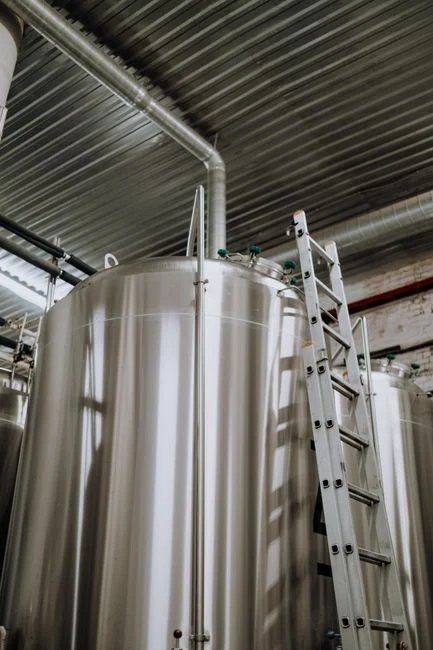
The front-end unit process decides how much load the downstream biological and membrane stages have to absorb, so it sets the OPEX baseline for the whole plant. A properly sized industrial DAF system typically removes 92-97% of TSS and 85-90% of FOG at hydraulic surface loadings of 15-25 m/h, with standard models covering 4-300 m³/h. That makes DAF the default choice for food, meat, dairy, edible-oil, and refinery streams where FOG dominates the load and floatable solids are the primary foulant.
A lamella clarifier operates at higher surface loadings of 20-40 m/h and uses inclined plate packs to multiply the effective settling area inside a small footprint. With sludge recirculation back to the flocculation zone, lamella can reduce coagulant demand by up to 30% versus a single-pass clarifier (HydropureWater JY-series catalog, 2026). Lamella wins on high-turbidity, low-FOG streams such as mineral processing, textile desize washwater, and pre-MBR equalization where the goal is TSS reduction with minimal chemical spend.
Upstream of either, a rotary mechanical bar screen protects pumps and membranes from rags, plastics, and fibers that drive both energy waste (clogged impellers) and chemical waste (re-dose to compensate for lost floc). This is the cheapest efficiency upgrade on the entire train and is routinely skipped in budget reviews. Decision rule: FOG above 200 mg/L or any food/meat/dairy duty → DAF; TSS-driven stream with no FOG and tight chemical budget → lamella; oilfield or refinery duty → DAF with plate-pack assist for oil-water separation.
| Parameter | DAF | Lamella Clarifier (JY series) |
|---|---|---|
| Surface loading (m/h) | 15-25 | 20-40 |
| TSS removal (%) | 92-97 | 80-90 |
| FOG removal (%) | 85-90 | 10-30 |
| Coagulant reduction vs single-pass | 15-25% | up to 30% |
| Best influent | High FOG, food/refinery | High TSS, low FOG |
Biological Step: MBR vs Conventional Activated Sludge When Footprint and Effluent Quality Matter
The biological stage is the highest-stakes equipment choice in a 2026 retrofit because it locks in both the energy baseline and the reuse-quality ceiling. An industrial MBR system delivers sub-micron filtration in a single step and typically runs at 60% smaller footprint than a conventional activated sludge train with a secondary clarifier, because the membrane tank replaces the clarifier and supports 3-4× higher MLSS (8,000-12,000 mg/L vs 2,000-4,000 mg/L). That higher biomass tolerates shock loads and trims the effluent BOD to under 5 mg/L and TSS to under 1 mg/L without a tertiary sand filter in most duty cycles.
DF-series flat-sheet modules use 10-20× less energy than external cross-flow tubular membranes because they operate at low trans-membrane pressure with air-scour only, no recirculation pump. The modules are individually replaceable, which converts a $40,000 membrane replacement event into a $3,000-5,000 per-module swap and avoids the "whole-train shutdown" pattern that drives hidden labor costs. MBR effluent typically clears direct-discharge thresholds and many non-potable reuse thresholds (TOC under 10 mg/L, turbidity under 1 NTU), so for sites facing reuse obligations, MBR removes the need for a tertiary polishing stage.
MBR is overspec when the site has low and stable flow, cheap land, no reuse obligation, and a strict CAPEX ceiling. In that case, a well-run CAS train with a lamella clarifier and a small sludge buffer can win on first cost, with the trade-off being higher footprint, higher polymer for sludge thickening, and no reuse-quality headroom. The MBR premium is recovered through OPEX and reuse revenue, not through CAPEX reduction.
Decision Matrix: Matching the Treatment Train to Your Influent and Discharge Goal
Below is the matrix an industrial procurement manager can screenshot and bring into a 2026 vendor meeting. It maps four common influent profiles to a recommended physical train, expected removal percentages, and the realistic OPEX delta versus a baseline CAS + clarifier configuration. Numbers are drawn from HydropureWater field data (2026) and the engineering literature on DAF and MBR performance cited earlier.
| Influent Profile | Recommended Train | Expected Removal | Expected OPEX Delta vs CAS |
|---|---|---|---|
| High-FOG food / meat / dairy | DAF → MBR → UV | 95% TSS, 90% FOG, 99% BOD | −15 to −25% energy, −20% polymer |
| High-COD chemical / pharma | Equalization → DAF → MBR → RO | 99% COD, 95% TDS | Reuse offsets freshwater purchase, payback under 24 months |
| High-TDS mining / metals | Lamella → MBR (selective) → RO + concentrate management | 98% TSS, 90% heavy metals | −10 to −20% chemical via lamella recirculation |
| Mixed industrial / textiles | Bar screen → Lamella → MBR | 90% TSS, 95% color (with MBR) | −10 to −15% energy vs CAS + sand filter |
For the high-TDS mining case, the 2026 U.S. pretreatment limit context for Velma-area sites is detailed in our 2026 Velma pretreatment compliance guide, and the DAF-vs-clarifier trade-off for mining wastewater in the York region is broken down in our 2026 York mining DAF guide. The point of the matrix is to give a buyer a defensible default in five minutes rather than a four-month evaluation study.
The Digital Layer: PLC, SCADA and Chemical Dosing as OPEX Multipliers
Automation is not a CAPEX line item, it is an OPEX multiplier that compounds the savings from the physical train. The Majorcan municipal water utility modernized its wastewater and pumping operations with Siemens digital solutions and reported a 15% cut in energy use, a 75% cut in engineering time, and an 85% cut in human error (Siemens case data, 2025). At the Nuremberg WWTP1, a SIMATIC Energy Manager tied to the SCADA layer delivered 100% self-generated energy, demonstrating that an automation layer can be the single highest-ROI element in a 2026 retrofit.
On the chemical side, a PLC-controlled chemical dosing skid typically trims polymer consumption 10-20% versus manual dosing because the controller reacts to flow and TSS feedback in real time rather than the operator overdosing on the worst-case shift. Per kilogram the saving looks small; per year on a 500 m³/d food plant, it is $4,000-9,000. The full integration pattern, including tag lists, PID loop tuning, and alarm philosophy, is in our PLC control engineering guide.
For 2026 facilities with capex headroom, edge AI is the next layer. On-device inference at the blowers and dosing skids reduces SCADA bandwidth, enables sub-second control, and catches drifting sensors before they cost a batch. Forward-looking buyers should evaluate edge-AI-capable PLCs against their cybersecurity posture; a structured starting point is our Intel edge AI for water utilities reference.
Quantifying the OPEX Delta: A Worked 2026 Example
Take a 500 m³/d food processing plant with 4,000 mg/L COD influent, discharging to a municipal sewer with a 500 mg/L COD and 50 mg/L oil & grease limit. The baseline train is a conventional activated sludge basin with a circular clarifier and manual polymer dosing. Per the operating envelopes above, the baseline runs at roughly 2.8 kWh/m³ and 0.45 kg polymer/m³. The upgraded train replaces the clarifier with DAF pretreatment, swaps the CAS basin for an MBR, and adds a PLC-controlled dosing skid with flow-paced polymer pump.
Per the OPEX deltas in the decision matrix, the upgraded train operates at roughly 1.9 kWh/m³ and 0.32 kg polymer/m³, with a 60% smaller biological footprint freeing floor space for production. At 2026 industrial electricity tariffs of $0.11-0.14/kWh and polymer at $1.80-2.40/kg, the annual energy saving is approximately $18,000-26,000 and the polymer saving is $42,500-71,500, for a combined OPEX reduction in the $60,000-98,000 range. The MBR premium CAPEX is typically recovered in 18-30 months, depending on whether the reuse-quality effluent displaces purchased water. The OPEX-defensibility framework is laid out in our wastewater OPEX planning guide, and the numbers above are meant to be re-run with site-specific influent and tariff inputs before a budget commitment.
| Line Item | Baseline (CAS + clarifier) | Upgraded (DAF + MBR + PLC dosing) |
|---|---|---|
| Specific energy (kWh/m³) | ~2.8 | ~1.9 |
| Specific polymer (kg/m³) | ~0.45 | ~0.32 |
| Footprint | 100% baseline | ~40% of baseline |
| Annual energy cost (500 m³/d, $0.12/kWh) | ~$61,300 | ~$41,600 |
| Annual polymer cost ($2.10/kg) | ~$172,800 | ~$122,600 |
| Estimated annual OPEX saving | — | ~$60,000-98,000 |
Frequently Asked Questions
What is a realistic specific energy demand target (kWh/m³) for an industrial wastewater plant in 2026?
A well-run MBR-based industrial plant treating food or chemical wastewater typically targets 1.5-2.0 kWh/m³, versus 2.5-3.5 kWh/m³ for a conventional activated sludge train at the same load. Pumping alone can reach 85% of that figure (Siemens, 2025), so hydraulic redesign is the first lever to pull before adding new equipment.
How much polymer can PLC-controlled chemical dosing save versus manual dosing?
Field data on PLC-paced polymer skids shows 10-20% reduction in polymer consumption versus manual dosing, driven by real-time response to flow and TSS feedback rather than shift-by-shift worst-case dosing. On a 500 m³/d plant dosing 0.4 kg/m³, that is $13,000-26,000 per year at 2026 polymer prices.
When is MBR overkill and a CAS + lamella train the better 2026 choice?
MBR is overspec at low-flow, low-load sites with cheap land, no reuse obligation, and a strict CAPEX ceiling. In those conditions a CAS basin with a lamella clarifier and sludge recirculation can deliver 80-90% TSS removal at lower first cost, with the trade-off being no reuse-quality headroom and higher sludge handling OPEX.
Does ISO 50001 certification actually move OPEX for an industrial wastewater plant?
Yes. ISO 50001 forces kWh/m³, kWh/kg COD removed, and kg polymer/kg TSS removed into the same reporting cadence as production KPIs, which is how the Majorcan utility cut energy 15% and the Nuremberg WWTP1 reached 100% self-generated energy (Siemens, 2025). Without the standard, those numbers stay buried in utility billing rather than operator scorecards.