Why Intel's Own Water Data Matters for Edge AI
Intel-funded projects restored approximately 5.8 billion gallons of water to local watersheds in 2024 and 2025 combined — roughly 2.9 billion gallons each year, representing 106% net positive water in 2024 and 103% in 2025 by volume against Intel's freshwater withdrawals (source: Intel 2024-25 Water Restoration Progress Report, dated 2026-07). The program is not a one-off: through the end of 2023, Intel had funded 44 restoration projects across the US, India, Costa Rica, Mexico, Vietnam, Ireland, and Malaysia, returning 3,141 million gallons in 2023 alone (source: Intel 2023 Water Restoration Progress Report, dated 2024-03). The point for plant engineers is the implication for data. To credibly claim 5.8 billion gallons restored, an operator must meter, model, and verify every reuse and discharge stream, which means fab sites like Ocotillo in Chandler, AZ are already running the dense, time-series SCADA archives that edge AI workloads require. Intel's 2030 net-positive water commitment makes on-site optimization of every reuse stream a board-level KPI, and that is precisely the workload pattern where inferencing on local hardware outperforms batch cloud analytics.
What "Edge AI" Means Inside a Wastewater Treatment Plant
Edge AI in a WWT context consists of inferencing and control logic running on local Intel-based industrial PCs, ruggedized gateways, or controller-mounted accelerators physically located at the plant. Siemens' Industrial Edge positioning captures the same idea for adjacent industries: local data processing cuts IT load, enables predictive maintenance, and keeps sensitive operational data on premises (per Siemens white paper Industrial Edge in Water & Wastewater, 2024). The typical data path on a real plant looks like this: field instruments (pH, dissolved oxygen, TSS, conductivity, flow, level) feed 4–20 mA or IO-Link signals into PLCs and RTUs, which publish to a SCADA server, which writes to a time-series historian; the edge AI node reads from the historian, runs an inferencing pass, and writes setpoints back through the SCADA to the PLC — without bypassing the PLC's safety logic. Three structural drivers push this architecture to the edge: closed-loop control loops at 1–60 second cadence, where round-trip latency to a public cloud (typically 200–800 ms) is too slow; uplink bandwidth economics for plants generating 5–50 GB/day of process data; and data-sovereignty requirements that are now codified in industrial operations across the EU, India, and China. Designing the up-stream treatment train is covered in the RO system design parameters guide, but the control architecture around it determines whether AI gains survive contact with operations.
Inside the Ocotillo Fab: A Reference Architecture for Edge AI
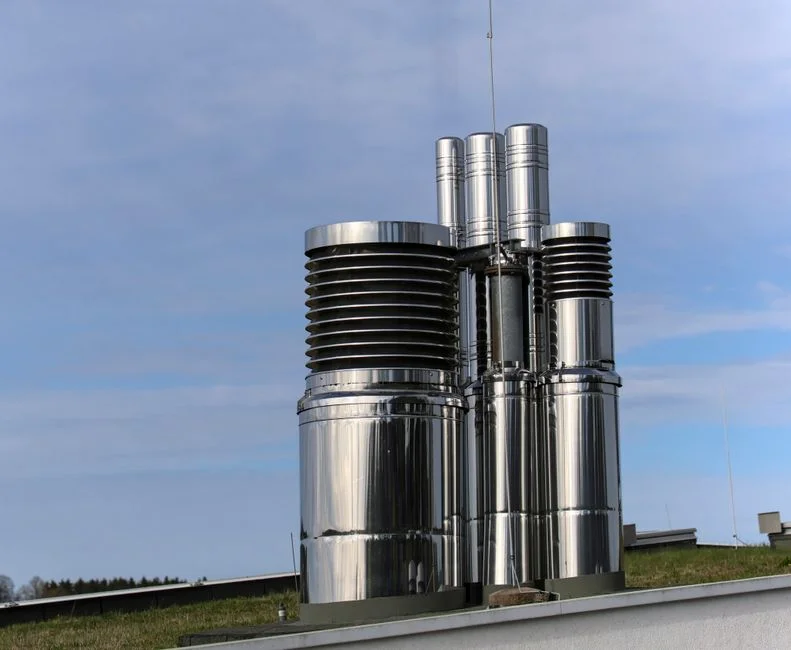
Intel's Ocotillo campus in Chandler, AZ operates a near-zero liquid discharge (ZLD) train documented by site water champion Kelly Osborne (source: Ultrafacility end-user insight: Water strategy at Intel's Ocotillo site). The on-site wastewater train runs: bio-nutrient removal (BNR) → membrane bioreactor (MBR) for ultrafiltration → ion exchange (IX) → reverse osmosis (RO) → thermal treatment (brine concentrator, crystallizer, centrifuge) to recover water and produce a salt byproduct. A separate public-private partnership with the City of Chandler, the Ocotillo Brine Reduction Facility (OBRF), runs cold lime softening plus IX and RO on the first-pass RO reject to lower TDS before discharge to the POTW. Four points in this train are direct candidates for edge AI inferencing: MBR fouling prediction (transmembrane pressure trends, air-scour cycle optimization), RO recovery-rate optimization (feed pressure, conductivity, temperature, recovery ratio), IX exhaustion forecasting (breakthrough curves on polishers feeding UPW makeup), and thermal energy minimization on the brine concentrator/crystallizer. Ocotillo also runs on 100% renewable electricity (per the same Ultrafacility source), so any AI workload added to the control loop must be power-efficient — a 50–150 W edge node running quantized inferencing is far more attractive than streaming raw waveforms to a cloud GPU. The membrane selection logic that defines what the edge node is optimizing is explored in the silicon carbide membrane design reference.
Proof It Works: Predictive Models in Real WWT Plants
The most defensible peer-reviewed benchmark for AI-driven WWT control in 2025 comes from a study at Asia's Jiangsu Province Metropolitan Wastewater Treatment Plant, where a Quantile Regression–Random Forest (QR-RF) meta-learner stacked on CNN, LSTM, and GRU base learners was deployed into an Integrated Control System (source: Scientific Reports, 2025; PMC12130272). The reported performance is concrete: RMSE 4.76 mg/L for 24-hour effluent quality horizons and MAE 0.85 mg/L for 1-hour predictions. Translated to plant operating KPIs, the integrated system cut energy consumption by 17%, improved chemical-based consumption optimization by 24%, and lifted average COD removal from a baseline of 88.76% to 94.23% — a 5.47 percentage-point improvement on a metric most plants are contractually obligated to report. The magnitude of the gain is large enough to pay back an edge hardware install in 12–24 months at industrial energy tariffs. Edge AI is the architecture that keeps the inferencing pass, the historian, and the control setpoint on the same LAN, which is what closes the loop at 1-second cadence.
Edge vs Cloud AI for Water Operations: A Decision Framework
Most plants end up running a hybrid architecture; the engineering question is which workload sits where. The table below maps common WWT use cases to their best location, with typical latency and a one-line justification.
| Use case | Best location | Typical latency budget | Why |
|---|---|---|---|
| Aeration DO control (blower VFD trim) | Edge | 1–5 s | Closed-loop stability; blower energy is the single largest OPEX line in activated sludge |
| Polymer / coagulant dosing | Edge | 5–30 s | Sensor-to-actuator loop; overdose costs hit within one shift |
| RO backwash / CIP sequencing trigger | Edge | 1–5 min | Sequence integrity and interlock safety belong on the plant LAN |
| MBR fouling prediction (TMP trend) | Edge | 1–5 min | High-rate historian reads; sub-minute response on aeration scour duty cycle |
| Fleet benchmarking across sites | Cloud | Hours–daily | Aggregation across plants, model retraining, cross-site dashboards |
| Regulatory quarterly reporting | Cloud | Daily–weekly | Batch aggregation, audit trail, signature workflows |
| Long-horizon demand / rainfall forecasting | Cloud | Hours | Depends on external meteorological and grid data feeds |
The hybrid pattern that survives most audits: edge handles real-time inferencing and writes setpoints through the SCADA; cloud ingests anonymized feature extracts for model retraining, drift monitoring, and cross-plant KPI rollups. Data-sovereignty constraints typical of EU and Indian operations further reinforce the default-on-prem posture for any raw sensor stream. Compliance context for fab-style discharges is detailed in the semiconductor fab wastewater compliance guide.
Deploying Edge AI in Your Own Water Plant: A 2026 Checklist
A practical five-step path a plant engineering manager can hand to an integrator or internal controls team:
- Map the train and the instrumentation. Walk influent screening → grit removal → biological stage (BNR or conventional activated sludge) → clarification or DAF → MBR or UF → RO → disinfection. At each stage, list the existing instruments, their signal type, and the historian tag. Do not start AI work until you know what data actually exists.
- Pick one high-value target. Aeration energy, polymer dose, and RO recovery are the three usual suspects because each one shows up on the monthly utility invoice. Prove value on one before scaling.
- Stand up the edge node, not a bypass. Install an Intel-based industrial PC (or a ruggedized gateway with a discrete GPU or NPU) between the historian and the SCADA. Writes go back through the SCADA to the PLC; the PLC remains the safety-of-state authority. Do not let AI write directly to actuator outputs.
- Start hybrid, escalate to deep models. Use a first-principles model plus an ML residual for the first 60–90 days. This keeps the loop interpretable and the process engineers in the loop. Move to a deeper CNN/LSTM/GRU stack only after baseline KPIs are stable and the team trusts the feature pipeline.
- Define KPIs up front, report monthly. Energy kWh/m³ treated, chemical kg/m³ treated, COD/TSS removal %, reuse rate %, and SCADA alarm rate. Treat these as the contract between operations and the controls/SCADA team.
The downstream stages — sludge dewatering and centrate handling — often dominate the mass balance once biological and membrane optimization are running, so the same edge pattern extends to the sludge dryer commissioning workflow and the decanter centrifuge operating envelope.
Frequently Asked Questions
What is edge AI in a water treatment plant, in one sentence?
Edge AI in WWT is running inferencing and closed-loop control logic on local Intel-based industrial PCs or gateways at the plant — between the historian and the SCADA — instead of sending every sensor reading to a remote cloud server, which keeps round-trip latency under one second and process data on premises.
How much water has Intel actually restored, and why does that matter for edge AI?
Intel-funded projects restored approximately 5.8 billion gallons of water in 2024 and 2025 combined — roughly 2.9 billion gallons each year, at 106% net positive in 2024 and 103% in 2025 (per the Intel 2024-25 Water Restoration Progress Report). The verification overhead of that program is what forces fab sites like Ocotillo to maintain the dense, time-series SCADA archives edge AI inferencing depends on.
What measurable gains have AI-driven WWT control systems actually delivered?
At the Jiangsu Province Metropolitan WWTP, a QR-RF meta-learner stacked on CNN, LSTM, and GRU delivered RMSE 4.76 mg/L at a 24-hour horizon, cut energy consumption by 17%, improved chemical consumption by 24%, and lifted COD removal from a baseline of 88.76% to 94.23% (per Scientific Reports, 2025; PMC12130272).
Should a B2B water plant run AI workloads on the edge or in the cloud?
Run real-time inferencing and closed-loop setpoint writes on the edge (sub-second to sub-minute latency, on-prem data), and run model retraining, drift monitoring, fleet benchmarking, and regulatory reporting in the cloud. The hybrid pattern is what survives most data-sovereignty and cybersecurity audits.
Related Equipment
- MBR membrane bioreactor system — specifications, capacity range, and technical data
- industrial RO system — specifications, capacity range, and technical data
- PLC-controlled automatic chemical dosing — specifications, capacity range, and technical data