What regulatory waterfall applies to an ArcelorMittal acquisition in Hungary?
When ArcelorMittal acquires a Hungarian steel plant in 2026, the site falls under the EU Industrial Emissions Directive 2010/75/EU and Hungary's integrated pollution permit regime (Government Decree 220/2004 (XII.21.)), so ArcelorMittal must inherit and upgrade the existing permit to meet the BAT-AELs of the revised Ferrous Metals Processing BREF — covering suspended solids, total nitrogen, heavy metals (Zn, Ni, Cd, Pb) and hydrocarbons — within the four-year BAT transition window set by the IED.
The first trigger is the EU-level merger control instrument: Council Regulation (EC) No 139/2004. The Commission's decision in M.8444 ArcelorMittal/Ilva (7.5.2018) is the controlling precedent: under Article 8(2) of that Regulation, the Commission may attach binding environmental investment commitments — including effluent-related CAPEX — as a condition of clearance, and require quarterly reporting on delivery. The same pathway is available for any 2026 Hungarian transaction above the turnover thresholds in Article 1.
The second trigger is the EU Industrial Emissions Directive 2010/75/EU (IED). An integrated steelworks is a 'specified installation' under Annex I, Chapter 4 (ferrous metals processing), and the operator is bound by Chapter IV on permits, BAT conclusions, and the four-year transition rule of Article 21(3) when new or revised BAT conclusions are published. The third trigger is the Hungarian national layer: Act CLXXXV of 2012 on waste, Government Decree 220/2004 (XII.21.) on integrated pollution permits, and the county Government Office that issues the permit — Fejér for Dunaújváros, Borsod-Abaúj-Zemplén for Ózd. Operator change must be re-notified within 30 days of closing.
The fourth trigger is the Ferrous Metals Processing BREF (originally 2012/134/EU); the 2024 revised BAT conclusions are the operative reference in 2026, with the four-year transition running from publication. Derogations under IED Article 15(4) are available but require measurable emission limits, a time-bound improvement programme, and explicit recording in the permit variation. Finally, the sanitary stream is governed by the Urban Waste Water Treatment Directive 91/271/EEC for plants above 2,000 PE — so the design must keep a segregated sanitary line rather than blending it with process water.
Which wastewater streams does ArcelorMittal have to characterise at a Hungarian steelworks?
A compliant influent matrix is the only auditable basis for downstream unit sizing. At an integrated Hungarian steelworks the engineer should expect five distinct streams, each with a characteristic pollutant fingerprint that the BAT conclusions expect to be segregated and treated separately (typical industry ranges; per Ferrous Metals Processing BREF 2024 revised, Annex on wastewater streams).
| Stream | Typical flow range | Key parameters (typical range) | Pre-treatment route |
|---|---|---|---|
| Coking wastewater | 20-150 m³/h | NH3-N 200-1,500 mg/L; phenols 100-1,000 mg/L; COD 1,500-5,000 mg/L; thiocyanate 50-500 mg/L; cyanides 1-20 mg/L; PAHs 1-50 mg/L | Steam/air stripping → biological → activated carbon |
| BF/BOF gas-cleaning water | 50-400 m³/h | TSS 1,000-5,000 mg/L; oil 50-500 mg/L; Zn 5-50 mg/L; Pb 1-10 mg/L | Sedimentation → DAF → sludge recirculation |
| Rolling mill / pickle line | 30-200 m³/h | O&G 500-10,000 mg/L (emulsified); pH 1-4; Fe 50-500 mg/L; sulfate 1,000-5,000 mg/L; Zn 1-20 mg/L | Emulsion breaking → pH correction → DAF |
| Contact cooling & stormwater | 100-1,000 m³/h (wet season) | TSS 50-300 mg/L; trace oil 5-20 mg/L; low COD | Settlement → oil removal |
| Sanitary (site population) | ~50-100 m³/d (1,000-2,000 PE) | BOD 200-400 mg/L; NH3-N 30-60 mg/L; TSS 200-400 mg/L | MBR / activated sludge → municipal sewer or on-site polishing |
The reason segregation matters is operational, not administrative: cyanide-bearing coking water and high-oil pickle rinsewater will collapse an activated sludge basin if blended. The permit will set separate emission limit values (ELVs) for each discharge point, and a combined treatment train is acceptable only where the BAT conclusions explicitly allow it.
What BAT-AEL effluent limits must a Hungarian ArcelorMittal site meet in 2026?
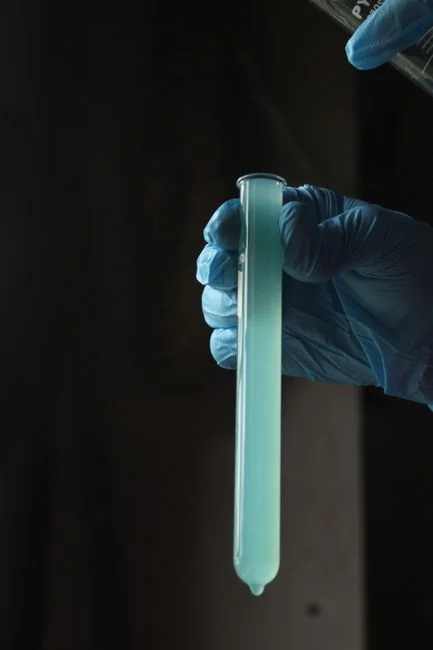
The 2024 revised Ferrous Metals Processing BREF sets the operative BAT-AEL bands for steelworks wastewater discharges to surface water or municipal sewer. The table below is the engineering target the existing plant's monitoring data has to be compared against — any parameter currently exceeding the band is a candidate for upgrade CAPEX in the integration plan.
| Parameter | BAT-AEL band (2024 revised BREF) | Indicative reference method |
|---|---|---|
| Total suspended solids (TSS) | ≤ 30 mg/L | EN 872 |
| COD | ≤ 130 mg/L | ISO 15705 |
| Total nitrogen (N) | ≤ 15 mg/L | EN 12260 / EN ISO 11905-1 |
| Total phosphorus (P) | ≤ 2 mg/L | EN ISO 6878 |
| Zinc (Zn) | ≤ 0.5 mg/L | ISO 17294-2 (ICP-MS) |
| Nickel (Ni) | ≤ 0.05 mg/L | ISO 17294-2 |
| Cadmium (Cd) | ≤ 0.05 mg/L | ISO 17294-2 |
| Lead (Pb) | ≤ 0.2 mg/L | ISO 17294-2 |
| Hydrocarbons (C10-C40) | ≤ 5 mg/L | EN ISO 9377-2 |
| PAHs (sum of 16) | ≤ 0.05 mg/L | EN 16691 |
| Coking wastewater — after biological + activated carbon polishing | ||
| NH3-N | ≤ 5 mg/L | EN ISO 11732 |
| Phenols (total) | ≤ 0.5 mg/L | EN ISO 14402 |
| Cyanide (total) | ≤ 0.1 mg/L | EN ISO 14403 |
Monitoring obligations sit in IED Article 8 and Decree 220/2004: continuous monitoring for flow, pH and temperature; daily composite sampling for COD, TSS, total N and total P; monthly for metals and PAHs. The on-site or contract laboratory must hold EN ISO/IEC 17025 accreditation for the methods above (per IED Article 8(2) and the Hungarian national accreditation body's scope). If a parameter is currently out-of-band, the operator can apply for an IED Article 15(4) derogation, but only by setting a measurable limit, a binding improvement programme (typically 4 years), and a permit variation — not a simple "best efforts" clause.
How should the process train be designed to hit BAT-AELs at an ArcelorMittal Hungary site?
The treatment train has to be designed against the parameter table, not against generic effluent quality. Seven stages cover the chain from raw wastewater to dewatered sludge, and each stage is a defined unit operation the EPC can procure.
Stage 1 — Source segregation and headworks. A rotary bar screen for headworks (typically 3-6 mm aperture) removes rags and debris; the more important engineering decision is upstream — keeping coking, oily, acidic and sanitary streams in separate gravity lines so toxic loads never reach the biological stage.
Stage 2 — Oil and emulsion removal. A DAF system for steelworks emulsion and oil removal ahead of equalisation achieves 90-95% O&G removal on rolling-mill and BF/BOF streams; micro-bubble flotation (40-80 μm bubbles) with automatic skimming is the configuration used on metalworking and petrochemical duties of similar loading.
Stage 3 — Equalisation and pH correction. A flow-equalisation basin with diffused aeration (typical HRT 6-12 h) dampens diurnal swings; a PLC-controlled chemical dosing system on the outlet line doses caustic or acid to hold pH 6.5-8.5 before biology.
Stage 4 — Physico-chemical stage. Coagulation-flocculation (FeCl3 or PAC at 50-200 mg/L, anionic polyelectrolyte at 1-5 mg/L) followed by a lamella clarifier for heavy-metal precipitation removes 80-95% of residual TSS and >90% of dissolved heavy metals at pH 8-9; sludge recirculation to the flocculation zone cuts coagulant dose by ~30%.
Stage 5 — Biological treatment. A MBR system for coking and sanitary wastewater delivers nitrification/denitrification at HRT 12-36 h, MLSS 3,000-5,000 mg/L, sludge age 15-25 d, and ammonia removal 95-99%. Membrane separation replaces the clarifier, producing a low-SDI effluent suitable for direct discharge or downstream reuse.
Stage 6 — Tertiary filtration. For reuse, PVDF ultrafiltration (0.01-0.1 μm) on the MBR permeate targets SDI <3 as RO pretreatment; for direct surface-water discharge, a sand/multi-media filter polishes residual TSS.
Stage 7 — Sludge handling. Combined chemical and biological sludge is dewatered with a plate and frame filter press for steelworks sludge to 25-35% DS, cutting disposal volume by 70-80% versus gravity thickening — a direct line item on the integration CAPEX schedule.
What equipment selection matrix maps BAT-AELs to a process train?
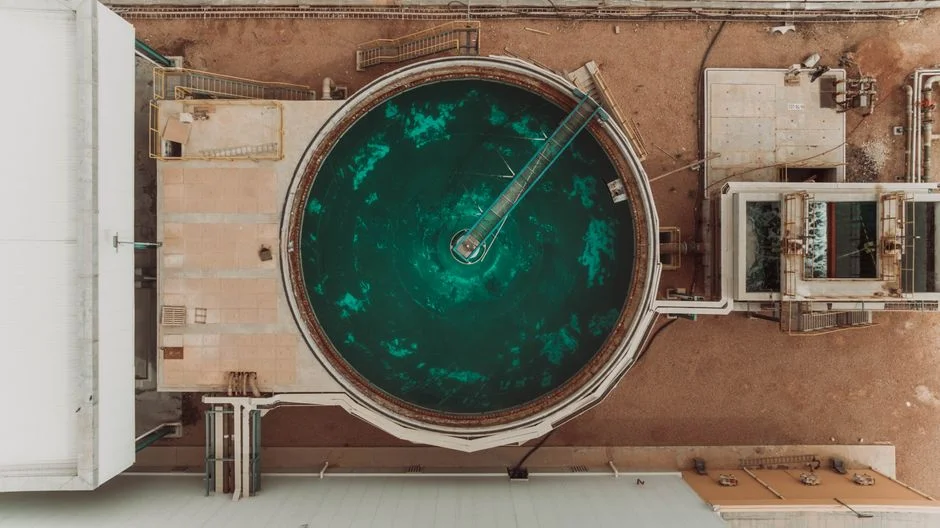
The matrix below is the page the EPC hands to procurement. It ties each unit to the BAT-AEL parameter it is responsible for, so vendor selection is parameter-driven rather than catalogue-driven.
| Unit | BAT-AEL parameter responsible for | Operating envelope |
|---|---|---|
| Rotary mechanical bar screen (GX series) | Protects downstream biology; TSS load | 3-6 mm aperture, channel widths 300-2,000 mm |
| DAF system | Hydrocarbons ≤ 5 mg/L; TSS polishing; O&G on rolling/pickle streams | 4-300 m³/h; 90-95% O&G removal; automatic skimming |
| High-efficiency sedimentation tank (lamella) | Zn, Ni, Cd, Pb precipitation; TSS ≤ 30 mg/L | Surface loading 20-40 m/h; sludge recirculation reduces coagulant ~30% |
| Automatic chemical dosing system | pH control; coagulant/flocculant feed | PLC-controlled, skid-mounted; pre-wired for fast install |
| MBR integrated wastewater treatment system | COD ≤ 130 mg/L; total N ≤ 15 mg/L; NH3-N ≤ 5 mg/L; phenols ≤ 0.5 mg/L | 10-2,000 m³/d; effluent <1 μm; ~60% smaller footprint than CAS |
| Plate and frame filter press | Sludge volume reduction to 25-35% DS | 1-500 m² filtration area; PLC-controlled; 70-80% volume cut |
The selection logic is: pick the unit that is responsible for the parameter currently out of band. If the existing plant is failing on nickel and lead but passing on hydrocarbons, the upgrade priority is the lamella clarifier with a proper coagulant scheme, not another DAF. The same matrix also feeds into comparable scope reviews for adjacent markets — the engineering team can use it as a baseline for a UPM Germany plant acquisition compliance or an Intel Mexico plant acquisition wastewater compliance assessment, swapping parameters where the BREF differs.
What deal-side and post-acquisition obligations should M&A teams model?
Two obligation layers sit on top of the engineering scope. The first is EU-level: the Commission can attach binding environmental investment commitments under Article 8(2) of Regulation 139/2004, exactly as it did in M.8444 ArcelorMittal/Ilva (C(2018) 2858 final, 7.5.2018) — where the clearance package included obligations to bring the target's facilities up to applicable environmental standards within a defined timetable, with periodic reporting. The M&A team should assume the same logic for any 2026 Hungarian transaction above the turnover thresholds and pre-size a CAPEX line for it.
The second layer is Hungarian: a Phase I/II Environmental Site Assessment under the MSZ 21450 series is standard pre-close practice (typical schedule 6-10 weeks, accredited sampling required); at closing, the integrated permit under Decree 220/2004 requires operator-change notification within 30 days and technical variation (capacity, BAT application) within 6 months. Financial provisioning for a 1-2 Mt/y integrated steelworks typically sits in the EUR 10-50M range, depending on plant age, stream complexity and whether existing biology can be retained — but the deal team should model it against the specific BAT gap, not against a generic multiplier. The same engineering logic that drives the paint and coating wastewater COD removal guide applies here: identify the failing parameter first, then size the unit.
Frequently Asked Questions
Which EU directive governs ArcelorMittal's wastewater after a Hungarian acquisition?
The EU Industrial Emissions Directive 2010/75/EU governs the operational permit, with Hungary transposing it through Government Decree 220/2004 (XII.21.) on integrated pollution permits. The County Government Office (Fejér for Dunaújváros, Borsod-Abaúj-Zemplén for Ózd) issues the permit and monitors compliance.
What BAT-AELs apply to coking wastewater at a Hungarian steelworks?
Under the 2024 revised Ferrous Metals Processing BREF, the coking wastewater train must deliver NH3-N ≤ 5 mg/L, total phenols ≤ 0.5 mg/L, total cyanide ≤ 0.1 mg/L and COD ≤ 130 mg/L, typically after stripping, biological treatment and activated-carbon polishing.
Does the EU Commission attach wastewater commitments to ArcelorMittal mergers?
Yes. In M.8444 ArcelorMittal/Ilva (7.5.2018) the Commission used Article 8(2) of Regulation 139/2004 to attach binding environmental investment commitments, with reporting obligations. The same instrument is available for any 2026 Hungarian transaction above the turnover thresholds.
How long does ArcelorMittal have to bring the plant up to BAT after acquisition?
IED Article 21(3) sets a four-year transition from publication of new or revised BAT conclusions. The 2024 revised Ferrous Metals Processing BREF is operative in 2026, so the clock runs from its publication. A derogation under IED Article 15(4) can extend deadlines but requires a measurable limit, a time-bound improvement programme, and an explicit permit variation.
Which treatment units are essential for a steelworks to meet the BAT-AELs?
Source segregation and headworks screening, DAF for oil and emulsion removal, equalisation with pH correction, physico-chemical precipitation, biological treatment (typically MBR), tertiary filtration where reuse is targeted, and sludge dewatering by plate and frame filter press.