What changes on closing day for the German discharge permit
When UPM acquires a plant in Germany in 2026, the new legal operator inherits the existing Wasserrechtliche Genehmigung under §§16–17 of the Federal Water Act (Wasserhaushaltsgesetz, WHG) only if the permit does not change. Otherwise UPM must re-apply for a new indirect-discharger (Indirekteinleiter) or direct-discharge permit aligned with the Waste Water Ordinance (Abwasserverordnung, AbwV), the EU Industrial Emissions Directive 2010/75/EU BAT-AEL ranges, and local §58 WHG requirements. The share certificate that travels from Helsinki to Frankfurt does not carry the water permit with it. German Wasserrechtliche Genehmigungen are issued to a named Inhaber (operator) under §§16–17 WHG, and the competent Wasserbehörde treats a change of control as a Wechsel des Inhabers event that triggers either a Nachtrag or a fresh Genehmigungsantrag, depending on whether the change is purely legal or also material in process terms.
Two outcomes are possible at closing. In the first, the permit transfers unchanged because process mix, capacity and discharge points stay as documented, and the Wasserbehörde confirms the Inhaber substitution by Nachtrag. In the second — and this is the more common path in M&A — operational control, the product mix or planned capacity has shifted, the receiving water body is more sensitive, or BAT conclusions have tightened since the original Bescheid was issued. In that case the Wasserbehörde requires a new Antrag, and the seller's existing permit becomes a closing-day liability rather than an asset. The legal floor UPM must hold against is §57(1) WHG: discharges to waters are only lawful if pollutant load is reduced to the lowest level achievable using best available technology (BMUKN, 2026).
Four documents must be in the data room before signing. The existing Genehmigungsbescheid with all Nachträge. The current AbwV self-monitoring (Eigenüberwachung) reports — typically the last 36 months. The Indirekteinleitungs-Verordnung of the receiving municipality, which sets the Überwachungswerte at the connection point. And any open Anhörung, Ordnungswidrigkeit or Verstoss proceedings, since these transfer with the operator change. The counterparty authority is the untere Wasserbehörde of the Landkreis, with the landesobere Wasserbehörde of the Bundesland acting as the supervisory and appellate tier.
| Closing-day scenario | Trigger under §§16–17 WHG | UPM action | Timeline risk |
|---|---|---|---|
| Pure Inhaber substitution, no process change | Nachtrag required | File Inhaber-Wechsel notification within 30 days | Low — administrative |
| Capacity, product mix or discharge-point change | New Genehmigungsantrag | Submit Antrag with updated Antragsunterlagen (process description, AbwV-applicable annex, mass balance) | 6–18 months to issuance |
| BAT-AEL or AbwV annex binding range tightened since original Bescheid | Material change — new permit | Gap study + Antrag; consider CAPEX roadmap to BAT floor | High if non-compliant at acquisition |
| Existing Verstoss or pending Anhörung | Inherits liability | Disclose in SPA; price remediation or escrow | Indeterminate — depends on Wasserbehörde action |
The regulatory cascade: EU IED → WHG → AbwV → local Indirekteinleiter rules
Four nested legal layers govern the acquired site's discharge, and the M&A team should brief German counsel with this hierarchy in hand. At the top sits EU Industrial Emissions Directive 2010/75/EU (IED), which sets the BAT-AEL ranges that Germany's AbwV and TA Luft transpose into binding national annexes. A UPM pulp or paper mill with a production capacity above the IED Annex I threshold of 20 t/day falls squarely under IED Chapter IV and is an IED installation — meaning any new permit must reflect the latest BAT conclusions, and any retrofit CAPEX must be justified against the current BAT-AEL envelope rather than the permit's 2005-era limits.
The federal framework is the Wasserhaushaltsgesetz (WHG, 2009). §57 sets the BAT discharge duty that defines the legal floor for every Bescheid. §58 governs indirect discharges to municipal WWTPs and is the lever the Gemeinde uses to set Indirekteinleiter Überwachungswerte. §62 covers hazardous-substance discharges and is the right citation where the acquired plant handles chlorinated compounds, AOX precursors or heavy-metal process chemicals. Below the WHG sits the sector-specific layer, the Abwasserverordnung (AbwV) with its 57 annexes. UPM's likely process lines map as follows: Anhang 31 binds pulp and paper, Anhang 25 binds wood-based panels and timber, Anhang 9 is relevant if any biofore site co-produces food-adjacent streams, and Anhang 3 governs cooling-water circuits at sites with once-through or open-recirculation cooling.
The local layer is where most of the practical work happens. Indirekteinleiter-Verordnungen vary by municipality and the receiving municipal WWTP sets Überwachungswerte at the connection point under §58 WHG. For Hamburg sites, the Hamburgische Indirekteinleiterverordnung and the city's mixed sewer discharge practice shape what UPM can push to the public network, and a Hamburg-specific discharge and cooling-blowdown precedent is documented in adjacent industry analysis. For sites discharging indirectly, the municipal plant — one of around 9,000 public WWTPs in Germany (BMUKN, 2026) — is the operational counterparty as much as the Wasserbehörde. The broader German wastewater compliance context for industrial discharger categories is summarised in general German wastewater compliance context and the same M&A framing applied to another corporate acquirer is detailed in a parallel M&A wastewater playbook for another corporate acquirer.
Matching discharge route to equipment: direct, indirect, or on-site
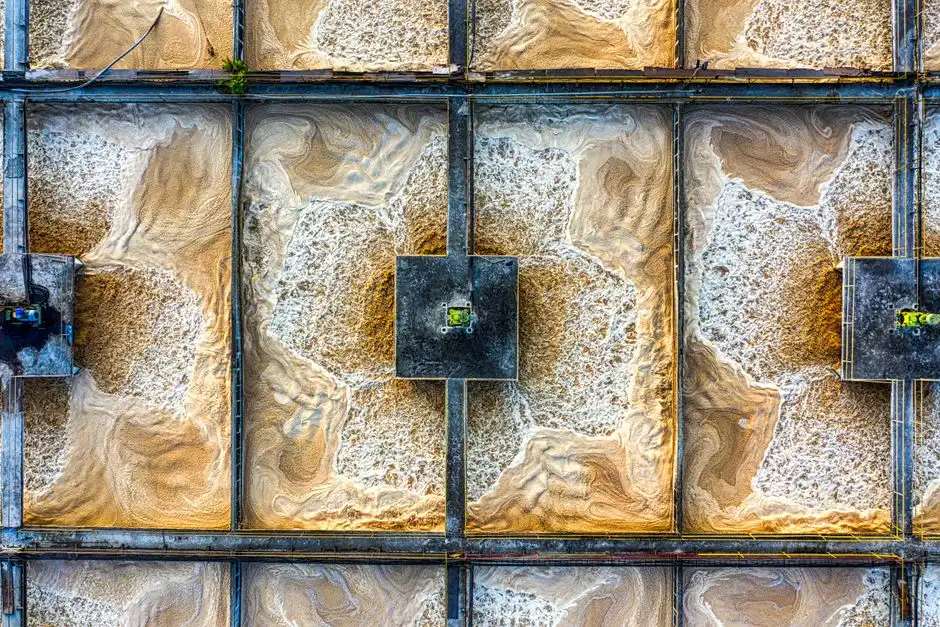
Once the cascade is mapped, the next decision is the discharge route, because the route dictates the equipment train. Three options are open to UPM at any acquired site. Direct discharge to a Gewässer — a river or lake — requires a full BAT-grade train: primary clarification, biological treatment (typically a membrane bioreactor delivering effluent of <1 μm suspended solids, increasingly the BAT baseline for kraft and paper mills in 2026), nutrient removal (N and P), and a growing case for a quaternary polishing stage to address residual AOX, COD and emerging micropollutants.
Indirect discharge to a municipal WWTP under §58 WHG reduces what UPM must remove on-site to screening, flow and load equalisation, pH control, and removal of inhibitory or persistent fractions — AOX, heavy metals, phenolics. The municipal plant takes the nutrient-removal burden, but the cost is passed through via AbwAG §12 charges, which scale with pollutant load and toxicity class. For a Finnish acquirer used to internalising water costs, the AbwAG math is a real line item. On-site closed-loop or partial ZLD becomes attractive at high-TDS sites or where freshwater intake is constrained; UPM's published water-stewardship targets push acquired sites toward higher reuse and lower freshwater draw, which can justify a MBR membrane bioreactor system for pulp & paper mill effluent sized for 70–90% water reuse.
The unit operations to keep or install are route-specific. A direct-discharge site typically needs a DAF upstream of biology for fiber and FOG recovery, a biological stage sized to the BAT-AEL envelope, and a polishing step that may be a UF or, where tightest AOX limits apply, a quaternary oxidation stage. An indirect-discharge site is more about pretreatment quality — equalisation, neutralisation, and a industrial DAF unit for fiber and FOG recovery to protect the municipal works. Equipment selection should be benchmarked against BAT-AEL ranges, not the legacy permit limits, so that any 2026 retrofit stays valid through the next BAT review cycle.
| Discharge route | Typical on-site equipment train | UPM exposure | Key design parameter |
|---|---|---|---|
| Direct to Gewässer | DAF → MBR → nutrient removal → optional UF/oxidation polish | Full BAT-AEL liability at outfall | Effluent TSS <10 mg/L, COD to BAT-AEL band |
| Indirect to municipal WWTP | Screening → flow EQ → pH correction → DAF → monitoring | AbwAG §12 pass-through, Indirekteinleiter Überwachungswerte | AOX <1 mg/L at connection point |
| On-site closed-loop / partial ZLD | MBR → UF → RO → optional evaporator/crystalliser | High CAPEX, low fresh-water intake, regulatory goodwill | Reuse rate 70–90% |
AbwV and BAT-AEL parameter benchmarks UPM will be held to
The engineer needs a numeric envelope to compare against the acquired plant's current Eigenüberwachung data. Typical BAT-AEL bands the engineer will see for UPM-relevant streams are: COD 150–300 mg/L for kraft pulp, 100–250 mg/L for paper; TSS ≤30–50 mg/L; AOX ≤1 mg/L for pulp under BAT; total nitrogen ≤10–20 mg/L with BAT-grade nitrification-denitrification; total phosphorus ≤0.5–2 mg/L. The 2026-case limits in the new Bescheid are set case-by-case, depending on receiving-water sensitivity, plant size, and BAT-AEL flexibility ranges — meaning an upper-tier river stretch in Bavaria is not the same as a sensitive standing water body in Schleswig-Holstein.
Monitoring frequency is non-negotiable. AbwV Anhang 31 typically requires 24-hour composite or flow-proportional sampling for the standard parameter set, plus continuous pH and temperature logging on the final effluent. Where the new Bescheid is silent, defaulting to continuous nutrient analysers on the discharge and a UV disinfection stage for residual microbial load is the conservative path. A UV sterilizer for the final disinfection step or a chlorine dioxide generator for residual biocidal control at the outfall is a low-cost, BAT-aligned addition when the receiving WWTP or Gewässer is sensitive to faecal coliforms or Legionella.
The forward-looking constraint is the EU 2045 micropollutant mandate: European legislation stipulates that by 2045 certain treatment plants must be fitted with technologies such as special membranes or oxidation processes that can remove pharmaceutical, cosmetic and industrial trace pollutants (BMUKN, 2026). This is not retroactive in 2026, but any CAPEX decision should leave hydraulic and footprint headroom — typically 15–20% extra hydraulic capacity and a defined pad for an ozone, GAC or UF-based quaternary stage.
90-day post-close integration checklist
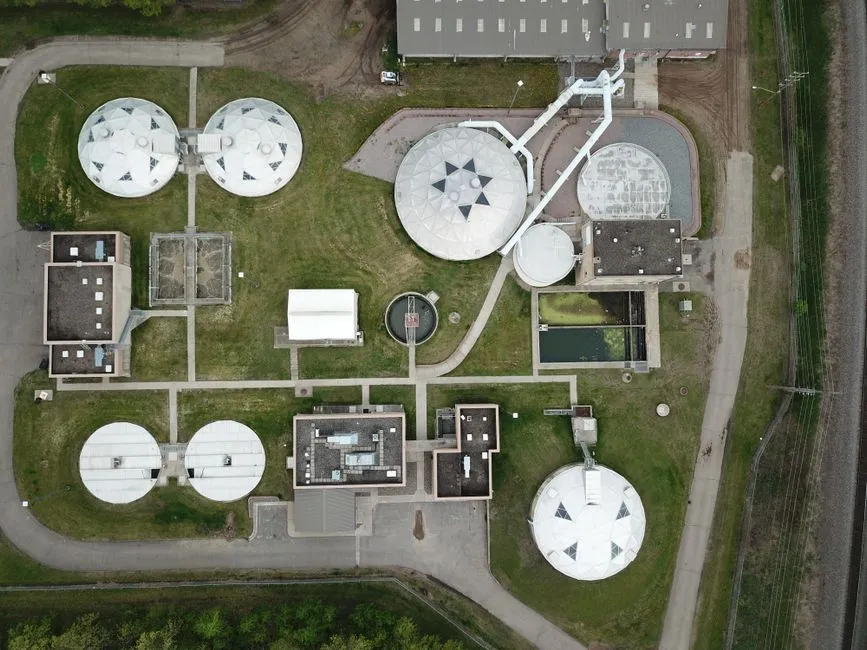
Most acquisition-related water non-compliances are discovered in the first 90 days, so the post-close plan should be templated rather than improvised. Days 1–30: confirm the Inhaber-Wechsel filing with the Wasserbehörde of the relevant Landkreis, baseline the existing discharge data against the Genehmigungsbescheid, and review the last 36 months of Eigenüberwachung reports for exceedances, trends and the timing of the most recent Anhörung. Any exceedance in that window is a UPM liability from minute one of close.
Days 31–60: commission an AbwV / BAT-AEL gap study. The output is a parameter-by-parameter comparison of the existing outfall concentrations against the BAT-AEL ranges applicable to the dominant AbwV annex, plus a hydraulic assessment of whether the existing WWTP (or the receiving municipal plant) can absorb UPM's planned production ramp. The gap study also tests whether the existing pretreatment train will meet the new Bescheid limits, or whether a PLC-controlled coagulant and nutrient dosing skid and a sludge dewatering filter press for the on-site WWTP need to be added to the equipment list.
Days 61–90: lock the CAPEX roadmap. The decision set covers MBR or UF membrane retrofit, DAF for fiber recovery, automatic chemical dosing for nutrient polish, and sludge dewatering with a plate-and-frame press. If the CAPEX triggers a material change under §§16–17 WHG — which it usually does if hydraulic capacity rises by more than 10–20% or a new discharge point is added — file a Vorbescheid or full Genehmigungsantrag before ordering long-lead equipment, because a Wasserbehörde that sees a retrofit before a permit tends to read it as a material change without prior approval.
Frequently Asked Questions
Does the existing Wasserrechtliche Genehmigung transfer automatically when UPM buys the company?
No. It transfers only if the competent Wasserbehörde issues a Nachtrag or new Bescheid confirming the Inhaber-Wechsel under §§16–17 WHG. UPM must file the change-of-operator notification within 30 days of closing; without confirmation, the seller remains the legally responsible Inhaber and UPM discharges at its own risk.
Which AbwV annex applies to a UPM pulp mill versus a plywood plant?
Anhang 31 of the Abwasserverordnung covers pulp and paper, and binds the dominant stream at any UPM pulp, paper, or recovered-fiber line. Anhang 25 covers wood-based panels and timber and applies to a UPM plywood, particleboard or veneer site. UPM must map each acquired site to its dominant annex, because the BAT-AEL ranges and the self-monitoring (Eigenüberwachung) frequency differ materially between the two.
Is a UPM plant above 20 t/day always an IED installation?
Yes, if it falls under one of the IED Annex I activities — pulp production above 20 t/day, paper or cardboard production above 20 t/day, or wood-based panels production above the Annex I threshold — it is an IED installation and must operate against the current BAT-AEL ranges. The 20 t/day threshold is production capacity, not effluent volume, and crossing it brings the site under the IED permit regime with a single integrated Genehmigungsbescheid that bundles water, air and waste obligations.
What is the 2045 micropollutant requirement and does it bind a 2026 acquisition today?
EU rules require certain WWTPs to add a quaternary treatment stage — typically ozonation, granular activated carbon, or membrane separation — by 2045 to remove trace pollutants that conventional biology cannot touch (BMUKN, 2026). The obligation is not retroactive in 2026, but a UPM CAPEX plan that ignores it will look short-sighted by 2030, and the retrofit should be designed into hydraulic and footprint headroom from day one.
Can UPM keep discharging to the municipal WWTP after acquisition?
Yes, under §58 WHG if the Indirekteinleiter-Verordnung of the receiving Gemeinde is met at the connection point. The Indirekteinleiter gatekeeper remains the municipal WWTP operator working with the untere Wasserbehörde, and UPM stays liable for any parameter that passes through to the receiving Gewässer, including AbwAG §12 cost pass-through on load and toxicity. The municipal route is often the lowest-CAPEX path, but it is not a low-liability path.