Why Inkster EV plants face a layered pretreatment stack
An EV or auto plant discharging to a sanitary sewer in the Inkster corridor answers to four overlapping regulators, not one. The Clean Water Act of 1972 (amended 1977) authorizes EPA to control indirect discharges, and in 1978 EPA's General Pretreatment Regulations (40 CFR Part 403) created the program that states and POTWs run day-to-day. On top of that federal floor sit two more layers: 40 CFR Part 467 categorical standards that set numeric ceilings for automotive operations, and site-specific local limits written by the receiving POTW to protect its own plant, its biosolids, and the receiving stream.
The two regulatory anchors an EHS manager should bookmark are 40 CFR 403.3(j) (defining "Industrial User") and 40 CFR 403.5(c), the section that obligates a POTW to develop local limits that are more specific than the general prohibited discharge standards in 40 CFR 403.5. EPA delegates implementation and enforcement to either the state or the local POTW authority, and once a POTW is "approved" by EPA it must monitor, permit, and enforce industrial pretreatment on EPA's behalf (per EPA, "National Pretreatment Program"). In the Inkster corridor, that approved POTW is typically the Downriver Utility Sewerage Authority (DUSA) for plants south of the River Rouge, or the Great Lakes Water Authority (GLWA) for plants whose collection system flows to the Detroit Water Resource Recovery Facility. Both agencies run active industrial pretreatment programs with their own permitting, sampling, and surcharge schedules, and both enforce the federal program in parallel with their own local limits.
Two terms drive the local limits layer: pass-through is a discharge that exits the POTW in concentrations or quantities that, alone or in conjunction with other sources, cause a violation of the POTW's NPDES permit (40 CFR 403.3(p)), and interference is a discharge that inhibits or disrupts the POTW, its treatment processes, or its sludge use or disposal and is therefore a cause of an NPDES or sludge-disposal violation (40 CFR 403.3(k)). Local limits exist specifically to prevent these two outcomes, and a categorical compliance check that ignores them will miss the most common cause of an automotive plant's pretreatment excursion. A 2026 compliance posture for an Inkster-area plant should therefore be audited against all four layers, and the audit pattern is the same one used in semiconductor pretreatment compliance work: identify each layer, name the controlling paragraph, and check the current operating data against it.
What 40 CFR Part 467 actually requires of an automotive plant
40 CFR Part 467 is the EPA categorical standard titled "Metal Products and Machinery," and it is the federal floor that applies to automotive stamping, machining, and assembly lines. EPA's master index for which subpart applies to which operation is the "Summary of Categorical Standards" (Attachment 3-1 to the National Pretreatment Program, December 2024), and an engineer working through compliance should request the plant's current local-limits letter and cross-reference each wastewater-generating line against that attachment. The pollutants of concern that 40 CFR 467 subparts set ceilings on are oil and grease, total suspended solids, pH, total metals (lead, cadmium, total chromium, hexavalent chromium, nickel, copper, zinc, and aluminum), and Total Toxic Organics (TTO). Categorical daily maximums and monthly averages apply at the end-of-pipe discharge to the POTW, per EPA's standing interpretation of 40 CFR Part 403, and a plant that meets the categorical number but still trips a local limit has not actually complied.
For a "core" automotive assembly plant, the relevant subparts are spread across Part 467 and tie to specific unit operations. For example, aluminum parts forming, copper forming, and metal finishing operations each carry their own numerical ceilings, and battery cell or gigafactory operations may also trigger 40 CFR Part 461 (Battery Manufacturing) or 40 CFR Part 433 (Metal Finishing) on top of Part 467. The right way to scope an audit is operation-by-operation, not plant-by-plant. A paint line that includes a zinc-phosphate pretreatment tank, for instance, will pull in zinc and nickel ceilings; a machining cell with hexavalent-chrome passivation will trigger Cr(VI) limits that demand a reduction step before discharge; and a battery mixing/coating line will introduce lithium, cobalt, and solvent-bearing streams that may be governed by Part 461 or a site-specific local limit. The table below maps typical operations in an EV/auto plant to the subparts that control them.
| Operation in the plant | Subpart most likely to control | Pollutants of concern |
|---|---|---|
| Stamping / drawing with coolants and lubricants | 40 CFR 467 — Coil Coating, Aluminum, Copper, or Steel Forming subparts | Oil & grease, TSS, pH, zinc, lead |
| Machining / grinding cells | 40 CFR 467 — Metal Products subparts (process-specific) | Oil & grease, TSS, nickel, copper, chromium, TTO |
| Phosphating and E-coat prep | 40 CFR 433 (Metal Finishing) or Part 467 subpart | Zinc, nickel, phosphate, TSS, pH |
| Painting line (waterborne) | 40 CFR 433 (Metal Finishing) and local limits on COD/BOD/TSS | COD, TSS, oil & grease, solvents, zinc |
| Battery mixing, coating, and formation | 40 CFR 461 (Battery Manufacturing), with local limits | COD, nickel, cobalt, lithium, pH, TTO |
| Hexavalent-chrome passivation | 40 CFR 433, with explicit Cr(VI) ceilings | Hex chrome, total chrome, nickel, pH |
How local limits and slug-control add to the federal floor
Local limits are site-specific, numeric or narrative effluent discharge limits, including BMPs, that a POTW imposes at the point of connection to its collection system, per 40 CFR 403.5(c) and EPA's "Pretreatment Standards and Requirements — Local Limits" guidance. EPA specifies which POTWs must develop local limits, and the agency has the authority to enforce limits developed and approved in accordance with 40 CFR 403.5(c). A POTW's local limits exist for three reasons: to stop pass-through into the receiving stream, to stop interference with the POTW's own treatment processes, and to protect sludge quality for land application, and any one of those three failure modes is a 40 CFR 403.3(p) or 403.3(k) violation regardless of what the categorical number says.
A practical local-limits audit for a Michigan plant in 2026 starts with three documents: the current local-limits letter from the receiving POTW (DUSA or GLWA, depending on collection system), the POTW's annual review record, and any surcharge or mass-loading schedule that bills the IU for pollutant load above an allocation. The local-limits letter is usually re-issued every permit cycle, and the surcharge schedule is where most plants find their first real cost driver: a 1-day composite that trips a local zinc ceiling for 24 hours is a billable exceedance, not a warning. The second document a Michigan plant should have on file is the slug-control plan, which is required as a BMP by most Michigan POTW pretreatment programs and which covers SPCC-style secondary containment, equalization basin sizing, automatic diversion to a holding tank on pH or flow excursion, and continuous pH/flow monitoring at the monitoring manhole.
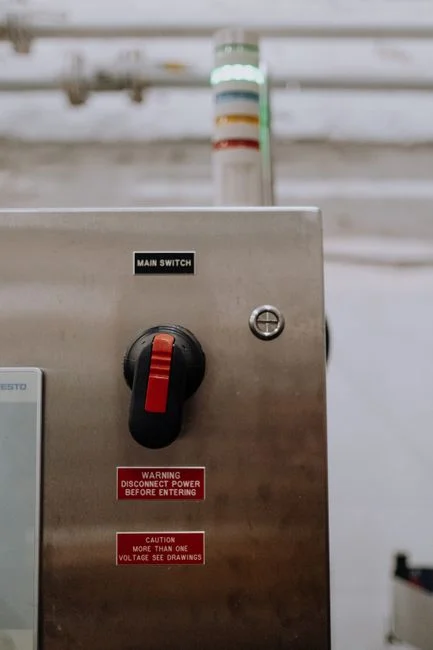
Slug-control is where the difference between a federal-categorical audit and a working pretreatment program shows up. A zinc-phosphate dump from a paint-line pretreatment tank, for example, is the kind of slug that will pass a federal categorical daily-maximum check on a monthly average and still trip a local limit on the next 24-hour composite. The engineering response is to size the equalization basin to buffer shift-based dumps, route the floor drain to a monitored manhole, and have a PLC-controlled diversion valve that sends a slug to a holding tank on pH or flow excursion. Without those three pieces, the plant is paying a surcharge it cannot engineer away after the fact.
The pretreatment train a Michigan EV plant actually runs
The treatment train that meets the four-layer stack for an automotive plant in the Inkster corridor is a sequence of unit processes, each of which solves a specific compliance problem from the previous sections. The engineer should be able to sketch the train on a P&ID and map each unit back to a categorical ceiling or a local limit. Below is the working sequence, with the equipment that handles each step.
- Headworks and equalization. A headworks bar screen removes gross solids before the equalization basin. The basin is sized to buffer shift-based slug loads from stamping and phosphating lines, and a PLC-controlled pH trim with acid/caustic dosing keeps the downstream chemistry in range. This step is what keeps a 1-hour paint-line dump from being a 24-hour excursion at the monitoring manhole.
- DAF for oil and grease. A DAF unit for oil and grease removal floats free and emulsified oil, grease, and low-density solids; hydraulic residence time for the flotation cell is generally on the order of 20–40 minutes, sized from the design flow and the air-to-solids ratio. DAF is the workhorse for an automotive plant because stamping and machining coolants are the dominant volume stream.
- Chemical precipitation for dissolved metals. A PLC-controlled chemical dosing skid stages pH for hydroxide or sulfide precipitation: zinc begins to drop at roughly pH 9, nickel and copper at pH 10, and hexavalent chromium requires a reduction step with ferrous sulfate or sodium metabisulfite to convert Cr(VI) to Cr(III) before it can be precipitated. Staging the pH correctly is what makes the downstream clarifier work.
- Lamella or inclined-plate clarification. A lamella clarifier for metals precipitation removes the metal-hydroxide sludge, with a sludge recirculation feature that returns settled solids to maintain a dense blanket and improve capture. Clarifier overflow then goes to the polish step.
- Multimedia and/or ultrafiltration polishing. Multimedia filtration captures residual precipitates and protects downstream equipment; if water reuse is in scope, UF at roughly 0.03 micron handles colloidal carryover and protects the RO from fouling.
- Sludge dewatering. A filter press for sludge dewatering drops sludge volume before POTW-hauled or contracted disposal. Filter press cake at 25–35% dry solids is the typical range for metal-hydroxide sludge and is what makes hauling economics work.
| Step | Unit operation | Compliance problem it solves |
|---|---|---|
| 1 | Bar screen + equalization + pH trim | Smooths shift-based slug loads; protects downstream chemistry |
| 2 | DAF | Oil & grease, emulsified coolants, floating TSS |
| 3 | Chemical precipitation (hydroxide + Cr(VI) reduction) | Dissolved zinc, nickel, copper, chromium |
| 4 | Lamella clarifier | Separates metal-hydroxide sludge from effluent |
| 5 | Multimedia filter and/or UF | Polishing; RO protection if reuse is in scope |
| 6 | Plate-and-frame filter press | Drops sludge volume for hauling/disposal |
How to match each pollutant to the right unit process

The fastest way to keep a vendor conversation focused is to start with the pollutant and work backward to the unit process. Each row below is a one-line scope item an engineer can hand to a supplier, with the design basis that the supplier needs to size the equipment correctly. Where a target number is well-established in the trade, it is given; where it is site-specific, the table describes the basis rather than inventing a value.
| Pollutant | Unit process | Design basis |
|---|---|---|
| Oil & grease (free and emulsified) | DAF; oil/water separator as first cut | Skim to ≤15 mg/L at the monitoring manhole; design target of 90%+ removal through the DAF train is typical |
| Dissolved metals (Ni, Cu, Zn, Cr) | Hydroxide precipitation at staged pH; sulfide for tightest Zn | Zinc pH ~9; Ni/Cu pH ~10; Cr(VI) reduced to Cr(III) before precipitation; lamella clarifier or DAF separates sludge |
| Total suspended solids | Coagulation + sedimentation or DAF; multimedia filter as polish | Coagulant dose set by jar testing; multimedia filter to capture residual precipitates and protect reuse RO if present |
| pH excursions | Equalization basin with PLC-controlled acid/caustic dosing | Target effluent pH 6–9 as required by most Michigan POTW local limits; trim response time on the order of minutes, not hours |
| Total Toxic Organics (TTO) | Oil/water separator first, then activated carbon if a specific solvent signature is identified | Solvent inventory in the plant drives carbon selection; DAF removes the solvent-laden oil phase before carbon polishing |
For a 2026 plant design, the right step order on the P&ID is the same as the row order in the table: capture the oil and TSS first (because oil blinds carbon and fouls membranes), precipitate the metals second, and polish last. The integrated JY-series packaged water-purification skid and the multi-media filter for polishing are the typical packaged systems that handle steps 3–5 in a skid-mounted footprint for brownfield retrofits, which is the common 2026 deployment pattern in the Inkster corridor as EV gigafactories repurpose older stamping and assembly buildings. The same train logic is the basis for a paint and coating wastewater treatment design when the COD load is high enough to require biological polishing ahead of metals precipitation.
Self-monitoring, reporting, and what 'pass-through' really costs you
Self-monitoring for a Significant Industrial User (SIU) in Michigan is a 24-hour flow-paced composite sample at the monitoring manhole, with the parameter list and frequency set by the POTW permit. The minimum analytical suite is usually pH, oil and grease, TSS, total metals, and any TTO compounds identified in the plant's process inventory, and the sampling frequency is typically monthly for categorical parameters and more often for local-limit parameters, with the exact cadence written into the SIU permit. Reporting follows 40 CFR 403.12, with the standard SIU reporting cadence being monthly discharge monitoring reports (DMRs) and an annual slug-control plan certification, and the receiving POTW has the right to additional sampling at any time. The cost of a single bad day of self-monitoring is a 40 CFR 403.3(p) or 403.3(k) determination, which is the legal hook the POTW uses to fine the IU.
The consequences of a pass-through or interference finding stack. The first is an administrative order with a corrective-action deadline, often 30 to 90 days. The second is a consent decree, which is what the POTW files when the corrective action slips. The third is the surcharge: a per-pound charge for the pollutant load above the local-limit allocation, billed on the next monthly invoice. The fourth, and often the most expensive, is the indirect cost to the receiving POTW's NPDES permit; if the plant's pass-through is the cause of an exceedance at the receiving stream, the receiving POTW's own permit violation becomes the IU's problem in the form of a third-party-claim or a permit-condition amendment that tightens the local limit for the entire industrial user base. A 2026 EHS team should therefore treat self-monitoring as a daily production activity, not a quarterly audit, and should size the equalization basin and diversion logic in the previous section to be the first line of defense before the sampling ever reaches the lab.
Frequently Asked Questions
Which federal categorical standard applies to an EV or auto assembly plant in Michigan?
40 CFR Part 467 (Metal Products and Machinery) covers core automotive manufacturing, and 40 CFR Part 461 (Battery Manufacturing) and 40 CFR Part 433 (Metal Finishing) often apply to battery and metal-finishing operations on the same site. EPA's "Summary of Categorical Standards" (Attachment 3-1, December 2024) is the master index an engineer uses to map each line to its subpart.
What is the difference between 'pass-through' and 'interference' under 40 CFR 403?
Pass-through (40 CFR 403.3(p)) is a discharge that exits the POTW in quantities or concentrations that cause a violation of the POTW's NPDES permit, while interference (40 CFR 403.3(k)) is a discharge that inhibits or disrupts the POTW, its treatment processes, or its sludge use or disposal and is a cause of an NPDES or sludge violation. Both are the legal hooks a Michigan POTW uses to fine an industrial user.
Who is the receiving POTW for an EV plant in the Inkster corridor?
Plants whose collection system flows south of the River Rouge typically discharge to the Downriver Utility Sewerage Authority (DUSA), and plants whose flow reaches the Detroit system discharge to the Great Lakes Water Authority (GLWA). Both agencies are EPA-approved pretreatment authorities and run their own local-limits and surcharge programs in parallel with the federal categorical standards.