What Changes on Closing Day
Four wastewater frameworks apply simultaneously when ownership of a Texas semiconductor fab transfers: the existing Texas Pollutant Discharge Elimination System (TPDES) individual permit under 30 TAC Chapter 305 must be legally transferred; any industrial user discharging to a publicly owned treatment works (POTW) must obtain or novate a pretreatment permit under 40 CFR Part 403; semiconductor fabs also need coverage under EPA Multi-Sector General Permit (MSGP) TXR05B000 for stormwater; and any reuse of treated effluent for cooling or scrubbing must meet 30 TAC §210 quality limits. Statutory authority flows from Texas Water Code §26 and 30 TAC Chapter 305. TCEQ Class A–D licensed operators are required based on design flow, per the state's wastewater operator certification framework.
Closing the asset purchase does not automatically transfer the TPDES permit. The seller remains the permittee of record until TCEQ approves a name-and-ownership change under 30 TAC §305.64. EPA pretreatment industrial user (IU) status is a site-specific determination under 40 CFR §403.3 and must be re-evaluated at the new-owner level whenever corporate ownership crosses the 10% threshold (40 CFR §403.3(j)). That gap between wire transfer and permit novation is the single most overlooked liability in a fab acquisition.
TPDES Permit Transfer Under 30 TAC Chapter 305
30 TAC §305.64 requires the buyer to file Form TCEQ-20717 — "Core Data Form" and a signed transfer application — within 30 days of the ownership change. The permittee of record remains liable for every gallon discharged between the closing date and the date TCEQ issues the approval letter, an interval the engineering team should treat as a 30- to 90-day "silent liability window" (per 30 TAC §305.64, 2025-08 review). The required submission package includes the signed transfer application, a copy of the deed or bill of sale, an updated operator certification (Class A, B, C, or D depending on rated design flow), and revised sampling point coordinates if any process lines are re-routed under the new owner. TPDES major permits in Texas typically carry 5-year terms, and ownership-only changes qualify for an administrative revision rather than a full major modification. Any process change — a new chemical, a new flow path, an increase in rated flow — triggers a separate major modification under 30 TAC §305.62 and a new antidegradation review.
| Permit Trigger Event | Form or Action | Citing Rule | Typical Review Window |
|---|---|---|---|
| Ownership / name change only | TCEQ-20717 + signed transfer application | 30 TAC §305.64 | 30–90 days |
| New process chemical or flow path | Major modification application | 30 TAC §305.62 | 6–12 months |
| Operator of record change | Updated Class A–D license on file | 30 TAC §30 | 30 days |
| Change in outfall location | Permit amendment with new sampling map | 30 TAC §305.62 | 3–6 months |
Semiconductor Categorical Pretreatment Standards (40 CFR Part 469)
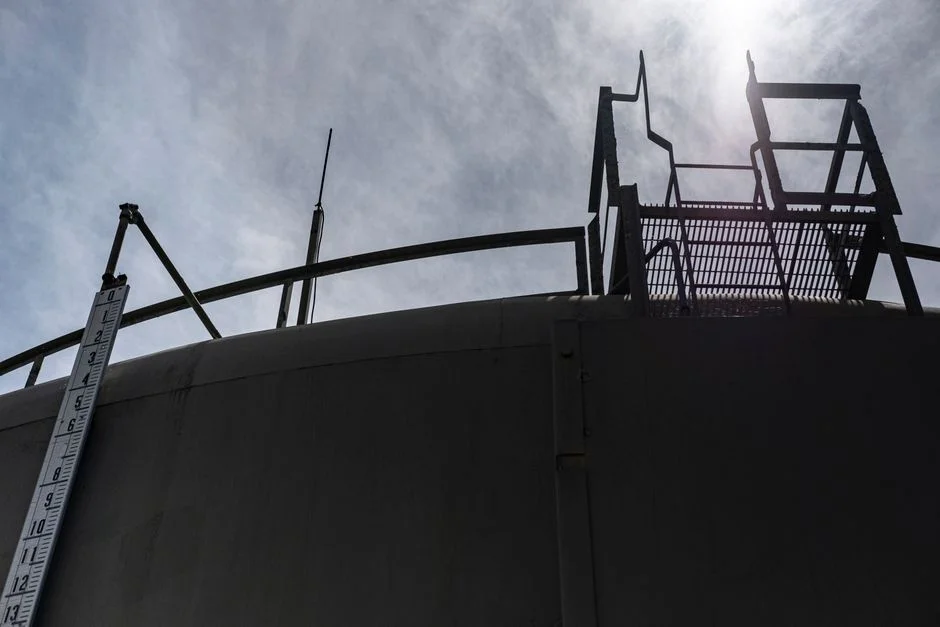
40 CFR Part 469 Subparts A through E set categorical pretreatment standards for semiconductor manufacturing, and these limits bind the fab regardless of whether the discharge is to a POTW or to surface water. The categorical daily-maximum and monthly-average limits cover arsenic (1.1 mg/L daily max, 0.66 mg/L monthly avg), copper (3.4 / 2.0 mg/L), lead (0.69 / 0.43 mg/L), zinc (2.6 / 1.5 mg/L), fluoride (≤10 mg/L at most Texas POTWs), and total suspended solids (60 mg/L monthly avg) per 40 CFR §469.12. TMAH (tetramethylammonium hydroxide) is not a listed categorical parameter, but it is regulated as a process pollutant — typical treatment combines biological oxidation (acclimated activated sludge, HRT 24–48 h) with advanced oxidation (O₃/H₂O₂ or UV/H₂O₂) to break the quaternary amine; the engineering detail is covered in the hybrid TMAH treatment and ZLD design for semiconductor fabs technical note. CMP (chemical-mechanical planarization) slurry waste runs high in colloidal silica (200–5,000 mg/L SiO₂) and is best handled with a DAF system for CMP and FOG removal in semiconductor fab wastewater or lamella clarifier, as detailed in the DAF vs clarifier comparison for semiconductor wastewater. Spent solvent streams from photoresist stripping may independently trigger 40 CFR Part 261 hazardous-waste listings and must be evaluated against RCRA characteristic wastes (D001 ignitability, F003/F005 solvent listings).
Stormwater Coverage Under Multi-Sector General Permit TXR05B000
The EPA Multi-Sector General Permit TXR05B000 covers stormwater associated with industrial activity, and semiconductor fabs fall under Sector M (electronic and electrical equipment and components). A new Notice of Intent (NOI) must be filed within 30 days of an operator change, even if the SIC code (3674 for semiconductors) and the outfall coordinates are unchanged (per EPA MSGP TXR05B000, 2025 issuance). Benchmark monitoring applies at every outfall for total suspended solids (100 mg/L benchmark), chemical oxygen demand (120 mg/L), and pH (6.0–9.0 SU). Outdoor chemical storage must carry both secondary containment (110% of the largest vessel) and roof coverage; without both, the storage area is "exposed to stormwater" and routes into the MSGP permit rather than staying exempt.
Water Reuse Under 30 TAC §210 and the EPA Texas Industrial Reuse Page
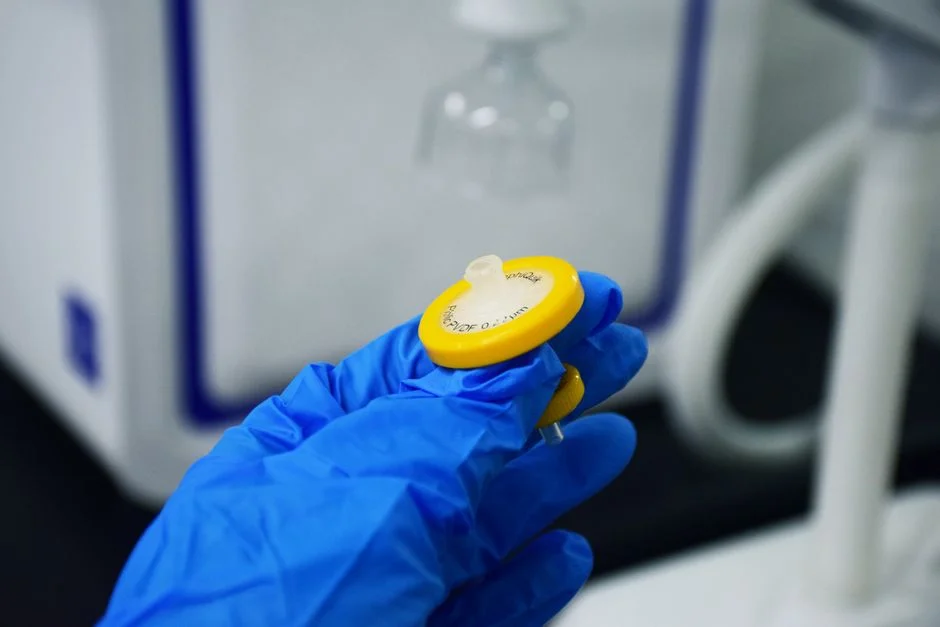
Texas defines industrial reclaimed water verbatim at 30 TAC §210.52(8) as "any industrial wastewater which has been treated, if necessary, to a quality suitable for land application for beneficial use." Industrial wastewater itself is defined as a non-domestic, non-municipal wastewater stream at 30 TAC §210.52. Surface and groundwater reuse is jointly governed by Texas Water Code §11 and 30 TAC Chapter 210, and Texas allows industrial reuse only with site-specific authorization. The four reuse categories a fab typically pursues are cooling-tower makeup, boiler feed, process rinse makeup, and landscape irrigation, each with its own quality matrix — cooling-tower makeup generally needs ≤5 mg/L TSS, ≤1 NTU turbidity, and biological control via ClO₂ or UV to keep Legionella counts under the industry target of <1,000 CFU/mL. These reuse standards ensure that treated effluent meets specific safety and performance metrics before entering secondary plant systems.
The standard reuse train at a fab is MBR → UF → RO → mixed-bed polishing, with a MBR membrane bioreactor for fab process wastewater treatment handling the bulk COD/BOD load, a UF pretreatment for fab RO and reuse systems protecting the RO membranes, and an on-site chlorine dioxide generator for cooling-tower biological control sized to the cooling-tower basin turnover. Existing activated-sludge tanks can often be converted to MBR duty; the engineering workflow is laid out in the MBR retrofit and upgrade guide for existing fabs. The RO design envelope — recovery, flux, and rejection — is summarized in the RO design criteria for fab reuse and ultrapure water pretreatment reference.
| Reuse End-Use | Typical Quality Target | Critical Treatment Step | Governing Rule |
|---|---|---|---|
| Cooling-tower makeup | ≤5 mg/L TSS, ≤1 NTU, <1,000 CFU/mL Legionella | MBR → UF → RO → ClO₂ or UV | 30 TAC §210.52(8) |
| Boiler feed | ≤0.1 mg/L SiO₂, conductivity <1 µS/cm | RO → mixed-bed polish | 30 TAC §210, Texas Water Code §11 |
| Process rinse makeup | ≥18 MΩ·cm resistivity | RO → EDI → mixed-bed → UV | Site-specific authorization |
| Landscape irrigation | ≤30 mg/L BOD₅, ≤30 mg/L TSS | MBR → UF | 30 TAC §210 Subchapter D |
Post-Closing 30-60-90 Day Compliance Checklist
Days 0–30: file Form TCEQ-20717 to novate the TPDES permit under 30 TAC §305.64; file a new NOI under TXR05B000 if MSGP coverage has lapsed; notify the receiving POTW of the ownership change so the IU permit can be reissued under 40 CFR §403.3. Days 31–60: conduct a baseline monitoring walk-through to verify all DMR sampling points match the permit map; confirm the operator of record holds a current TCEQ Class B or A license (Class D for systems under 25,000 gpd design flow) per 30 TAC §30; confirm DMR submission cadence (monthly for major permits). Days 61–90: evaluate any reuse upgrade opportunity against 30 TAC §210.52(8); submit a major modification under 30 TAC §305.62 if process chemistry has changed; close any open TCEQ enforcement dockets inherited from the seller, because successor liability flows with the permit. Operator certification is governed by the Texas water and wastewater operator certification pathway, and a new owner should lock in a licensed operator before Day 30 to avoid operating-permit noncompliance.
Frequently Asked Questions
How long does a TPDES permit transfer take after a fab acquisition in Texas?
Under 30 TAC §305.64, the buyer must file Form TCEQ-20717 within 30 days of closing. TCEQ administrative review typically runs 30 to 90 days for an ownership-only name change; the seller remains the permittee of record and liable for any discharge violation during that window.
Does Intel need a separate pretreatment permit if the fab discharges to a POTW?
Yes. Industrial user status is site-specific under 40 CFR §403.3 and is re-evaluated at the new-owner level when corporate ownership crosses the 10% threshold. The receiving POTW issues or novates the IU permit; categorical limits from 40 CFR Part 469 still apply on top of any local discharge limits.
When can treated fab effluent be reused for cooling or scrubber makeup in Texas?
Reuse requires site-specific authorization under 30 TAC §210.52(8) and Texas Water Code §11. Cooling-tower makeup generally requires MBR → UF → RO treatment to meet ≤5 mg/L TSS, ≤1 NTU turbidity, and biological-control targets before the water can be sent to the cooling-tower basin.
What hazardous-waste carryover should a buyer expect from the seller's fab operations?
Spent solvents, photoresist stripper waste, and certain acid baths may carry 40 CFR Part 261 characteristic or listed hazardous-waste codes (D001 ignitability, F003/F005 solvent listings). The buyer should request the seller's RCRA manifests and biennial reports before closing and re-permit any on-site 90-day accumulation areas under the new EPA ID number.