Why North Branch Food Plants Are Picking DAF Over a Clarifier in 2026
For most North Branch, MN food and beverage factories in 2026, a Dissolved Air Flotation (DAF) unit is the right primary step because wastewater streams are typically high in fats, oils and grease (FOG) and light suspended solids — Ecologix-cited data shows DAF hitting 95% oil and grease removal versus 70% for a gravity clarifier on the same food-plant effluent. A lamella clarifier is the better pick when solids settle easily and the budget is tight, or as a polishing step after the DAF.
The headline rule is simple. When influent FOG is consistently above ~100 mg/L, when the stream is light or colloidal, or when temperature swings above 50 °C during hot-water washdowns, a DAF is the default. When the stream is dominated by settleable starches, fruit pulp, or grain solids, a lamella clarifier is enough. When both conditions show up in the same day — and most North Branch slaughterhouses, dairies, and breweries see exactly that — run the DAF first and a small lamella clarifier second as a polish step. The 95% vs 70% FOG gap (per the Ecologix DAF-vs-clarifier comparison) is the single largest driver of that decision; the 30-percentage-point swing on the parameter regulators actually surcharge on is what shifts the project budget.
Local conditions reinforce the call. Chisago County sits on the fringe of the Twin Cities metro, and almost every plant in the North Branch area discharges to a POTW — the Chisago Environmental Center or a city sewer ordinance — under a pretreatment permit, not a direct-discharge NPDES. That means pretreatment quality, not flow, is the regulated variable, and a clarifier alone rarely clears local FOG or TSS surcharges. On top of that, 2026 production-volume growth in protein and dairy lines (Messer Americas, 2025-09) is pushing FOG and TSS loadings up at the same time regulators are tightening surcharge enforcement — exactly the conditions where a clarifier starts to underperform. For plants ordering a primary unit now, sizing starts with the HydropureWater DAF system as the workhorse and the lamella clarifier as the optional second stage.
How a DAF and a Clarifier Actually Treat Food & Beverage Water
A DAF is a flotation unit, not a settling tank. A side stream of clarified water is pressurized to 4–6 bar in a saturator vessel with dissolved air, then released through a needle valve or nozzle array at the bottom of the flotation tank. The pressure drop nucleates a cloud of micro-bubbles in the 10–100 µm range; those bubbles attach to oil droplets, floc, and fine suspended matter, lifting the floated layer to the surface in 5–20 minutes where a paddle or scoop skims it off. The air-to-solids ratio for food streams typically runs 0.02–0.06 lb air per lb TSS — high enough to lift colloidal and emulsified FOG, low enough that the saturator stays a sensible size. A correctly designed DAF for a 30 m³/h dairy line will use a 20–30% recycle stream, an 8–15 kW air compressor, and a small polymer feed ahead of the saturator.
A clarifier is a settling tank, with or without inclined plates. Coagulant and flocculant are dosed upstream, the stream flows through a flocculation zone, and gravity pulls the agglomerated solids to the bottom for scraping or hydrostatic extraction. A conventional gravity clarifier works at a surface overflow rate of 1–2 m³/h per m² of footprint; a lamella clarifier inserts a pack of inclined plates at 55–60° to multiply the effective settling area, pushing the surface loading rate to 20–40 m³/h per m² of plan area (HydropureWater product data). A lamella clarifier needs only a scraper drive, a sludge pump, and the polymer system — no compressed air, no recycle pump, no saturator. The tradeoff is that a clarifier can only remove what already wants to fall out; emulsified FOG, light fruit skins, and surfactant-laden CIP streams tend to slip through.
For a North Branch dairy or meat plant with frequent hot-water washdowns and surfactant-rich CIP, the DAF handles temperature swings and stabilized emulsions better than a clarifier, which loses floc when influent goes above ~40 °C and struggles to capture anything that does not naturally settle. The two technologies are not equivalent in scope — DAF is the mechanically complex box that captures what gravity cannot. Plants ordering a single skid today usually pair the automatic coagulant and flocculant dosing rack with the DAF saturator skid so polymer and air-saturation tuning stay in one control envelope.
Side-by-Side: DAF vs Clarifier on the Numbers That Matter
| Parameter | Dissolved Air Flotation (DAF) | Lamella Clarifier | Conventional Gravity Clarifier |
|---|---|---|---|
| FOG removal | 85–95% (95% per Ecologix food-plant case) | 60–75% | 55–70% |
| TSS removal | 80–90% | 85–95% on settleable solids | 70–85% on settleable solids |
| Hydraulic residence time | 15–30 min | 30–60 min | 90–180 min |
| Footprint per m³/h | Most compact (typical 0.2–0.4 m² per m³/h) | ~1/3 the footprint of a conventional clarifier | Largest — 0.8–1.2 m² per m³/h |
| Air-to-solids ratio (food streams) | 0.02–0.06 lb air/lb TSS | N/A | N/A |
| Sludge dry solids | 3–6% DS float, dewaters easily | 1–2% DS underflow | 1–2% DS underflow |
| Polymer consumption | 2–10 mg/L | 1–5 mg/L | 1–5 mg/L |
| Power (50 m³/h unit) | 8–15 kW | 2–5 kW | 2–5 kW |
| 2026 CAPEX band (skid, ex-works) | USD 35,000–90,000 (5–25 m³/h); USD 90,000–250,000 (25–80 m³/h) | USD 25,000–80,000 (10–80 m³/h) | USD 30,000–100,000 (10–80 m³/h) |
| Mechanical complexity | Recycle pump, saturator, compressor, skimmer | Scraper drive, sludge pump | Scraper drive, sludge pump |
| Best-fit stream | Meat, poultry, dairy, edible-oil, fryer, sauce, brewery | Vegetable wash, fruit processing, grain starch, polishing after DAF | High-flow, low-FOG, steady streams |
The 95% vs 70% FOG gap from the Ecologix comparison is the single most-quoted line in vendor meetings, but the table makes the quieter points visible too. A DAF's 15–30 minute HRT lets it absorb peak-to-average flow swings of 3:1 without scouring; a clarifier's 30–60 minute HRT cannot. DAF float at 3–6% DS pairs naturally with a plate and frame filter press for sludge dewatering — clarifier underflow at 1–2% DS doubles the cake volume and the disposal cost. Treat the CAPEX bands as 2026 planning figures (HydropureWater field data), not as a vendor quote.
Matching the Choice to 2026 EPA Categorical Standards and MPCA Rules
40 CFR Part 437 sets categorical pretreatment standards for Fruit & Vegetable, Meat & Poultry, and Dairy Products subcategories. BOD₅ monthly-average limits in the F&V subcategory sit around 332 mg/L for several processing lines; meat and poultry subcategory limits trend stricter on TSS and FOG; the FOG monthly-average limit of 173 mg/L applies across multiple subcategories. A DAF typically brings FOG to 30–60 mg/L and TSS to 80–150 mg/L on the front end, clearing the categorical line and most local POTW surcharges; a lamella clarifier alone on a high-FOG stream usually leaves 100–200 mg/L FOG, which is over the surcharge trigger and difficult to defend in a monthly-average self-monitoring report.
| Subcategory (40 CFR Part 437) | Key monthly-average limit | DAF effluent (typical) | Lamella clarifier effluent (typical) | Selection outcome |
|---|---|---|---|---|
| Fruit & Vegetable (selected lines) | BOD₅ ~332 mg/L | BOD 150–250 mg/L | BOD 200–320 mg/L | Lamella often sufficient; DAF if FOG >100 mg/L |
| Meat & Poultry | FOG 173 mg/L; strict TSS | FOG 30–60 mg/L, TSS 80–150 mg/L | FOG 100–200 mg/L, TSS 100–200 mg/L | DAF default |
| Dairy Products | BOD₅ and FOG categorical limits | FOG 30–60 mg/L | FOG 90–150 mg/L | DAF default; DAF + lamella hybrid for high loads |
| Brewery / beverage | BOD₅ and TSS local limits | High TSS removal | Lamella adequate on settleable grain | Either, depending on FOG |
Most North Branch-area POTWs apply local surcharges on TSS >250 mg/L, FOG >100 mg/L, and BOD >250 mg/L (typical Twin Cities metro pretreatment ordinance band). A clarifier alone often cannot meet the FOG surcharge line, a DAF typically can. MPCA industrial stormwater and pretreatment permits in 2026 continue to require daily-max and monthly-average self-monitoring; a DAF's higher removal consistency makes the monthly average easier to defend than a clarifier's variable settleable-solids capture. The 1978 EPA Plant A and Plant B case data (per the Ninth National Symposium on Food Processing Wastes proceedings) showed that air flotation for grease plus biological treatment plus a secondary clarifier routinely delivered clarifier-effluent BOD <30 mg/L and SS <40 mg/L — numbers that still define good pretreatment performance in 2026. For the broader compliance picture, the 2026 EPA pretreatment compliance guide for food and beverage plants covers the MPCA reporting chain in detail.
2026 Cost Reality: CAPEX, OPEX and What Changes the Payback
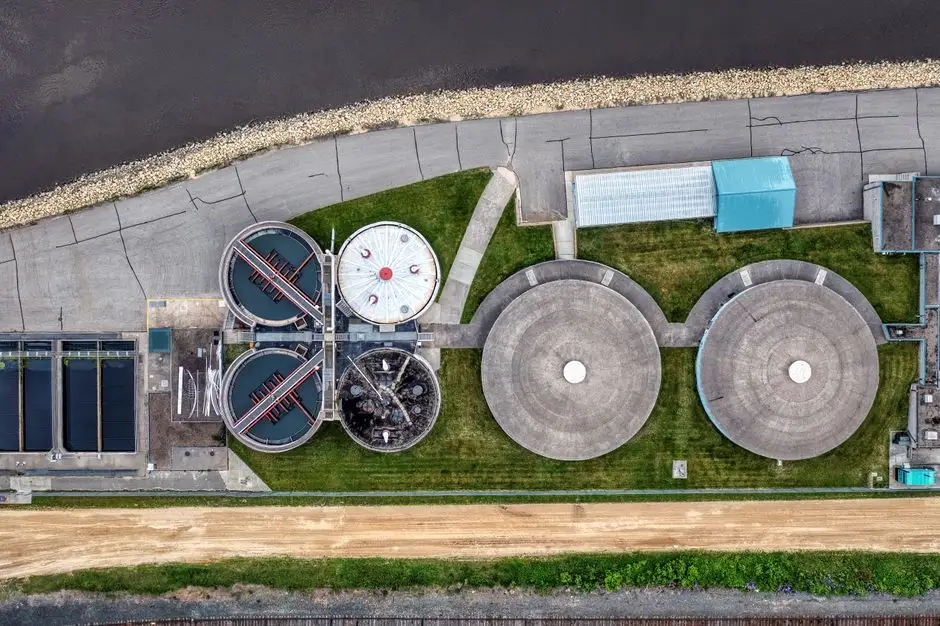
OPEX for a DAF is dominated by polymer consumption at 2–10 mg/L, saturated-water recycle pumping, and float disposal. A 50 m³/h DAF typically draws 8–15 kW; an equivalent lamella clarifier draws 2–5 kW. Sludge handling tilts back toward the DAF: float at 3–6% DS dewaters cheaply on a plate and frame press, while clarifier underflow at 1–2% DS roughly doubles the cake volume and the haul-off cost. Maintenance on either unit is modest — DAF needs periodic nozzle, saturator, and skim-blade inspection; a clarifier needs scraper and lamella cleaning.
For a typical 30 m³/h North Branch food line in 2026, the installed CAPEX delta between a DAF and a lamella clarifier lands in the USD 40,000–90,000 range. DAF OPEX runs 15–30% higher, but the FOG-related surcharge savings at a typical surcharge of USD 0.05–0.15 per m³ over the local limit usually pay back that delta inside 24 months for a plant running 12+ hours per day. The detailed line-item math sits in the 2026 industrial wastewater OPEX breakdown; treat the bands here as planning-level (HydropureWater field data), not as vendor quotes.
Selection Flowchart for a North Branch Food or Beverage Plant
- Pull two weeks of composite influent data for FOG, TSS, and BOD. If FOG is consistently above ~100 mg/L, or if the stream runs above 50 °C, or if CIP surfactants are present, the default is DAF.
- Check the diurnal flow profile. If peak-to-average is above 3:1, the DAF's 15–30 minute HRT will absorb it; a clarifier's 30–60 minute HRT will scour at peak flow. If flow is steady and settleables dominate, a lamella clarifier is enough.
- Pull the POTW surcharge schedule. Once FOG or TSS surcharges exceed roughly USD 0.05 per m³, the DAF payback is usually under two years on its own.
- If the stream has both heavy settleables (starch, fruit pulp) and FOG, run the DAF first, then a small HydropureWater lamella clarifier as a polish step — the hybrid pattern documented in the 1978 EPA Plant B case.
- Confirm floor space and ceiling height before locking the skid. The DAF is the most compact per m³/h, which matters in older North Branch plants with low ceilings and narrow equipment rooms. The HydropureWater DAF system ships in containerized form for tight retrofits.
Frequently Asked Questions
Is a DAF or clarifier better for high-FOG food wastewater?
DAF. The Ecologix food-plant case shows DAF at 95% FOG removal versus 70% for a clarifier on the same stream, and a DAF typically drops FOG to 30–60 mg/L — well under the 100 mg/L surcharge line most North Branch-area POTWs enforce.
Can I use a lamella clarifier instead of a DAF in a meat processing plant?
Conditionally yes, only if influent FOG is consistently below ~100 mg/L and the stream is steady. If FOG spikes above 100 mg/L during slaughter or rendering campaigns, the lamella will underperform and you will need to upgrade to a DAF or a DAF + lamella hybrid.
What FOG level triggers a DAF instead of a clarifier?
~100 mg/L is the working rule of thumb. Above that, a clarifier alone rarely clears the FOG surcharge at a typical North Branch POTW. Below that, a lamella clarifier is defensible on settleable-heavy streams like vegetable wash or brewery grain runoff.
How much does a DAF system cost for a small food plant in 2026?
For a skid-mounted 5–25 m³/h unit ex-works, USD 35,000–90,000 (HydropureWater field data, 2026). Add 20–40% for installed cost depending on site work, and treat the band as planning-level rather than a quote.
Do DAF and clarifier get used together?
Yes. The 1978 EPA Plant B case used air flotation for grease removal followed by biological treatment and a secondary clarifier. In a 2026 primary-treatment train, the DAF takes FOG and colloids, the lamella clarifier polishes settleable carryover and thickens the sludge for dewatering.
What EPA rule applies to a North Branch food and beverage plant?
40 CFR Part 437 categorical pretreatment standards cover Fruit & Vegetable, Meat & Poultry, and Dairy Products subcategories with daily-max and monthly-average limits on BOD, TSS, and FOG. On top of that, the local POTW ordinance (Chisago Environmental Center or city sewer) sets the surcharges that drive the equipment choice day to day. The Springdale food factory DAF vs clarifier guide walks through the same logic for a comparable jurisdiction.