Why textile plants are looking at medical-grade packaged wastewater systems in 2026
Tightening discharge permits, rising water tariffs, and buyer-side effluent clauses are pushing mills in Surat, Coimbatore, Keqiao, İzmir and Barcelos to look beyond conventional activated sludge — and toward compact, ozone-based packaged units originally sold to hospitals and clinics. A 2025 review of textile water management puts the sector's annual intake at roughly 830 million m³ of freshwater and its output at about 640 million m³ of effluent per year (Springer, Discover Water, 2025-03, doi:10.1007/s43832-025-00215-z). Against that footprint, the same source confirms that bleaching, finishing and dyeing together consume more than 50% of plant water, which is why the discharge stream is so heavily loaded and why a one-cubic-metre "plug-and-play" box looks attractive on paper.
The 2026 appeal of a medical-grade unit is straightforward. The medical wastewater treatment system ships in a 0.5 m² footprint, runs fully automated, uses ozone instead of chlorine, and is pre-engineered to EPA effluent standards and the EU Urban Waste Water Directive 91/271/EEC (HydropureWater product catalog, 2026). The central tension — and the reason this article exists — is that a hospital feed is several-hundred-mg/L COD clinical waste, whereas a dyehouse feed is dye-, salt- and surfactant-laden effluent that swings between pH 2 and pH 13. The compact medical wastewater system works on the former; on the latter it is a polish and disinfection tail, not a stand-alone treatment plant.
What textile effluent actually contains (and where a medical system breaks)
The Springer 2025 review maps textile pollutants process by process: sizing and desizing release high-BOD, starch-rich liquor; scouring discharges sodium hydroxide at pH above 12; bleaching releases chlorinated by-products and residual H₂O₂; mercerizing adds a second NaOH pulse; dyeing contributes sulphite, formaldehyde, salts, surfactants, and the dye bath itself; printing and finishing add carriers, softeners and pigments. The U.S. EPA figure cited in the same review sets water intensity at 40 L of freshwater per kg of cloth coloured — the headline number any reuse calculation has to clear. Auxiliary chemicals include 2-naphthylamine, benzidine and 4-diphenylamine, all classified as carcinogenic and relevant to worker exposure as well as downstream disposal. The trace heavy-metal load (zinc, cadmium, nickel, lead, cobalt, chromium, iron, magnesium, copper, phosphorus, sodium, potassium) is what determines the stainless grade and ozone wetted-parts selection on any packaged unit.
| Process stage | Dominant pollutant | Loading range / impact |
|---|---|---|
| Sizing / desizing | Starch, PVA, carboxymethyl cellulose | High BOD/COD, 2,000–6,000 mg/L typical |
| Scouring | NaOH, surfactants, oils | pH 12–13, high TSS |
| Bleaching | H₂O₂, chlorinated by-products | Residual oxidant demand on downstream biology |
| Mercerizing | NaOH | Strong alkali pulse; equalisation required |
| Dyeing | Sulphite, formaldehyde, salts, reactive dyes, heavy metals | TDS often 5,000–30,000 mg/L; colour persistent |
| Printing / finishing | Dyes, carriers, softeners, PVA | Variable COD, refractory organics |
Stand-alone, a medical system fails on this feed in three predictable ways. First, ozone demand explodes when reactive dyes and surfactants are present — the unit's 99%+ kill envelope is sized for low-COD clinical waste, not for the reducing-agent load of a dye bath. Second, membranes in the multi-stage filtration chain foul on suspended fibre, lint and sizing residues that a hospital stream never carries. Third, salinity routinely exceeds the envelope assumed under 91/271/EEC discharge calculations, so the unit's conductivity compliance cannot be met from a single pass. The implication is clear: the medical unit must be wrapped in textile-specific primary and biological stages before it is asked to do the polish and disinfection work it was actually designed for.
Adapting a medical wastewater unit to textile feed: the 2026 process train
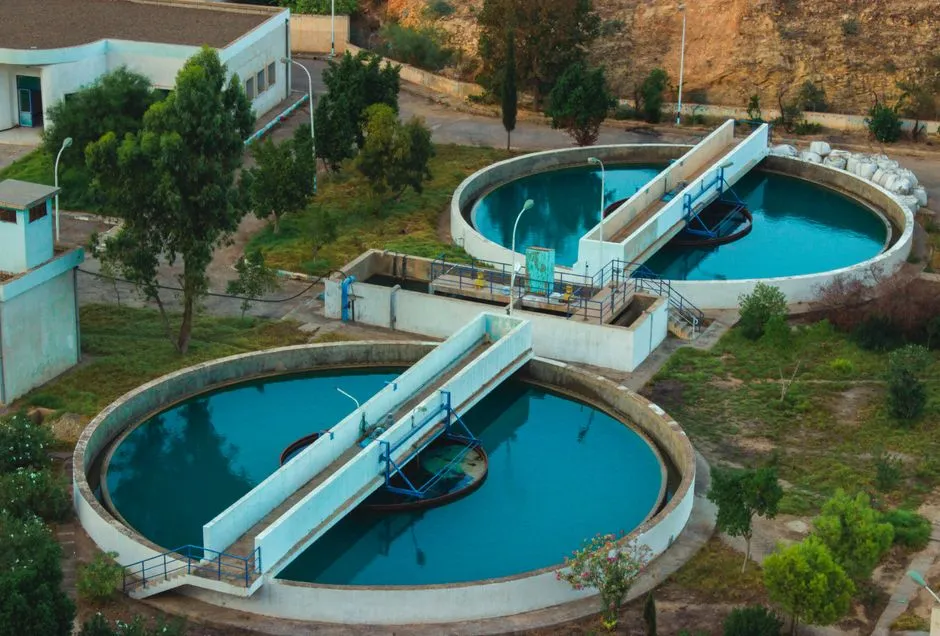
The workable 2026 layout wraps a textile-specific primary and secondary train around the compact medical wastewater system, in the order the unit was never designed to face but works in practice when arranged this way. The sequence is fixed by the failure modes above: remove solids, flatten chemistry, strip colour and bulk organics, then disinfect.
- Stage 1 — Mechanical screening. A GX rotary mechanical bar screen pulls fibres, lint, and rag debris at the head of the plant. Without it, the MBR membranes and the compact medical wastewater system's filter cartridges see what is effectively a rag slurry.
- Stage 2 — Equalisation and pH correction. An automatic chemical dosing system flattens the pH 2–13 swing typical of dyehouse effluent. This stage protects the downstream biology and prevents ozone from being scavenged by residual reducing agents.
- Stage 3 — DAF pre-treatment. A dissolved air flotation system (4–300 m³/h across 13 models) strips suspended solids, emulsified oils and a large fraction of the colour bodies. DAF is a proven textile pre-treatment workhorse; skipping it forces the MBR to absorb the load it was not sized for.
- Stage 4 — MBR with flat-sheet PVDF modules. A DF-series flat-sheet MBR module (0.1 μm pore, 80–225 m² per cassette, 32–135 m³/h per cassette, 10–20× lower energy than cross-flow) drops bulk COD/BOD, takes out residual colour, and tolerates the salinity a hospital unit cannot. Conventional activated-sludge footprints shrink by roughly 60% at this stage — the reason an MBR-based textile plant is even buildable inside a brownfield mill shed.
- Stage 5 — medical unit as the tail-end. The medical wastewater treatment system runs its multi-stage filtration plus ozone contactor as the final polish: 99%+ pathogen kill, EPA and 91/271/EEC discharge compliance, and a TSS/colour floor suitable for in-process reuse (rinsing, washing) or sewer discharge.
- Stage 6 — Optional RO for ZLD/MLD. Where reuse is targeted above 70% or ZLD is mandated, an industrial reverse osmosis system with up to 95% recovery follows the compact medical wastewater system. The Springer 2025 review frames ZLD/MLD as the response for water-scarce clusters: membrane filtration, RO, and evaporation in series, leaving only solid waste. Concentrate handling then becomes the next engineering decision.
The compact medical wastewater system is therefore the final 0.5 m² of a much longer train, not a substitute for any of the stages above.
Medical unit vs full textile WWTP: parameter comparison
The spec delta below is the gap the engineer's procurement decision turns on. The medical baseline is taken from the product catalog (HydropureWater, 2026); the textile-adapted column aggregates the DAF, MBR and RO parameters from the same catalog line-up and from the Springer 2025 review's reuse figures.
| Parameter | Medical baseline (out-of-the-box) | Textile-adapted target (with DAF + MBR + RO) |
|---|---|---|
| Footprint | 0.5 m² | Train footprint dominated by MBR (≈60% smaller than CAS) and DAF |
| Typical feed COD tolerance | Several hundred mg/L (clinical waste) | Up to ~2,000 mg/L upstream of MBR; <100 mg/L post-MBR |
| Effluent COD target | Compliant with EPA / 91/271/EEC for clinical profile | <100 mg/L typical reuse-grade; <50 mg/L for RO permeate |
| Colour removal | Limited; not designed for reactive dyes | DAF + MBR stack removes bulk; RO polish for reuse |
| Salinity tolerance | Limited; assumes low-TDS clinical feed | MBR tolerates 5,000–30,000 mg/L TDS textile window; RO handles remainder |
| Pathogen kill | 99%+ (ozone) | 99%+ retained; upstream stages protect ozone from scavengers |
| Chemical demand | None | pH correction, coagulant, antiscalant (RO) |
| Energy use | Low (ozone + pumps) | MBR 10–20× lower than cross-flow; RO pump adds load |
| Automation level | Fully automated, PLC | Same; equalisation and RO skids extend the PLC envelope |
| Regulatory compliance | EPA + EU 91/271/EEC | Same compliance carried through, with textile-specific pre-treatment upstream |
Two columns carry most of the weight. Feed COD tolerance rises from a few hundred mg/L to roughly 2,000 mg/L once an MBR membrane bioreactor system is in front, and the unit's chemical-demand profile shifts from "none" to a controlled dosing envelope the equalisation stage already demands. The reference benchmark any 2026 system has to beat is the 30% printing-and-dyeing reuse rate the PeerJ 2020 dataset documents for the Chinese textile sector (PeerJ, doi:10.7717/peerj.6937, data attributed to CNTAC 2018); an ozone-tailed train typically lands between 50% and 75% reuse depending on the RO stage.
Where the medical-grade disinfection tail-end earns its place
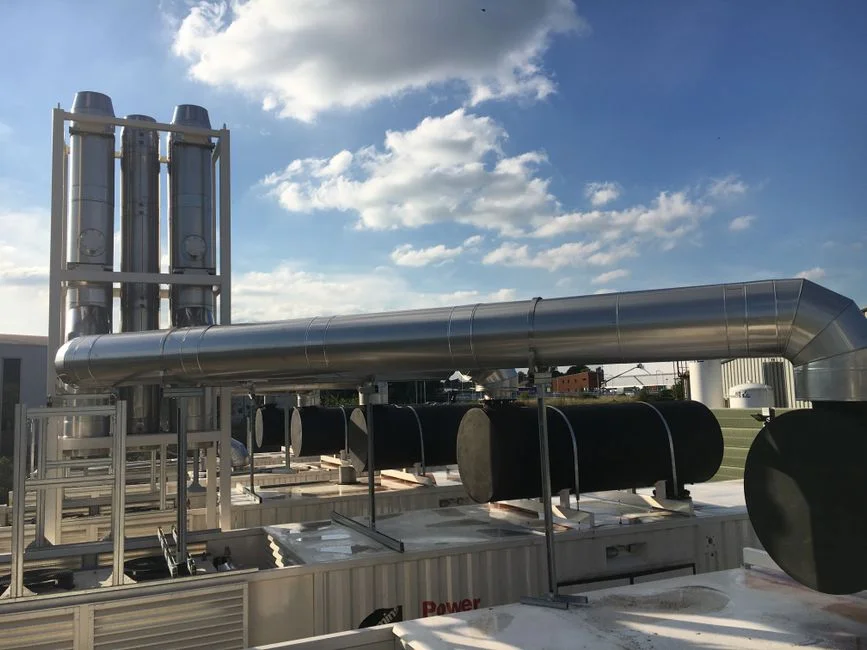
The compact medical wastewater system earns its slot in the train for three specific reasons, and only those three. First, the ozone stage delivers chemical-free pathogen kill without forming the chlorinated by-products that chlorine dosing would generate on a textile feed — a real concern given the Springer 2025 review's flagging of chlorine-resistant organisms in textile effluent. Second, the EPA and EU 91/271/EEC compliance built into the unit is hard-coded, which is exactly the audit-trail a mill exporting to EU and US buyers needs when those buyers impose supplier-side effluent clauses. Third, the multi-stage filtration chain lifts TSS to the floor required for in-process reuse — rinsing, washing, even pad-batch operations in light finishing — and supports the >30% reuse baseline that the PeerJ 2020 dataset identifies for printing and dyeing.
The honest limits are equally specific. Ozone does not remove salinity and it does not destroy the chromophore groups of reactive azo dyes once they are in solution; that is what the upstream MBR and the optional RO are for. Doubling the ozone dose to "push" colour is the most common mis-spec in retrofits, and the fastest way to push operating cost above the budget a 2026 audit will tolerate. Pairing the UV steriliser downstream of the ozone contactor can extend the disinfection envelope for reuse loops where residual ozone is undesirable, but the bulk of the work is upstream of the compact medical unit, not inside it.
Decision framework: when to adapt a packaged medical unit vs build a full textile WWTP
The choice in front of a 2026 buyer is not "medical unit or textile WWTP" — it is "where in the train does the medical unit sit, and does the mill need RO on top of it". Three decision paths cover the realistic cases.
Use the compact medical wastewater system as the only treatment. Only viable for very small auxiliary streams — a mill's clinic, staff block, or boiler-blowdown buffer — where the feed COD is in the few-hundred-mg/L range and there is no dye or salt load. On dyehouse or printing-floor effluent, a stand-alone compact medical wastewater system will fail its own compliance envelope within a shift.
Use the compact medical wastewater system as the tail-end of a textile-adapted train. This is the right fit for 1–200 m³/day mills in water-stressed or strictly regulated clusters (Surat, Coimbatore, Keqiao, İzmir, Barcelos) that need to push reuse past the 30% printing-and-dyeing baseline toward 50–75%. Screening + equalisation + DAF + MBR carry the load; the compact medical wastewater system delivers the disinfection and compliance layer at the lowest possible footprint and operating cost. The full process guide for the RO leg is laid out in the RO process guide for textile wastewater in 2026.
Skip the medical unit; build a full textile WWTP with RO and evaporation. Justified above ~500 m³/day where ZLD is mandated or where the concentrate stream can be evaporated economically. For flows between 200 and 500 m³/day, the cost calculus usually still favours keeping the compact medical wastewater system as the disinfection/polish stage even on a ZLD plant, because its compliance envelope and small footprint offset the marginal cost of including it.
The 2026 regulatory framing reinforces this. The late-2026 push by Poland to freeze parts of the EU wastewater rules and similar regional volatility (see the hospital wastewater treatment compliance guide for adjacent sector context) means buyers should favour systems whose compliance — EPA and 91/271/EEC — is hard-coded into the unit, not into local rule interpretations that can shift. An MBR + compact medical unit train with a documented MBR process and efficiency record (see the MBR process and efficiency explainer) survives an audit under either the 2026 or the 2027 rule set, which is the only defensible position when local standards are moving.
Frequently Asked Questions
Can a medical wastewater system treat dyehouse effluent on its own?
No. A medical-grade unit is sized for a few-hundred-mg/L COD clinical feed, not for the dye, salt and surfactant load of a dyehouse. The ozone stage will be scavenged, the membranes will foul, and the unit will fail its own EPA / 91/271/EEC envelope within a shift. It works as the final disinfection and polish stage of a textile-adapted train (screening → equalisation → DAF → MBR → compact medical wastewater system), not as a stand-alone plant.
What flow rate can an ozone-tailed textile train realistically handle?
For 1–200 m³/day mills, an ozone-tailed train with a DF-series flat-sheet MBR (0.1 μm pore, 80–225 m² per cassette, 32–135 m³/h per cassette) is the standard 2026 configuration. Above ~500 m³/day, the train is usually duplicated rather than scaled up, and an RO stage is added when reuse is targeted above 70% or when ZLD is mandated.
What reuse rate should a 2026 textile plant target with an ozone-tailed train?
The 2026 benchmark to beat is the 30% printing-and-dyeing reuse rate reported for the Chinese textile sector (PeerJ 2020, doi:10.7717/peerj.6937, CNTAC 2018). With DAF + MBR alone, a well-tuned train typically lands at 50–60% reuse; adding an industrial RO stage with up to 95% recovery pushes the figure into the 70–80% band, which is the realistic ceiling without moving to full evaporation-based ZLD.
Does ozone replace the MBR in a textile wastewater train?
No. Ozone is a disinfection and partial-oxidation step; it does not remove salinity and it does not reliably break down the chromophore groups of reactive azo dyes once they are dissolved. The MBR has to carry the bulk COD, BOD, colour and salinity load; the compact medical wastewater system's ozone stage is then responsible for pathogen kill and final compliance polishing, supported by its multi-stage filtration chain. The medical wastewater treatment system is sized for that role, not for primary textile treatment.