Why a TSMC Malaysia Acquisition Triggers a Full DOE Re-Permit
When TSMC acquires a Malaysia plant in 2026, the seller's DOE discharge permit does not transfer with the share purchase. Under Section 34A of the Environmental Quality Act 1974 (Act 127), the prohibition on discharge of untreated effluent binds the entity operating the plant on the date of discharge, not the original permit holder (per HydropureWater 2026-02). Liability follows the operator — the legal principle under EQA 1974 that the party operating a plant on the day effluent leaves the site is the party liable for that event, regardless of when the original permit was granted.
Two sections of the EQA 1974 frame the enforcement risk. Section 25 covers pollution of inland waters (reservoirs, lakes, rivers, streams, subsurface water); Section 29 covers Malaysian waters within 12 nautical miles of shore. For a landlocked fab discharging to a stormwater drain or receiving catchment, Section 25 is the routine exposure. The penalty ceiling under Section 25 is a fine of up to RM 100,000 and/or imprisonment up to five years, plus a further RM 1,000/day after a Director General notice to cease. Section 29 raises the ceiling to RM 500,000 and/or five years (per HydropureWater 2026-02).
The DOE permit sequence is fixed and non-negotiable: pre-application consultation → engineering plan submission → EIA for prescribed activities → DOE site inspection → license issuance → time-limited renewal. Two extenders routinely push the critical path. First, a full EIA on a photolithography or large fluorinated-waste stream typically adds 4–9 months. Second, any prior Section 25 history at the acquired site pulls additional DOE scrutiny on the transfer. The Environmental Quality (Industrial Effluent) Regulations 2009 (IER 2009) and the Industrial Effluent Regulations framework set the numerical envelope; the EQA 1974 and the IER 2009 are the binding instruments, with the Department of Environment (DOE) as sole enforcer (per HydropureWater 2026-02). Closing day does not equal discharge day, and the engineering workstreams that produce a lawful new permit are not optional — they run in parallel with due diligence, as laid out in the parallel BMW Malaysia plant acquisition compliance guide.
What Standard A and Standard B Actually Require for a Fab Discharge
Standard B is the binding numerical envelope for industrial discharges upstream of water intakes and sensitive catchments, and it is the limit set in the 2007-12 Chemkimia design basis for the Subang air-conditioning plant (reproduced in HydropureWater 2026-02). The parameters are: pH 5.5–9.0, COD 100 mg/L, BOD₅ (20 °C) 50 mg/L, TSS 100 mg/L, oil & grease 10 mg/L, Hg 0.05 mg/L, Cd 0.02 mg/L, Cr(VI) 0.05 mg/L, Cu 1.0 mg/L, Ni 1.0 mg/L, Zn 2.0 mg/L, B 4.0 mg/L. Standard A is stricter still — BOD 20 mg/L — and applies to discharges into the most sensitive catchments; if the acquired site sits upstream of a water intake, Standard A is the floor.
The broader inland-water framework sets slightly different boundaries: BOD ≤ 50 mg/L, COD ≤ 100 mg/L, SS ≤ 50 mg/L, NH₃-N ≤ 15 mg/L, pH 6.0–9.0, temperature < 40 °C, O&G ≤ 10 mg/L. The operating rule for the deal team is that regulation values are the floor, not the ceiling — the DOE will set site-specific conditions inside the issued permit, and the ETP must be built to the stricter of Standard B and any site-specific condition likely to be imposed on a process change. Compliance is verified through quarterly 24-hour composite sampling at MS ISO/IEC 17025-accredited labs, with electronic submission via the Integrated Environmental Quality Information System (IEQIS); 2026 pilot signals point to real-time continuous monitoring in Selangor and Johor.
TSMC's own 10-pollutant composite indicator covers chemical oxygen demand, fluoride, suspended solids, ammonia nitrogen, nitrate nitrogen, arsenic, boron, copper, cobalt, and total phosphorus (per TSMC 2025 ESG, p. 105). A fab waste stream must be tested against this list, not only the Standard B table — Standard A vs Standard B Malaysia side-by-side is the floor, the corporate indicator is the design target. The IEQIS-compatible PLC/SCADA spec must capture all ten parameters to pass future continuous-monitoring audits.
| Parameter | Unit | Standard A | Standard B | Broader Inland-Water Framework | TSMC 10-Pollutant Indicator |
|---|---|---|---|---|---|
| pH | — | 5.5–9.0 | 5.5–9.0 | 6.0–9.0 | — |
| BOD (20 °C) | mg/L | 20 | 50 | 50 | — |
| COD | mg/L | — | 100 | 100 | ✓ |
| TSS / SS | mg/L | — | 100 | 50 | ✓ (SS) |
| O&G | mg/L | — | 10 | 10 | — |
| NH₃-N | mg/L | — | — | 15 | ✓ |
| Cu | mg/L | — | 1.0 | — | ✓ |
| F⁻ (fluoride) | mg/L | — | — | — | ✓ |
| B (boron) | mg/L | — | 4.0 | — | ✓ |
| Temperature | °C | — | — | < 40 | — |
Semiconductor Chemistry the Chemkimia Baseline Does Not Cover
The 2007 Chemkimia influent is the only public Malaysian electronics dataset (pH 9.02–9.06, COD 740–850, BOD₅ 280–310, TSS 86–110, O&G 28–34, Cu 0.18–0.36, Ni 0.21–0.23, B 8.46–12.4 mg/L) — and it is explicitly an air-conditioning plant (per HydropureWater 2026-02). It has no TMAH, NMP, F⁻, or Cu etch terms, so any fab design using only that dataset will under-spec the biological and polishing stages.
The pollutants that distinguish a fab ETP from an automotive or air-conditioning ETP are four. TMAH (tetramethylammonium hydroxide) from photoresist developing drives a high COD/N load and requires biological acclimation with extended sludge age, or advanced oxidation. NMP (N-methyl-2-pyrrolidone) from cathode slurry or coating operations is recoverable by vacuum distillation but otherwise loads the biological stage with a high-COD solvent. Fluorides from HF, BOE and BHF etch — and from LiPF₆-type electrolyte hydrolysis where the site is battery-adjacent — require Ca²⁺ precipitation to < 10 mg/L before discharge or before any RO stage. Copper from BEOL plating and current-foil etching, at 2026 metal prices, is increasingly an electrolytic-recovery opportunity rather than a precipitation cost. Ammonia nitrogen from process chemistries requires a separate NH₄-N treatment train to land inside the 15 mg/L broader-framework limit (per HydropureWater 2026-02).
None of these streams appear in the 2007 Chemkimia design duty (85–88% COD removal, 85% BOD removal, 63–90% O&G removal, pH correction from ~9 into the 5.5–9.0 window). A fab ETP sized to that duty will fail the fluoride cap, miss the NH₃-N envelope, and discharge copper that an electrolytic-recovery skid could have paid back inside the first 18 months. The chemistry gap is the wedge between the automotive-style 2007 baseline and any defensible 2026 fab design.
| Pollutant | Source | Chemkimia 2007 (mg/L) | Fab-Specific Load (typical) | Stage Required |
|---|---|---|---|---|
| TMAH | Photoresist developing | Not present | 5–50 (as COD) | Acclimated biology / AOP |
| NMP | Cathode slurry, coating | Not present | 10–100 (as COD) | Vacuum distillation / biology |
| F⁻ (fluoride) | HF / BOE / BHF etch, LiPF₆ | Not present | 50–500 | Ca²⁺ precipitation |
| Cu | BEOL plating, current-foil etch | 0.18–0.36 | 1–20 | Electrolytic recovery / precipitation |
| NH₃-N | Process chemistries | Not separately reported | 10–80 | Separate NH₄-N train |
| B (boron) | Etch, cleaning | 8.46–12.4 | 5–20 | Selective ion exchange / RO |
Mapping the Fab Waste Stream to a Standard B-Compliant ETP Train
The Chemkimia reference train is a defensible skeleton: equalization sump → oil & grease trap → coagulation (pH-corrected) → flocculation → dissolved air flotation → biological aeration → sedimentation → activated carbon filter → continuous microfiltration (0.2 µm) → sludge thickener → filter press. A DAF system for FOG and suspended-solids removal is the workhorse stage — design documentation reports clarification rates of ≥ 97% on fats, oils, greases, and floatable TSS (per HydropureWater 2026-02). When footprint is constrained and effluent SS must land below 10 mg/L — which the broader framework's 50 mg/L limit practically demands — an MBR membrane bioreactor for fab wastewater is the standard upgrade path, with a footprint roughly 60% smaller than conventional activated sludge.
For a fab waste stream, the train has to be extended. Ca²⁺ precipitation must sit before any RO stage when HF/BHF or LiPF₆ is in scope, with the resulting sludge routed to a plate-and-frame filter press for Ca²⁺ fluoride sludge to dewater to 22–28% dry solids. TMAH and other amines require either biological acclimation with extended sludge age or advanced oxidation. NMP is recoverable by vacuum distillation but otherwise treatable as a high-COD solvent load. Copper, given current metal prices, is increasingly a recovery opportunity rather than a precipitation cost — electrolytic recovery units in the RARELOOP class landed in April 2026 as a smaller-footprint alternative to conventional plant-scale systems (per HydropureWater 2026-02). The biological stage is the point at which the 2007 Chemkimia influent range (COD 740–850 mg/L) gets broken down; equalization across three shifts is what keeps that load from peaking into the polishing train.
Activated carbon and 0.2 µm microfiltration handle the polishing. RO is included only where reuse > 60% is in scope, because RO polishing is what gets the design inside TSMC's 2026 reclaimed-water substitution trajectory. The full train, with the chemistry-specific stages inserted, is what a DOE pre-application meeting expects to see — not the 2007 skeleton alone.
Aligning the Malaysia ETP with TSMC's 2026 Water Positive Trajectory
TSMC's 2026 targets are binding for any plant in the global portfolio: Global Water Positive achievement rate > 65%, reclaimed-water substitution 15% at Taiwan fabs, and a > 60% reduction in the 10-pollutant water pollution composite indicator (per TSMC 2025 ESG, p. 105). The 2025 baseline shows 18% reclaimed-water substitution at Taiwan fabs, 23.53 million m³ cumulative reclaimed water, and a 61.9% reduction in the composite indicator — ahead of the 60% target.
The trajectory is concrete, not aspirational. The Kaohsiung Qiaotou reclaimed water plant will supply 25,500 m³/day to Fab 22 from 2026, and the TSMC S.T.S.P. Reclaimed Water Plant capacity will rise to 30,000 m³/day by 2028 (per TSMC 2025 ESG, p. 108). JASM in Kumamoto, Japan, already runs 8 million m³ of groundwater recharge per year — the same aquifer-recharge discipline TSMC brings to any overseas fab. The design rule for a Malaysia acquisition is therefore to build a 60% reuse loop into the MBR + RO polishing train now; designing for less risks stranded capex when the 2027 circular-economy direction codifies reuse targets for industrial parks.
The reuse envelope is built from industrial RO polishing for water reuse and PLC-controlled chemical dosing skids sized for the recovered stream. A defensible Malaysia design hits 60% reuse from day one, not as a Phase 2 retrofit. The same logic shows up in the semiconductor wastewater reuse engineering specs reference, which treats 85%+ recovery as the planning floor rather than a stretch target.
Engineering Workstreams That Must Start Before Closing
Permit design and engineering must begin before closing, not after. A new EIA, a new engineering package, and a new IEQIS operator profile all need DOE counter-signature before the acquired plant can lawfully discharge under the new owner's name. The 4–9 month M&A runway is the period in which engineering workstreams run in parallel with due diligence (per HydropureWater 2026-02).
The pre-closing checklist is concrete. Run three-shift influent characterization across all production days — not a single composite grab. Run an ETP gap analysis against the TSMC process profile, with explicit treatment of TMAH, NMP, F⁻, Cu, and NH₃-N. Specify an IEQIS-compatible PLC/SCADA package: 2026 pilot signals point to continuous monitoring in Selangor and Johor, so designing in PLC-controlled chemical dosing now is cheaper than retrofitting. Lay out MS ISO/IEC 17025 sampling ports — required for the quarterly 24-hour composite and any ad-hoc DOE audit grab. Lock the sludge handling protocol: dewatered cake must go to a licensed disposal facility, with inland disposal prohibited. Vendor selection must require a rotary mechanical bar screen for fab headworks sized to the plant's solids load, and PLC-controlled chemical dosing skids with documented OPEX in MYR.
The cost of a missed workstream is not a delayed start — it is a Section 25 offence, which is the exposure the EQA 1974 makes the operator's on day one. The same logic that drives parallel workstreams for an automotive acquisition applies to a fab acquisition, with the additional demand that the chemistry gap analysis reach into TMAH, NMP, and F⁻ rather than stopping at FOG and Zn. The pre-closing checklist in the Penang data center cooling blowdown treatment guide is a useful peer reference for headworks and SCADA integration, though the chemistry envelope is less demanding than a fab.
Cost Bands for a TSMC-Class Malaysia ETP (2026 Planning Figures)
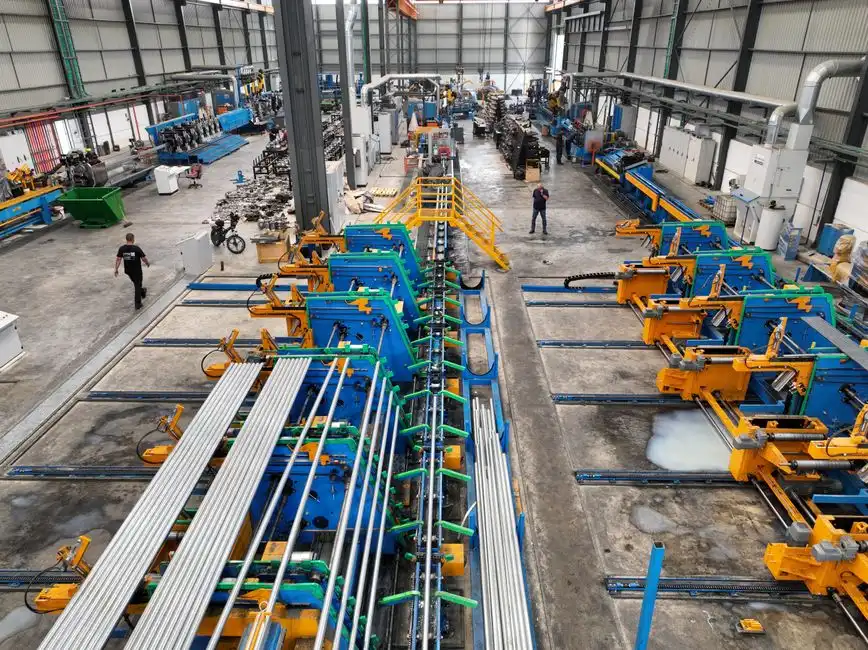
The numbers below are planning bands, not quotes. They exclude site work, civil works, and contingency, and they should be re-quoted against the final influent characterization. The four bands are sequenced: lower band anchors the duty, middle band adds the fluoride chemistry, the electrolytic option is a 2026 product category, and the top band is what carries the design inside the 60% reuse trajectory.
| Band | Scope | Driver |
|---|---|---|
| Lower | Equalization + DAF system + biological (SBR or MBR) | Baseline for any industrial ETP |
| Middle | Ca²⁺ precipitation + sludge handling via plate-and-frame filter press | F⁻ from HF / BHF / LiPF₆ in scope |
| Forward option | Electrolytic Cu recovery (RARELOOP-class units) | Cu-bearing etch waste, metal price supports |
| Top | RO / UF polishing + reuse loop (industrial RO) | 60% reuse target, 2027 circular-economy direction |
The lower and middle bands are baseline cost items. The forward option is a 2026 product category, vendor-side capex, justified where Cu-bearing etch waste is in the stream. The top band is what carries the design inside TSMC's 2026 Water Positive trajectory and the 2027 circular-economy direction — designing for less risks stranded capex when industrial-park reuse targets codify. All figures should be re-quoted against the final influent characterization, not the 2007 Chemkimia range.
Frequently Asked Questions
Does the seller's DOE discharge permit transfer to TSMC when the share purchase closes?
No. Under EQA 1974, liability follows the operator, so the seller's permit does not automatically transfer with the share purchase. TSMC must re-apply for a DOE discharge permit, submit engineering plans, complete an EIA where the activity is prescribed, and pass DOE site inspection before the acquired plant can lawfully discharge under the new owner's name (per HydropureWater 2026-02).
What are the binding numerical limits under Standard B?
Under Standard B, the binding values are pH 5.5–9.0, COD ≤ 100 mg/L, BOD₅ (20 °C) ≤ 50 mg/L, TSS ≤ 100 mg/L, O&G ≤ 10 mg/L, with heavy-metal caps including Hg 0.05 mg/L, Cd 0.02 mg/L, Cr(VI) 0.05 mg/L, Cu 1.0 mg/L, Ni 1.0 mg/L, Zn 2.0 mg/L, and B 4.0 mg/L (per HydropureWater 2026-02). Site-specific permit conditions may tighten these.
What is the maximum penalty under Section 25 of the EQA 1974?
Under Section 25 of the EQA 1974, the maximum fine is RM 100,000 with imprisonment up to 5 years, plus a further RM 1,000/day for every day the offence continues after a Director General notice. Section 29 raises the ceiling for Malaysian waters to RM 500,000 and/or five years (per HydropureWater 2026-02).
What semiconductor chemistry is not covered by the 2007 Chemkimia baseline?
The 2007 Chemkimia dataset does not cover TMAH and amines from photoresist developing, NMP from cathode slurry coating, fluorides from HF/BHF etch or LiPF₆ electrolyte, or copper from BEOL plating. A defensible design must add Ca²⁺ precipitation for F⁻, acclimated biology or AOP for TMAH/amines, and either precipitation or electrolytic recovery for copper, on top of the standard equalization–DAF–MBR–polishing train (per HydropureWater 2026-02).
How long does a full DOE re-permit take on a fab acquisition?
The DOE permit sequence is fixed and non-negotiable: pre-application consultation, engineering plan submission, EIA for prescribed activities, DOE site inspection, license issuance, and time-limited renewal. A full EIA on a photolithography or large fluorinated-waste stream typically adds 4–9 months to the critical path, and any prior Section 25 history at the acquired site pulls additional DOE scrutiny on the transfer (per HydropureWater 2026-02).