Why Pretreatment Looks Different in Nome, Alaska
Nome sits on the southern shore of the Seward Peninsula, on the Bering Sea coast, where the mining economy is dominated by placer gold operations — suction dredging, the offshore Nome dredge, beach deposits on the老三 nominal "third beach" line, and small-scale recirculating sluice plants. Hard-rock and metals/machine-shop facilities exist but are smaller and usually support the placer sector (vehicle repair, welding, drill-bit fabrication). For all of these, the compliance question is almost never "do I have an NPDES permit for direct surface-water discharge?" It is "do my effluent streams meet the local publicly owned treatment works' (POTW) sewer-use ordinance, and do I avoid triggering Alaska's 18 AAC 72 industrial pretreatment limits?" Most process water, equipment washwater, and shop floor drainage in the Nome Census Area is piped or trucked to the municipal collection system, not discharged to a stream or the ocean. That distinction reframes every engineering choice: the utility's local limits (and the surcharge schedule attached to them) determine success, not 40 CFR Part 436 effluent guidelines for ore mining. The climate is the second frame. Air temperatures stay below freezing roughly 5–6 months of the year, frost penetrates 1.5–3 m in the Nome area, and the open-water working season for surface placer runs roughly mid-May to mid-October. Equalization basins, process tanks, and chemical dosing lines cannot simply be pad-mounted on permafrost-adjacent ground; they have to be buried, insulated, heat-traced, or housed — a design choice that reshapes footprint, capital cost, and operator accessibility.
The Regulatory Stack: NPDES, 18 AAC 72, and Local Sewer Ordinance
Three regulatory layers apply to a Nome-area operator, and each one controls something different. At the federal level, the Clean Water Act (CWA) requires any U.S. mine generating wastewater to obtain an NPDES permit, and 40 CFR Part 436 sets effluent limitation guidelines for the mineral mining point source category (per EPA industrial wastewater guidance, archived 2017-01). The federal layer is what people read about most, but for a sewer-discharging operator in Nome it is largely indirect: the EPA delegates pretreatment authority in Alaska to the Alaska Department of Environmental Conservation (ADEC), and ADEC in turn relies on the local POTW to enforce industrial pretreatment. At the state layer, Alaska Administrative Code Title 18, Chapter 72 (18 AAC 72) sets statewide standards for wastewater disposal, including specific pretreatment requirements for industrial users discharging to a POTW. The state rule defines the parameter list — pH, TSS, oil & grease, total metals, mercury, sulfides, and others — and the sampling protocols that apply. At the local layer, the City of Nome utility's sewer-use ordinance operationalizes 18 AAC 72 with site-specific discharge limits, monitoring frequency, surcharges for exceedances, and the right to inspect, sample, and require corrective action. The local operator is the day-to-day enforcer.
The CWA defines "pretreatment" under 40 CFR Part 403 as reducing pollutants at the source before they reach a POTW, so the receiving plant is not damaged (interference), pass-through does not occur (a pollutant that exits the POTW still over limit), and residual sludges are not contaminated. The three keywords an operator should care about are pass-through, interference, and slug discharge — each of these is an enforceable trigger under the local ordinance and each maps to a specific piece of equipment or operating practice on the mine site.
| Layer | Rule | What It Controls | Enforcer |
|---|---|---|---|
| Federal | Clean Water Act; 40 CFR Part 403; 40 CFR Part 436 | NPDES permitting framework; categorical standards for mineral mining; pretreatment definitions | EPA (delegated to ADEC in Alaska) |
| State | 18 AAC 72 (Alaska Admin Code Title 18, Ch. 72) | Statewide wastewater disposal standards, including industrial pretreatment parameters to POTWs | ADEC |
| Local | City of Nome sewer-use ordinance | Site-specific discharge limits, monitoring, surcharges, inspection authority | Nome utility (POTW) |
What Mining and Metals Wastewater Near Nome Actually Contains
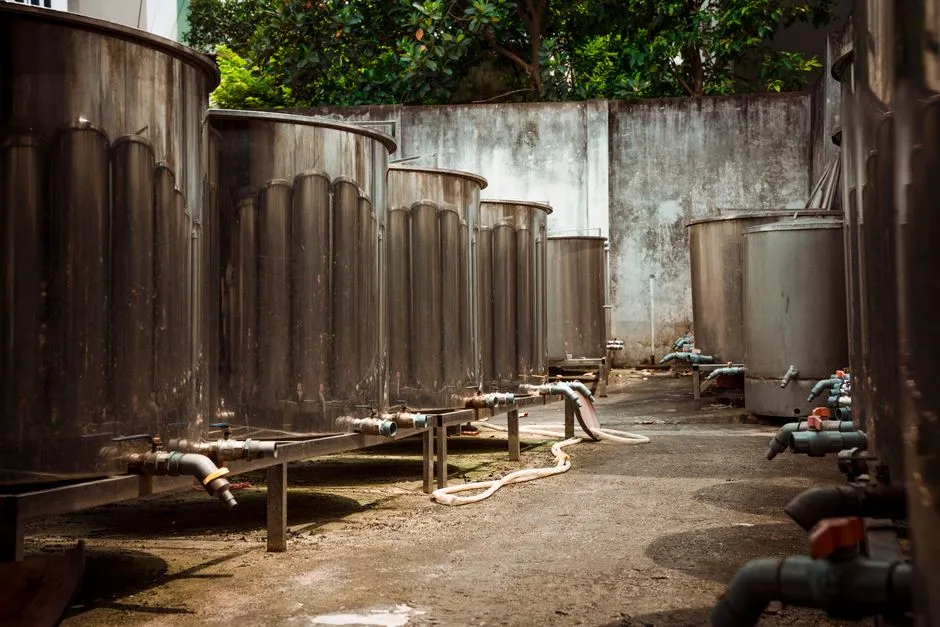
Placer-generated wastewater is physically dominated, not chemically dominated. A recirculating sluice or a beach-cut operation produces a slurry with total suspended solids in the multi-gram-per-liter range during active cuts — gravel, sand, silt, and clay — alongside low dissolved metals and modest turbidity once the slurry is decanted. Where historic amalgamation was used, residual mercury can show up in fines. The chemistry is largely mechanical: settle the particles, polish the supernatant, and you are most of the way to compliant. Hard-rock and metals-fabrication wastewater looks different. Crushing, milling, and small cyanidation or sulfide-flotation circuits produce lower TSS but acidic pH (often 2–4 from acid rock drainage generation) and elevated dissolved metals — arsenic, lead, zinc, copper, cadmium, and chromium — plus sulfate and possible cyanide or sulfide residuals. Support shops — vehicle repair, welding, machining — generate the third profile: free and emulsified oils from parts washing, suspended solids from grinding, and trace metals from cutting fluids. Free oil and grease (FOG) floats; emulsified oil requires chemical breakage before it will separate. For context on scale: the U.S. Geological Survey identified 6,785 active mines and mineral plants in 2003 (the most recent national baseline), and although mine water accounts for under 1% of total U.S. water demand, the impact is highly localized (per Miller et al., ACS ES&T Engineering, 2021-10). Nome's small municipal system is exactly that high-impact, low-volume scenario.
Treatment Train That Passes the Limits
The treatment train below is the unit-operation sequence most placer and small metals operations near Nome will end up with. The exact order depends on whether the dominant load is sediment (placer) or dissolved metals (hard-rock or fabrication), but the steps run in roughly the same order. Start with flow equalization and grit removal — a rotary mechanical bar screen ahead of an equalization tank sized for 1.5–2× the daily hydraulic peak smooths pulses from batch placer cuts and protects downstream equipment. Step 2 is pH adjustment. Operators in this region typically dose acid or caustic via an automatic chemical dosing system to bring influent into the 6–9 range, and where dissolved metals are the concern, target pH ≥ 8 so metals precipitate as insoluble hydroxides (per Genesis Water Technologies, mining wastewater guidance). Step 3 is coagulation and flocculation: coagulant (alum, ferric chloride, or polyaluminum chloride) destabilizes colloidal fines, and anionic polyacrylamide flocculant builds settleable floc; dose selection is jar-test-driven for each ore or feed-water change. Step 4 is clarification — either a dissolved air flotation system for fine suspended solids in placer flows (micro-bubbles carry floc to the surface) or a lamella clarifier with sludge recirculation for metal-precipitation sludges, achieving 20–40 m/h surface loading. Step 5 is multimedia filtration — graded sand, anthracite, and garnet polish residual TSS below 10 mg/L and protect any downstream polishing step. Step 6 is sludge dewatering: a plate and frame filter press produces a stackable cake suitable for dry-stack disposal, and field experience across mineral applications puts operating cost at roughly one-sixth that of a belt press or centrifuge for comparable throughput (per ChemREADY mining wastewater guidance). Step 7 is effluent polishing when required — activated carbon for residual organics, ion exchange for specific trace metals, or UV if the receiving utility requires disinfection.
| Parameter | Typical Local Limit | Driver Unit Operation | Equipment Link |
|---|---|---|---|
| Total Suspended Solids (TSS) | ~250 mg/L (site-specific) | Coagulation/flocculation → DAF or lamella → multimedia filter | DAF system, lamella clarifier, multimedia filter |
| pH | 5.0–9.0 (typically 6.0–9.0) | Automatic chemical dosing with feedback control | automatic chemical dosing system |
| Total Metals (As, Pb, Zn, Cu, Cd, Cr) | Site-specific; typically 0.1–2 mg/L per metal | pH elevation to ≥ 8 → precipitation → clarifier → multimedia polish | dosing system, lamella clarifier |
| Mercury | Low ppb range; trigger parameter | Sulfide precipitation or ion exchange after TSS removal | multimedia filter + polishing |
| Oil & Grease | ~100 mg/L; visible-free requirement | DAF or coalescer; emulsion break for cutting fluids | DAF system |
| Sulfides | Site-specific; low mg/L | Oxidation (aeration) or precipitation | Equalization/aeration basin |
For an operator comparing this approach to other regions, the parameter-by-parameter treatment logic is similar to DAF or clarifier selection for fabricated metals wastewater, but the placer TSS load near Nome is high enough to make DAF the first choice over a conventional clarifier. A rotary mechanical bar screen ahead of equalization is the single most cost-effective protection for downstream equipment given how much oversize material placer flows can carry.
Designing for an Alaskan Winter: Cold-Climate Engineering Essentials
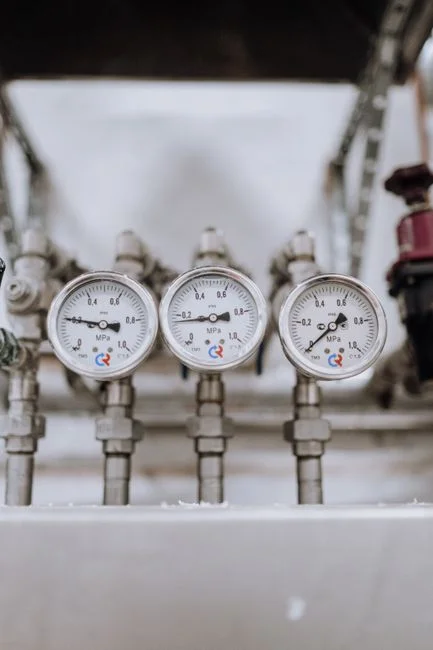
The treatment train above will not run from October through April without freeze protection. Equalization tanks and process basins in the Nome area need to be below the frost line — typically 1.5–3 m of burial, depending on exposure and snow cover — or fully insulated and heat-traced. HDPE-lined concrete vaults, insulated steel tanks, and pre-engineered fiberglass basins all see service; the design decision is usually driven by whether the basin holds equalization volume (large, often buried) or process volume (smaller, often skid-mounted in a heated enclosure). Chemical dosing lines, sampling lines, and any above-grade piping need heat-traced, insulated runs to prevent freezing and dose interruption. PLC panels, chemical dosing skids, pH probes, and lab equipment belong inside an insulated, heated building with a minimum temperature setpoint of about 10 °C and redundant heat (electric plus a small fuel-fired unit) for power outages. Operator rounds in winter shift from a daily habit to a scheduled checklist: confirm heat-trace amperage, verify building temperature, walk the line for ice accumulation, and check chemical feed tank levels before a storm. Seasonal transition is real work — switching from open-water summer placer operation to frozen-ground winter maintenance is its own procedure, and it usually happens twice a year. The cost of getting this wrong is straightforward: a frozen dosing line means no pH control, no pH control means a metals excursion, and a metals excursion means a violation. Build the freeze protection first and the chemistry second.
| Item | Cold-Climate Specification | Design Driver |
|---|---|---|
| Equalization basin burial | 1.5–3 m below grade, or fully insulated | Frost-line depth in the Nome area |
| Process tank enclosure | Insulated, heat-traced, or housed in heated building | Maintain chemistry above 5 °C minimum |
| Chemical dosing lines | Heat-traced, insulated, with redundant tracing on long runs | Prevent dose interruption → pH excursion |
| Control panels / analyzers | Heated enclosure, 10 °C minimum setpoint, redundant heat source | Electronics, pH probe lifespan, lab work |
| Operator rounds (winter) | Daily freeze-protection checklist; storm pre-checks | Catch failures before chemistry is lost |
| Sludge handling | Indoor dewatering or freeze-protected cake storage | Prevent re-melt leachate, dry-stack integrity |
Operators running an automatic chemical dosing system in a Nome winter should plan on housing the skid indoors or in a fully insulated, heat-traced enclosure. The dosing system is the single point of failure for pH and metals precipitation, and freeze damage to a metering pump or its calibration column turns into a compliance event within hours.
Sampling, Monitoring, and What Triggers a Violation
Compliance is a paperwork problem as much as a chemistry problem, and the paperwork starts with how the sample is taken. pH is a grab parameter — it has to be measured on a fresh sample because pH drifts once the water leaves the process. Total metals, TSS, mercury, oil & grease, and sulfides are 24-hour composite parameters, and the sampler itself needs to be heated and insulated or the sample will freeze in the line. The reports a Nome-area operator typically files are a monthly self-monitoring report (basic flow and pH at minimum), a quarterly compliance report (full parameter list, with composite results), and an annual pretreatment report if the site is a categorical industrial user under 40 CFR Part 436. Four triggers account for the majority of non-compliance findings in this region: pH excursion outside the 5–11 instantaneous band (and outside 6–9 on a daily average); TSS above 250 mg/L on a composite; a single-metal exceedance (arsenic and lead are the most common triggers in placer and hard-rock flows); and slug discharges — a process upset that dumps a high-strength batch into the collection system in a short window. The local utility retains the right to inspect, sample, and require corrective action under the sewer-use ordinance, and slug-load limits are enforced as separate violations even when the daily averages look fine. Engineers weighing biological treatment options can compare alternatives like MBR vs conventional activated sludge for mining wastewater in other regions, but the cold-climate and low-COD placer profile near Nome makes biological treatment uneconomical at most sites.
Frequently Asked Questions
Which rules actually apply to a placer or small metals operation near Nome that discharges to the sewer?
Three layers apply. Federal NPDES authority is delegated to ADEC, which enforces Alaska Administrative Code 18 AAC 72, and the City of Nome utility applies its own sewer-use ordinance on top of that. Operators should map each parameter (pH, TSS, total metals, mercury, oil & grease, sulfides) to the most restrictive applicable limit, then design the treatment train to that limit. The local ordinance is the day-to-day rule that actually determines whether a discharge is compliant on any given day.
What are the most common parameters that trigger a violation for placer and metals operations in this region?
Total suspended solids, pH excursions, and single-metal exceedances (most often arsenic or lead) account for the majority of non-compliance events. Mercury is a known trigger parameter for placer operations that have historic amalgamation in their process, and oil & grease trips the visible-free requirement for support shops. Slug discharges — short, high-strength batches from process upsets — are enforced as separate violations even when the daily averages look acceptable.
Can a standard treatment train run through an Alaskan winter at sub-zero temperatures?
Not without freeze protection. Equalization tanks and process basins need to be buried below the 1.5–3 m frost line or fully insulated, chemical dosing and sampling lines need heat tracing and insulation, and dosing skids plus control panels belong in a heated enclosure with a minimum 10 °C setpoint and redundant heat. Operator rounds shift from daily to storm-driven in winter, and freeze-protection checks become a formal checklist. Operators who treat freeze protection as an after-thought tend to find out about it through a pH excursion, not a scheduled test.
What is the difference between 40 CFR Part 436 and 18 AAC 72 for a sewer-discharging operator?
40 CFR Part 436 is the federal categorical effluent guideline for the mineral mining point source category and applies primarily to direct surface-water discharges under an NPDES permit. 18 AAC 72 is the Alaska state rule that governs industrial discharges to a POTW, and it is enforced locally through the sewer-use ordinance. A sewer-discharging placer operation near Nome is bound by 18 AAC 72 and the local ordinance; 40 CFR Part 436 is the framework to be aware of, but the day-to-day compliance limit comes from the state and local rule stack.