What a Gallaway Fabricated Metals Plant Is Actually Treating
A fabricated metals shop in Gallaway is not running a single wastewater stream — it is running four streams that mix on the floor before they ever reach pretreatment. The decision between dissolved air flotation and a conventional clarifier falls out of those four streams, and the worst mistake is to size equipment against a composite sample that hides them.
The first stream is free-floating oil and lubricant from stamping, machining, and cut-off operations. Tramp oil sits on top of the equalization tank in the first five minutes and ranges from 200 mg/L on a clean day to 2,000 mg/L when a coolant sump overflows. The second stream is emulsified oil and surfactant from parts-washing baths. Those droplets are sub-20 micron, stabilized by detergents, and they are the reason a gravity clarifier that looks perfect on paper produces cloudy overflow. The third stream is suspended metal hydroxide floc generated when rinse-water pH is adjusted with NaOH or lime — a soft, low-density floc that settles slowly and carries the bulk of the zinc, lead, copper, and nickel load. The fourth stream is fine grinding swarf and grit from cutoff saws and surface grinders, typically 50–500 mg/L TSS of inorganics that settle easily but abrade pump impellers.
Typical composite influent to pretreatment at a mid-sized Gallaway fabricator runs O&G 200–2,000 mg/L, TSS 100–1,000 mg/L, pH 5–11 swinging across shifts, and dissolved metals dominated by zinc from galvanizing rinse and copper from machining coolants. Emulsified oil is the killer for gravity clarifiers — droplets in the 1–20 micron range will not float or settle at any reasonable hydraulic residence time without microbubbles or aggressive chemistry. Most Gallaway sites are tributary to the MLG&WWTA (Memphis Light, Gas & Water Division) POTW, which applies its own local limits that mirror or tighten the federal categorical standards.
The Regulatory Floor: 40 CFR 433 and Local Limits That Drive the Choice
The 40 CFR 433 Metal Finishing categorical standards set the daily-maximum ceilings that any pretreatment system has to clear before discharge to a POTW, and for fabricated metals the binding parameters are oil & grease at 52 mg/L, TSS at 97 mg/L, total metals at lead 0.69 mg/L, copper 4.5 mg/L, and zinc 4.0 mg/L (per EPA 40 CFR 433). The local MLG&WWTA pretreatment program enforces these same ceilings and adds surcharges for excess O&G, TSS, and high-strength metals, so missing the numbers costs twice — once in surcharges, again in permit risk.
A clarifier-only line on a metalworking stream will struggle on the 52 mg/L O&G ceiling because emulsified oils do not settle. A DAF with coagulant dosing, pH adjustment to 8.5–9.5, and an anionic polymer flocculant routinely clears 52 mg/L O&G and pushes TSS below 30 mg/L in a single stage, which is why the broader U.S. mining and metals pretreatment compliance guide treats DAF as the default primary for this category. EPA updated the analytical methods in the 2024–2026 window: O&G is now reported under Method 1664A (HEM, silica-gel treated), and metals methods (200.8/6020) carry lower detection limits that tighten compliance evidence. PFAS scrutiny has also reached metal-finishing shops that use PFAS-based mist suppressants or plating bath stabilizers, and the discharge reporting requirements now extend to those analytes when concentration triggers are exceeded.
| Parameter | 40 CFR 433 Daily Maximum (mg/L) | MLG&WWTA Local Limit (typical) | Implication for technology choice |
|---|---|---|---|
| Oil & Grease | 52 | 50–52 | Emulsified oil forces DAF or chemical emulsion break ahead of any clarifier |
| TSS | 97 | 50–100 | Either technology meets with proper chemistry; lamella plates help on the polishing step |
| Lead | 0.69 | 0.5–0.69 | pH control and hydroxide precipitation required regardless of clarifier choice |
| Copper | 4.5 | 2.0–4.5 | Surcharge applies above 2.0 mg/L at MLG&WWTA; DAF float captures bound copper |
| Zinc | 4.0 | 2.0–4.0 | Dominant metal at most Gallaway sites; hydroxide floc drives sludge yield |
| pH | 5.0–10.0 (continuous) | 6.0–9.5 | NaOH dosing standard; clarifier HRT must allow pH to stabilize |
How a DAF and a Clarifier Work on This Stream
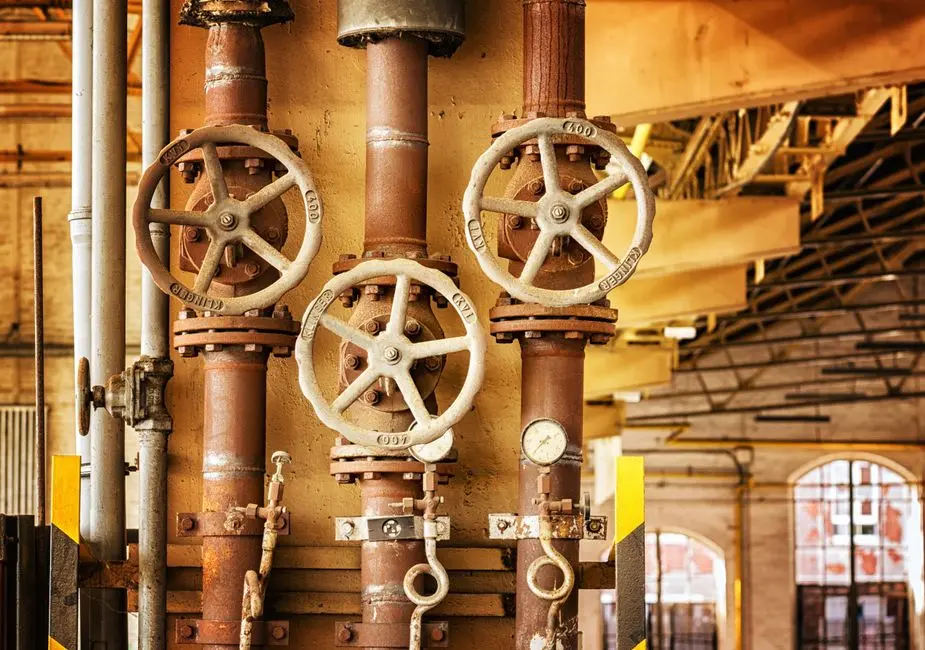
A DAF unit is a flotation tank, not a settling tank. A pressurized recycle stream — typically 20–30% of the clarified effluent — is saturated with air at 60–80 psig, then released through needle valves or special nozzles inside the contact zone, generating 30–50 micron microbubbles (per Clearwater Industries DAF specifications, 2026). Those bubbles attach to oil droplets and pre-flocculated solids and lift them to the surface in 3–5 minutes. A paddle skimmer sweeps the floating sludge into a collection trough, while heavier metal-hydroxide sludge settles to a bottom auger or hopper. Hydraulic residence in the flotation zone is typically 15–25 minutes, total tank residence under 30 minutes. The DAF influent almost always needs coagulant (alum, PAC, or ferric chloride), pH adjustment to 8.5–9.5 for metal precipitation, and an anionic polymer at 1–5 mg/L to build a buoyant floc.
A clarifier relies on gravity alone. In a circular clarifier or a lamella (inclined-plate) tank, density difference and floc weight do the work. Lamella plates shorten the effective settling path and push surface loading to 20–40 m/h (per the HydropureWater lamella product entry), which is why a small footprint lamella can polish a stream that a circular clarifier ten times its size struggles to handle. The catch is HRT: a clarifier typically needs 1–2 hours of hydraulic residence for the same surface loading, and it cannot lift oil — emulsified oil passes through, free oil skims off the top with no scraping mechanism unless a belt skimmer is added. A HydropureWater high-efficiency lamella clarifier is designed to capture hydroxide flocs and reuse-loop solids, not to act as a primary oil-removal device. A dissolved air flotation (DAF) system is designed for both, which is why the two technologies complement rather than replace each other.
Side-by-Side: DAF vs Clarifier for Fabricated Metals in 2026
Below is the parameter matrix most vendor pages leave out. The numbers are anchored to DAF equipment specifications from Clearwater Industries (2026), the HydropureWater DAF product line (4–300 m³/h, 13 standard models), and field data from fabricated-metals pretreatment installs. Footprint is normalized to a 10 m³/h (44 GPM) design flow so a shop can scale linearly.
| Parameter | DAF (Compact) | Lamella Clarifier | Circular Clarifier |
|---|---|---|---|
| Oil & grease removal | 85–95% | 10–30% (free oil only) | 10–25% (free oil only) |
| Emulsified oil handling | Excellent with chemistry | Poor — passes through | Poor — passes through |
| TSS removal | 70–90% | 80–95% | 60–85% |
| Surface loading (m/h) | 5–15 (float zone) | 20–40 (lamella basis) | 1–2 (circular basis) |
| HRT | 15–30 min | 60–120 min | 90–180 min |
| Footprint @ 10 m³/h | 2–4 m² (skidded) | 3–6 m² (lamella pack) | 15–25 m² |
| CAPEX band (packaged) | USD 40,000–120,000 | USD 15,000–50,000 | USD 25,000–80,000 |
| OPEX (chem + power + sludge) | USD 0.20–0.50 per m³ | USD 0.10–0.30 per m³ | USD 0.10–0.30 per m³ |
| 40 CFR 433 O&G compliance out-of-box | Yes | No — needs upstream DAF or CPI | No — needs upstream DAF or CPI |
| Sludge yield (dry solids) | 3–6% cake after filter press | 1–3% (needs thickening) | 1–3% (needs thickening) |
The DAF wins on O&G, emulsified oil, footprint per m³/h, and out-of-box compliance with the 52 mg/L ceiling. The lamella wins on dissolved-metals sludge capture, polymer consumption (sludge recirculation cuts polymer use up to 30%), and polishing-clarity for reuse loops. The honest read of the matrix is that the binary framing is wrong for 2026: most Gallaway fabricators run a dissolved air flotation (DAF) system as primary and a small lamella as polish, with a plate-and-frame filter press on the combined sludge.
When a Clarifier Alone Is the Right Call
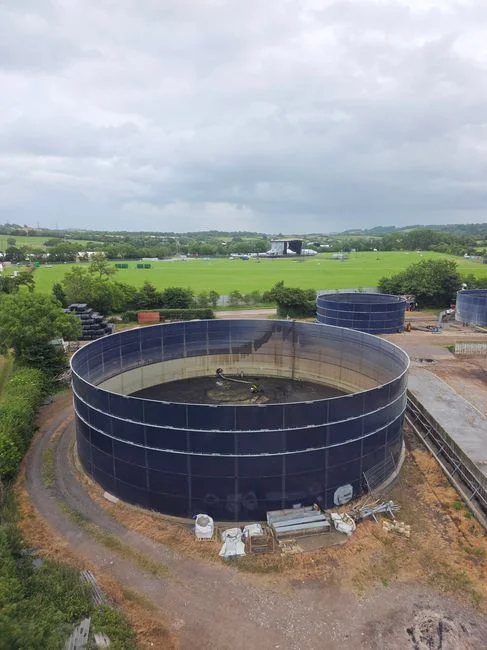
A clarifier is not a bad technology — it is the wrong tool for the wrong stream. There are three Gallaway scenarios where a lamella or circular clarifier is the correct primary unit, and an engineer who ignores them will overspend on equipment that does not earn its keep.
First, the stream is already oil-free — for example, a clean anodizing rinse line where parts washing is segregated upstream, or a post-DAF polishing stage in a water-reuse loop. In that case, a HydropureWater high-efficiency lamella clarifier is the most cost-effective way to capture hydroxide flocs and protect downstream multi-media or UF filters. Second, the plant is space-constrained on a low-solids line and chemical OPEX dominates the budget. Lamella with sludge recirculation can cut polymer consumption by up to 30% (per the HydropureWater product entry), which is meaningful on a 50–100 m³/day shop where polymer runs USD 0.08–0.15 per m³. Third, a 70–80% water-reuse project where the clarifier is the second stage after DAF and before multi-media or UF — the lamella's high surface loading makes it ideal for polishing a DAF effluent that already meets the O&G ceiling.
The fourth case deserves a warning. A greenfield site with no existing oil-removal step and a mixed stamping/machining/wash stream should not install a clarifier as the only primary unit. Even with a CPI or parallel-plate oil-water separator upstream, a clarifier will not reliably clear 52 mg/L O&G on a stream that swings in emulsion stability across shifts. The companion DAF vs clarifier guide for fabricated metals plants in Avilla makes the same point for a different Mid-South shop floor.
Recommended Configuration and CAPEX/OPEX for a Typical Gallaway Plant
For a 20 m³/h fabricated-metals line with 500 mg/L O&G and 400 mg/L TSS, the equipment list and rough cost band look like this. The line runs rotary bar screen → equalization tank (8–12 hr HRT) → chemical dosing (coagulant + NaOH/H₂SO₄ + polymer via an automatic chemical dosing skid) → DAF (15–25 m³/h) → lamella clarifier (~5 m² plate area) → multi-media filter or UF for reuse → plate and frame filter press for sludge dewatering. DAF sludge and lamella underflow combine in a sludge holding tank and feed the press at 3–6% dry solids.
| Equipment | Size for 20 m³/h | Material | CAPEX (USD) | OPEX driver |
|---|---|---|---|---|
| DAF skid | 20 m³/h | 304SS standard, 316SS optional | 60,000–100,000 | Polymer 1–5 mg/L; recycle pump power |
| Lamella clarifier | 5 m² plate area | PP / 304SS | 20,000–40,000 | Sludge recirculation pump |
| Plate-and-frame press | 5–10 ft³ chamber | PP / cast iron | 25,000–80,000 | Filter cloth replacement, haul-off |
| Chemical dosing skid | 3 pumps (coag, pH, polymer) | PE / PVC | 8,000–18,000 | Chemicals USD 0.15–0.40 per m³ |
| Equalization tank | 160–240 m³ | Concrete / coated CS | 40,000–90,000 | Aeration or mixing power |
| Multi-media filter (optional) | 20 m³/h | FRP / rubber-lined CS | 15,000–35,000 | Backwash water 3–5% of throughput |
Order-of-magnitude OPEX at 20 m³/h and 16 hr/day operation: chemical dosing USD 0.15–0.40 per m³, power USD 0.05–0.12 per m³, sludge haul-off driven by the filter press output of 3–6% dry solids cake. For a 20 m³/h, 16 hr/day shop, total annual OPEX lands in the USD 35,000–80,000 range, dominated by chemical cost and sludge disposal.
Selection Checklist Before You Buy
Five items to lock down before the first vendor call, in the order they will save you money.
- Sample the stream across one full shift. Pull composite samples every two hours for three days, with grabs at startup, mid-shift, and end-of-shift. Test for O&G (HEM, Method 1664A), TSS, pH swing, peak instantaneous flow, and a metals panel including zinc, lead, copper, and nickel. A single composite hides the emulsion stability swing that drives DAF sizing.
- Confirm the discharge route. Direct to MLG&WWTA POTW, on-site pretreatment only with surface discharge, or zero-discharge recycle. Recycle loops need a polishing train (lamella + multi-media or UF) that direct-discharge systems do not.
- Decide material of construction. 304SS handles most neutral-to-alkaline fabricated-metals streams. 316SS is required for chloride-bearing rinses (often above 200 mg/L Cl⁻) and for acidic pickling rinse. Polypropylene suits highly acidic pickling baths where stainless would corrode.
- Confirm floor loading and ceiling height. A packaged DAF skid is typically 4–5 m long, 2–2.5 m wide, and 2.5 m tall. The COMPACT-format single-skid DAF handles flows of 66 GPM (15 m³/h) or less (per Clearwater Industries, 2026); above that, you step to a modular two-skid layout that needs more headroom and floor area.
- Verify the sludge end-of-line. If haul-off is expensive in the Gallaway area, size the plate-and-frame press for a 4–6% dry cake, not 2–3%. That decision alone can cut annual sludge volume by 40%.
Frequently Asked Questions
Can a clarifier meet 40 CFR 433 on its own for a fabricated metals plant?
Rarely. A clarifier will meet the 97 mg/L TSS ceiling on most streams with proper chemistry, but the 52 mg/L oil and grease daily maximum requires the clarifier to remove emulsified oil, which gravity alone cannot do at any practical hydraulic residence time. A DAF ahead of the clarifier is the standard configuration that clears both numbers, and a clarifier-only line typically fails O&G compliance within the first permit cycle.
How much oil can a DAF remove from a metalworking stream?
A properly sized and chemically conditioned DAF on a fabricated-metals stream removes 85–95% of total O&G, with residual effluent typically under 20–30 mg/L when influent is 200–2,000 mg/L (per Clearwater Industries DAF performance data, 2026). The key variables are polymer dose, pH control to 8.5–9.5, and the air-to-solids ratio in the recycle saturator, which should be tuned during jar testing at startup.
Is 304SS enough for fabricated metals wastewater, or do I need 316SS?
304SS handles the majority of fabricated-metals streams at neutral-to-alkaline pH with low chloride. Move to 316SS when chloride exceeds 200 mg/L (common in parts-washing rinses that pick up road salt or in acid pickling rinses after neutralization), or when the stream runs hot above 60 °C. For strongly acidic pickling baths below pH 2, polypropylene or rubber-lined carbon steel is safer than either stainless grade.
What is the smallest packaged DAF that makes sense for a 5–10 GPM Gallaway shop?
A 5–10 GPM (1–2.3 m³/h) shop is at the bottom of the packaged-DAF range and the top of the small-lamella range. The Clearwater COMPACT DAF single-skid design handles up to 66 GPM (per Clearwater Industries, 2026), so a 5–10 GPM shop is well within a single skid. Budget USD 40,000–70,000 for a small 304SS DAF, plus USD 15,000–30,000 for a lamella polishing unit if a reuse loop is in scope.
Do I need a lamella clarifier behind the DAF, or is the DAF enough?
For direct discharge to MLG&WWTA POTW under 40 CFR 433, a DAF alone is usually sufficient when properly conditioned — effluent O&G under 30 mg/L and TSS under 50 mg/L are routine. A lamella clarifier behind the DAF is the right call when the plant is targeting 70–80% rinse-water recycle, when the DAF effluent TSS is still above 30–40 mg/L and is loading downstream multi-media or UF filters, or when the hydroxide floc is carrying too much zinc and copper into the POTW and triggering surcharges. For a deeper regulatory framing, the U.S. mining and metals pretreatment compliance guide covers the broader categorical standards landscape, and the DAF vs clarifier guide for mining and metals plants in Fairhope shows the same DAF-plus-lamella logic applied to a different Gulf-coast stream.