Why Avilla Fabricated Metals Plants Are Re-evaluating Primary Treatment in 2026
For an Avilla, Indiana fabricated metals plant in 2026, the binding federal rule is 40 CFR Part 433 — the Electroplating Point Source Category — which caps oil and grease at a 52 mg/L daily maximum and imposes categorical limits on copper, nickel, zinc, and total chromium. Indiana Department of Environmental Management (IDEM) holds NPDES authority, and the local POTW's pretreatment program layers site-specific local limits on top of those federal numbers. A primary-treatment unit that misses the oil & grease number by even 30 mg/L can trigger an enforcement chain that ends in a compliance schedule, so the choice between a DAF system and a conventional clarifier is the most leveraged CAPEX decision on the plant floor: every downstream unit — chemical precipitation, biological polish, RO, plate and frame filter press — inherits the mistakes made here. Plants in Noble County running stamping presses, CNC machining cells, alkaline degreasing, and light anodizing are exactly the profile Part 433 was written for, which is why the 2026 re-evaluation is mandatory. For peer-region context, the Birmingham fabricated metals DAF vs clarifier guide and the Kankakee fabricated metals DAF buyer's guide walk the same decision for two comparable Midwestern sub-sectors.
Typical Influent Profile for an Avilla Fabricated Metals Plant
A typical Avilla-area fabricated metals stream runs TSS 100–1,500 mg/L, FOG 100–2,000 mg/L, pH 6–9, and trace metals (Fe, Zn, Ni, Cr, Al) from rinsewater — with cutting fluids, drawing compounds, and tramp oils dominating the FOG load in stamping cells (HydropureWater field data, 2026). Batch discharges from cleaning baths and spent emulsions spike FOG 5–10× within minutes, which is why hydraulic response time matters as much as steady-state removal. Emulsified oils — stabilized by surfactants in semi-synthetic and synthetic cutting fluids — do not coalesce the way free oils do, so a quiescent gravity tank cannot break the emulsion. This physical limitation is the reason dissolved air flotation outperforms gravity settling on metalworking streams: the 30–50 µm microbubbles attach to oil droplets and metal-hydroxide floc simultaneously, then lift both phases to the surface in a single pass. A clarifier can polish what the DAF leaves behind, but it cannot do the DAF's job upstream.
How a DAF Actually Works in a Metalworking Stream
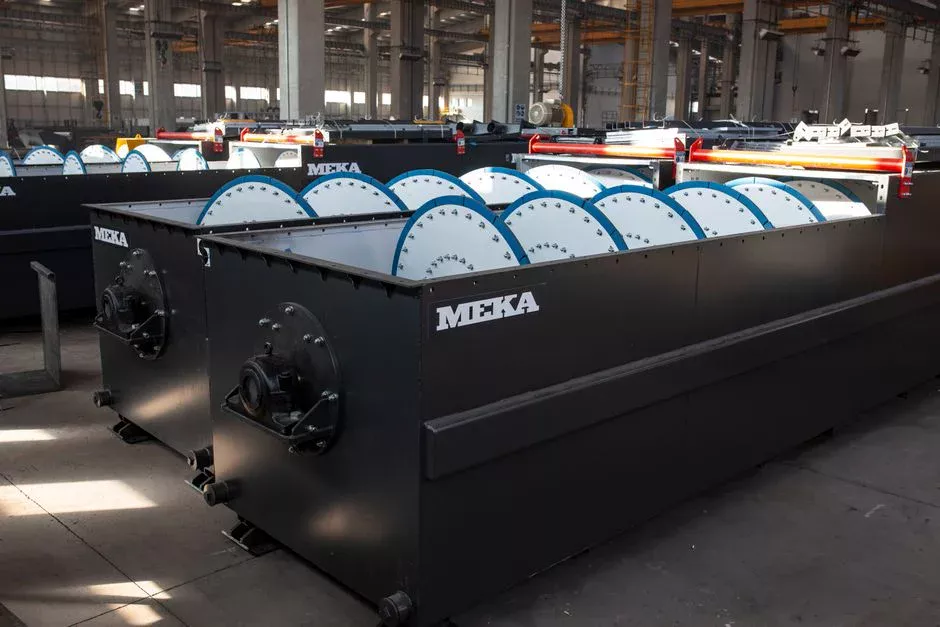
A dissolved air flotation unit removes suspended solids, oils, and associated pollutants by attaching 30–50 µm microbubbles to chemically conditioned floc and floating it to the surface (per Clearwater/SigmaDAF USA, 2026-04-27). The mechanism has four steps. First, raw wastewater is dosed with coagulant (typically ferric chloride or alum at 50–200 mg/L) and a flocculant polymer in a serpentine flocculator or chemical mix tank to grow the colloidal metals and emulsified oil into a settleable-and-floatable floc. Second, a saturated recycle system (SRS) takes 20–40% of clarified effluent, pressurizes it to 60–80 psig in a packed saturator, and dissolves air into the recycle stream per Henry's Law. Third, the pressurized recycle is injected at the DAF inlet, depressurizes, and releases a cloud of microbubbles that nucleate on the floc surface; a paddle skimmer then scrapes the floated layer into a scum hopper, and a bottom auger removes any heavy settleables. Fourth, the float sludge typically discharges at 3–6% dry solids, which feeds a filter press efficiently. Material of construction matters: 304SS is the standard, 316SS is specified for chloride-bearing rinses above roughly 200 mg/L Cl⁻, and polypropylene is used for acidic pickling baths (per Clearwater/SigmaDAF USA spec sheet). A DAF system is built around exactly this process envelope.
How a Conventional Clarifier Handles the Same Stream
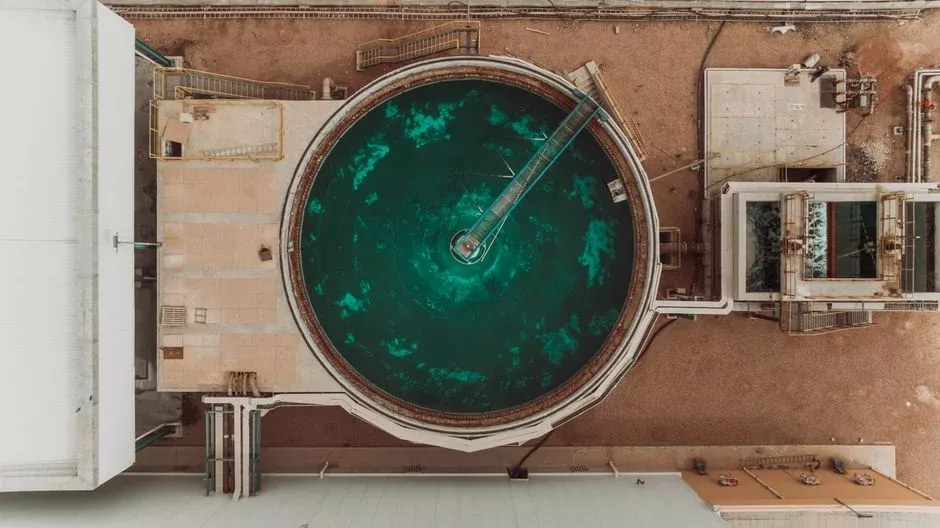
A conventional clarifier relies on gravity settling of floc, meaning its design anchor is surface loading rate rather than tank volume. Typical surface loading for a lamella clarifier in industrial service runs 20–40 m/h, and inclined plates at 55–60° shrink the footprint to roughly 1.5–2.5 m² per gpm of treated flow. The physics is unforgiving: a still body of water cannot break an emulsion, and free oils simply float across a quiescent surface and re-entrain downstream. A clarifier handles dense metal-hydroxide floc well, which is why pairing it after a DAF works — but as a standalone primary on a stamping and machining stream it leaves 50–70% of emulsified FOG in the overflow, which guarantees a 40 CFR 433 oil & grease excursion on any batch discharge day. The HydropureWater lamella clarifier is sized for this polishing role rather than for raw metalworking influent. Bottom underflow typically lands at 1–3% DS, which doubles filter-press volume relative to a DAF float.
DAF vs Clarifier: Side-by-Side Comparison for Fabricated Metals
The table below provides a procurement reference for parameters plant owners must evaluate during CAPEX reviews. Cost figures are 2026 order-of-magnitude ranges and a jar test governs final sizing.
| Parameter | DAF (dissolved air flotation) | Lamella clarifier |
|---|---|---|
| TSS removal | 70–90% on raw metalworking influent (HydropureWater field data, 2026) | 50–70% on the same stream; higher only on already-clarified water |
| FOG removal | 80–95% (per Clearwater/SigmaDAF USA, 2026-04-27) | 20–40% on emulsified oils; near-zero on free oils that re-entrain |
| Heavy-metals co-removal (after pH precipitation) | 80–95% across Cu, Ni, Zn, Cr when paired with a PLC-controlled coagulant and flocculant dosing system | 60–80% on settleable floc; light hydroxide floes wash out |
| Footprint (m² per gpm) | 0.5–1.0 | 1.5–2.5 |
| Hydraulic residence time | 15–30 minutes | 60–120 minutes |
| Typical 2026 CAPEX (USD per gpm, packaged) | $180–$320 | $90–$160 |
| Typical 2026 OPEX (USD per 1,000 gal) | $0.45–$0.85 (poly + power) | $0.20–$0.45 (mostly polymer) |
| Sludge dryness from primary | 3–6% DS — feeds a plate and frame filter press efficiently | 1–3% DS — doubles press volume and hauling cost |
| Sensitivity to batch flow/FOG spikes | Low — fast hydraulic response (15–30 min HRT) | High — long HRT and oil re-entrainment on surges |
| Modularity breakpoint | 66 GPM single skid vs. two-skid modular (per Clearwater/SigmaDAF USA, 2026-04-27) | Typically field-built above 100 GPM |
For oil & grease specifically, 40 CFR 433 sets a 52 mg/L daily maximum, and the categorical metals limits are 2.07 mg/L Cu (1.0 mg/L monthly avg), 2.38 mg/L Ni, 1.61 mg/L Zn (1.27 mg/L monthly avg), and 1.71 mg/L total Cr (0.69 mg/L monthly avg). The DAF column above is the only realistic path to staying under the O&G daily max on a stamping-and-machining stream.
Decision Framework: Pick DAF, Pick Clarifier, or Pick Both
This decision tree allows engineers to determine the appropriate technology based on specific plant conditions.
- Pick DAF as primary if any of these are true: FOG >50 mg/L on the routine composite, batch discharges spike FOG 5× or more, the POTW's local oil & grease limit sits below 100 mg/L, or floor space is constrained below roughly 2 m² per gpm. This is the default for most Avilla-area fabricated metals plants.
- Pick lamella clarifier as primary if FOG is consistently below 50 mg/L, flow is steady with no batch spikes, and the design flow exceeds roughly 100 gpm where lamella's lower CAPEX per gpm dominates.
- Pick DAF + lamella in series if the jar test on a DAF effluent still shows settleable solids above the POTW's TSS limit, or if a downstream membrane (RO) requires <20 mg/L TSS polishing.
The general rule for an Avilla plant is to default to DAF as primary and only add a clarifier if the jar test on DAF effluent shows residual settleable solids above the local limit. A bench-scale jar test on a real shift's composite is the cheapest insurance against a $200,000 mis-spec.
2026 CAPEX, Footprint, and Sludge-Handling Considerations
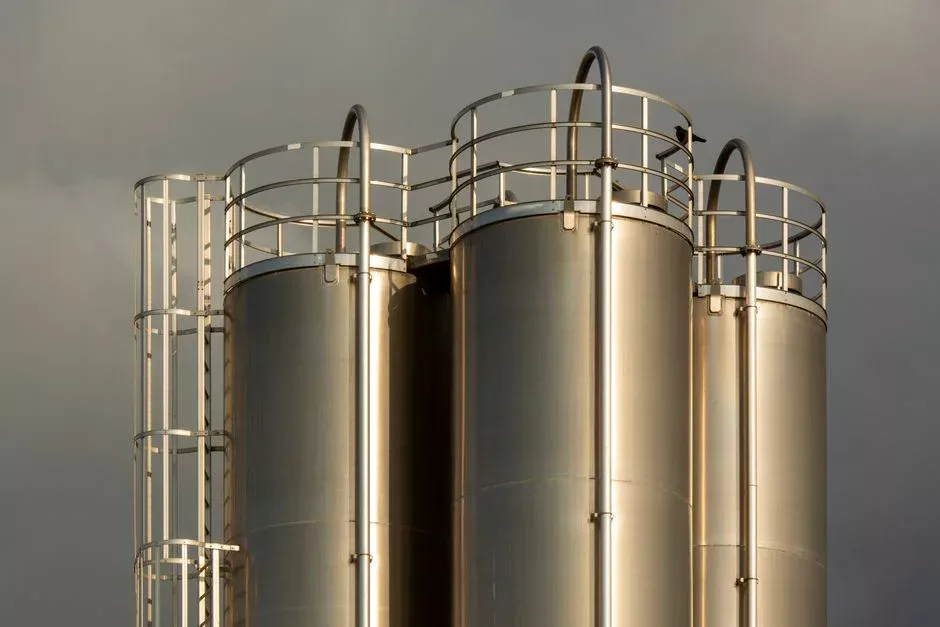
Packaged DAF systems in 2026 run $180–$320 per gpm of design flow, while lamella clarifiers run $90–$160 per gpm — roughly half the entry price for the clarifier (HydropureWater field data, 2026). The footprint gap is the counter-argument: DAF systems at 0.5–1.0 m² per gpm versus a lamella clarifier at 1.5–2.5 m² per gpm means a 100 gpm DAF fits in a 50–100 m² room, while a clarifier needs 150–250 m² of floor space. Sludge dryness drives the year-two OPEX: DAF float at 3–6% DS feeds a plate and frame filter press to a 25–35% DS cake, while clarifier underflow at 1–3% DS roughly doubles press volume, polymer consumption, and hauling trips. The hidden cost is waste classification: electroplating sludges from etching, anodizing, and chemical milling fall under RCRA hazardous-waste listing P006, and the F007/F008/F009 series covers additional electroplating waste streams (per EPA RCRA Permit Policy Compendium, 9444.1987 series). Better dewatering from a DAF float reduces tonnage sent to a RCRA Subtitle C facility, which is typically $300–$800 per ton versus $80–$150 per ton for a Subtitle D non-hazardous disposal.
Frequently Asked Questions
Which is better for oil and grease removal in fabricated metals wastewater — DAF or clarifier?
DAF. A dissolved air flotation unit removes 80–95% of free and emulsified FOG from metalworking streams, while a conventional clarifier removes 20–40% and lets free oils re-entrain downstream (per Clearwater/SigmaDAF USA, 2026-04-27). For the 40 CFR 433 oil & grease daily max of 52 mg/L, a DAF is the only realistic primary on a stamping or machining stream.
When does a lamella clarifier
Frequently Asked Questions
Should an Avilla fabricated metals plant pick a DAF or a clarifier in 2026?
The selection depends primarily on the density of your specific waste stream and the required footprint of your Avilla facility. In 2026, Dissolved Air Flotation (DAF) is the preferred choice for fabricated metals plants dealing with high concentrations of emulsified oils, greases, and low-density metal fines that resist gravity settling. If your facility space is constrained, DAF provides a smaller surface area footprint compared to a conventional clarifier due to the accelerated separation process.
Conversely, if your wastewater is dominated by heavy inorganic metal hydroxides or high-density particulates from grinding and abrasive blasting, a clarifier is often more cost-effective and simpler to maintain. Plants must conduct a bench-scale jar test on their specific 2026 process stream to confirm whether the contaminants exhibit high-float or high-settle characteristics before installation.
What is the 40 CFR 433 oil and grease limit and can a clarifier meet it?
Under 40 CFR 433 (Metal Finishing Point Source Category), the daily maximum limit for oil and grease is 52 mg/L, and the monthly average limit is 26 mg/L. A standard gravity clarifier is generally insufficient to meet these limits when the wastewater contains stable oil emulsions, as these typically require chemical demulsification and physical separation via air bubbles to achieve the necessary reduction.
While a clarifier can successfully remove large, free-floating oil droplets and settleable solids, it cannot effectively break down emulsified oils that pass through the system. Consequently, most fabricated metals plants utilizing a clarifier for 40 CFR 433 compliance must supplement the system with an upstream oil-water separator or advanced chemical coagulation and flocculation processes to reach consistent regulatory compliance.
How much does a DAF system cost per gpm in 2026?
As of 2026, the capital expenditure for a skid-mounted, industrial-grade DAF system typically ranges from $2,500 to $4,500 per gallon per minute (gpm) of capacity. This cost variation depends on the level of automation, the inclusion of integrated chemical feed skids, and the metallurgy of the tank construction, such as 304 or 316 stainless steel to resist corrosion from metalworking fluids.
Operational costs should also be factored in, as DAF systems require ongoing expenses for air saturation pumps, chemical coagulants, and sludge dewatering equipment. Smaller systems under 20 gpm often carry a higher per-gpm cost due to fixed instrumentation and control panel expenses, whereas larger high-capacity systems benefit from economies of scale.
What FOG and TSS removal rates can a DAF achieve on metalworking wastewater?
A properly optimized DAF system can achieve Fats, Oil, and Grease (FOG) removal rates of 90% to 98% and Total Suspended Solids (TSS) reduction of 85% to 95% on metalworking wastewater. These high efficiency rates are contingent upon maintaining precise pH control, typically between 6.0 and 9.0, and the correct dosage of polymers and coagulants to facilitate the formation of stable, floatable flocs.
Actual performance in a fabricated metals environment is highly dependent on the influent concentration of mineral oils, synthetic coolants, and heavy metals. If the wastewater contains significant amounts of dissolved heavy metals, the DAF must be preceded by a precipitation stage to convert these metals into insoluble hydroxides that the DAF can then effectively float to the surface.
When does a lamella clarifier outperform a DAF on fabricated metals rinses?
A lamella clarifier outperforms a DAF when the process rinses contain high concentrations of dense, inorganic solids such as metal oxides, ceramic media fines, or abrasive particles that exhibit high settling velocities. Because lamella clarifiers use inclined plates to increase the effective settling area without increasing the physical footprint, they are highly efficient at handling high-solids loading without the ongoing energy or chemical costs associated with air saturation.
Additionally, if the rinse water is relatively free of emulsified oils, the lamella clarifier is the superior choice due to its mechanical simplicity and lower maintenance requirements. It is the preferred technology in 2026 for facilities focusing on high-volume, low-oil metal finishing stages where the primary goal is the removal of heavy particulate matter rather than the separation of floating hydrocarbons.