
Why the Midland Basin Rewrites the Pretreatment Playbook in 2026
Mining and metals plants near Midland City, US meet 2026 sewer pretreatment limits by designing a 7-step train — screening, equalization, pH/coagulation, dissolved air flotation (DAF), multimedia filtration, and sludge dewatering — sized to the 40 CFR Part 437 categorical envelope (TSS ≈30 mg/L monthly average), TCEQ's tightened 2025 surface-water numbers, and the receiving POTW's local limits. DAF is specified over lamella whenever FOG exceeds 200 mg/L or produced-water crossover swings the feed.
Midland, TX sits at the seam of two industries that no longer keep their water to themselves. A 2026 mining or metals plant in this basin can be running barite or silica sand beneficiation in the morning and taking a tanker of Permian produced water through the same headworks by the afternoon. That crossover is the single biggest reason primary-clarification decisions are being reopened: feed character swings from week to week, and the unit specified in 2022 may no longer match the feed actually being received (per the DAF vs clarifier guide for Hamilton mining and metals factories).
Regulatory pressure is the second reason. 40 CFR Part 437 sets the federal effluent limits for metal mining, ore mining and beneficiation (subpart B), mineral processing (subpart D), and metal finishing (subpart F). TCEQ's 2025 surface-water discharge amendments tightened several of these numbers further, and West Texas water scarcity — driven by withdrawal limits from the Colorado River Municipal Water District and rising produced-water disposal costs in the Permian — is pushing more plants toward closed-loop recycle. That changes the design target from "meet the discharge limit" to "meet the reuse spec," which is typically under 10 mg/L TSS for the polish step (HydropureWater field data, 2026).
The Regulatory Stack: 40 CFR 437, NPDES, TCEQ, and the Local POTW
40 CFR Part 437 subpart B sets monthly-average TSS around 30 mg/L, with individual metals (As, Cd, Cu, Pb, Ni, Zn, Hg) tracked on separate schedules. The subpart that applies is set by SIC code and primary activity, not by feed character — subpart B covers ore mining and beneficiation (barite, silica sand), subpart D covers mineral processing, and subpart F covers metal finishing (HydropureWater Midland guide, 2026).
TCEQ's 2025 surface-water amendments tightened several 40 CFR 437 numbers, so confirm against the current TCEQ APDES fact sheets before sizing. The EPA NPDES framework governs direct discharges and authorizes indirect-discharge oversight by the receiving POTW, with permit structure documented at the EPA NPDES industrial wastewater program page (epa.gov, 2026). For indirect discharges, the operator must meet the more stringent of the categorical standard and the local limit — the same logic used in the Keokuk 2026 pretreatment guide.
A local limit is a specific discharge limit developed and enforced by the POTW to implement the general and specific discharge prohibitions listed in 40 CFR 403.5(a)(1) and (b) (per City of Keokuk Ordinance 2039, §13.10.020). Where daily-max limits are in mass units, the daily discharge is total mass over the day; where in concentration, the daily discharge is the arithmetic average of all measurements sampled under 40 CFR.
| Parameter | Representative 2026 Daily-Max Envelope (Indirect Discharge) | Monitoring Approach |
|---|---|---|
| pH | 6.0–9.0 standard units | Continuous probe at discharge sampling point |
| Total Suspended Solids (TSS) | 30–50 mg/L | 7-day composite, 2–4 hour grabs |
| Total Copper / Lead / Zinc / Nickel | 1–3 mg/L each | Weekly composite + monthly confirmation |
| FOG (oil & grease) | 100 mg/L | Grab during peak production window |
| Arsenic, Cadmium, Mercury | Per 40 CFR 437 subpart schedule | Monthly composite by GC/MS or ICP |
Designing the 2026 Pretreatment Train for a Midland Headworks
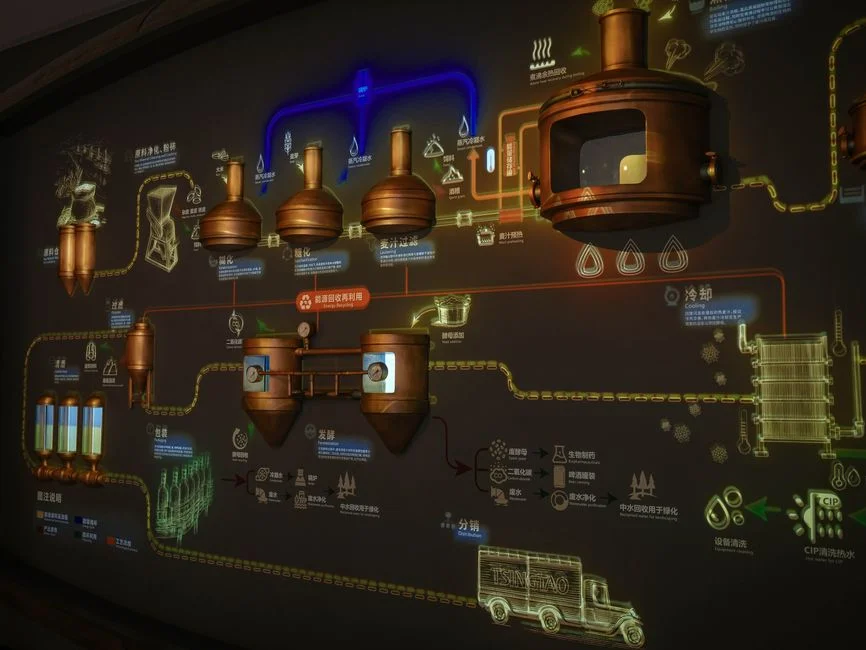
A defensible 2026 process train for a Midland SIU runs headworks screening → equalization → pH adjustment → coagulation/flocculation/precipitation → DAF or lamella separation → polishing filtration → sludge dewatering, with continuous flow and pH metering at the discharge sampling point (Keokuk 2026 pretreatment guide).
Step 1 — Screening. A rotary mechanical bar screen at the headworks removes rags, plastics, and coarse grit. Standard openings run 3–6 mm for quarry wash water and 1–3 mm for metals-finishing rinses. The HydropureWater GX rotary mechanical bar screen is specified to handle grit loads typical of Midland quarry operations.
Step 2 — Flow equalization sized to at least 24 hours of average process flow, because the chronic SNC calculation runs over a 6-month window and any unbuffered batch spike is a candidate violation.
Step 3 — PLC-controlled pH adjustment with caustic or acid, holding pH in the 6.0–9.0 band. The HydropureWater PLC-controlled chemical dosing package feeds the precipitation reactor that follows.
Step 4 — Coagulation, flocculation, and metal hydroxide precipitation. Ferric chloride or alum at 50–200 mg/L plus a polymer flocculant at 1–5 mg/L pulls dissolved Cu, Pb, Zn, and Ni out of solution as hydroxide or sulfide precipitate. Co-precipitate Cu with Fe/Mn hydroxides in the pH 9.0–9.5 window for the tightest removal.
Step 5 — Primary separation. Use the HydropureWater DAF system whenever FOG or produced-water crossover is in the feed. DAF operates at 4–300 m³/h, 80–95% TSS and FOG removal, 15–30 min residence time, saturator at 4–6 bar, recycle 20–40% of forward flow (HydropureWater field data, 2026).
Step 6 — Multi-media filter polish. The HydropureWater multi-media filter drops residual TSS below 10 mg/L and protects downstream UV or RO if reuse is being considered.
Step 7 — Sludge dewatering. The HydropureWater plate and frame filter press produces a stackable 25–35% dry solids cake. DAF float at 3–6% DS dewaters faster than clarifier underflow at 2–4% DS, with cleaner filtrate and shorter cycle times (HydropureWater Midland guide, 2026).
Cold-climate note for West Texas winters: when overnight lows drop near 0 °C, enclose equalization and DAF cells, or specify cold-adapted biology for any biological polish.
DAF vs Lamella Clarifier: The Midland Decision Matrix
Score the five questions below against actual influent data. A "Yes" answer is one point. The total score points to a unit (HydropureWater Midland guide, 2026).
| Criterion | DAF | Lamella Clarifier (55–60° plates) |
|---|---|---|
| Flow envelope | 4–300 m³/h on a single skid | 20–40 m³/h per m² plan area (4–6× conventional clarifier throughput) |
| TSS / FOG removal | 80–95% on mining-type feeds | 30–60% (often insufficient alone for 40 CFR 437) |
| Residence time | 15–30 min | Gravity settling, no fixed HRT |
| Chemical demand | Polymer + coagulant, higher dose | ~30% lower polymer vs conventional clarifier |
| Energy / moving parts | Recycle pump 1.5–5 kW + saturator | No moving parts in separation zone |
| Sludge dry solids | 3–6% DS, dewaters faster | 2–4% DS, slower press cycles |
| Failure-mode risks | Wet float; higher polymer drift over time | Emulsified oil, fine colloids under 10 µm, diurnal ΔT > 10–15 °C |
| Best-fit feed | FOG, emulsified oil, colloidal metal hydroxides, mixed produced-water crossover | Low-oil, high-density, high-throughput, stable feed |
| Installed CAPEX (25–100 m³/h, 2026 USD) | $150k–$600k | $80k–$350k |
Hard override rule: if FOG is above 200 mg/L, specify DAF regardless of the other four scores. Lamella underperforms on emulsified oil, fine colloids under 10 µm, and feed temperatures that swing more than 10–15 °C diurnally — all three are routine in Midland summer operation, where ambient tank temperatures can move from 18 °C at 6 a.m. to 38 °C by 3 p.m. (HydropureWater field data, 2026).
Hybrid option: DAF primary followed by lamella polish is a documented configuration on mining recycle loops; the lamella offsets the DAF's higher polymer dose on the polished stream. The HydropureWater high-efficiency lamella clarifier handles the residual floc before the media filter. Scoring: 4–5 "Yes" answers → specify DAF; 2–3 → pilot both, default DAF for FOG risk; 0–1 → lamella will win on 5-year OPEX.
CAPEX and OPEX Bands for a 2026 Midland Build
Order-of-magnitude CAPEX for a packaged unit installed in a 2026 Midland build runs $150k–$600k for a DAF and $80k–$350k for an equivalent-capacity lamella clarifier, with 25–100 m³/h as the typical duty range. The wide bands are driven by tankage material (FRP vs rubber-lined carbon steel), automation level (PLC with HMI vs SCADA), recycle-pump sizing for the DAF, and skimmer mechanism (surface vs full-width). A 50 m³/h DAF with 40% recycle, PLC, and FRP tankage sits closer to the middle of its band (HydropureWater Midland guide, 2026).
| Cost Driver | DAF | Lamella |
|---|---|---|
| Packaged CAPEX (25–100 m³/h, 2026 USD) | $150,000–$600,000 | $80,000–$350,000 |
| Recurring chemical OPEX | Polymer 2–10 mg/L | ~30% lower polymer draw |
| Energy at 50 m³/h | Recycle pump 1.5–5 kW continuous | No moving parts in separation zone |
| Sludge volume / hauling | Lower volume; DAF float dewaters faster | Wetter underflow; longer press cycles |
| Payback vs lamella (if FOG present) | 12–24 months | Compliance penalty erodes advantage inside 18 months |
The CFO-level payback rule for 2026: if FOG is in the feed, DAF pays back its CAPEX premium in 12–24 months through lower sludge volume, fewer filter-press cycles, and tighter compliance margins against 40 CFR 437. If FOG is provably absent and the feed is steady, lamella's 5-year total cost of ownership is lower. Run a 7-day composite profile (TSS, FOG, total metals, pH, temperature, flow) and pilot on a rental DAF or mobile lamella trailer before committing CAPEX. Confirm spare-parts inventory for probes, valves, and media through HydropureWater water-treatment parts, valves, and media.
Compliance Math: TRC, SNC, and How Much Headroom to Design In
Significant Noncompliance (SNC) is the trigger that escalates a routine violation into an EPA-publishable enforcement event. Most West Texas POTWs model their definitions on Keokuk Ordinance 2039 §13.10.020(45). Chronic SNC: ≥66% of measurements exceed the daily-max or average limit over a 6-month window. Technical Review Criteria (TRC) SNC: ≥33% of measurements ≥ 1.4× the limit for BOD, TSS, and FOG; ≥ 1.2× for all other pollutants except pH (per City of Keokuk Ordinance 2039, §13.10.020(45)).
| SNC Trigger | Threshold | Window | Design Implication |
|---|---|---|---|
| Chronic SNC | ≥ 66% of measurements exceed daily max or average limit | 6 months | Buffer batch spikes; size equalization ≥ 24 h of average flow |
| TRC SNC — BOD, TSS, FOG | ≥ 33% of measurements ≥ 1.4 × limit | 6 months | Run monthly averages at 70–75% of limit |
| TRC SNC — all other pollutants except pH | ≥ 33% of measurements ≥ 1.2 × limit | 6 months | Target metals ≤ 1 mg/L to protect sludge quality |
| Reporting SNC | Any required report > 30 days late | Per due date | Automate 90-day and BMR submissions |
Design implication: keep monthly averages at 70–75% of the limit so a single bad day does not trip the TRC multiplier and force a permit rewrite. Sample every 2–4 hours on a 7-day composite to capture the diurnal swing — a single grab sample will understate variability on a plant with produced-water crossover (HydropureWater field data, 2026). Audit self-monitoring data monthly and flag any parameter trending above 1.2× or 1.4× the limit before the chronic or TRC SNC thresholds trip.
Pre-Purchase Checklist for a 2026 Midland Sewer Discharge Permit
- Confirm SIU vs. categorical vs. non-significant categorical status with the receiving POTW — same logic as the Keokuk §13.10 framework.
- Obtain the current local-limit letter and the BMP expectations specific to the discharge type before sizing equalization or DAF surface-loading rates.
- Verify stormwater, roof drains, and non-contact cooling water are segregated from the sanitary and process sewer.
- Install continuous pH and flow metering at the discharge sampling point to feed automatic compliance reports.
- Confirm spare-parts inventory for probes, valves, filter media, and RO/UF membranes so a single failed component does not push a day into noncompliance.
- Pilot the chosen unit on a rental DAF or mobile lamella trailer for 4–6 weeks before committing CAPEX.
Order consumables and replacement membranes for the polish step through HydropureWater RO/UF membranes and filter elements before the plant starts up — a membrane on backorder is the fastest path to a TRC violation.
Frequently Asked Questions
How do mining and metals plants near Midland City, US meet 2026 pretreatment limits before sewer discharge?
They run a 7-step train — bar screen, equalization (≥24 h), PLC pH adjustment, coagulation/precipitation, DAF or lamella, multi-media filter, and plate-and-frame press — sized to the more stringent of 40 CFR Part 437 (TSS ≈30 mg/L monthly average) and the receiving POTW's local limit (per EPA 40 CFR Part 437, 2026).
When should a Midland plant specify DAF instead of a lamella clarifier in 2026?
Specify DAF whenever FOG exceeds 200 mg/L, the feed carries emulsified oil or fine colloids under 10 µm, or diurnal temperature swings exceed 10–15 °C. The HydropureWater DAF system handles 4–300 m³/h with 80–95% TSS/FOG removal (HydropureWater field data, 2026).
What SNC and TRC thresholds should a 2026 Midland indirect discharger design around?
Chronic SNC triggers when ≥66% of measurements exceed the daily-max or average limit over 6 months. TRC SNC triggers when ≥33% of measurements hit 1.4× the limit for BOD/TSS/FOG or 1.2× for all other pollutants except pH — so target monthly averages at 70–75% of the limit (per City of Keokuk Ordinance 2039, §13.10.020(45)).
Can a lamella clarifier handle Permian produced-water crossover alone?
No. Produced water carries emulsified oil, FOG, and fine colloids that lamella cannot reliably remove at typical Midland loading rates. Run a HydropureWater DAF system (or IGF) first, with the HydropureWater high-efficiency lamella clarifier downstream as a polish if needed (HydropureWater Midland guide, 2026).