Why an Almaty hotel cannot use a generic hotel sewage package
A 2026 hotel or mountain-resort project in Almaty cannot be sized against a generic hotel sewage figure because the amenity mix and the discharge/reuse environment distort both the hydraulic envelope and the regulatory envelope. The Swissôtel Wellness Resort Alatau — a rebranding of the 1986 Soviet sanatorium, itself a protected local cultural monument — runs 222 rooms alongside a water park, restaurant, sports fields, and its own mineral water source. The parallel GOCO Life Alatau development plans 212 rooms, 45,000 m² GFA, a 4,000 m² medical and wellness centre, a 2,000 m² thermae with aqua park, an 18-hole golf course, and four F&B outlets on 100 ha of forested Alatau mountain land. That combination of domestic rooms, high-volume spa/thermae, F&B, laundry, pool backwash, and on-site mineral source produces a wastewater envelope no off-the-shelf hotel sewage package handles correctly.
Compliance in 2026 sits on two pillars: the Kazakhstan Water Code plus environmental permits from the Ministry of Ecology and Natural Resources for any discharge near the Alatau mountain watershed, and the practical pressure to reuse treated effluent on 100 ha of landscaped grounds and a golf course where the subsoil and aquifer make freshwater withdrawal expensive. The defensible 2026 design outcome is a packaged, buried or semi-buried MBR-based train sized for 250–400 m³/day, with on-site disinfection and an optional RO polishing step for landscape and golf-course reuse. The remainder of this guide walks through the calculation, the technology decision, the equipment specification, the climate and permit envelope, and the procurement path that delivers that outcome.
Step 1 — Set the design flow and load from the amenity mix
Sizing the train against a generic 0.2 m³/room/day municipal figure will undersize the biological stage, undersize the equalisation tank, and leave no room for the FOG, lint, and pool-backwash streams that any F&B-heavy full-service resort actually generates. The defensible starting point is amenity-mix-driven, not room-count-driven.
Average dry-weather flow for a 222-room full-service resort with spa, aqua park, and four F&B outlets lands in the 1.0–1.6 m³/room/day range, giving 220–360 m³/day at typical mid-week occupancy and pushing to 1.5–2.0× peak factor during morning pool turnover and evening meal-service peaks (industry benchmark, F&B-heavy properties). Backwash and pool/aqua park drain-down add a low-COD but high-volume 30–80 m³/day contribution from a 2,000 m² thermae plus aqua park, and that stream carries residual free chlorine that must be neutralised before it hits the biological stage.
Raw sewage quality for a resort of this profile runs COD 400–600 mg/L, BOD₅ 200–350 mg/L, TSS 200–350 mg/L, FOG 50–150 mg/L, NH₃-N 25–45 mg/L, and pH 6.5–8.5. Three special sidestreams need segregation rather than blending: the on-site mineral water source (high TDS, governed by Kazakhstan subsoil/water-use rules), laundry lint (fibre loads that blind bar screens and membranes), and pool filter backwash with residual free chlorine that disrupts nitrification if blended uncontrolled. The equalisation tank is sized for 6–12 hours with pH trim to absorb spa drain-down surges and meal-service FOG spikes without shock-loading the biology.
| Parameter | Design value (222-room F&B-heavy resort) | RFQ envelope | Source / note |
|---|---|---|---|
| Average dry-weather flow | 1.0–1.6 m³/room/day | 220–360 m³/day | F&B-heavy resort benchmark |
| Peak factor | 1.5–2.0× ADWF | 330–720 m³/day | Morning pool turnover, evening meal peaks |
| Pool / aqua park backwash | 30–80 m³/day added | Low COD, high volume, dechlorinate first | 2,000 m² thermae + aqua park |
| COD (raw) | 400–600 mg/L | Headworks & equalisation sized to this band | Resort-profile envelope |
| BOD₅ (raw) | 200–350 mg/L | Biological stage F/M sized to this band | Resort-profile envelope |
| TSS (raw) | 200–350 mg/L | DAF + MBR combined removal | Resort-profile envelope |
| FOG (raw) | 50–150 mg/L | DAF sized for ≥80% removal | Four F&B outlets + spa oils |
| NH₃-N (raw) | 25–45 mg/L | Nitrification stage HRT sized accordingly | High-occupancy domestic load |
| pH | 6.5–8.5 | pH probe + trim in equalisation | Resort-profile envelope |
| Equalisation retention | 6–12 hours | Buffer for spa drain-down & FOG spikes | Design choice, not vendor default |
Step 2 — Choose the technology: MBR vs MBBR vs SBR for an Almaty hotel
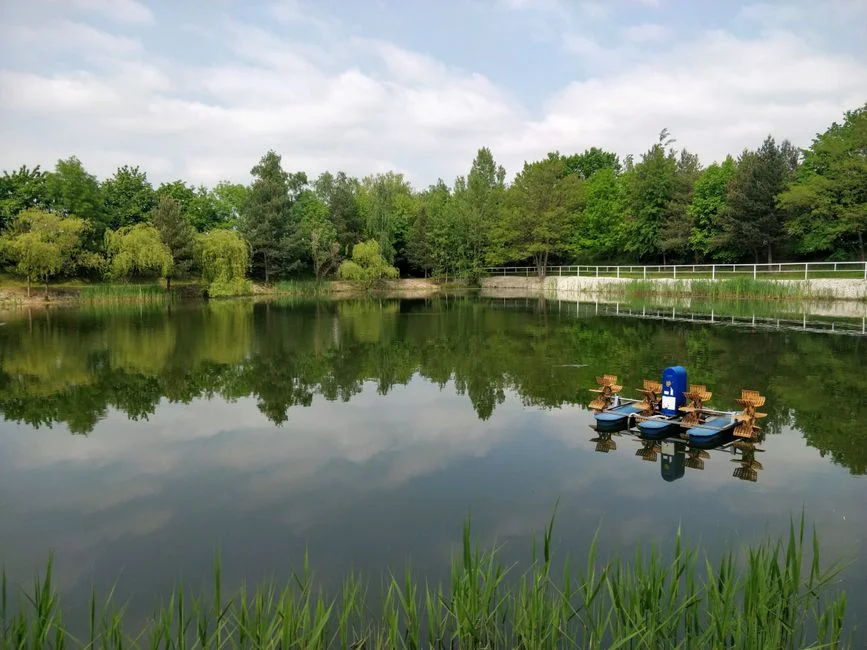
For a 200–250 m³/day hotel duty in an Almaty mountain climate, the technology choice should be defended with numbers, not brand preference. Imemflo's documented 200-bed, 5-star hotel installation at 250 m³/d using hollow-fibre MBR confirms MBR is the established hotel duty choice at this scale; the remaining question is whether the alternative technologies (MBBR, SBR) clear the bar for an Almaty mountain-resort profile where reuse, footprint, and heritage constraints are binding.
An MBR with submerged integrated MBR membrane bioreactor system delivers COD ≤ 50 mg/L, BOD₅ ≤ 10 mg/L, TSS ≤ 5 mg/L, NH₃-N ≤ 5 mg/L, and turbidity ≤ 1 NTU on a consistent basis, occupies roughly 60% of the footprint of a comparable conventional activated-sludge plant, and is tolerant of variable load — the deciding factors on a heritage-protected mountain site where above-grade tankage is restricted and reuse is a stated water-stewardship goal. The membrane-care weakness (cleaning, TMP monitoring) is mitigated on a remote site by specifying individually replaceable elements and an MBR troubleshooting playbook into the RFQ, not by switching technology. MBBR delivers robust shock-load performance at lower membrane cost, but effluent of 20–30 mg/L BOD and 20–30 mg/L TSS is not reuse-ready without a polishing step and the footprint is larger than MBR. SBR is mechanically simple and membrane-free, but its large footprint, batch-timing sensitivity, and weaker effluent on FOG spikes make it a poor fit for a heritage-protected mountain site. The WSZ underground package sewage treatment plant is the natural core for the buried configuration.
| Criterion | MBR (submerged PVDF flat-sheet) | MBBR | SBR |
|---|---|---|---|
| Effluent BOD₅ | ≤ 10 mg/L | 20–30 mg/L | 20–30 mg/L |
| Effluent TSS | ≤ 5 mg/L | 20–30 mg/L | 20–30 mg/L |
| Effluent NH₃-N | ≤ 5 mg/L with A/O | 5–10 mg/L | 5–10 mg/L |
| Footprint vs CAS | ~40% (60% smaller) | ~60% | ~70% |
| Peak-flow sensitivity | Low (membrane buffers) | Moderate | High (batch timing) |
| FOG / lint tolerance | Requires DAF upstream | Moderate | Weak on FOG spikes |
| Reuse readiness | Direct feed to MMF + RO | Polishing step required | Polishing step required |
| Operator skill | Moderate (TMP, cleaning) | Low | Low |
| Climate fit (Almaty mountain) | Good if insulated and buried | Good | Poor (above-grade tankage) |
| Heritage site fit | Strong (buried core) | Moderate | Weak |
Decision rule: if reuse, heritage site, or footprint is binding, specify MBR; if reuse is out of scope and capital is tight, MBBR is a defensible fallback; SBR is rarely the right answer for an Almaty mountain resort.
Step 3 — Specify the train: equipment list with parameters, not a process description
The RFQ needs an equipment list with parameters, not a process narrative. The following is a paste-ready table for a 250–400 m³/day MBR-based train for a 200–250-room F&B-heavy Almaty resort.
| Stage | Equipment | Specification / model | Function in train |
|---|---|---|---|
| 1 — Fine screening | Rotary mechanical bar screen | GX-series, 3–5 mm aperture | Removes rags, lint from laundry stream; finer than municipal default to protect pumps and membranes |
| 2 — Equalisation | EQ tank with mixer and pH probe | 60–200 m³, 6–12 h retention | Buffers spa drain-down surges and F&B FOG spikes; pH trim |
| 3 — FOG / TSS removal | Dissolved air flotation | DAF, 4–300 m³/h, 13 standard models | 50–90% FOG removal, 60–80% TSS removal; protects downstream membranes from oil fouling |
| 4 — Biology + membrane | A/O stage + submerged MBR | DF-series PVDF flat-sheet modules, 0.1 μm nominal pore; integrated skid or buried | 10–20× lower energy than cross-flow tubular; individually replaceable elements |
| 5 — Disinfection | On-site ClO₂ generation | ClO₂ generator, 50 g/h to 20,000 g/h, 8 configurations | No bulk Cl₂ on a guest-occupied site; aligns with EPA, EU, and WHO guidelines for reuse |
| 6 — Reuse polishing (optional) | MMF + RO | Multi-Media Filter + Reverse Osmosis train | Required for unrestricted irrigation on 100 ha or golf-course use; without RO, MBR + ClO₂ covers drip irrigation of non-edible areas and golf roughs |
| 7 — Sludge handling | Plate and frame filter press | Plate and frame filter press, 20–30% dry-solids cake | Reduces sludge haul-off from weekly to twice-weekly in the Almaty winter |
Specify into the RFQ: effluent performance guarantees on the envelope above, individually replaceable membrane elements, a remote-commissioning option for the pilot phase, and an operator-training scope. The DF-series MBR modules at 0.1 μm are the right call for a remote mountain site where a full cassette swap should be preferable to a crane lift, and the DAF standard 13-model range allows close matching to design flow rather than oversizing.
Step 4 — Engineer for Almaty's climate, seismic, and compliance envelope
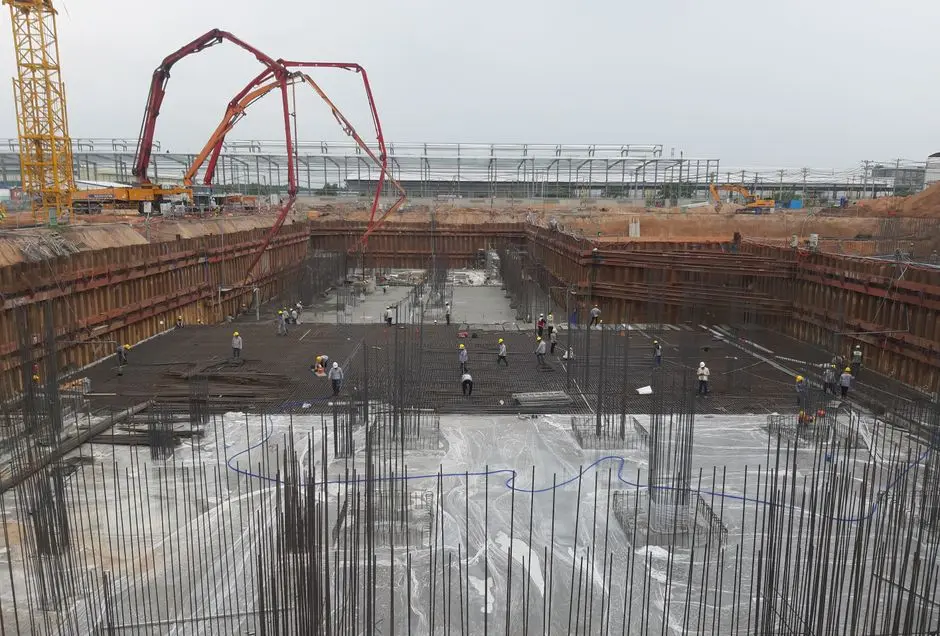
A generic MBR spec does not survive an Almaty mountain winter, a local seismic event, or the Kazakh permitting process without explicit site engineering. The following checklist is the minimum an RFQ should demand.
| Domain | Constraint | RFQ requirement |
|---|---|---|
| Winterisation | Sub-zero ambient 4–6 months/year | Insulate and heat EQ + MBR tanks; bury or semi-bury to use ground temperature; cold-rated blowers and diffusers; plan MLSS/HRT adjustment for reduced sub-zero biological activity |
| Seismic | Alatau mountain zone is seismically active; original sanatorium uses anti-seismic belts | Specify seismic-rated anchorage and flexible couplings on all equipment foundations; comply with current local seismic code |
| Snow load | Almaty mountain snow envelope exceeds lowland Kazakhstan loads | Design buried vaults and access hatches for the Almaty mountain snow envelope, not generic Kazakhstan load |
| Mineral water sidestream | High TDS, governed by Kazakhstan subsoil/water-use rules | Route to dedicated TDS-appropriate handling stream; keep out of biological train (suppresses flux, drives cleaning frequency, complicates RO balance) |
| Discharge | Almaty Vodokanal municipal sewer connection; pretreatment tariff applies | Confirm sewer connection capacity and pretreatment tariff; or plan on-site reuse and reduced freshwater demand on the Almaty mountain aquifer |
| Permitting | MoENR environmental permit for any discharge near the Alatau mountain watershed | Allow lead time in project schedule; engage local EIA consultant early |
| Reuse compliance | WHO and Codex microbial targets for unrestricted landscape irrigation | MMF + RO required for unrestricted irrigation; without RO, restrict to drip irrigation of non-edible areas, golf roughs, and forest zones |
Step 5 — Cost, procurement path, and pilot options for 2026
The indicative 2026 CAPEX envelope for a 250–400 m³/day MBR-based train — equipment only, FOB China or CIF Almaty — sits in the low single-digit USD million range, with the spread driven by configuration and scope rather than by unit equipment cost. The non-equipment cost drivers that move the number materially in Kazakhstan are skid versus containerised versus buried configuration, winterisation for the Almaty mountain climate, seismic-rated foundations, and whether the plant is installed indoors or outdoors.
The pragmatic procurement path is to install a pilot or trial containerised MBR for the first 12 months of operation to validate hydraulic and load assumptions against real occupancy, then replace it with a permanent buried WSZ underground package sewage treatment plant once room-night revenue stabilises. The WSZ buried package at 1–80 m³/h suits the heritage-protected permanent site; skid or containerised MBR suits the pilot phase. For comparison, a similar packaged approach for a 200–250-room urban hotel is documented in the Budapest hotel wastewater treatment 2026 engineering guide; the Hong Kong hotel wastewater treatment 2026 piece covers high-density urban reuse; and the MBR common problems and solutions 2026 guide is worth specifying into the RFQ as a reference for operator training.
Specify into the RFQ: performance guarantees on the effluent envelope (COD ≤ 50, BOD₅ ≤ 10, TSS ≤ 5, NH₃-N ≤ 5 mg/L, turbidity ≤ 1 NTU), a remote-commissioning option for the pilot, an MBR troubleshooting playbook, and an operator-training scope. Containerised export units are a well-established route into the Almaty Free Economic Zone and similar industrial parks where MoENR regulates industrial effluent; ISO 9001:2015 documentation, factory acceptance testing, and remote commissioning are standard inclusions.
Frequently Asked Questions
What size MBR STP does a 200-room Almaty hotel need?
For a 200-room F&B-heavy full-service resort, plan on 1.0–1.6 m³/room/day average dry-weather flow, giving a 200–320 m³/day design envelope and a 250–400 m³/day procurement envelope once peak factor and pool/aqua park backwash are added. Size against the amenity mix, not the room count alone.
Can a packaged MBR be buried on a heritage-protected site?
Yes. The Alatau sanatorium building sits on a reinforced concrete pile field, and the property's status as a local cultural monument restricts above-grade structures rather than buried infrastructure. A WSZ-class buried plant preserves the heritage streetscape while delivering full treatment capacity.
What effluent quality can an MBR deliver for an Almaty hotel?
A well-operated integrated MBR membrane bioreactor with 0.1–0.4 μm PVDF flat-sheet modules delivers COD ≤ 50 mg/L, BOD₅ ≤ 10 mg/L, TSS ≤ 5 mg/L, NH₃-N ≤ 5 mg/L, and turbidity ≤ 1 NTU — sufficient for municipal discharge and as feed for an MMF + RO reuse polishing step on 100 ha of landscaped grounds.
How is hotel FOG handled before the MBR?
A DAF sized for 50–90% FOG removal and 60–80% TSS removal, placed downstream of the equalisation tank, removes the bulk of kitchen and spa FOG. A 6–12 hour equalisation tank with pH trim buffers FOG spikes and spa drain-down surges upstream of the DAF so the biology and membranes are not shock-loaded.
Is a containerised MBR STP available for export to Kazakhstan?
Yes. Containerised factory-built export MBR units are standard product, with ISO 9001:2015 documentation, factory acceptance testing, and remote or on-site commissioning options. For a pilot phase at an Almaty resort, a containerised or skid-mounted MBR is the right starting point; the permanent plant can be a buried WSZ-class unit once occupancy stabilises.