Why Amman hotels need a packaged MBR, not a conventional STP
A 200-room hotel in Amman discharges 200-300 m³/d of highly variable wastewater, and the urban plot simply cannot accommodate the clarifiers, sludge hoppers and aeration basins that an activated-sludge plant needs. A packaged MBR sidesteps that constraint: it integrates biological treatment with submerged 0.1 μm PVDF membranes in a single skid, eliminates the secondary clarifier entirely, and delivers the 60% footprint reduction that makes it the only realistic class of plant for basement or service-yard retrofits in central Amman. Imemflo's reference installation at a 200-bed 5-star hotel, designed for 250 m³/d and operating continuously to a reuse standard, is the working example (source: Imemflo hotel MBR project profile).
Hotel wastewater is uniquely difficult. BOD and COD swing with occupancy, breakfast and check-out surges create hydraulic peaks within the same day, kitchen flows carry fats, oils and grease (FOG), and laundry streams add lint, surfactants and high pH. A membrane bioreactor handles that variability because the membranes retain biomass independently of sludge settleability — the operator does not have to ride a clarifier through a peak. The MBR stage removes 90-95% of harmful substances in the Imemflo reference, meeting reuse criteria for toilet flushing and irrigation (source: Imemflo). For the developer, that translates directly into offsetting municipal water purchases.
Other technologies — MBBR, SBR and conventional ASP — are technically capable of treating hotel sewage, but they need larger bioreactors, separate clarifiers, and more operator attention. On a tight Amman plot, or inside an operating hotel that cannot shut down for months of civil works, those requirements are decisive. A skid-mounted, factory-tested integrated packaged MBR system shortens on-site installation to weeks rather than months, which is what makes "packaged" the operative word for the hotel segment.
Step 1 — Size the plant from rooms, occupancy and peak factor
Hotel STP sizing starts with beds, not with flow meters. The working rule is 1.0-1.5 m³ per guest-night; the Imemflo 200-bed / 250 m³/d reference back-calculates to roughly 1.25 m³ per bed-day (source: Imemflo). That number must then be multiplied by a peak factor of 1.5-2.0× to absorb the breakfast and check-out surges, plus a 10-20% safety margin for resort hotels with pools, hammams, spa facilities and on-site laundry (per standard MBR design practice for hospitality). Skipping the peak factor is the single most common reason packaged MBRs get undersized for hotels.
| Rooms (keys) | Avg flow (m³/d) | Peak flow (m³/d, 1.75×) | Recommended MBR capacity (m³/d) |
|---|---|---|---|
| 50 | 50-75 | 90-130 | 100-150 |
| 100 | 100-150 | 175-260 | 200-300 |
| 200 | 200-300 | 350-525 | 400-550 |
| 300 | 300-450 | 525-790 | 550-800 |
| 500 | 500-750 | 875-1,300 | 900-1,400 |
Two practical points follow. First, packaged MBR product families that span 10-2,000 m³/d — such as the integrated packaged MBR system range — cover the entire hotel segment without forcing the specifier to jump between product lines. Second, the sizing table above is the document a consultant hands the Water Authority of Jordan; it is the basis for the discharge permit and the reuse-water permit, and it must be defensible against audit. Use calculated average flow, justify the peak factor with a daily-load profile, and document the safety margin in writing.
Step 2 — Match the membrane configuration to hotel load swings
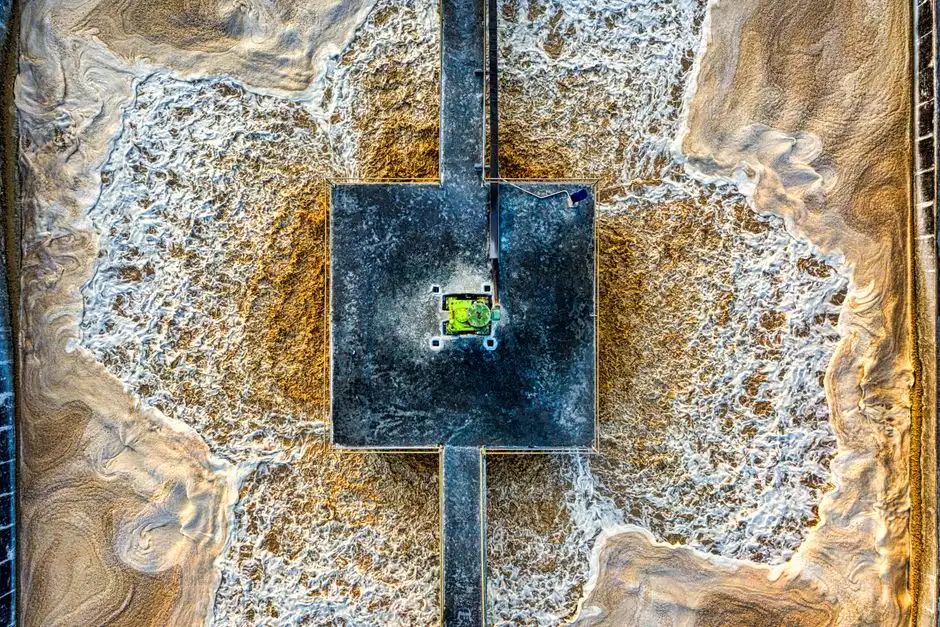
Once capacity is fixed, the next decision is hollow-fiber (HF) versus flat-sheet (FS) MBR. Imemflo's hotel reference uses HF membranes from Suez, Dow, DuPont or Mitsubishi, and its product line also includes Toray flat-sheet modules (source: Imemflo). Both configurations use 0.1 μm PVDF ultrafiltration and produce comparable effluent; the difference is in how they behave under variable load and how they are maintained.
| Parameter | Hollow-fiber MBR (HF) | Flat-sheet MBR (FS / DF series) |
|---|---|---|
| Packing density | High (more membrane area per m³) | Moderate |
| Best fit for load profile | Stable, high-load plants | Variable, intermittent, low-operator sites |
| Element-level repair | Difficult — potted bundles | Easy — individual cassettes replaceable |
| Aeration energy | Higher (coarse bubble scour) | 10-20× lower than external cross-flow designs |
| Module output range | Vendor-specific | 32-135 m³/d per DF module (HydropureWater) |
| Hotel recommendation | Suitable for large 500+ key resorts | Preferred for 50-300 key Amman hotels |
For most Amman hotels the flat-sheet DF configuration is the more defensible choice. The 0.1 μm PVDF membrane, integrated aeration box, and individually replaceable cassettes tolerate the breakfast-peak / 3 a.m.-trough cycle that defines hotel flows, and an on-site maintenance team can swap a single element without draining the tank or calling in a membrane specialist. The PVDF flat-sheet MBR modules in the DF series also right-size capacity module by module, so a 250 m³/d plant is two or three cassettes, not an over-specified skid. Hollow-fiber wins on packing density and is appropriate for very large 500+ key resort properties with steady high loads, where the higher aeration cost is amortized across more rooms.
Step 3 — Build the pretreatment and reuse train around the MBR
An MBR is the heart of the train, not the whole plant. The pretreatment stage protects the membranes from fouling, and the post-treatment stage is what makes reuse water acceptable to the Water Authority of Jordan.
Upstream of the MBR, hotel wastewater needs at least two unit operations. A rotary bar screen (GX series) removes hair, lint, fabric fragments and other solids that would otherwise blind the membrane; a DAF for FOG removal strips emulsified fats and oils from kitchen flows before they reach the bioreactor. Both are stocked in the HydropureWater catalogue and both materially extend membrane life in hotel service.
Downstream, the MBR effluent goes to UV disinfection for reuse water or, less commonly in Jordan, chlorine dioxide, before it is distributed for toilet flushing, landscape irrigation or cooling-tower makeup. Many large hotels also install a parallel grey-water train to treat laundry wastewater separately — Imemflo notes this is common practice in the hotel sector (source: Imemflo). The decision threshold is roughly 10 m³/d of laundry flow, or any site with a corporate water-reuse target that the combined stream cannot meet. An optional polishing UF stage (HydropureWater 0.03 μm PVDF, 2,000-40,000 L/h, available at UF system specifications) provides insurance for the highest reuse tiers, where the developer wants toilet-flush water that meets drinking-water microbiological criteria short of the actual potable standard. The single biggest selection driver for hotel developers in Jordan is reuse, and the train above is what unlocks it.
Step 4 — Check compliance, footprint and noise for an Amman site
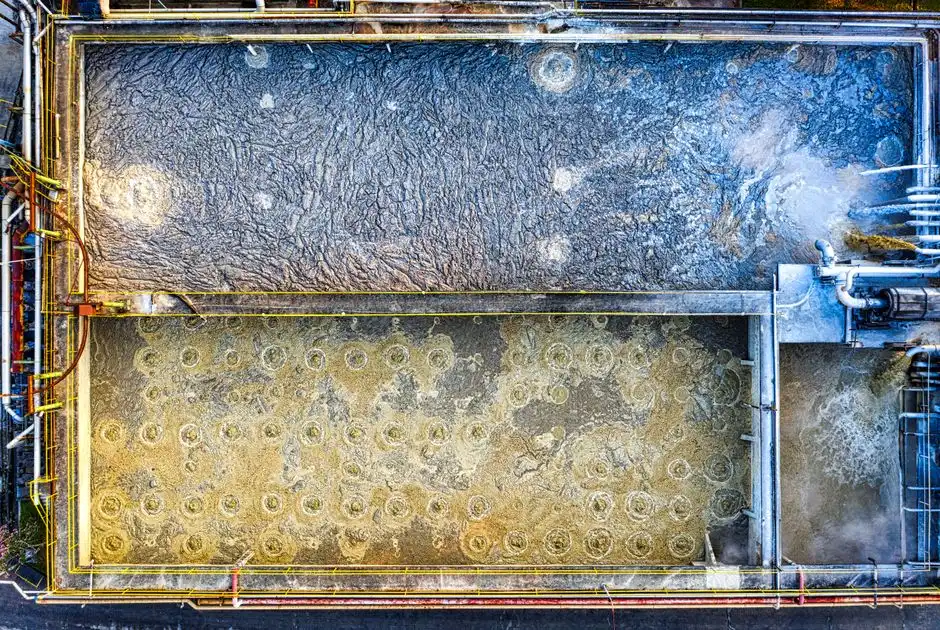
Three site-specific issues decide whether an MBR package fits an Amman hotel: the regulatory framework, the available envelope, and the neighbours.
Discharge and reuse in Jordan are governed by the Water Authority of Jordan (WAJ) and the JS 893 family of standards for treated wastewater reuse. These instruments set the limits for BOD, COD, TSS, faecal coliforms and nutrients that a hotel STP must meet, and they tier reuse by end-use — restricted irrigation, unrestricted irrigation, toilet flushing. A specifier should obtain the current WAJ discharge and reuse requirements at the design stage and size the disinfection stage to the target tier; compliance failure is the most common reason hotel STPs in Jordan are shut down (per WAJ enforcement practice). The HydropureWater MBR product line is documented to meet reuse-water targets when properly specified (see the MBR effluent quality vs cost guide for parameter-by-parameter performance data).
On the envelope side, Amman hotel basements and service yards typically limit equipment to 2.5-3.0 m clear height, which rules out tall aeration tanks and pushes the design toward packaged, shallow-tank or semi-buried configurations. The WSZ underground integrated unit, available at underground STP specifications, illustrates the semi-buried concept at smaller capacities; for MBR-class capacities the specifier should still confirm tank height against the available headroom. Noise and odour are secondary but real: an MBR is much quieter than an SBR or aerated lagoon, but the tank farm still needs covers and an odour-management plan when the STP sits below guest-room windows or beside a restaurant terrace. The permit pathway typically runs through WAJ for the discharge/reuse permit, the Greater Amman Municipality for the building permit, and the Ministry of Environment if the effluent discharges to a wadi or a public irrigation network — three separate approvals that the EPC contractor must sequence.
Step 5 — Evaluate suppliers and total cost of ownership
Suppliers should be evaluated on technical scope, local presence, and lifecycle cost, not on brochure aesthetics. The following checklist is the minimum a hotel developer or M&E consultant should require before signing a purchase order.
| Evaluation criterion | What to look for |
|---|---|
| Membrane brand and traceability | Named OEM (e.g. Toray, Suez, Mitsubishi, HydropureWater DF), material certificates, batch traceability |
| Factory testing | Full skid FAT at the supplier's facility before shipment — witnessed or video-recorded |
| Local agent in Amman | Commissioning team based in Jordan, not flown in; 24-48 h response SLA |
| O&M training | Structured handover with PLC logic, alarm setpoints, cleaning-in-place procedures |
| Hotel reference plants | At least one operating hotel MBR in the region, contactable for site visit |
| Spare-parts lead time | Membrane cassettes, aerator heads, UV lamps stocked locally or ≤ 2 weeks |
| Remote monitoring | PLC/SCADA with remote telemetry, off-site alarm forwarding to operator's phone |
For indicative cost, the regional packaged-STP reference for a 10-50 m³/d plant sits in the $15,000-$50,000 equipment band (source: regional packaged STP cost reference). Scaling linearly to a 200-300 m³/d hotel MBR, the equipment-only CAPEX band is approximately $150,000-$400,000, with civil works, installation and commissioning often matching equipment cost again — treat these as order-of-magnitude figures, not quotes, and verify against current 2026 bids. The OPEX side is dominated by aeration energy, membrane cleaning chemicals, sludge hauling and labour; energy optimization is where the 10-20× lower aeration demand of flat-sheet modules over external cross-flow designs shows up in the bill. The ROI lever, however, is water reuse: a 250 m³/d MBR with 90-95% reuse (source: Imemflo) offsets roughly 225-238 m³/d of freshwater, and at Amman municipal tariffs the payback is driven almost entirely by the water-recovery line. A defensible ROI model should be built around the local tariff and a realistic reuse fraction, not a sales-department claim.
Frequently Asked Questions
What MBR capacity does a 200-room Amman hotel need?
A 200-key hotel typically discharges 200-300 m³/d, which translates to a packaged MBR sized at 250-350 m³/d after applying the standard 1.5-2.0× peak factor for breakfast and check-out surges. The Imemflo 200-bed / 250 m³/d reference confirms that 1.0-1.5 m³ per guest-night is a defensible starting point (source: Imemflo).
Should I choose hollow-fiber or flat-sheet MBR for a hotel?
Flat-sheet PVDF modules are usually the better fit for 50-300 key hotels because they tolerate variable loads, allow individual element replacement, and consume 10-20× less aeration energy than external cross-flow designs. Hollow-fiber is appropriate for very large 500+ key resort properties with steady high loads and dense packing.
Can hotel wastewater be reused for irrigation in Jordan?
Yes — MBR effluent followed by UV or chlorine dioxide disinfection can meet the JS 893 reuse criteria for landscape and restricted agricultural irrigation, subject to Water Authority of Jordan approval. Tier the disinfection stage to the target end-use, and document compliance from day one.
How does MBR compare to SBR or activated sludge for a hotel in Amman?
MBR delivers higher effluent quality (BOD < 5 mg/L, TSS < 1 mg/L typical), a 60% smaller footprint because the clarifier is eliminated, and direct reuse-water compatibility. SBR and ASP remain technically viable but require more plot area, more operator attention, and a separate tertiary step before reuse — usually a decisive disadvantage on urban Amman sites.
What is the indicative cost of a packaged MBR for a mid-size hotel in 2026?
Using the regional packaged-STP reference of $15,000-$50,000 for 10-50 m³/d plants and scaling upward, a 200-300 m³/d hotel MBR falls in an indicative equipment-CAPEX band of roughly $150,000-$400,000, with civil works and installation often comparable. Verify against current 2026 vendor quotes and build the ROI around the 90-95% reuse fraction the MBR enables (source: Imemflo).