
What Electoplating Sludge Is — and Why It Is a 2026 Priority
Electroplating sludge (ES) is the metal-rich cake produced when rinse water from nickel, chromium, copper and zinc plating lines is treated by acid–base neutralization, coagulation and sedimentation (per S4, PMC 2024). Globally, more than 1 million tons of ES are generated each year; China alone discharges over 13 million tons and the EU roughly 100,000 tons (S4). For a typical U.S. job shop, hauling cake at 75–80% moisture to a Subtitle C landfill runs $300–$800 per wet ton plus surcharges — and that line item is the single largest variable cost in an EPW treatment budget. Three forces make 2026 the inflection year: tighter TCLP enforcement under EPA's RCRA Subtitle C program, mandatory Scope 3 waste reporting under CSRD/ESRS for any supplier touching an EU OEM, and LME nickel prices that have held above $17,000/t through Q1 2026, making in-house recovery economically defensible. Hazardous ES streams — those containing Ni, Cr(VI), Cd or Pb above TCLP thresholds — are the focus of this guide; non-hazardous finishing waste (e.g., clean alkaline cleaning rinse) follows a different disposal path and is not addressed in the dewatering sections below.
How Electoplating Wastewater Becomes Sludge: The Precipitation Step
Most full-scale EPW trains follow the same sequence: pH adjustment with lime or NaOH → coagulant dosing (ferric chloride, FeCl₃, or polyaluminum chloride, PACl) → flocculant (anionic polyacrylamide, A-PAM) → sedimentation or dissolved air flotation → thickened sludge (S1, S4). A 24-week full-scale study at a Tunisian facility compared three configurations and found that lime slurry conditioning (Configuration 3) was the only one that held residual nickel below 2 mg/L while influent Ni swung from 33 to 92 mg/L (S1, PLoS One Aug 2026). The same train achieved 99% chromium removal, 97% nickel removal and 50% chloride reduction, at a chemical operating cost of €0.134 per m³ versus €0.432 for the FeCl₃ baseline — a 69% cost reduction. The study's RSM-CCD model encodes that performance as a dosing rule: [Ni]final = f([Ni]influent, pH, [A-PAM]), with pH and flocculant windowed at 6.3–9.7 and 2.2–9.4 mg/L respectively and an R² of 0.9917 (S1). That equation is PLC-deployable: an operator enters the on-line influent nickel reading and the model returns a pH setpoint and polymer pump speed. Two practical cautions follow from S4: zinc precipitates as Zn(OH)₂ near pH 8.5 but redissolves on either side of that band because the hydroxide is amphoteric — a wide pH window is a hidden OPEX cost. And complexing agents dragged in from brighteners (citrate, EDTA, gluconate) bind Ni and Cu, which is why simple hydroxide precipitation alone often leaves residuals in the 5–60 mg/L range seen in the S1 baseline monitoring and forces a downstream sulfide polishing stage.
| Parameter | Configuration 1 (FeCl₃) | Configuration 2 (PACl) | Configuration 3 (Lime slurry) |
|---|---|---|---|
| Cr removal | ~85–92% | ~90–95% | 99% |
| Ni removal | ~70–85% | ~80–90% | 97% |
| Cl⁻ reduction | ~10% | ~15% | 50% |
| Residual Ni (steady state) | 0.02–60 mg/L | 5–20 mg/L | < 2 mg/L |
| Chemical OPEX (€/m³) | 0.432 | 0.28–0.35 | 0.134 |
| pH operating window | 7.5–8.5 | 7.0–8.0 | 6.3–9.7 (RSM-optimized) |
| A-PAM dose (mg/L) | 4–8 | 4–8 | 2.2–9.4 |
Polishing Heavy Metals: Sulfide Precipitation and Selective Recovery
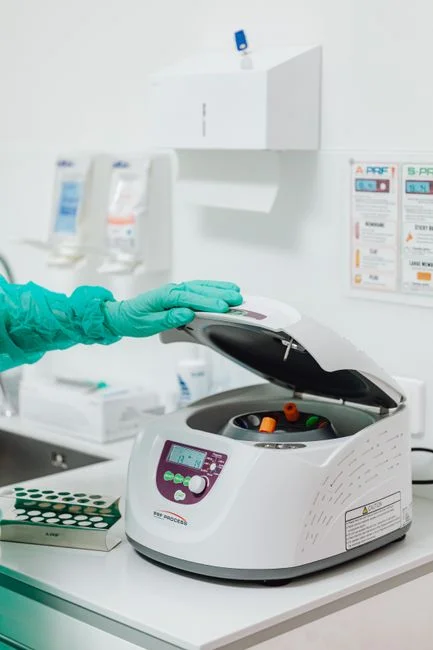
When hydroxide precipitation cannot meet a 0.5–1.0 mg/L discharge limit because of complexing agents, sulfide precipitation is the established polishing step. S3 (Water Quality Research Journal, 2020) treated a 100 mg/L Ni²⁺ industrial EPW in a stirred batch reactor and identified pH and the [S²⁻]/[Ni²⁺] molar ratio as the two control variables for residual nickel — pushing both into their optimized band drops soluble Ni by an additional order of magnitude below what hydroxide alone achieves. The trade-off is real: sulfide precipitates tolerate citrate and EDTA, produce a denser, faster-settling sludge, and reach lower residuals, but they require H₂S gas monitoring, sealed reactors, and a separate sludge line because the metal sulfide stream is incompatible with the hydroxide cake for downstream recovery. Where the plant's goal is metal value rather than just discharge compliance, selective acid leaching converts the dried ES into a saleable concentrate: 30% H₂SO₄ on dried cake gives 98.99% Cu, 99.27% Ni and 97.22% Cr dissolution in a single stage (S4). The leachate is then sent through solvent extraction or selective precipitation to upgrade each metal. The upstream alternative — source reduction via an enhanced deionization (EDI) loop on the rinse water — hits ≥99.8% removal of Ni²⁺, Cu²⁺, Zn²⁺, Cd²⁺ and Cr³⁺ and recirculates the water back to the plating line, which shrinks the sludge mass that has to be dewatered at all (S4).
Dewatering EPW Sludge: Plate-and-Frame Press vs Centrifuge vs Belt Press
Selection starts with the cake moisture target, not the machine name on a quote. A well-conditioned EPW sludge will reach 55–65% dry solids on a plate-and-frame filter press, versus 22–28% on a belt press and 25–35% on a decanter centrifuge — and that gap is what decides whether the cake is a free-flowing handleable solid or a paste that bleeds leachate in the roll-off. The plate-and-frame press is the workhorse for hazardous EPW cake: it is fully enclosed (important for Cr(VI) and Ni dust), available from 1 to 500 m² of filtration area, and can be specified as manual, hydraulic or PLC with automatic plate shifting and cloth washing. Centrifuges win on footprint and continuous operation but lose on three counts that matter for EPW: high-density abrasive solids accelerate scroll wear, polymer demand is typically 30–50% higher than a press, and the wetter cake usually needs a thermal drying step before recovery or landfill. Belt presses have the lowest CAPEX and the simplest automation, but a 25% dry-solids cake roughly doubles the tonnage a hauler bills against compared with a press cake. The OPEX ranking therefore inverts the CAPEX ranking: filter press < belt press < centrifuge, driven by polymer, power and wear-part replacement. Heat treatment is a separate option for volume reduction — ES ash falls to roughly 10% of the original sludge volume under high-temperature decomposition (S4) — but it destroys organic complexing agents and is normally reserved for cakes that fail TCLP rather than as a default step.
| Selection criterion | Plate-and-frame filter press | Decanter centrifuge | Belt press |
|---|---|---|---|
| Achievable cake dryness, EPW sludge | 55–65% DS | 25–35% DS | 22–28% DS |
| CAPEX ranking (1 = lowest) | 2 | 3 | 1 |
| OPEX ranking (1 = lowest) | 1 | 3 | 2 |
| Polymer demand (kg/t DS) | 2–4 | 5–8 | 4–6 |
| Enclosure / operator exposure | Fully enclosed | Open scrolls, aerosol risk | Open belt, drip risk |
| Abrasive-sludge wear penalty | Low (cloth change only) | High (scroll, bowl) | Moderate (belt, rolls) |
| Best fit for EPW | Hazardous, Ni/Cr/Cd cake, recovery feed | High-throughput non-haz finishing | Low-CAPEX, non-haz, large flow |
| Typical size range | 1–500 m² filtration area | 5–70 m³/h feed | 1–25 m³/h feed |
Stabilization, Solidification and the TCLP Crosswalk
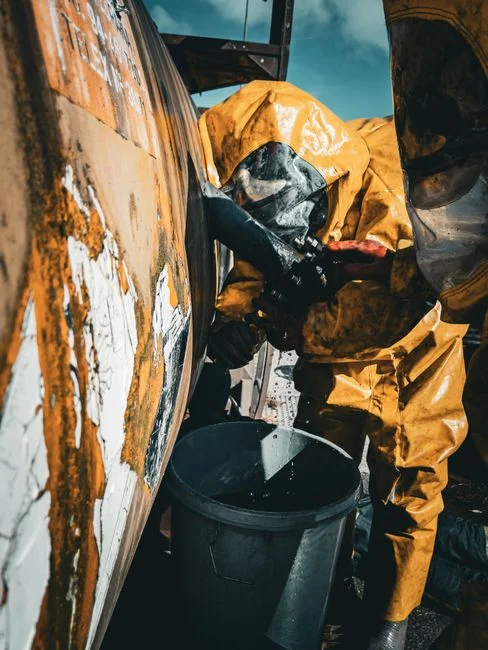
The TCLP result — not the influent concentration, not the operator's intuition — is the gate that decides whether a sludge is a Subtitle C hazardous waste, a non-hazardous landfill-acceptable solid, or a feedstock for recovery. EPA Method 1311 thresholds for the metals common in EPW cake are 5.0 mg/L Pb and 1.0 mg/L Cd; S5 (Scientific Reports, Aug 2026) confirmed a treated adsorbent at 0.58 mg/L Pb and 0.18 mg/L Cd leachate passed these limits comfortably, and retained more than 82% removal efficiency over five adsorption-desorption cycles. S4 enumerates the four downstream fates for any ES stream: solidification/stabilization, reduction (e.g., Cr(VI) to Cr(III) with FeSO₄ or Na₂S₂O₅), metal resource recovery, and high-value utilization as a feed for building materials or catalysts. In practice, the conditioning chemistry has to match the failing analyte: cement-based solidification reliably locks Cr(VI) as calcium chromate but can fail on Cd because the hydroxide is amphoteric at high pH (the same chemistry that frustrates Zn precipitation in the clarifier). Sulfide reduction plus cement encapsulation is the safer pairing for mixed Ni/Cu/Cd sludges because the metal sulfides are stable across the full cement pore-water pH range. If a representative grab sample of the dewatered cake fails TCLP, the operator's only compliant options are metal recovery or thermal destruction; if it passes, the cake can be sent to a Subtitle D landfill at one-third to one-half the haulage cost. A dissolved air flotation unit upstream of the press is the cheapest insurance against TCLP failure caused by residual oils, surfactants and brighteners floating with the cake — DAF typically removes 80–95% of FOG and suspended organics that would otherwise bleed through the cloth and contaminate the leachate.
| Analyte | EPA TCLP limit (mg/L) | Cement-only stabilization | Sulfide reduction + cement | Recovery path (acid leach) |
|---|---|---|---|---|
| Pb | 5.0 | Pass at low loading | Pass (PbS stable) | Recoverable as PbSO₄ |
| Cd | 1.0 | Fails at pH > 11 (amphoteric) | Pass (CdS stable) | Recoverable as CdSO₄ |
| Cr (total) | 5.0 | Pass if Cr(VI) reduced first | Pass | Recoverable as Cr³⁺ sulfate |
| Ni | — (state-specific) | Pass at moderate loading | Pass (NiS stable) | Recoverable as NiSO₄ |
| Cu | — (state-specific) | Pass | Pass | Recoverable as CuSO₄ |
2026 Equipment Shortlist for an Electoplating Sludge Line
The full train below maps each stage of the playbook to a specific equipment class, with capacity ranges a procurement manager can quote against. Stage 1 is equalization and primary clarification: a high-efficiency lamella clarifier sized for 20–40 m/h surface loading, which the S1 RSM window can drive to 30% lower chemical use by holding pH in the tight band that the model predicts. Stage 2 is the dosing skid: a PLC-controlled chemical dosing skid for lime slurry, FeCl₃ or PACl, and A-PAM, with the pump curves matched to the 2.2–9.4 mg/L flocculant range from the S1 RSM-CCD model — that range is wide enough to absorb influent swings from 33 to 92 mg/L Ni without manual retuning. Stage 3 is thickening and dewatering: a plate-and-frame filter press sized to the daily ES mass (a 50 m² press handles roughly 8–12 t DS/day on a 6-hour cycle), with a dissolved air flotation unit upstream if FOG or surfactant loading is visible in the clarifier underflow. Stage 4 is optional metal recovery: a 30% H₂SO₄ acid-leaching skid on the filter cake, sized for a 4-hour contact time, with the pregnant leachate returned to a neutralization tank for selective metal precipitation. The recovery stage pays back when LME Ni holds above ~$15,000/t and the daily cake mass exceeds 1–2 t DS, both of which are typical for captive lines running above 50,000 A·h/week.
Frequently Asked Questions
What moisture content should an electroplating sludge cake target before landfill or recovery?
A well-conditioned EPW sludge should reach 55–65% dry solids on a plate-and-frame filter press. Cake below 50% DS bleeds leachate in transport and usually fails TCLP on nickel, while cake above 65% DS is rarely achievable without thermal drying (S4).
Is a filter press or a centrifuge better for dewatering nickel and chromium sludge?
For hazardous Ni/Cr cake, a filter press is the better choice: it delivers 55–65% DS versus 25–35% on a decanter centrifuge, fully encloses the cake for operator safety, and runs at lower polymer and power cost. A centrifuge is justified only when footprint or continuous feed is the binding constraint (see filter press vs centrifuge comparison).
What TCLP limits decide whether electroplating sludge is hazardous in 2026?
EPA Method 1311 sets 5.0 mg/L for Pb and 1.0 mg/L for Cd on the leachate; state programs add limits for Ni, Cu, Zn and total Cr. A representative cake sample that exceeds any of those thresholds is a Subtitle C hazardous waste and must go to metal recovery or thermal destruction, not a Subtitle D landfill (S5).
How much electroplating sludge does the average mid-sized job shop generate per year?
A job shop running 20,000–40,000 A·h/week across Ni, Cr and Zn lines typically produces 50–150 t DS/year of ES, or 200–600 wet tons at 70% moisture. At a $300–$800/wet-ton haulage cost, annual disposal spend lands between $60,000 and $480,000 (S4).