Why Mobile, AL Chemicals Plants Are Reconsidering Their Biological Step
A specialty chemicals plant on the Mobile Bay watershed takes a 90-minute pH excursion from 4 to 10 during a batch transfer. The conventional activated sludge (CAS) clarifier loses its biomass over the next 24 hours, the surface-water discharge limit for ammonia-N is exceeded for 36 hours, and the Alabama Department of Environmental Management (ADEM) opens a non-compliance event under the facility's NPDES permit. The engineering team now has a budget question, not a textbook one: do we harden the existing CAS train, or replace the secondary step with a membrane bioreactor (MBR) that combines biological treatment and solids separation in a single tank?
For Mobile, AL chemicals wastewater, an MBR typically outperforms a CAS system on effluent quality — sub-1 µm permeate with BOD and TSS near detection limits and ammonia-N around 0.2 mg/L — and uses roughly 60% less footprint, but it costs more in energy and membrane replacement and requires fine screening and fouling control. CAS remains cheaper to build and easier to operate when influent is steady and non-toxic.
Mobile-area plants sit on top of three stressors the textbook comparison does not capture: ADEM-enforced NPDES limits on BOD, TSS, ammonia-N, and priority pollutants under the federal Organic Chemicals, Plastics, and Synthetic Fibers rule at 40 CFR Part 414; Gulf Coast summer mixed-liquor temperatures of 30–38 °C that push CAS nitrification kinetics toward washout; and feed chemistry (chlorinated organics, phenols, solvents, and saltwater intrusion) that routinely drives pH swings from 2 to 11 and COD spikes above 5,000 mg/L. The rest of this guide builds the parameter-level case for each technology, then layers Mobile's regulatory and climatic lens on top so a process engineer can defend a capex decision to ADEM and to a CFO. The mechanics of an MBR system are covered in more depth in the MBR system explained guide.
How a Conventional Activated Sludge System Works in a Chemicals Plant
A conventional activated sludge train is the workhorse most Mobile plants inherited from the 1980s and 1990s. Influent passes through equalization, a primary clarifier, an aeration basin, and a secondary clarifier, with optional sand filtration and disinfection downstream. The biology is the same suspended-growth mixed liquor that an MBR uses — the difference is that the clarifier has to settle the biomass by gravity before any water leaves the plant.
Operating windows for CAS in chemicals service are well documented: hydraulic retention time (HRT) of 4–8 hours, solids retention time (SRT) of 5–15 days, and mixed liquor suspended solids (MLSS) of 2,000–4,000 mg/L (per the 2016 PMC review of MBR technology, S4). At those SRTs, nitrifying bacteria grow slowly enough that ammonia-N breakthrough is a recurring summer problem once mixed liquor climbs past 32 °C. The chronic pain points at Mobile-area plants are predictable: bulking sludge from high food-to-microorganism (F/M) ratios during batch discharges, foaming from surfactants and lubricants, and total clarifier failure after a toxic slug — the same event described in the opening scenario. Sludge handling is identical downstream of either technology: waste activated sludge is thickened, dewatered through a sludge dewatering filter press, and hauled off site.
How an MBR Replaces the Clarifier and Changes the Operating Envelope
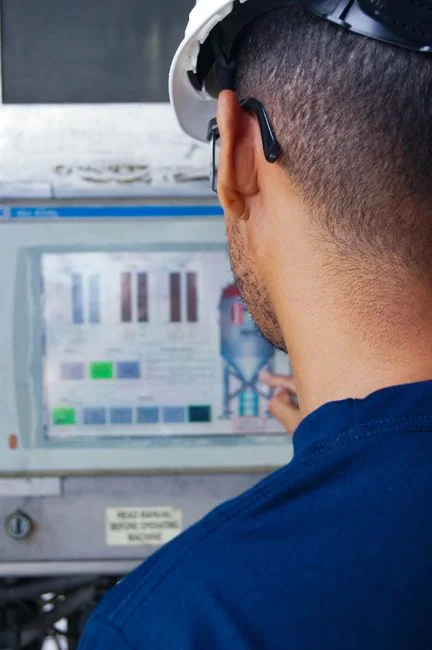
An MBR is activated sludge with a submerged or external membrane module (typically 0.1–0.4 µm PVDF flat sheet or hollow fiber) doing the work of the secondary clarifier. The mixed liquor never has to settle — water is drawn through the membrane under a slight vacuum, and everything larger than the pore size stays in the tank. That single change unlocks a wider operating window than CAS can hold (S4 PMC review).
Typical MBR operating parameters in industrial service are HRT 2–5 hours, SRT 20–60 days, and MLSS 8,000–15,000 mg/L — roughly four to five times the biomass a clarifier can carry before solids wash over the weir (S4). Higher MLSS means smaller tanks, longer SRT means nitrifiers are not washed out, and tighter SRT control means the plant can absorb a feed spike without losing the population. The EPA wastewater management fact sheet on membrane bioreactors (S5) sets the mechanical rules of the road: 1–3 mm fine screens immediately upstream of the membranes, periodic back-pulsing for 1–5% of operating time, continuous air scour to keep biomass from caking the membrane surface, and an N+1 redundancy unit so one train can be taken down for chemical cleaning without losing permit capacity.
Commercial implementations differ mostly in geometry. The integrated MBR system built around the DF series flat-sheet MBR module uses 0.1 µm PVDF plates in a cassette with an integrated aeration box, which the manufacturer reports draws 10–20× less energy than external cross-flow designs because the mixed liquor never leaves the bioreactor. The trade-off is honest: capex is higher than CAS at the same flow, membrane replacement every 5–10 years is a real opex line, and fouling remains the single biggest operational risk (S4). A membrane fouling control strategy — typically in-situ bleach (sodium hypochlorite) and citric acid cleans, plus an automatic chemical dosing skid — is non-negotiable.
MBR vs CAS — Side-by-Side Parameter Comparison
The table below is the working reference a Mobile engineer can paste into a design basis memo. Effluent numbers come from the EPA Calls Creek case study in the MBR fact sheet (S5) and the operating envelopes from the 2016 PMC review (S4); cost and footprint deltas come from the HydropureWater verified product catalog (S6). Where chemicals-industry tolerance is a judgment call rather than a published number, it is flagged.
| Parameter | CAS (Mobile chemicals service) | MBR (Mobile chemicals service) |
|---|---|---|
| HRT | 4–8 h (S4) | 2–5 h (S4) |
| SRT | 5–15 days (S4) | 20–60 days (S4) |
| MLSS | 2,000–4,000 mg/L (S4) | 8,000–15,000 mg/L (S4) |
| Effluent BOD | 10–30 mg/L typical, fails after toxic slug | ~2 mg/L (avg), ~1 mg/L max month (S5 Calls Creek) |
| Effluent TSS | 10–30 mg/L, excursions to >100 mg/L during bulking | ~1 mg/L (avg), ~1 mg/L max month (S5 Calls Creek) |
| Effluent ammonia-N | 2–10 mg/L, summer washout above 32 °C | 0.21 mg/L avg, 0.72 mg/L max month (S5 Calls Creek) |
| Effluent turbidity | 5–20 NTU after clarifier | 0.30 NTU avg, 1.31 NTU max month (S5 Calls Creek) |
| Footprint | 100% baseline (clarifier + sand filter required) | ~40% of CAS (S5, S6) — clarifier and sand filter eliminated |
| Energy | Aeration only; ~0.3–0.5 kWh/m³ | Aeration + air scour + permeate vacuum; higher per m³ |
| Capex (Mobile scale, per mgd) | $0.5–1.5M (HydropureWater field data, 2026) | 20–40% higher than CAS at same flow (S6) |
| Opex drivers | Aeration, polymer for settling, sludge hauling | Aeration, membrane cleaning chemicals, periodic membrane replacement |
| Fouling / upset risk | Clarifier failure on pH <5 or >9.5, F/M shock | TMP climb on EPS / surfactant overload; recoverable with CIP |
| Chemicals-industry tolerance | Poor — bulking and clarifier loss common on toxic slug | Higher — 4–5× biomass absorbs shock, closed-loop liquor recovers faster |
The single biggest operational difference at Gulf Coast temperatures is ammonia-N. CAS at 30–38 °C mixed liquor runs into nitrifier washout because the warm-water nitrification rate still demands a long enough SRT, and a clarifier cannot hold the MLSS that an SRT of 20+ days would require. MBR holds both SRT and MLSS in one tank, so the same influent produces effluent ammonia-N around 0.2 mg/L (S5) without a separate nitrification stage.
What Changes in Mobile: ADEM Limits, Gulf Coast Climate, and Feed Chemistry
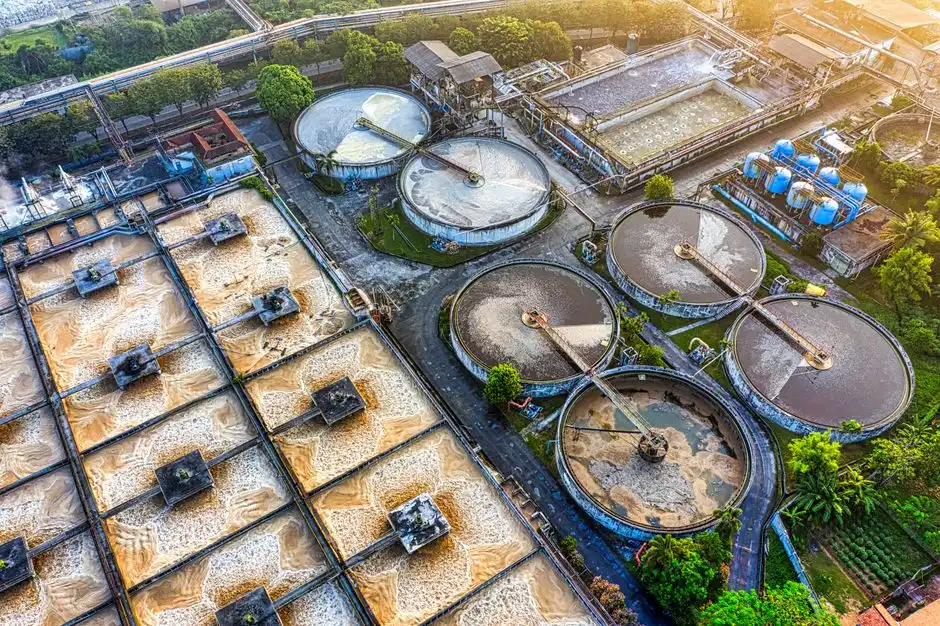
The generic MBR-vs-CAS table is necessary but not sufficient. Three Mobile-specific layers decide which technology survives a permit cycle and which one does not.
Regulatory layer. Federal baseline limits come from 40 CFR Part 414, the Organic Chemicals, Plastics, and Synthetic Fibers category that covers most Mobile specialty chemicals, petrochemical, and ag-chemical operations. On top of that, ADEM sets site-specific NPDES limits for BOD, TSS, ammonia-N, oil and grease, and priority pollutants (phenolics, chlorinated organics, metals) at the outfall. Plants that send wastewater to the public system instead of surface water fall under the Mobile Water & Sewer Service (HWWS) sewer-use ordinance, which carries its own surcharge-trigger thresholds for COD, TSS, and oil and grease. Either way, the ammonia-N number is the one that breaks CAS in summer and the one ADEM flags first on a DMR.
Climatic layer. Gulf Coast mixed-liquor temperatures run 30–38 °C from May through September. Nitrification kinetics actually speed up at those temperatures, but the competing sludge loss over the clarifier weir accelerates faster, and the net effect is nitrifier washout. MBR sidesteps the clarifier entirely and holds SRT independently of hydraulic load, so the nitrifier population is preserved through the hot months (S4).
Feed-chemistry layer. Mobile-side plants see chlorinated solvents, phenols, surfactants, and brine from Gulf-side operations. Each of these is a known inhibitor to the floc-forming bacteria CAS relies on for settling. MBR's 4–5× higher MLSS acts as a buffer — the same toxic slug that wipes out a clarifier is diluted across a larger biomass, and the closed-loop mixed liquor (no suspended solids lost over a weir) recovers within hours rather than days (S4). The DAF vs clarifier for chemicals wastewater guide covers the upstream equalization side of this same feed-chemistry problem.
Capex, Opex, and 5-Year TCO Sketch
Order-of-magnitude capex for a Mobile-scale CAS train runs roughly $0.5–1.5M per million gallons per day (mgd) of design flow, while an MBR train at the same flow runs 20–40% higher on equipment cost (HydropureWater internal product data, 2026). The gap comes from the membrane cassettes, the structural stainless to hold them, the N+1 redundancy train, and the fine-screening package the EPA fact sheet (S5) requires.
Opex runs in the opposite direction in three places. First, MBR's longer SRT (20–60 days vs 5–15) reduces waste activated sludge yield, which shrinks hauling and dewatering costs on the back end — the sludge dewatering filter press runs less often. Second, MBR effluent is reuse-quality, so plants that can sell or reuse permeate on site recover the aeration cost through water savings. Third, MBR eliminates the polymer dose CAS needs to keep the clarifier from floating sludge.
The cost MBR cannot avoid is membrane replacement every 5–10 years, plus the routine cleaning chemicals (sodium hypochlorite and citric acid, per S5) dosed through an automatic chemical dosing skid. Across a 5-year window, those opex lines combined with the 60% smaller civil footprint (S5, S6) typically close the capex gap, and over 10 years MBR is usually ahead on a net-present-value basis for a chemicals feed. The honest version of the answer: run a site-specific TCO with the actual flow, influent load, and discharge destination (surface water vs. reuse vs. POTW) before either technology gets budgeted.
When to Choose CAS, When to Choose MBR — Decision Framework
For most Mobile specialty chemicals plants evaluating a new biological step in 2026, the default is MBR, and CAS remains defensible only under a narrow set of conditions.
Choose CAS if influent is steady, non-toxic, and within 20–30 °C; if the plant discharges to a POTW with conventional limits rather than to surface water under an ADEM NPDES permit; if available land is not a binding constraint; and if capital — not operating complexity — is the constraint that decides the project. A brownfield retrofit with an existing clarifier and stable feed fits this case.
Choose MBR if the feed carries shock loads or inhibitory compounds (pH swings, COD spikes above 5,000 mg/L, surfactant or solvent slugs), if the site is footprint-constrained, if the effluent must meet strict ammonia-N or reuse limits, if Gulf Coast mixed-liquor temperatures are a recurring summer problem, and if the plant values operational simplicity — one tank instead of aeration basin plus clarifier plus sand filter — over the lowest capex. The equipment-side reference for this choice is the integrated MBR system and the DF series flat-sheet MBR module; the broader how-it-works treatment is in the MBR system explained guide. For comparison with non-Mobile permitting, the industrial wastewater treatment in Charlotte 2026 guide shows how a colder-climate jurisdiction frames the same decision.
Frequently Asked Questions
Is MBR more expensive than CAS for a Mobile chemicals plant?
Yes on capex, often no on 5-year TCO. MBR trains run 20–40% higher in equipment cost than CAS at the same flow (HydropureWater internal product data, 2026), but the 60% smaller footprint, lower sludge yield from longer SRT, and elimination of polymer dosing typically close the gap within 5 years (S5, S6).
Can MBR meet typical ADEM ammonia-N limits at Gulf Coast temperatures?
Yes. The EPA Calls Creek data show ammonia-N averaging 0.21 mg/L and maxing at 0.72 mg/L (S5). MBR's 20–60 day SRT preserves nitrifiers through the 30–38 °C summer window where CAS clarifiers lose them (S4).
How does MBR handle pH swings and toxic slugs in a chemicals plant?
Better than CAS, but not infinitely. MBR's 8,000–15,000 mg/L MLSS (4–5× CAS) buffers a toxic slug across a larger biomass, and the closed-loop mixed liquor has no weir to lose biomass over (S4). Sustained pH below 5 or above 9.5 still requires upstream equalization.
How long do MBR membranes actually last in industrial service?
Industrial membrane guarantees typically run 3–5 years, with municipal systems sometimes warrantied to 10 years (S5). Field life in chemicals service is most often 5–8 years with disciplined cleaning and the 1–3 mm fine screens the EPA fact sheet requires.
Is MBR overkill for a small Mobile plant under 50,000 gpd?
Often, yes. At very small flows the membrane cost per gallon is high and the operator skill floor is the same as a much larger plant. CAS with a properly sized equalization basin and a good DAF upstream is usually the lower-risk answer below ~50,000 gpd, unless the feed chemistry forces the issue.