Why a Yangon data center needs two parallel wastewater trains
A 2026 data center in Yangon, Myanmar must treat two distinct waste streams: (1) cooling-tower blowdown — concentrated hardness, silica, phosphate/phosphonate inhibitors, zinc and elevated TDS from 4–6 cycles of concentration under a 27–34°C tropical monsoon climate; and (2) sanitary/grey wastewater from the building. The standard process train is screening → DAF → softening → side-stream RO → ClO₂ or UV, designed against Myanmar's National Environmental Quality (Emission) Guidelines and YCDC sewer limits, and increasingly paired with 50–70% blowdown reuse as cooling-tower makeup.
The volumetric split is what forces the parallel-trains design. A 15 MW Yangon build running at PUE 1.4 produces roughly 200–400 m³/day of blowdown against only 30–60 m³/day of sanitary sewage — a 6:1 to 10:1 ratio (HydropureWater 2026 KL field data, applied to the Yangon envelope). Blowdown sets the water-management agenda, not blackwater. The same conclusion is reached in the global KETOS and ASCE/Eric Vance references: where evaporative cooling dominates, the cooling loop's bleed stream is the largest and most chemically loaded effluent the site will produce (source: KETOS, 2025; ASCE Civil Engineering, 2024-03).
Keeping the two streams hydraulically separate is non-negotiable. Biocides, zinc and phosphonates from the cooling loop will shock a biological plant and strip nitrification; BOD and ammonia from sanitary sewage will foul an RO feed and consume oxidiser residual. The parallel-trains approach is the same one used at Equinix and Digital Realty campuses, and at the Bridge DC Johor template referenced in the KL data center blowdown treatment guide. Yangon's operating envelope — 27–34°C ambient, 24–28°C wet-bulb during the May–October monsoon, 1,800–2,200 mm annual rainfall, and YCDC-supplied makeup drawn partly from groundwater under the Environmental Conservation Law amendments — is what every chemistry and reuse number below has to be sized against.
What cooling-tower blowdown chemistry looks like in Yangon
Yangon YCDC tap water typically enters the cooling system at 60–150 mg/L hardness as CaCO₃ and 15–35 mg/L silica, reflecting a blended surface/groundwater source that runs slightly softer than Klang Valley supply but with comparable silica loading (HydropureWater KL analogue, adjusted for Yangon groundwater-influenced YCDC supply). Cycles of concentration then multiply those baselines: at CoC 4, blowdown volume equals 25% of makeup (1/(CoC−1) per Genesis Water Tech); at CoC 6, blowdown drops to 20% but silica and CaSO₄ scaling risk rise sharply above CoC 5, so Yangon hyperscale sites typically cap CoC at 5 unless a high-grade antiscalant programme is justified.
The MDPI 2021 critical review by Soliman et al. classifies cooling water blowdown as a stream "containing high concentrations of various chemicals (e.g., scale and corrosion inhibitors) and pollutants" — a definition that translates directly to a Yangon site's discharge profile. The dominant ions and parameters an engineer designs against are Ca/Mg hardness, silica, alkalinity, chloride and sulfate, all of which scale with CoC. Layered on top are the treatment additives: phosphate or phosphonate-based scale inhibitors (HEDP, ATMP), zinc-based corrosion inhibitors, biodispersants, and oxidising biocides (Cl₂ or Br₂). At CoC 5 against a 100 mg/L hardness makeup, the loop itself runs at 400–750 mg/L hardness and 75–175 mg/L silica before any blowdown is taken — chemistry that the table below consolidates.
The wet season imposes a kinetic penalty the KL and temperate references understate. Yangon runs 8–9 months at 27–34°C ambient with 1,800–2,200 mm/yr of rainfall, which drives higher biocide demand and shortens oxidiser residuals in the loop. A Yangon blowdown is therefore more biologically active than the same loop run in temperate air, and the side-stream RO upstream of any reuse line has to be sized with that fouling load in mind. The same MDPI 2021 review ranks RO and EDR as the dominant polishing technologies for high-recovery blowdown reuse, which is what the table below assumes.
| Parameter | Yangon YCDC makeup | Loop at CoC 5 (pre-blowdown) | Typical blowdown envelope | Reuse TDS target (cooling makeup) |
|---|---|---|---|---|
| Total hardness as CaCO₃ (mg/L) | 60–150 | 300–750 | 400–900 | <100 |
| Silica SiO₂ (mg/L) | 15–35 | 75–175 | 100–200 | <20 |
| Alkalinity as CaCO₃ (mg/L) | 40–120 | 200–600 | 250–700 | <50 |
| Chloride (mg/L) | 10–40 | 50–200 | 75–250 | <25 |
| Sulfate (mg/L) | 5–25 | 25–125 | 40–150 | <30 |
| Conductivity (µS/cm) | 150–450 | 750–2,250 | 1,000–2,800 | <200 |
| Phosphonate (HEDP/ATMP, mg/L) | 0 | 5–20 | 8–30 | <1 |
| Zinc (mg/L) | <0.05 | 0.5–2.0 | 1.0–3.0 | <0.2 |
Myanmar NEQEG emission limits and YCDC sewer constraints
The National Environmental Quality (Emission) Guidelines set the envelope that every Yangon discharge has to clear. The parameters that bite hardest for cooling-tower blowdown are pH 6–9, TSS ≤50 mg/L, BOD₅ ≤30 mg/L, COD ≤125 mg/L, residual Cl₂ ≤1 mg/L, temperature ≤40°C, total Zn ≤2 mg/L, total Cu ≤1 mg/L, and total Cr ≤0.5 mg/L (per Myanmar NEQEG, ECD). The YCDC sewer discharge overlay adds oil & grease ≤10 mg/L and sulphide ≤1 mg/L, and — for hyperscale sites — a consent flow cap that the operator has to negotiate with the Yangon City sewer authority before commissioning.
The Myanmar Environmental Conservation Law (2012) and its 2014/2023 amendments give the Environmental Conservation Department (ECD) the authority to impose site-specific, tighter limits on hyperscale builds — the same trajectory the Department of Environment is on in Malaysia (per DOE IE Regulations 2009, P.U.(A) 434). The practical implication is that thermal discharge to monsoon drains is restricted above 40°C, and the 2026 expectation is that hyperscale RFPs in Yangon will increasingly require a water-reuse line item, mirroring the Bridge DC Johor precedent. A 2026 design review has to assume ECD site-specific consent risk on heavy metals, residual inhibitors and total dissolved solids for any site above ~5 MW.
For a 5–50 MW Yangon build, the conservative move is to design the blowdown train against the stricter NEQEG Standard B sewer envelope (TSS ≤50 mg/L, residual Cl₂ ≤1 mg/L) even when Strategy C reuse is the operating target, because the reuse line will bypass YCDC on a routine basis but any slug discharge, RO downtime, or monsoon overflow still has to clear the YCDC consent. The same logic drives the strategy matrix below, and the broader regulatory framing is set out in the broader Yangon industrial wastewater guide.
The 2026 Yangon process train, unit by unit
The equipment sequence below matches the order of procurement for a 5–50 MW Yangon hyperscale site. Each step is justified by chemistry, regulation or reuse intent.
- Rotary mechanical bar screen (2–6 mm aperture) on the blowdown header to protect downstream pumps and DAF from ragging, sized to the 200–500 m³/day range typical of a 15–30 MW Yangon build. A rotary mechanical bar screen at the head of the train is the cheapest insurance against downstream fouling.
- DAF for TSS, oil and trace floc removal, with surface loading 15–25 m/h and standard model flow range 4–300 m³/h. The DAF system takes the bulk of the suspended load before softening, and is sized to drop TSS from the 200–600 mg/L blowdown envelope to under 30 mg/L.
- Industrial water softener — lime softening or weak-acid cation — to drop hardness and silica before the RO, with a SO₃²⁻ clarifier polish for residual TSS. The industrial water softener in this position is the unit operation that protects the side-stream RO from CaCO₃ and CaSO₄ scaling, and from silica breakthrough at Yangon's high wet-bulb conditions.
- Side-stream RO at 65–85% recovery per the MDPI 2021 review, sized with a high-grade antiscalant to handle the silica and CaSO₄ scaling risk at Yangon CoC 5. The side-stream RO unit is what unlocks both NEQEG compliance and the 50–70% reuse fraction.
- ClO₂ or UV polishing for NEQEG residual-disinfectant compliance, with ClO₂ preferred for its longer residual life in the warm Yangon loop. A ClO₂ generator sized at 0.5–5 kg/h covers a 5–50 MW envelope.
The sanitary train runs in parallel and stays hydraulically isolated: an underground package MBR in the 10–500 m³/day range for office, cafeteria and washroom flow, with no cross-connection to the blowdown header. The same parallel-trains approach is standard at mature operator campuses, including Equinix and Digital Realty reference designs. The table below consolidates sizing for a 15 MW Yangon build.
| Unit operation | Design duty | Typical sizing (15 MW) | Performance target |
|---|---|---|---|
| Rotary bar screen | Rag and gross solids removal | 2–6 mm aperture, 50–80 m³/h peak | <5% downstream ragging |
| DAF | TSS, oil, floc removal | 15–25 m/h surface loading, 25–50 m³/h | TSS <30 mg/L |
| Lime softening / WAC | Hardness and silica drop | 20–40 m³/h, pH 10.5–11.0 | Hardness <100 mg/L as CaCO₃; SiO₂ <80 mg/L |
| Side-stream RO | Dissolved solids polishing | 15–35 m³/h permeate at 70–80% recovery | Permeate TDS <50 mg/L |
| ClO₂ polishing | Residual disinfection | 0.5–2 kg/h ClO₂ | Residual 0.2–0.5 mg/L at outfall |
| Sanitary MBR (WSZ) | BOD/ammonia removal | 30–60 m³/day, 10–500 m³/day range | BOD <20 mg/L, NH₃-N <5 mg/L |
Strategy matrix: sewer vs surface vs cooling-tower reuse
Three credible strategies exist for handling 200–400 m³/day of Yangon blowdown, and the right one depends on site size, YCDC consent capacity and the ECD's 2026–2028 tightening trajectory. The table below sets them side by side so the choice can be defended in front of a finance committee or a YCDC reviewer.
| Strategy | Treatment train | Compliance envelope | Cost (CAPEX + OPEX) | 2026–2028 compliance risk | Best fit |
|---|---|---|---|---|---|
| A — Discharge to YCDC sewer | Screen + DAF + pH adjust + dechlor | NEQEG Std B: TSS ≤50 mg/L, Cl₂ ≤1 mg/L, T ≤40°C | Lowest CAPEX, moderate OPEX (sewer + chemicals) | Rising — ECD site-specific tightening + YCDC consent cap | Edge/colocation <2 MW; Strategy buffer for slug flows |
| B — Discharge to receiving water at NEQEG Std A | A + softening + sand filter + UV | NEQEG Std A: TSS ≤50 mg/L, residual Cl₂ ≤1 mg/L, T ≤40°C | Moderate CAPEX and OPEX | Moderate — monsoon-driven receiving-water sensitivity | Sites with a monsoon-fed receiving body and an ECD surface-water consent |
| C — Reuse for cooling-tower makeup | A + lime softening + side-stream RO + ClO₂ | NEQEG envelope + internal reuse (50–70% recovery) | Higher CAPEX, lowest OPEX (water + sewer + carbon) | Lowest — aligned with ECD/YCDC direction | 5–50 MW Yangon hyperscale; Bridge DC Johor template |
For a 2026 Yangon hyperscale build, the default is Strategy C with a Strategy A buffer for slug discharges, RO downtime and monsoon overflows. The reuse line drops site WUE from ~1.8 L/kWh (industry average) toward ~1.2 L/kWh, which is the number finance committees are now asking for in a board paper. Edge and colocation sites under ~2 MW can stay on Strategy A provided pretreatment is tightened to the TSS <50 mg/L envelope. The hybrid pattern — Strategy C as the operating mode, Strategy A as the consent-compliant fallback — is the same one KL hyperscale sites are adopting per HydropureWater 2026 field data, and aligns with the KL data center blowdown treatment guide design precedent.
Worked example: a 15 MW Yangon site at PUE 1.4 and CoC 5 produces roughly 300 m³/day of blowdown. Reusing 65% of that stream cuts freshwater makeup by about 190 m³/day, drops YCDC sewer flow to ~100 m³/day, and lifts site WUE from ~1.8 L/kWh toward the ~1.2 L/kWh target hyperscale boards are now writing into RFPs.
What an engineer should specify now for a 2026 Yangon build
Six line items convert the process train into a 2026 RFP-ready spec for a 5–50 MW Yangon site:
- Side-stream RO sized for AI-load turn-up (50–100 kW/rack uplift) at 65–85% recovery with a high-silica antiscalant programme. The side-stream RO unit is the unit that simultaneously unlocks NEQEG compliance and the reuse fraction.
- Chemical dosing skid able to switch inhibitor programmes as CoC is pushed from 4 to 6 over the site life. An automatic chemical dosing skid in this position handles phosphonate, zinc, biodispersant and biocide rotation without operator intervention.
- Smart monitoring on the blowdown header: flow, conductivity, ORP and residual oxidiser — now a tender requirement on hyperscale sites rather than an optional extra.
- Sanitary MBR sized at 10–500 m³/day and kept off the blowdown hydraulic line, so biocides and heavy metals never reach the biological stage.
- Sludge handling — plate-and-frame filter press for the softening/DAF sludge, sized at 1–500 m² filtration area and matched to the daily dry-solids production rate.
- Discharge compliance documentation — NEQEG lab verification on TSS, residual Cl₂, heavy metals and temperature before the YCDC/ECD sign-off, paired with the performance-based O&M contracts guide so the verification cadence is contractually anchored.
What changes between now and 2028 for Myanmar data centers
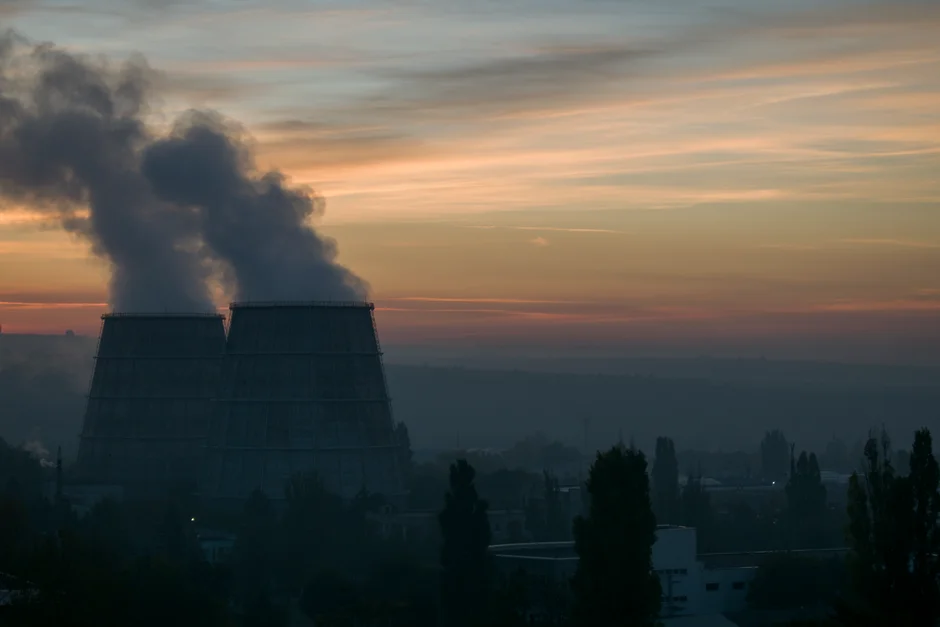
AI and HPC rack densities above 50 kW are pushing Yangon operators toward direct liquid cooling, which shifts the mass balance from evaporative blowdown to warm-water-loop bleed-off — a smaller-volume, higher-temperature stream with different chemistry but the same reuse logic. ECD site-specific effluent limits in Myanmar are expected to tighten on total nitrogen, total phosphorus and residual inhibitor chemicals as Yangon water-stress policies mature through 2026–2028, on the same trajectory Malaysia's DOE is on. Blowdown reuse is moving from innovative to baseline specification for Yangon hyperscale RFPs within the next 24–36 months — the same template Bridge DC Johor proved out in 2026.
Frequently Asked Questions
What NEQEG limits apply to data-center blowdown in Yangon in 2026?
Myanmar's National Environmental Quality (Emission) Guidelines set pH 6–9, TSS ≤50 mg/L, BOD₅ ≤30 mg/L, COD ≤125 mg/L, residual Cl₂ ≤1 mg/L, temperature ≤40°C, total Zn ≤2 mg/L, total Cu ≤1 mg/L and total Cr ≤0.5 mg/L for cooling-tower blowdown. YCDC sewer add-ons include oil & grease ≤10 mg/L and sulphide ≤1 mg/L, with a consent flow cap negotiated for hyperscale sites (per Myanmar NEQEG, ECD).
How much blowdown does a 15 MW Yangon data center produce?
A 15 MW Yangon build at PUE 1.4 and cycles of concentration 4–6 produces approximately 200–400 m³/day of blowdown, equal to 17–25% of makeup volume per the 1/(CoC−1) blowdown ratio. That stream is roughly 6–10 times larger than the site's sanitary sewage, which is why blowdown — not blackwater — sets the water-management agenda.
Can blowdown be reused as cooling-tower makeup in Yangon?
Yes. A train of lime softening → side-stream RO at 65–85% recovery → ClO₂ polishing typically reuses 50–70% of blowdown as cooling-tower makeup, drops freshwater demand by ~190 m³/day at a 15 MW site, and lifts WUE from ~1.8 L/kWh toward ~1.2 L/kWh. This is the same template Bridge DC Johor proved out in 2026.
Does a Yangon data center need a separate sanitary wastewater plant?
Yes. Sanitary sewage from offices, canteens and washrooms is normally handled by a small MBR or underground package plant sized at 10–500 m³/day, kept hydraulically separate from the blowdown stream so biocides and heavy metals never reach the biological stage. The parallel-trains approach is standard at Equinix and Digital Realty campuses.
What WUE can a Yangon data center realistically hit in 2026?
A reuse-enabled train — softening plus side-stream RO plus ClO₂ — typically delivers ~1.2 L/kWh for a 5–50 MW Yangon site, against the ~1.8 L/kWh industry average reported for evaporatively cooled facilities. The range achievable in practice is 1.0–1.5 L/kWh depending on AI load factor and monsoon-season CoC.