Why Adhesive Wastewater Defeats Conventional Treatment
A water-based adhesive plant generates a wastewater fingerprint that no generic chemical recipe handles correctly: PVAc, EVA, acrylic and SBR emulsions at 0.5–5% solids, non-ionic and anionic surfactants, defoamers, plasticizers (DOP, DINP) and biocides such as formaldehyde or isothiazolinones at mg/L levels. Hot-melt operations add terpene and rosin condensates with a BOD/COD ratio skewed by volatile fractions, while solvent-borne PSA wash water carries toluene, ethyl acetate or heptane loads that pass through primary clarification largely intact (per Operators Unlimited, 2026). The pollutant set spans solvents, lattices, surfactants, fillers and preservatives, with TSS, BOD, COD and heavy metals as the regulated parameters.
The biological stage is the first place the recipe fails. Activated sludge or MBR removes up to roughly 85% of bulk organics on recalcitrant streams, but leaves formaldehyde, solvents and polymer residuals largely untouched (per Axine Water Technologies, 2026). Emulsion stability makes the gap worse: anionic and non-ionic surfactants stabilize polymer particles below 1 µm, which pass through primary clarification and stress MBR membranes with fouling and FOG loading. The consequence is direct: discharge limits under 40 CFR 414 (OCPSF) and EU IED 2010/75/EU BAT-AELs cannot be met reliably without a tertiary oxidation step. A 2026 retrofit on adhesive matrices is therefore not a polishing upgrade; it is the unit process that closes the compliance gap.
AOP Families and How They Behave on Adhesive Matrices
All four families relevant to adhesive effluent generate the hydroxyl radical (•OH), a non-selective oxidant at standard reduction potential ~2.8 V, the second strongest after fluorine (per HydropureWater vaccine AOP guide, 2026). The differences between them are operational, not chemical: how the radical is generated, what hazardous inputs the process demands, and what off-gas or solid waste it leaves behind. Engineers selecting a 50–200 m³/d retrofit place each family against the same four columns — removal band, hazardous inputs, off-gas, footprint — and the trade-off becomes visible on one page.
| Family | Mechanism & pH window | COD/TOC removal on industrial streams | Hazardous inputs & off-gas | Footprint |
|---|---|---|---|---|
| O₃/H₂O₂ (peroxone) | O₃ decomposition accelerated by H₂O₂; alkaline pH 7–9 | 60–77% CODcr; 60–62% TOC (Korean 2024 study, via HydropureWater) | O₃ toxic — destruct unit, LEL monitor, vent scrubber; H₂O₂ 35–50% storage | Large — ozone contactors + H₂O₂ tank farm |
| UV/H₂O₂ | 254 nm photolysis of H₂O₂ to •OH; pH 5–9 | Similar 60–77% range; partial oxidation can leave aldehydes/carboxylic acids | Mercury-lamp disposal under RCRA universal waste; H₂O₂ storage | Medium — UV reactor banks + dosing |
| Fenton / photo-Fenton | Fe²⁺ + H₂O₂ at pH 2.8–3.2; UV enhances | Strong on polymer emulsion color and BOD; COD 50–70% on real effluents | Iron sludge handling; acid + neutralization reagents | Medium — reactor + sludge thickener |
| Electrochemical AOP (EAOP) | BDD/MMO anode generates •OH, O₃, H₂O₂, peroxosulfate, active chlorine in situ; pH 5–7 | Up to 90%+ on pharmaceutical/API streams (per Axine, 2026); full mineralization | No external oxidant feed; no liquid or solid hazardous waste | Modular — 32–135 m³/day cabinets, skid-mountable |
The pattern is consistent across solvent wastewater AOP specs and cost models: O₃/H₂O₂ and UV/H₂O₂ are effective at low concentration but cannot meet the most stringent PNEC values and produce partial-oxidation by-products, while EAOP mineralizes diverse complex APIs and process residuals to the most stringent levels through multiple oxidation mechanisms (per Axine, 2026).
The 2026 Treatment Train for an Adhesive Plant AOP Retrofit
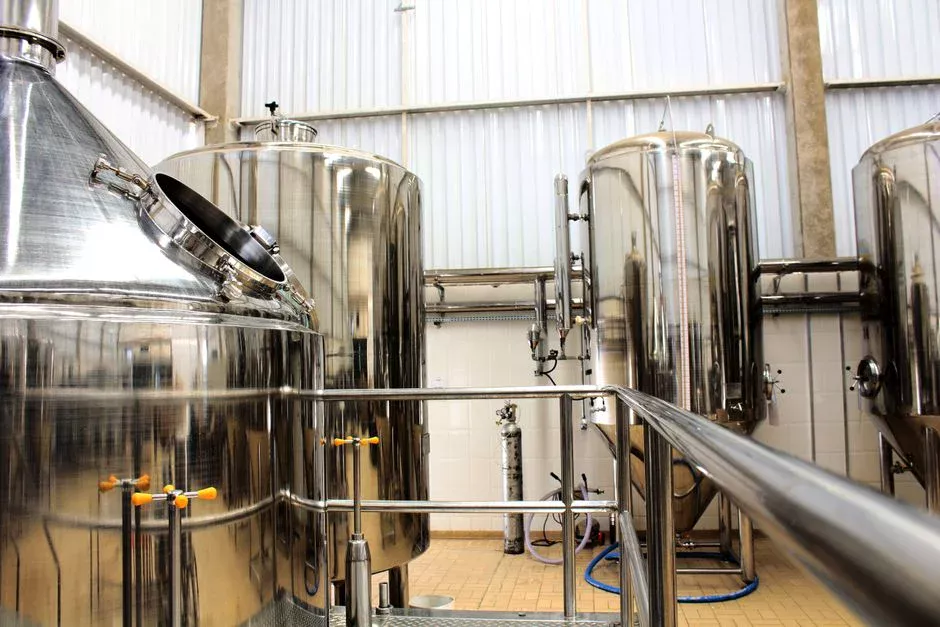
The unit-process sequence for a 2026 adhesive retrofit is: rotary bar screen → equalization basin → DAF pre-treatment ahead of AOP for TSS, FOG and broken-emulsion capture → MBR biological stage ahead of AOP for bulk organics (60% smaller footprint than CAS with sub-1 µm filtration) → pH/H₂O₂ trim skid → AOP reactor → ClO₂ residual disinfection + UV sterilization → sewer discharge or RO polishing for reuse. The DAF sits ahead of the MBR because surfactant-stabilized emulsions break under air flotation and the floated sludge is easier to dewater than membrane-fouled biomass. The MBR is the bulk-removal workhorse; the AOP is the polish that closes the gap to NPDES or BAT-AEL.
Place the AOP downstream of the MBR with a PLC-controlled H₂O2 and pH dosing skid immediately upstream. pH targets are family-specific: 7–9 for O₃/H₂O₂, 5–7 for EAOP depending on anode chemistry, and 2.8–3.2 for classic Fenton (with downstream neutralization to pH 7 using lime or NaOH). For a first-installation risk-controlled retrofit, run a parallel slip-stream: route 20–30% of MBR permeate through a pilot AOP skid for 4–8 weeks to validate the dose envelope on actual plant effluent before freezing the full-scale design.
Adhesive-Specific Dose Envelopes and Parameter Tables
This is the data-dense section most engineers will bookmark. The dose envelope is sub-stream specific because the matrix drives radical demand and scavenging.
| Adhesive sub-stream | Recommended AOP family | Design dose envelope | Residence / fluence | pH window |
|---|---|---|---|---|
| Water-based emulsion (PVA / acrylic) | Fenton or photo-Fenton | Fe²⁺ 20–50 mg/L; H₂O₂:Fe molar 5–10; H₂O₂ dose sized to COD (typical 0.3–1.0 g H₂O₂/g COD) | 30–60 min reaction; UV enhances on color fraction | 2.8–3.2 in reactor; neutralize to 7 downstream |
| Hot-melt condensate | UV/H₂O₂ | 10–40 mJ/cm² fluence at 254 nm; 5–20 mg/L H₂O₂ | Lamp array sized to flow; ballast duty factored | 5–9 (avoid •OH scavenging at extremes) |
| PSA solvent wash water | O₃/H₂O₂ or EAOP | 0.5–2 kg O₃/h on 50–100 m³/h; H₂O₂:O₃ 0.3–0.5 mass ratio (per Axine, 2026) | Contactor contact time 10–20 min; EAOP current density per jar test | 7–9 for peroxone; 5–7 for EAOP |
| Biocidal CIP rinse (formaldehyde, isothiazolinones) | EAOP for sub-ppb residuals | Site-specific by jar test; modular 32–135 m³/day cabinets | Residence time defined by influent COD and target PNEC | 5–7 |
Realistic expectation band: a textile ozone-AOP case study documented up to 80% COD reduction (per WaterAndWastewater, 2026), and O₃/H₂O₂ and UV/H₂O₂ on real effluents reach 60–77% CODcr removal (Korean 2024 study, via HydropureWater). For the highest matrix load — polymer emulsion plus biocides — only EAOP reliably reaches sub-ppb PNEC residuals without leaving partial-oxidation by-products (per Axine, 2026). The single most common error on adhesive retrofits is extrapolating municipal ozone doses onto emulsion matrices; do not skip the jar test.
Which AOP Family Matches Which Adhesive Sub-Stream
Three inputs decide the family: (1) target residual COD, (2) reuse intent (yes/no), and (3) the site's ability to handle hazardous chemicals and off-gas. If reuse is not on the table and the local POTW is forgiving, O₃/H₂O₂ at 60–77% CODcr removal is the lowest CAPEX, but budget for ozone destruct, LEL monitor, and a 35–50% w/w H₂O₂ tank farm with bunding. If reuse is required and the local discharge limit is sub-100 mg/L COD with VOC constraints, EAOP is the established path: it mineralizes without off-gas or mercury, and the modular cabinets can sit at decentralized CIP rinse headers rather than at a central end-of-pipe location (per Axine, 2026). If the stream is dominated by polymer emulsion color and BOD rather than VOC, Fenton or photo-Fenton at pH ~3 is the right pick — accept the iron-sludge OPEX line for the cheaper CAPEX. If the stream is a UV-transparent solvent rinse where mercury-bearing lamps are already accepted in the site hazardous-waste program, UV/H2O2 with medium-pressure UV reactor banks is defensible.
CAPEX, OPEX and the 2026 Budget Conversation
Order-of-magnitude CAPEX for a 50–200 m³/d adhesive AOP retrofit: O₃/H₂O₂ and UV/H₂O₂ skids sit in the lower CAPEX band; EAOP modular cabinets in the mid-band carry the lowest OPEX at PNEC polishing load (per Axine, 2026). OPEX drivers are family-specific: O₃ generation at 1–2 kWh/kg O₃ plus H₂O₂ purchase; UV lamp and ballast replacement plus mercury waste disposal; Fenton iron sludge handling; EAOP electrical energy per kg COD removed.
| Line item | O₃/H₂O₂ | UV/H₂O₂ | Fenton | EAOP |
|---|---|---|---|---|
| Main OPEX driver | Ozone generation 1–2 kWh/kg O₃ + H₂O₂ | Lamp/ballast replacement + mercury disposal + H₂O₂ | Iron sludge handling + acid/neutralization | Electrical energy per kg COD removed |
| Hazardous inputs | H₂O₂ 35–50% w/w; O₃ off-gas | H₂O₂; mercury lamps (RCRA) | FeSO₄; H₂O₂; HCl/H₂SO₄; lime/NaOH | None external |
| Footprint | Large | Medium | Medium | Modular 32–135 m³/day cabinets |
| OPEX at PNEC polishing | Higher | Higher | Sludge-bound | Lower (per Axine, 2026) |
| Reuse credit | Partial — cooling-tower make-up possible | Partial | Limited by salinity | 30–60% freshwater offset as cooling-tower make-up; boiler feed via RO polish |
The reuse credit is the line that swings NPV. AOP polish to PNEC enables 30–60% freshwater offset when routed to cooling-tower make-up; for higher-purity reuse, industrial RO polishing after AOP brings conductivity and TOC down to boiler-feed spec (per HydropureWater vaccine AOP guide, 2026). A second lever is the service model: a vendor that finances, owns and operates the modular AOP under a guaranteed performance contract converts CAPEX to OPEX — attractive for an adhesive producer that does not want to own a new unit process (per Axine, 2026). Frame the choice as a Scope 1 carbon move: on-site electricity-driven AOP is lower carbon than trucking and 800–1,200 °C incineration of solvent-contaminated waste.
Regulatory Anchors and Reuse Targets in 2026
The procurement committee will ask three questions. First, the U.S. anchor: 40 CFR Part 414 (OCPSF — Organic Chemicals, Plastics and Synthetic Fibers) governs adhesive and sealant plant discharges; site-specific NPDES pretreatment limits set the floor for BOD, COD, TSS and priority pollutants. Second, the EU anchor: Industrial Emissions Directive 2010/75/EU BAT-AELs apply to adhesive and coating installations above the capacity threshold; confirm the applicable BAT conclusions with the local competent authority before design freeze. Third, the Asia pivot: India CPCB has pushed zero liquid discharge for several adhesive clusters (e.g. Kanpur, Vatva) and China is tightening GB discharge limits on volatile organics through 2026 — direct discharge to surface water is no longer the default. Reuse targets are increasingly embedded in supplier audits and ESG disclosures for downstream brand owners, with PNEC-style thresholds (sub-ppb for problematic additives) now part of the procurement scorecard. Confirm site-specific permitting with the local POTW or regulator before any pilot or design freeze.
Frequently Asked Questions
What COD removal can an AOP realistically deliver on adhesive manufacturing wastewater?
On water-based adhesive matrices, O₃/H₂O₂ and UV/H₂O₂ typically reach 60–77% CODcr removal, with a textile case study documenting up to 80% COD reduction on a comparable polymer-dye stream (per WaterAndWastewater, 2026; Korean 2024 study via HydropureWater). Fenton and photo-Fenton reach 50–70% on the polymer emulsion fraction. EAOP achieves up to 90%+ COD/TOC removal and full mineralization on comparable API and process-chemical streams (per Axine, 2026).
Which AOP family is best for a PSA solvent wash water carrying toluene or ethyl acetate?
PSA solvent wash water is the case for O₃/H₂O₂ (peroxone) or EAOP. The 2026 design envelope is 0.5–2 kg O₃/h on a 50–100 m³/h stream at H₂O₂:O₃ mass ratio 0.3–0.5, pH 7–9 (per Axine, 2026). EAOP is preferred when sub-ppb discharge and 30–60% cooling-tower reuse credit are required, because it mineralizes VOCs to CO₂ without ozone off-gas or mercury-lamp waste.
Is a biological stage still required in front of the AOP on an adhesive retrofit?
Yes. The MBR is the bulk-removal workhorse and typically removes 60–85% of influent COD; the AOP is the polish that closes the gap to NPDES, BAT-AEL or PNEC targets. On adhesive matrices, activated sludge and MBR alone leave formaldehyde, isothiazolinone biocides, polymer residuals and solvents largely untouched, and direct AOP on raw emulsion is uneconomical due to radical scavenging by surfactants (per Axine, 2026).
Which 2026 regulations govern an AOP retrofit at a U.S. or EU adhesive plant?
In the U.S., 40 CFR Part 414 (OCPSF) sets adhesive and sealant discharge categories, with site-specific NPDES pretreatment limits. In the EU, Industrial Emissions Directive 2010/75/EU BAT-AELs apply above the capacity threshold. India CPCB has moved several adhesive clusters (Kanpur, Vatva) toward zero liquid discharge, and China is tightening GB volatile-organic discharge limits in 2026 — direct discharge is no longer the default in either jurisdiction.