Why Tannery Wastewater Pushes Conventional Treatment Past Its Limit
Tannery effluent carries four pollutant families that defeat the standard activated-sludge plant: raw COD/BOD in the 2,000–6,000 mg/L range, reactive sulfide at 50–500 mg/L, synthetic dyes, and chrome-bearing organics. A 2026 RSC Advances review on tannery treatment confirms that conventional treatment methods often lead to high operational costs, sludge generation, and disposal issues. Activated sludge handles only the biodegradable fraction well. Sulfide at tens to hundreds of mg/L is acutely toxic to nitrifiers, hydraulic retention times stretch to 30–60 hours, and biomass cannot break azo bonds or crack chromium–organic complexes. Enzymatic pathways such as chromate reductase and peroxidase operate too slowly at plant scale to meet discharge limits (S1, 2026-07). The result is a polishing problem: residual COD, true color, and Cr-bound organics pass through biology and force a downstream barrier. This barrier is the role for an ozone-based AOP — not as a stand-alone reactor, but as a stage positioned where its oxidant dose targets recalcitrant compounds rather than sulfide.
How Ozone Oxidation Works in a Tannery Effluent Train
Ozone reacts with water through direct molecular O3 oxidation and indirect hydroxyl radical (OH•) pathways. Direct molecular O3 oxidation is selective and slow on aromatic and azo structures typical of tannery effluent. Indirect oxidation routes through the hydroxyl radical (OH•), a non-selective species with a standard reduction potential near 2.8 V. Research indicates that ozone alone does not cause complete oxidation of some refractory organic compounds and has a low reaction rate (S2, 2020; S3, 2024). At pH above ~9, OH• formation dominates; tannery effluent leaving the lime/sulfide unhairing stage is naturally in the pH 8–10 window, the operating range where ozone behaves as an AOP. Four practical AOP variants are documented for tannery work: O3/H2O2 (peroxone), O3/UV, O3 with a heterogeneous catalyst (Fe, Mn, Ce on alumina or activated carbon), and O3/ultrasound (S2, S3). The mechanism matters at the bid-review stage because the process selection determines the dose, contactor, and power budget. A 2024 Elsevier chapter notes that AOPs convert pollutants to smaller, less contaminant fragments, meaning the ozone stage prepares recalcitrant molecules for final polishing (S3).
Ozone AOP Variants Compared: O3, O3/H2O2, O3/UV, O3/Catalyst, O3/Ultrasound
Selection should follow the binding contaminant in the polished stream. The comparison below uses typical engineering ranges drawn from S2 and S3 for ozone-based AOPs, supplemented with general peroxone/catalyzed-ozone operating windows.
| Variant | Typical O3 dose (g O3/g COD) | Contact time | COD removal on polished effluent | Color removal | Cr-bound organics removal | CAPEX intensity | OPEX intensity | Key risk |
|---|---|---|---|---|---|---|---|---|
| Neat O3 | 1.5–4 | 30–60 min | 20–40% | 30–50% | Limited | Low–Medium | Low (electricity only) | High O3 waste to off-gas; slow on aromatics |
| O3/H2O2 (peroxone) | 0.5–2 | 15–45 min | 40–70% | 60–85% | 40–60% | Medium | Medium (H2O2 + power) | Carbonate/bicarbonate scavenging of OH• |
| O3/UV | 0.3–1.5 | 10–30 min | 50–80% | 80–95% | 50–70% | High (lamps + reactor) | High (lamp replacement + power) | Lamp fouling; quartz sleeve scaling |
| O3/Catalyst (Fe/Mn/Ce) | 0.5–2 | 20–45 min | 60–80% | 70–90% | 60–80% | Medium–High | Medium (catalyst replacement) | Catalyst attrition; metal leaching |
| O3/Ultrasound | 0.5–2 | 20–40 min | 40–65% | 60–80% | Limited data | Medium–High (transducers) | High (electrical energy density) | Scale-up risk; transducer wear |
For a 2026 specification, pick O3/H2O2 when the driver is a low-CAPEX retrofit on a stream with moderate residual COD; pick O3/UV when discharge limits are tight on color and total organic carbon (<50 mg/L COD or <50 Pt-Co color); pick O3/catalyst for chrome-laden streams; pick O3/ultrasound only for pilot work on very high-strength streams (S2, S3). For most 2026 retrofits, a skid-mounted ozone generator and tank sterilization skid configured for peroxone covers 70–80% of tannery polishing applications.
Where the Ozone Stage Fits in a 2026 Tannery Treatment Train
The 2026 process flow for a typical integrated tannery ETP is: screening/flow equalization → DAF pre-treatment for suspended solids and FOG removal → primary sedimentation → sulfide stripping → chrome precipitation → equalization → biological stage (typically MBR biological polishing stage upstream of the ozone skid or SBR) → ozone AOP polishing → optional activated carbon or RO. The two placement rules are non-negotiable. First, ozone goes after biology, never before: ozone will oxidize residual sulfide to sulfate and damage biomass if placed ahead of the biological reactor. Second, chrome recovery must precede ozone: the standard approach is Cr(VI) reduction to Cr(III) at low pH followed by hydroxide precipitation and sludge separation (S1, 2026-07). Ozone does not reliably reduce Cr(VI) to Cr(III); it can, however, oxidize Cr-bound organic ligands, which improves total chromium removal. For very high-COD streams where biomass toxicity is the constraint, a "pre-AOP + biology" train is documented in S3 and is worth piloting when influent COD exceeds ~4,000 mg/L.
Design Parameters and Operating Windows for Tannery Ozone AOP
Engineers writing a process datasheet need a parameter table for 2026 tannery polishing duty, confirmed by pilot on the actual stream.
| Parameter | Typical range (tannery polishing) | Notes |
|---|---|---|
| O3 dose | 0.5–3 g O3 per g residual COD | Peroxide and UV lower the dose; neat O3 sits at the top of the range |
| Gas-phase O3 concentration | 50–120 g O3/Nm³ | Higher concentration improves mass transfer |
| Contact time | 15–60 min | 20–30 min is most common for peroxone polishing |
| pH window | 8–10 for AOP mode; <7 for selective molecular O3 | Tannery effluent often arrives in the AOP-favored window |
| Water temperature | 20–35 °C | Ozone solubility drops above ~35 °C |
| Removal target | COD down to <250 mg/L; color <50 Pt-Co; Cr-total <2 mg/L | Local discharge limits govern |
| Specific power | 10–15 kWh per kg O3 produced | Plus oxygen-feed energy |
| Contactor type | Venturi injection + baffled tank, or fine-bubble diffuser column | SS316L or FRP with PVDF lining |
| Off-gas treatment | Thermal or catalytic destructor to <0.1 ppm | ACGIH/OSHA workplace limit is 0.1 ppm (8-h TWA) |
| Instrumentation | ORP probe, inlet/outlet dissolved O3, gas-phase O3 analyzer, online COD/TOC | ORP >750 mV typically indicates effective OH• generation |
Mass transfer is where most 2025–2026 ozone systems under-perform. A venturi-injection contactor ahead of a baffled reaction tank gives the highest ozone-transfer efficiency for a tannery polishing duty. A skid integrating the ozone generator and tank sterilization skid with an ORP-controlled H2O2 dosing loop, venturi contactor, and catalytic off-gas destructor is the typical deliverable.
2026 Cost, Energy, and Compliance Picture for Ozone AOP
Specific power for ozone generation is 10–15 kWh per kg O3 at modern corona-discharge units fed with oxygen. Pure electricity OPEX typically sits near ₹80–120 per kg O3 generated, with oxygen feed and peroxide a secondary cost. The OPEX trade against Fenton is specific: Fenton consumes FeSO4 plus H2O2, creating ferric hydroxide sludge that often pushes the plant's hazardous-waste disposal budget up by 30–60% (S1, 2026-07). Ozone eliminates the iron reagent and reduces sludge volume, trading chemical costs for electricity. Ozone polishing hits COD <250 mg/L and color <50 Pt-Co without leaving residual peroxide or iron in the effluent. The 2026 regulatory tilt is uniformly toward tighter textile/leather limits, pushing operators toward AOP-class polishing rather than additional chemical precipitation.
Procurement Checklist and Common Pitfalls
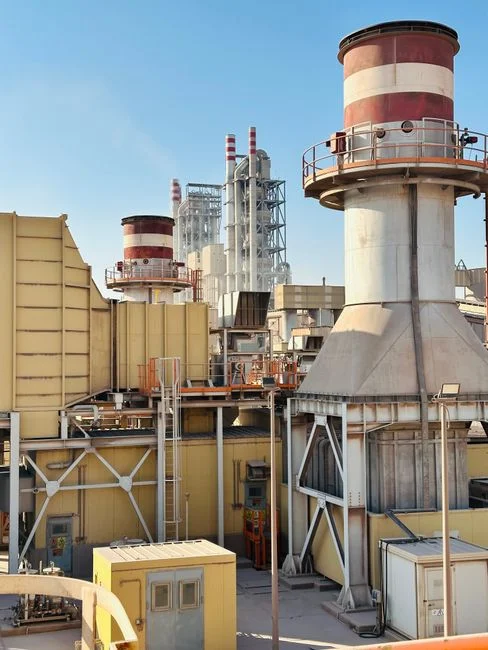
Hand the following list to procurement before the bid goes out: Guaranteed O3 output in g/h at the stated feed-gas flow, concentration, and ambient conditions; off-gas destruction efficiency tied to <0.1 ppm at the stack; contactor material of construction (SS316L for chloride-bearing tannery water, or FRP with PVDF lining); control system integration with the upstream MBR or SBR; and a pilot test protocol with defined target removal % on the actual tannery stream. Four pitfalls repeat across 2024–2026 projects: skipping sulfide stripping upstream, ignoring carbonate scavenging, under-sizing off-gas destruction, and treating AOP as turn-key without pilot data. For a parallel AOP option, see the Fenton oxidation system for pharmaceutical wastewater 2026 engineering guide for dose and sludge math, and the industrial wastewater treatment in Delhi advanced solutions and compliance reference for current Indian discharge norms and tariff benchmarks.
Frequently Asked Questions
What is the typical ozone dose for tannery wastewater?
For polishing duty on biologically treated tannery effluent, the typical engineering range is 0.5–3 g O3 per gram of residual COD, with peroxone and O3/UV sitting at the low end and neat ozonation at the high end. Site-specific confirmation by pilot is required.
Can ozone alone treat tannery wastewater?
Not effectively for the refractory fraction. Both S2 and S3 confirm that neat ozonation does not cause complete oxidation of some refractory organic compounds and has a low reaction rate. AOP variants — O3/H2O2, O3/UV, O3/catalyst, or O3/ultrasound — are needed to drive hydroxyl-radical oxidation on azo dyes, phenolics, and Cr-bound organics.
Does ozone remove chromium from tannery effluent?
It does not reliably reduce Cr(VI) to Cr(III). The standard train is chemical Cr(VI) reduction with hydroxide precipitation upstream, followed by ozone AOP polishing to oxidize residual Cr-bound organic ligands. This sequence hits the typical <2 mg/L total chromium target in discharge.
Where in the train should the ozone AOP be placed?
After biological polishing (MBR or SBR) and before any final activated-carbon or RO polishing. Placing ozone ahead of biology wastes dose on sulfide and damages