
Why a Jaipur Hotel Needs MBR, Not Just Any Packaged STP
A packaged MBR commands a CAPEX premium of 30–50% over an SBR or MBBR of equivalent capacity, but a Jaipur hotel recovers that premium inside a 5–7 year horizon through treated-water reuse and a 60% smaller plant footprint (HydropureWater field data, 2026). On a tight urban Jaipur plot, that footprint saving is the difference between fitting the STP in the basement and losing banquet or parking area — which carries its own revenue cost. The integrated MBR membrane bioreactor system is sized for the 30–200 KLD hospitality band and is designed to hit BOD under 10 mg/L and TSS under 5 mg/L, the envelope that turns effluent into a reusable asset rather than a disposal liability.
Jaipur's water-stress profile — declining aquifer levels and rising JMC tanker-water tariffs — makes reuse-grade effluent a commercial line item, not a CSR checkbox. Hotel wastewater is also unusually variable: high organics, FOG from the kitchen, surfactant spikes from laundry, and banquet-driven flow surges. A submerged MBR couples an activated-sludge biology stage with a physical membrane barrier, which absorbs this variability better than a clarifier-based SBR or a biofilm-only MBBR. A 10 MLD Jaipur STP already runs at 100% Swachh Bharat Mission 2.0 compliance with smart monitoring, per hecspstp.com — that sets the regulator's expectation bar, and a smaller hotel plant will be measured against the same yardstick during RSPCB audits.
Sizing the Plant: Hotel Occupancy, Peak Factor and FOG Load
The defensible starting point for a Jaipur hotel is 150–200 L per occupied bed per day for guest rooms and 50–80 L per seat for F&B and banquet areas, with a peak factor of 1.5–2.0 applied to the average. A 100-room property (2 beds/room) at 180 L/bed/day generates 36,000 L/day from rooms; adding 200 banquet seats at 70 L/seat adds 14,000 L/day, for a 50 KLD average and a 75–100 KLD peak. Size the biological stage on the peak after the equalisation tank, not the average — this is the single most common reason packaged STPs under-perform in hospitality.
Kitchen flow is the silent sizing variable. Hotel kitchen streams carry FOG concentrations of 200–600 mg/L, and a packaged MBR cannot tolerate this raw. Specify a DAF or grease trap upstream of the MBR (target outlet FOG under 50 mg/L), or membrane fouling and CIP frequency will dominate the OPEX line. The DAF pre-treatment for kitchen FOG is the standard solution in this band. The equalisation buffer should hold 6–8 hours of average flow to absorb banquet and laundry spikes; under-sizing it is the second most common packaged-STP failure mode after undersized membranes.
| Parameter | Design value | Source / basis |
|---|---|---|
| Guest room hydraulic load | 150–200 L/bed/day | Hospitality benchmark, 2026 |
| Banquet / F&B load | 50–80 L/seat/day | Hospitality benchmark, 2026 |
| Peak factor | 1.5–2.0 | Applied to average flow |
| Kitchen FOG inlet | 200–600 mg/L | Pre-DAF |
| FOG after DAF | < 50 mg/L | DAF outlet target |
| Equalisation buffer | 6–8 hours of avg flow | Banquet surge absorption |
| Worked example: 100 rooms | ~50 KLD avg, 75–100 KLD peak | 2 beds/room, 200 banquet seats |
RSPCB and CPCB Discharge Limits a Jaipur Hotel Must Clear in 2026
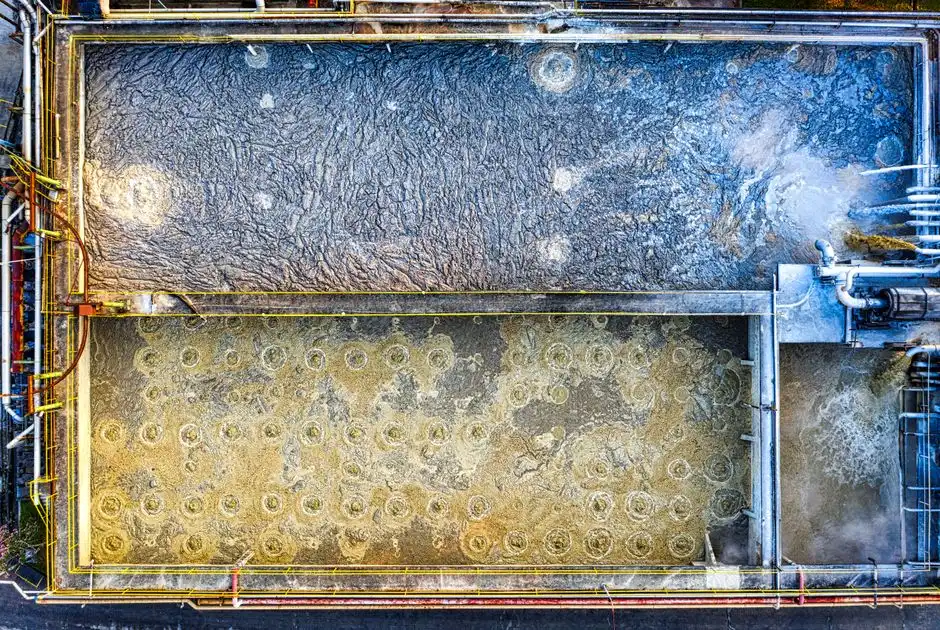
CPCB general discharge norms for sewage set BOD under 30 mg/L and TSS under 100 mg/L for inland surface-water discharge, but a Jaipur hotel that wants to reuse treated water for landscaping, cooling, or flushing must design to BOD under 10 mg/L and TSS under 5 mg/L — that is the MBR envelope, not a stretch target. Designing to the MBR envelope from day one avoids a costly retrofit the moment the promoter wants to plumb the treated water into the cooling tower or landscape irrigation, and it is the same envelope RSPCB officers expect when they audit a hospitality project in Rajasthan.
The compliance pathway has two gates. Consent to Establish (CTE) is required before any civil work on the STP, and Consent to Operate (CTO) is required before commissioning and is renewed periodically (per the CTE/CTO framework on hecs.in). File Form-I with a detailed project report covering hydraulic and organic load, attach the STP design as a controlled document, and treat both as living files — vendor substitutions after submission trigger re-filing. For the broader compliance picture across the state, the Rajasthan municipal STP compliance guide lays out the same checkpoints at larger scale. Non-compliance exposure under the Water Act, 1974 is documented at ₹1 crore/day in commercial sources (hecspstp.com, 2025-08) — treat this as project risk in the board memo, not as a marketing headline.
| Parameter | CPCB general discharge | Hotel reuse target (MBR) | Reuse end-use enabled |
|---|---|---|---|
| BOD | < 30 mg/L | < 10 mg/L | Landscape, flushing, cooling |
| TSS | < 100 mg/L | < 5 mg/L | Landscape, flushing, cooling |
| COD | < 250 mg/L | < 50 mg/L | Reuse envelope |
| FOG | < 10 mg/L | < 5 mg/L | Cooling-tower safe |
| Consent gate | CTE pre-construction, CTO pre-commissioning | — | — |
Comparing MBR, MBBR and SBR for a Hotel Project
For a 50 KLD hotel STP, the three technologies trade off in three places: footprint, effluent quality, and reuse readiness. SBR carries the lowest CAPEX but the highest land requirement; MBR carries the highest CAPEX but the smallest footprint and reuse-ready effluent; MBBR sits in the middle on CAPEX but produces effluent TSS in the 20–50 mg/L range, which then needs tertiary filtration before it can be reused — eroding the upfront saving once a polishing stage is added. The head-to-head numbers below are sized for a representative 50 KLD hotel project.
The MBR premium is recovered through three vectors: lower civil cost on a tight Jaipur plot, lower tertiary treatment cost (it is built in), and direct reuse revenue. For a 50–200 KLD hotel on a space-constrained urban site with reuse in scope, MBR is the correct default; SBR and MBBR only win when land is cheap and reuse is off the table. For a deeper process-side explanation, the submerged MBR working principle and spec guide walks through the biology-plus-membrane integration. The PVDF flat-sheet MBR membrane module used in the comparison is the DF series, suited to the 50–200 KLD band.
| Parameter (50 KLD hotel) | MBR | MBBR | SBR |
|---|---|---|---|
| Footprint (relative) | 0.4× (60% smaller) | 0.7× | 1.0× (baseline) |
| Effluent BOD (mg/L) | < 10 | 10–20 | 10–20 |
| Effluent TSS (mg/L) | < 5 | 20–50 | 20–40 |
| Reuse-ready directly | Yes | No (tertiary needed) | No (tertiary needed) |
| CAPEX (relative) | 1.3–1.5× | 0.9–1.0× | 0.8–1.0× |
| OPEX driver | Membrane scour + aeration power | Aeration power | Aeration + sludge |
| Operator skill | Medium (membrane CIP) | Low–medium | Low (timer-based) |
What to Look for Inside a Packaged MBR: Specs That Matter
Four numbers on a vendor datasheet decide whether the plant will run or become a chronic under-performer: membrane material and pore size, SOTE at design airflow, MLSS in the MBR tank, and the depth of the automation stack. Membrane spec: PVDF (not PES or PVC) at 0.1–0.4 μm pore size, in a submerged hollow-fibre or flat-sheet configuration; flat-sheet modules such as the DF series (80–225 m² area, 32–135 m³/day per cassette) let you replace elements one at a time instead of scrapping a whole rack (HydropureWater DF spec, 2026). Cheap PES modules and unbranded UF substitutes are the first place vendors cut corners — reject them in the tender.
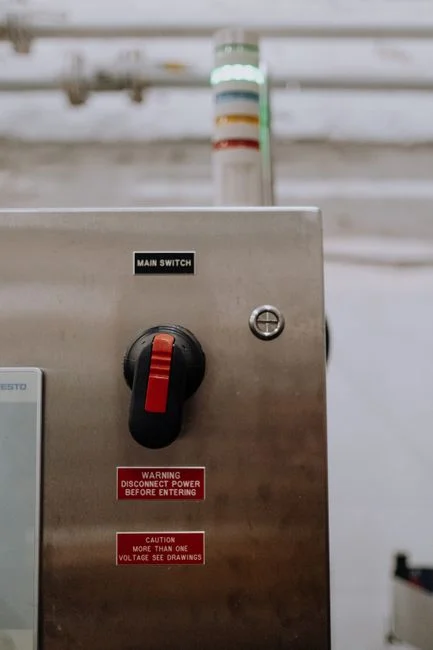
Aeration is the second number. Specify fine-bubble diffusers with a dedicated membrane scour blower, and demand an SOTE target in the 25–35% range at design airflow — anything below 20% means the blower will over-cycle to maintain dissolved oxygen, and power cost will eat the reuse savings. MLSS is the third: design the MBR tank at 8,000–12,000 mg/L — this is the parameter that buys the 60% footprint reduction. Below 6,000 mg/L, the membrane area is wasted and the clarifier equivalent is doing the work. The fourth is automation: at minimum, a PLC with level, DO, pH, TMP and flow instrumentation, plus SCADA for 4–5 star properties with a central engineering team. Inlet screening is upstream of all of this — the rotary mechanical bar screen protects the membranes from rag and fibre fouling that no amount of aeration can fix.
| Specification | Target value | Why it matters |
|---|---|---|
| Membrane material | PVDF | Chemical tolerance, lifespan |
| Pore size | 0.1–0.4 μm | BOD < 10 / TSS < 5 envelope |
| Configuration | Submerged hollow-fibre or flat-sheet | Element-level replacement |
| SOTE at design airflow | 25–35% | Aeration power cost |
| MLSS in MBR tank | 8,000–12,000 mg/L | Drives footprint reduction |
| Automation | PLC + DO/pH/TMP/flow + SCADA optional | Operator load, alarm integrity |
Cost Benchmarks for a Packaged MBR STP in the 30–200 KLD Band
India residential-scale benchmarks (hecspstp.com) put a 5 KLD STP at ₹3–5 lakh and a 50 KLD STP at ₹25–40 lakh; hotel-grade packaged MBR sits 30–50% above these figures once FOG pre-treatment, reuse-grade polishing, and hospitality-grade automation are included. A defensible working band for a 30–100 KLD hotel packaged MBR in 2026 is CAPEX of ₹18–35 lakh per 10 KLD, and OPEX of ₹1.2–2.0 lakh per 10 KLD per year — dominated by aeration and membrane-scour power, with membrane replacement on a 5–7 year cycle. The Delhi hospital case on hecspstp.com reported ₹25 lakh/year in savings after an MBR retrofit, which sets a realistic order-of-magnitude for hospitality payback when reuse displaces freshwater.
The reuse line is where payback lives. A 60% reuse rate for flushing and landscaping — as documented at the HECS 2.7 MLD SIPCOT reference plant — can cut a hotel's municipal freshwater draw by 30–40%; run the reader's own JMC tariff against that and the payback window is usually 4–6 years. The hidden cost line is sludge handling: a hotel-grade plant generates 80–120 kg of dry sludge per 100 KLD per day, and without a dewatering step the disposal tonnage and cost are routinely underestimated. Specify a sludge dewatering filter press to bring sludge cake to 20–25% dry solids before TSDF disposal.
| Capacity band | CAPEX (₹ lakh / 10 KLD) | OPEX (₹ lakh / 10 KLD / yr) | Major OPEX driver |
|---|---|---|---|
| 30–50 KLD | 22–35 | 1.5–2.0 | Aeration power, CIP chemicals |
| 50–100 KLD | 18–28 | 1.2–1.8 | Aeration + membrane scour |
| 100–200 KLD | 15–22 | 1.0–1.5 | Membrane replacement (5–7 yr cycle) |
| Sludge handling (hidden) | Add 8–12% to CAPEX | — | Filter press, TSDF disposal |
Vendor Evaluation Checklist for a Jaipur Hotel Project
A vendor who quotes ₹X per KLD without naming the membrane OEM, the SOTE, the MLSS rating, or the local service network should be filtered out before the second meeting. Score each shortlisted vendor on a fixed set of axes so the comparison is apples-to-apples, and weight membrane warranty and Jaipur service reach heavier than headline KLD price — the cheapest quote is the most expensive plant once membrane freight and callout travel eat the savings.
The hard filters are non-negotiable: BIS/ISO certification, prior RSPCB-approved project references in Rajasthan, the ability to support CTE/CTO documentation as part of the scope, and willingness to commit BOD and TSS performance in writing with a third-party lab test. Soft filters separate vendors on day-365 operation: training of hotel engineering staff, response-time SLA in hours, and consumables stocking in Jaipur. The on-site acceptance test should include a 7-day trial run at design flow, a third-party effluent lab report against the MBR envelope, and a membrane integrity test before final payment is released.
| Evaluation axis | What to verify | Hard or soft filter |
|---|---|---|
| Membrane OEM & warranty | PVDF, named OEM, ≥ 5 yr warranty | Hard |
| Rajasthan service footprint | Jaipur-based engineers, spares depot | Hard |
| RSPCB reference projects | Documented CTO history in state | Hard |
| CTE/CTO documentation support | Vendor assists filing, not just supply | Hard |
| Performance guarantee in writing | BOD < 10, TSS < 5, third-party lab | Hard |
| Automation depth | PLC + SCADA, remote alarms | Soft |
| Staff training & AMC terms | On-site training, AMC SLA in hours | Soft |
| Acceptance test | 7-day trial, lab report, integrity test | Hard (contractual) |
Frequently Asked Questions
What is the right KLD to size a packaged MBR STP for a 100-room Jaipur hotel?
Plan for 150–200 L per bed per day plus 50–80 L per banquet seat, then apply a 1.5–2.0 peak factor. A 100-room property with 200 banquet seats typically lands at 50 KLD average and 75–100 KLD peak, which is what the biological stage should be sized to handle after the equalisation tank.
What discharge and reuse limits does RSPCB enforce on hotel STPs in 2026?
CPCB general sewage norms are BOD under 30 mg/L and TSS under 100 mg/L. For a hotel planning to reuse treated water for landscaping, flushing, or cooling, design to BOD under 10 mg/L and TSS under 5 mg/L — the MBR envelope — and file CTE before construction and CTO before commissioning.
How much does a packaged MBR STP cost for a hotel in the 30–200 KLD band?
Expect ₹18–35 lakh per 10 KLD on CAPEX and ₹1.2–2.0 lakh per 10 KLD per year on OPEX in 2026, which is 30–50% above residential STP benchmarks because of FOG pre-treatment, reuse-grade polishing, and hospitality-grade automation. Membrane replacement every 5–7 years and a sludge dewatering step should be carried as separate cost lines.
How long do MBR membranes last in a hotel STP, and what controls replacement cost?
PVDF submerged membranes in a hotel STP typically run 5–7 years before replacement when FOG pre-treatment, MLSS, and scour airflow are kept in spec. Membrane replacement cost is the single largest non-power OPEX line and should be provisioned as a sinking-fund line from year one.
Can a hotel use treated STP water for cooling towers and landscaping in Jaipur?
Yes, provided the MBR envelope (BOD under 10 mg/L, TSS under 5 mg/L, FOG under 5 mg/L) is met and the cooling-tower make-up line is segregated from potable plumbing with appropriate cross-connection control. Reuse at 60% of the treated flow is documented at reference plants such as the HECS 2.7 MLD SIPCOT facility.