

Why COD Removal Efficiency Matters in 2026
COD removal efficiency is the percentage of total oxidisable organics a treatment train strips from a wastewater stream before discharge, and tightening 2026 permit limits under the EPA Clean Water Act and EU UWTD 91/271/EEC have made every additional percentage point a compliance and OPEX lever. Industrial influent COD in food and refining plants routinely runs from 710 mg/L in refinery streams (S4) to 1,300–3,815 mg/L in dairy operations (S1), while rice mill effluent (RME) is characterised by high COD alongside elevated TOC and TSS that defeat conventional settling (S2). A 10% efficiency gain on a 3,000 mg/L dairy stream drops discharge COD by roughly 300 mg/L, often the difference between surcharges and reuse credits, and reduces aeration demand, sludge yield, and oxidant consumption downstream. Three main levers determine where those gains come from: biological treatment (aerobic, anaerobic, bioaugmented), electrochemical treatment (electrocoagulation), and advanced oxidation processes (AOPs) such as cavitation with H2O2 or Na2S2O8.
Pre-Treatment: The First Efficiency Lever
Pre-treatment protects the main stage and unlocks its rated COD removal. Fats, oils, and grease (FOG) and suspended solids consume oxidant and biological capacity that the main stage could otherwise spend on dissolved COD; field data in dairy processing shows that O&G removal alone lowered COD from 1,360 to 1,240 mg/L at the O&G outlet, with the reading rebounding to 1,360 mg/L in the equalisation tank once upstream load returned (S1). A dissolved air flotation (DAF) system with 20–50 µm micro-bubbles typically achieves 80–95% TSS removal and 70–90% oil and grease removal in industrial effluents, stripping colloidal material that would otherwise foul aeration tanks and membrane cassettes. For streams carrying emulsified oil, fine colloids, or bacterial load, a UF pre-treatment system at 0.03 µm acts as a barrier to COD-bearing colloids and protects downstream MBR or RO membranes. Engineers comparing primary clarification approaches can review the practical trade-offs in our DAF vs clarifier selection for petroleum wastewater guide. Pre-treatment alone rarely meets COD limits, but without it the main stage rarely hits its own nameplate.
Biological Treatment: Aerobic, Anaerobic, and Bioaugmentation
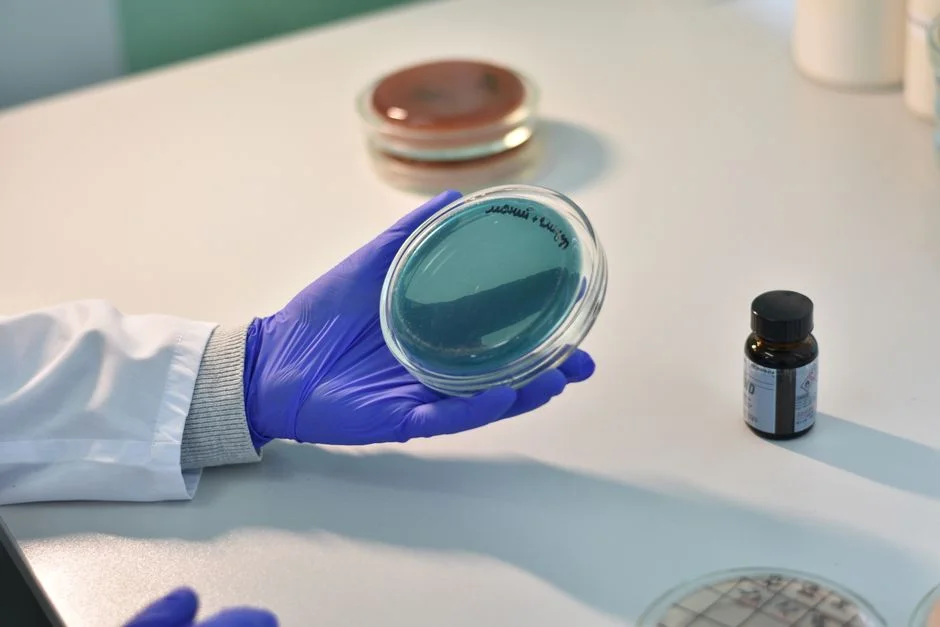
On dairy effluent with COD around 1,300–3,815 mg/L, aerobic treatment delivers 80% COD removal versus 58.6% for anaerobic (S1). The anaerobic gap is not a kinetic limit; it is largely a mass-transfer penalty from fats and oils fouling the membrane–aqueous interface in the reactor, which drives blockages and odour (S1). Bioaugmentation is the lever that closes the gap when influent is variable. A defined 4-strain consortium of Massilia haematophila (DSSC1), Brevibacillus agri (ENAT1), Pseudomonas guguanensis (ENOG5), and Lysinibacillus fusiformis (ETOG2) reduced COD by ~1,700 mg/L in 24 h at 30°C, 26–86% higher than any single strain tested, against an average dairy influent of ~1,300 mg/L (S1). A Lactobacillus consortium reached 75.8% COD reduction versus 71.6% for L. plantarum and 60.8% for L. casei alone, a 6% gain from combining strains at the same 1% inoculum (S1). Operating levers that protect that efficiency: DO 1.5–2.5 mg/L, pH 6.5–7.5, temperature 25–35°C, HRT 24–48 h, and sufficient N and P to prevent the limitation that dropped COD reduction to 35–43% in N/P-starved runs (S1). For plants consolidating secondary treatment and solids separation on a tight footprint, an MBR membrane bioreactor system lifts MLSS to 8,000–12,000 mg/L and tightens effluent COD by retaining the biomass that conventional clarifiers lose over the weir.
| Parameter | Aerobic (S1) | Anaerobic (S1) | Bioaugmented Consortium (S1) |
|---|---|---|---|
| COD removal (%) | 80 | 58.6 | 26–86% higher than single strains; ~1,700 mg/L reduction |
| Best-fit influent COD (mg/L) | 1,300–3,815 | 1,300–3,815 | Variable / shock-loaded dairy |
| Temperature (°C) | 25–35 | 30–37 (mesophilic) | 30 |
| HRT (h) | 24–48 | 24–72 | 24 |
| Limiting factor | Aeration energy | FOG fouling, mass transfer | N/P availability, inoculum viability |
Electrochemical Treatment: Electrocoagulation for High COD Streams
Electrocoagulation (EC) generates coagulant in situ by sacrificial dissolution of Al and Fe anodes, and on petroleum refinery wastewater it reached 99.5% COD removal and 94.2% oil removal at the optimum of 4 Al + 4 Fe electrodes, 2 cm inter-electrode spacing, 12 cm submergence depth, pH 7, 10.5 V, 50 min reaction time, and 0.5 g/L NaCl as supporting electrolyte on a 710 mg/L COD feed (S4). The economic counterweight is energy: the same study reported 12 kWh/m³, which is the key trade-off versus biological treatment at typical dairy or food-plant scale. Mechanism: Al³⁺ and Fe²⁺/Fe³⁺ ions hydrolyse to polymeric hydroxide flocs that bind dissolved and colloidal organics, while the cathodic H2 bubble field floats coalesced oil. The parameters that move COD removal most are electrode material and count, spacing, current density (typically 10–50 A/m²), electrolyte concentration (0.5–2 g/L NaCl), pH, and reaction time. Dosing systems on the feed and pH-correction loop are best handled by an automatic chemical dosing system sized to the peak influent load, not the average, since underdosing at peak is the most common cause of mid-cell voltage drop and rising effluent COD.
| Parameter | Optimum (S4) | Effect on COD Removal |
|---|---|---|
| Electrode configuration | 4 Al + 4 Fe, 2 cm spacing | Drives coagulant dose; closer spacing lowers cell resistance |
| Voltage / time | 10.5 V, 50 min | Higher V accelerates dissolution; longer time risks passivation |
| Submergence depth | 12 cm | Defines active electrode area and bubble residence |
| pH | 7 | Neutral pH favours mixed Al/Fe flocs; acidic pH dissolves Fe²⁺ prematurely |
| NaCl electrolyte | 0.5 g/L | Boosts conductivity and Cl⁻-mediated oxidation pathways |
| Energy use | 12 kWh/m³ | Key OPEX lever versus biological routes |
Advanced Oxidation: Cavitation and Oxidant Dosing

For non-biodegradable or high-strength streams where biology plateaus, advanced oxidation paired with cavitation breaks the recalcitrant fraction. The EC + hydrodynamic cavitation (HC) hybrid on rice mill effluent is a useful template: EC pre-conditions the stream by stripping TSS, turbidity, and a share of COD, which sharpens cavitation bubble collapse and mass transfer downstream (S2). With H2O2 at 10 g/L, the HC step reached 88.8% COD removal; with Na2S2O8 at 3.0 g/L, it reached 90.7% (S2). Apparent pseudo-first-order kinetics confirmed the gap: k = 9.28×10⁻³ min⁻¹ for Na2S2O8 versus 6.99×10⁻³ min⁻¹ for H2O2, and the synergy coefficient greater than unity between EC and HC confirms the hybrid is more than additive (S2). For plants considering standalone AOP trains, our ozone oxidation system design for industrial wastewater guide covers dose-response and contactor sizing. Constraints to flag in any capex case: the S2 result is laboratory-scale, and continuous-flow validation, energy optimisation, and a full techno-economic analysis are still required before scale-up (S2). An ozone generator sized to the peak oxidant demand can serve as the final polishing stage where biology and cavitation leave residual recalcitrant COD.
Choosing the Right Path: A Process Selection Table
The table below consolidates the headline removal figures and matches each main-stage process to the influent range where it is most defensible. These are research-scale results (S1, S2, S4); full-scale performance depends on local TSS, temperature, salinity, and operator skill.
| Process | Typical Influent COD (mg/L) | Reported COD Removal (%) | Energy Intensity | Best-Fit Industries |
|---|---|---|---|---|
| Aerobic (e.g. MBR) | 500–4,000 | ~80 (S1) | Low–moderate (aeration) | Dairy, food, beverage |
| Anaerobic + bioaugmentation | 1,300–10,000 | 58.6 baseline; consortium up to 86% improvement (S1) | Low (biogas credit) | Dairy, brewery, starch |
| Electrocoagulation (Al/Fe) | 500–5,000 | 99.5 (S4) | High (12 kWh/m³, S4) | Refinery, oily wastewater |
| HC + oxidant (AOP) | 2,000–20,000+ | 88.8–90.7 (S2) | Moderate–high | Rice mill, recalcitrant, landfill leachate |
Decision rule: if influent COD is below ~2,000 mg/L and biodegradable, run aerobic or MBR; if COD is 2,000–10,000 mg/L with FOG, pre-treat with DAF and then choose bioaugmented biology or electrocoagulation based on energy budget; if COD is above 10,000 mg/L or recalcitrant, route to AOP or a hybrid EC + HC train, then polish with ozone or activated carbon to meet the discharge cap.
Operating Levers That Lift COD Removal Across All Methods

Before recommending capex, tune the existing train. On the biological side, hold DO at 1.5–2.5 mg/L, MLSS at 3,000–5,000 mg/L for conventional activated sludge (8,000–12,000 mg/L for MBR), pH 6.5–7.5, temperature 25–35°C, and F:M ratio 0.2–0.5; deviations are the most common cause of a "mystery" 10–15% COD drop. On electrocoagulation cells, sweep current density across 10–50 A/m², lock electrode spacing, hold NaCl at 0.5–2 g/L, and stop at 30–60 min before passivation drives COD back up (S4). On AOPs, dose oxidant to COD load: 10 g/L H2O2 and 3.0 g/L Na2S2O8 are the research reference points for HC on rice mill effluent (S2). Across every method, hold TSS below ~100 mg/L into the main stage to avoid fouling and wasted oxidant. Solids handling matters too: a well-tuned plate-and-frame filter press recovers cake at 22–28% dryness and cuts polymer demand, and the trade-offs are detailed in our polymer optimisation in sludge dewatering guide. Cleaner recycle means less COD returned to the biological stage head-of-works.
Frequently Asked Questions
What is the fastest way to improve COD removal efficiency on an existing line?
Audit pre-treatment first. FOG and TSS consume downstream oxidant and aeration capacity; a DAF unit typically removes 80–95% TSS and 70–90% oil and grease, and UF at 0.03 µm strips colloids that would otherwise add to COD (S1). Field data shows O&G removal alone dropped COD from 1,360 to 1,240 mg/L before equalisation (S1).
Which method gives the highest single-pass COD removal?
Electrocoagulation with Al/Fe electrodes, which reached 99.5% COD removal at 10.5 V, 50 min, 0.5 g/L NaCl, pH 7 on 710 mg/L refinery feed (S4). The trade-off is energy at 12 kWh/m³ versus biological treatment, so it is most defensible on oily or refractory streams where biology cannot reach the limit.
Is bioaugmentation worth specifying for dairy wastewater?
Yes, on variable influents. A 4-strain consortium reduced COD by ~1,700 mg/L, 26–86% higher than single strains, and a Lactobacillus consortium reached 75.8% versus 71.6% and 60.8% for individual strains at the same 1% inoculum (S1). Gains are largest when the base COD is high and N/P are not limiting.
When should I move from biology to advanced oxidation?
When effluent COD plateaus above the permit cap and respirometry or BOD/COD ratio below 0.3 confirms the residual is recalcitrant. HC with Na2S2O8 at 3.0 g/L reached 90.7% COD removal with k = 9.28×10⁻³ min⁻¹ on rice mill effluent (S2), and the synergy coefficient above 1 confirms EC + HC is more than additive (S2).
What operating parameters move COD removal the most?
For biology, DO 1.5–2.5 mg/L, pH 6.5–7.5, HRT 24–48 h, and sufficient N/P (S1). For electrocoagulation, current density, electrode spacing, electrolyte, pH, and time (S4). For AOPs, oxidant dose matched to COD load, with 10 g/L H2O2 and 3.0 g/L Na2S2O8 as the research reference (S2).