
Why the CAS vs MBR Question Is Live in Opelika Right Now
The Saugahatchee subwatershed drains the Auburn-Opelika metropolitan area and feeds downstream water supplies in Lee County, and the land-use model developed for that watershed tracks a clear shift from legacy stamping and Tier 1 metal-finishing to new EV and battery-adjacent tenants (per the regional wastewater treatment plant master plan, 2025). Plants that commissioned a conventional activated sludge (CAS) basin 15-20 years ago sized it for drawing compounds, stamping oils, and occasional phosphating washwater. The wastewater matrix arriving in 2026 is fundamentally different: cathodic electrocoat (e-coat) rinsewater carrying residual organics and surfactants, phosphating and Ni-bearing streams from battery precursor lines, glycol-based machining coolants at 2-5% volume, and intermittent PFAS traces from PTFE and NMP sealants used in battery pack assembly. None of those streams were in the original mass balance.
The project trigger for 2026 is the ADEM-administered categorical pretreatment review, which enforces 40 CFR 433 (metal finishing), 40 CFR 438 (battery manufacturing) and 40 CFR 463 (plastics/rubber) on top of City of Opelika POTW discharge limits that have tightened for total metals, TDS and oil & grease. Engineers at the affected plants are being asked to choose between retrofitting the existing CAS basin and installing a new membrane bioreactor (MBR) skid before the next permit renewal. This article is a 2026 decision aid for that choice, not a generic textbook comparison.
What CAS and MBR Actually Do Differently
A conventional activated sludge (CAS) system performs biological oxidation in an aeration basin and separates the mixed liquor from the clean water in a downstream gravity clarifier, with return activated sludge (RAS) and waste activated sludge (WAS) loops maintaining mixed liquor suspended solids (MLSS) in the 2,000-4,000 mg/L range. Clarifier performance is governed by sludge settleability, typically expressed as a sludge volume index (SVI) target of 80-150 mL/g, and any upset in FOG, foam, or filamentous growth propagates directly into effluent TSS.
A membrane bioreactor (MBR) couples the same activated-sludge biology with submerged ultrafiltration membranes, eliminating the secondary clarifier entirely. The integrated systems on the market use PVDF flat-sheet or hollow-fiber modules rated at 0.1 μm absolute pore size, with a broader literature envelope of 0.04-0.2 μm for general MBR duty (per the S3 MBR viability thesis). Because the membrane retains biomass rather than a clarifier, MBR runs at 8,000-12,000 mg/L MLSS, which compresses the tankage roughly 60% versus an equivalent CAS train (HydropureWater integrated MBR product data, 10-2,000 m³/d range, 2026). The practical consequence is near-reuse-quality filtrate with <1 μm particulate cutoff, no dependence on sludge settleability, and a much smaller clarifier-sensitive failure surface.
There is a real trade-off. The S3 thesis confirms that membrane fouling dynamics intensify under very high organic load (Cv), so MBR is not a "fit and forget" upgrade — it requires disciplined peak-load equalization and a stable upstream feed. CAS, by contrast, is forgiving of shock loads as long as the clarifier does not lose its blanket.
The Four Parameters That Decide It for an Opelika EV Plant
Four metrics will end up in the project memo: regulated pollutants, footprint, sludge handling, and discharge target. Everything else (energy per m³, blower redundancy, controls scope) is downstream of those four.
- Regulated pollutants. The pollutant mix for an Opelika EV/auto plant is dominated by nickel and zinc from metal-finishing lines (regulated under 40 CFR 433), cobalt and lithium from battery precursor and cell-rinse streams (regulated under 40 CFR 438), and chromium and lead from legacy stamping and trim lines. MBR retains biomass and fine particulates far more consistently than CAS settling, because the 0.1 μm membrane does not depend on floc structure.
- Footprint. An integrated MBR train at 10-2,000 m³/d delivers roughly 60% smaller footprint than a CAS train of equal capacity (HydropureWater MBR product data, 2026). On a constrained Auburn-Opelika site, that delta frequently decides between a greenfield pad and a retrofit in an existing building.
- Sludge yield and dewatering. MBR operates at higher MLSS, so the WAS stream is lower in volume but more concentrated (typically 15,000-25,000 mg/L versus 6,000-10,000 mg/L for CAS WAS). Dewatering on a belt press or decanter is correspondingly cheaper per kg of dry solids, but the centrate is hotter and must be returned to the head of the plant.
- Discharge target. CAS discharging to the City of Opelika POTW sewer is generally adequate, provided metals limits are met at the headworks. MBR is required when the project is being designed for on-site reuse (cooling tower make-up, process rinses, or landscape irrigation) or for surface-water discharge under very tight ADEM limits, because only a membrane produces the consistent <1 μm filtrate that reuse applications demand.
Side-by-Side: CAS vs MBR Performance on the Metrics That Matter
The table below anchors the rest of the article. MBR figures reference the integrated MBR system product data (0.1 μm PVDF, 10-2,000 m³/d range, 60% footprint advantage); CAS figures reflect industry-standard operating ranges, and exact performance must be confirmed by site-specific jar testing and treatability work.
| Parameter | CAS (typical) | MBR (typical) |
|---|---|---|
| Influent COD tolerance (mg/L) | Up to ~1,500 with stable biology; sensitive to shock | Up to ~2,500+ with proper equalization |
| Effluent TSS (mg/L) | 10-30 | <1 (limited by membrane integrity) |
| Effluent COD (mg/L) | 40-80 | 20-40 |
| Nickel removal | Variable; depends on clarifier performance and sludge age | Consistent; membrane retains Ni-bearing particulates and biomass |
| Footprint (relative) | 1.0× baseline | ~0.4× (60% smaller) |
| MLSS range (mg/L) | 2,000-4,000 | 8,000-12,000 |
| Sludge yield (WAS) | Higher volume, lower concentration | Lower volume, higher concentration |
| Sensitivity to hydraulic shock | Moderate; clarifier can wash out | Low to moderate; membrane flux is the limiter |
| Reuse suitability | Requires tertiary polish | Direct to cooling tower or process rinse |
| CAPEX direction | Lower for retrofit; civil-heavy | Higher for new build; equipment-heavy |
| OPEX direction | Lower energy; higher sludge hauling | Higher energy (membrane scouring air); lower sludge hauling |
For an Opelika EV/auto plant with Ni, Zn or glycol peaks and a battery-adjacent line on the same site, MBR wins on effluent stability. For a stable, low-metal stamping wastewater train with an existing aeration basin in good condition, CAS still wins on cost — provided the discharge point is the City of Opelika POTW and the metals mass balance is below the local limits. The two table cells that typically convert a skeptical manager are effluent TSS and footprint: the MBR numbers on those rows are not negotiable.
Designing the Trains for Opelika Influent Characteristics
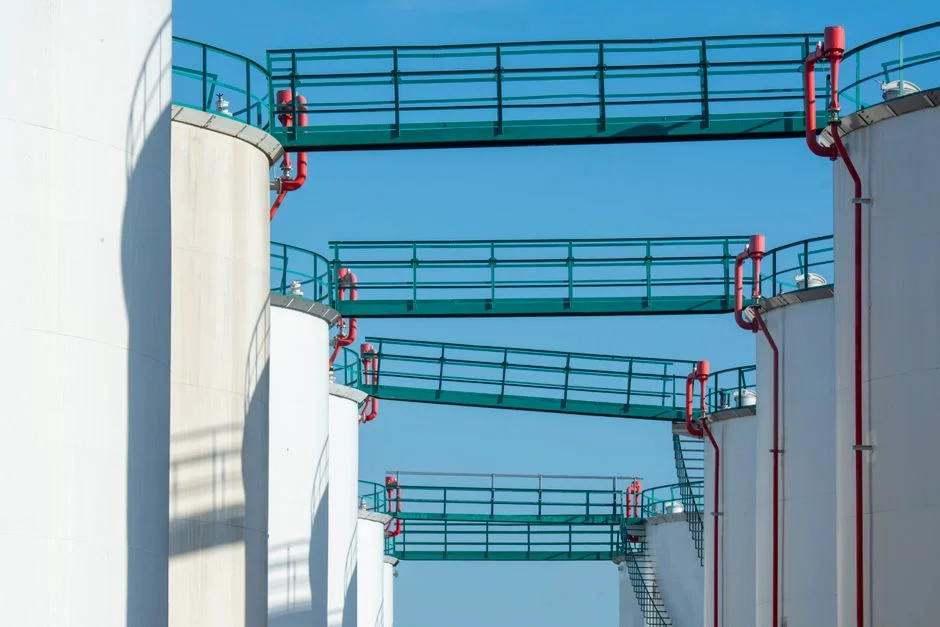
Both trains start with the same front-end protection. A rotary bar screen at 1-3 mm aperture removes rags, labels, and large solids, and a dissolved air flotation (DAF) unit skims free oil, FOG, and emulsified coolant. The standard equipment pair for this duty is a GX series rotary mechanical bar screen feeding a DAF unit, sized for the peak hourly flow rather than the daily average because e-coat dump-and-rinse cycles produce sharp hydraulic spikes.
The CAS train for an auto plant is a familiar sequence: equalization → primary lamella plate separator → aeration basin (plug-flow or oxidation ditch) → secondary clarifier → sand/anthracite tertiary polish → chlorination. MLSS control via the RAS and WAS pumps is the operational hot spot, and an out-of-spec SVI during a coolant upset can carry several days of recovery cost. Tertiary polishing with multimedia filtration is required to bring TSS down to reuse quality if the project scope ever shifts to on-site water recycling.
The MBR train for an EV plant is shorter and tighter: equalization → fine screen at ≤2 mm → DAF for oil and coolant → MBR tank with submerged PVDF flat-sheet or hollow-fiber modules → UV or ClO₂ disinfection. Membrane scouring air is typically sized in the 0.3-0.5 m³/h per m² of membrane area envelope, which sets the blower load and dominates MBR energy use. The S3 thesis finding that fouling dynamics intensify under very high organic load translates into an operational rule: design the MBR feed with a peak-load buffer tank or an equalization basin sized for at least 8-12 hours of average flow, and avoid feeding the MBR directly from a batch dump. For module selection, flat-sheet PVDF modules (such as the DF series flat-sheet MBR modules) tolerate FOG spikes better than hollow-fiber and are easier to clean in place when a coolant upset reaches the membrane tank.
Which One Should an Opelika EV or Auto Plant Choose?
The decision matrix below maps common plant profiles to a defensible recommendation. Treat the output as a starting point — final selection must follow a treatability study and must be confirmed against the applicable ADEM-administered categorical standard (40 CFR 433, 438 or 463).
| Plant profile | Recommendation | Why |
|---|---|---|
| Stable stamping wastewater only, existing aeration basin in good condition | CAS (retrofit) | Lowest CAPEX; discharge to City of Opelika POTW; biology is forgiving of the matrix. |
| E-coat + phosphating present, no battery chemistry, discharge to POTW | CAS with tertiary polish, or MBR if reuse is planned | CAS handles the COD/BOD load; add multimedia polish if the project is later converted to reuse. |
| Battery cell rinse or precursor chemicals present (Ni, Co, Li, high TDS) | MBR (new skid) | Membrane retains fine particulates and biomass; effluent stability protects 40 CFR 438 compliance. |
| Plant targeting on-site water reuse (cooling tower make-up, process rinses) | MBR | Only a membrane delivers the <1 μm filtrate that reuse applications require. |
| Greenfield site with tight footprint | MBR | 60% footprint advantage is decisive when the pad is the constraint. |
| Mixed legacy line plus new EV line, both streams must be treated | Hybrid: CAS roughing + MBR polish | Use the existing CAS basin for carbon oxidation, then polish with MBR for metals and reuse. |
Default guidance: retrofit CAS when the existing aeration basin is structurally sound, the influent matrix is biodegradable, and the discharge target is the City of Opelika POTW. Choose an integrated MBR system for greenfield sites, for on-site reuse, and for any stream carrying battery chemistry or strict metals limits. In the 10-2,000 m³/d size band that covers most Opelika Tier 1 and battery-adjacent plants, the MBR footprint delta alone — roughly 60% smaller than a CAS train of equal capacity (HydropureWater MBR product data, 2026) — often pays back the incremental CAPEX inside one permit cycle, particularly when civil and site-work costs in the Auburn-Opelika corridor are running high.
Frequently Asked Questions
Is MBR worth the higher CAPEX for a small auto parts shop in Opelika?
Below about 10 m³/d, the economics rarely justify a packaged MBR and a properly operated CAS train is usually the right answer. The lower bound of the HydropureWater MBR product range is 10 m³/d, and at that size the footprint delta is real but the equipment cost per m³ is at its highest. For shops in the 10-50 m³/d band with variable metal loads, a sidestream MBR polish on an existing CAS basin is often the cheapest path to compliance.
What ADEM limits apply to an EV battery assembly plant?
ADEM administers the federal categorical pretreatment standards in Alabama, and an EV battery assembly plant is typically covered by 40 CFR 438 (battery manufacturing) for the cell-forming and formation lines and by 40 CFR 433 (metal finishing) for the bus-bar, enclosure, and tray fabrication lines. Final applicability and any site-specific local limits from the City of Opelika POTW must be confirmed against the plant's actual process map before final design.
Can a CAS basin be upgraded with MBR membranes instead of replaced?
Yes. The sidestream MBR retrofit pattern keeps the existing aeration basin as the biology reactor and adds a membrane cassette or skid downstream of the secondary clarifier, or in place of it. This is the lowest-CAPEX route to MBR effluent quality and is well suited to a plant that needs to defer full civil replacement while still meeting tightened 40 CFR 433 or 40 CFR 438 limits at the next permit renewal.
How much smaller is an MBR vs a CAS plant of the same capacity?
About 60% smaller by footprint for the 10-2,000 m³/d capacity band (HydropureWater MBR product data, 2026). The number is driven by the higher MLSS the membrane permits, which compresses the aeration basin and eliminates the secondary clarifier.
What pretreatment must run in front of either system?
Both trains need a rotary bar screen at 1-3 mm aperture for solids and a dissolved air flotation (DAF) unit for free oil, FOG, and emulsified coolant. For an MBR specifically, the fine screen should be tightened to ≤2 mm to protect the membrane fibers. For more on the equipment selection and energy profile behind these pretreatment steps, see the detailed walkthrough in the MBR wastewater treatment system explained guide.