Why Plywood Press Wastewater Needs Ozone, Not Just Biology
A plywood hot-press stream is not a generic industrial wastewater, and running it through an MBR alone is the most common reason wood-panel plants miss their COD targets. The combined press and glue-blend discharge typically carries 3,000–12,000 mg/L COD against a BOD that rarely exceeds 1,500 mg/L, which drives the BOD/COD ratio below 0.3 and puts the substrate outside the tractable window for heterotrophic bacteria (HydropureWater field data, 2026). The pollutant fingerprint combines free formaldehyde at 50–500 mg/L in the press condensate, uncured phenol-formaldehyde (PF) resin, hemicellulose hydrolysate sugars, tannins, lignin fragments, and suspended fiber fines — a mix that resists biological attack even at long HRTs (HydropureWater Fenton guide, 2026).
Operating data from running mills show that a biology-only train plateaus at 50–70% COD removal on PF resin and formaldehyde, and that a single shift routinely swings the influent by 20–30 °C and 1–2 pH units between cold glue-blend cleanouts and hot-press discharge. That variability is what kills MBR stability on a wood-panel site. The reason ozone is the right chemistry for the phenolic-aromatic fraction is its two-pathway attack profile documented in MDPI Processes 13(8):2331 (2025-07): direct molecular O3 at an oxidation potential of 2.07 V for electrophilic attack on aromatic rings and unsaturated bonds, and the indirect hydroxyl-radical pathway at E° ≈ +2.80 V — about 1.35× more reactive than O3 itself — for non-selective mineralization. Building the design around that dual pathway is the only way to lift the BOD/COD ratio back into the 0.4–0.5 range where the MBR polisher can finish the job.
Ozone Chemistry on PF Resin, Formaldehyde and Wood Sugars
Ozone does not "burn" the press condensate; it opens specific bonds and then hands the broken fragments to a biological polisher. The direct pathway is an electrophilic attack on the aromatic rings of PF resin and on the unsaturated C=C bonds in lignin fragments, classically through 1,3-dipolar cycloaddition that opens the ring and produces muconic-type acids (MDPI Processes 13(8):2331, 2025). Formaldehyde is mineralized to CO2 and H2O through the same chain, which is the chemistry that drives free-formaldehyde discharge below the detection limits a regulator will accept.
The indirect pathway dominates once O3 self-decomposes into hydroxyl radicals (•OH), accelerated under alkaline pH and by H2O2, UV, or solid catalysts. That is the foundation of the O3/H2O2 (peroxone), O3/UV, and O3/TiO2 advanced oxidation processes (AOPs) catalogued in the same 2025 MDPI review. Practically, the ring-opened aromatics and short-chain carboxylates that drop out of the direct pathway are the species that raise the BOD/COD ratio from <0.3 to the 0.4–0.5 band an MBR can metabolize. The MDPI review also draws a sharp line on what ozone will not do: it does not mineralize NH3/NH4+, perchlorate, selenate, PFOS, or carbon tetrachloride — for an ammonia spike in a glue-blend dump, a side-stream nitrification or breakpoint chlorination still has to be on the P&ID.
Dose Envelope and Operating Window for Press Condensate
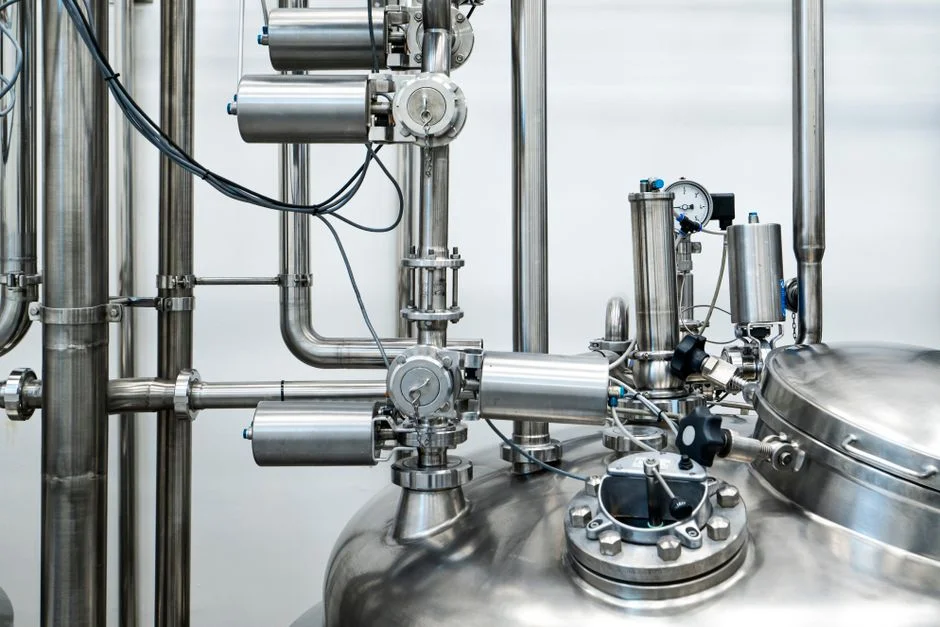
The defensible 2026 design envelope for an ozone system on plywood press condensate is 1.5–3.5 g O3 per gram of COD removed, paired with 20–40 min contactor HRT. Lift toward 3.5 g O3/g COD when the PF resin fraction is high and color or AOX removal is a permit line item. Transfer efficiency in a well-designed fine-bubble diffuser column or venturi-injector contactor lands at 85–95%, so the O3 generator should be oversized 20% above the design dose to absorb fouling and feed-gas variability (HydropureWater engineering practice, 2026).
The operating pH window is 7–10 in practice, with a shift to 9–10 once H2O2 is added to maximize •OH yield in the peroxone configuration; going above pH 11 starts to lose oxidant to carbonate scavenging rather than to target organics. The H2O2:O3 molar ratio for peroxone is 0.3–0.7, and the O3/UV variant is sized at 15–40 mJ/cm² UV dose (MDPI Processes 13(8):2331, 2025). Reactor temperature should stay below 35 °C because O3 solubility drops sharply above 40 °C; on a hot-press condensate stream that means an upstream equalization tank and sometimes a trim cooler before the contactor.
| Parameter | 2026 design value | Notes |
|---|---|---|
| O3 dose | 1.5–3.5 g O3/g COD removed | Push to 3.5 for high-PF, color/AOX targets |
| Generator sizing margin | +20% over design dose | Accounts for fouling and feed-gas variation |
| Transfer efficiency | 85–95% | Fine-bubble diffuser or venturi-injector |
| pH | 7–10 (9–10 for peroxone) | Above pH 11 carbonate scavenging dominates |
| H2O2:O3 molar ratio (peroxone) | 0.3–0.7 | Per MDPI 2025 |
| UV dose (O3/UV variant) | 15–40 mJ/cm² | Per MDPI 2025 |
| HRT in contactor | 20–40 min | Baffled CSTR or static mixer + tank |
| Reactor temperature | < 35 °C | Solubility drops above 40 °C |
Contactor, Materials and Off-Gas Treatment
Translating dose into hardware starts with contactor geometry. For dilute streams a fine-bubble diffuser column with an L/D ratio of 3–6 and a baffle factor above 0.7 is the standard; for high-strength press condensate a venturi-injector plus a downstream reaction tank gives the gas-to-liquid ratio needed at the 3.5 g O3/g COD end of the envelope. Wetted gas and liquid piping is specified in SS316L with PTFE or PVDF seals; the contactor shell can be FRP with a vinyl-ester liner, but bare carbon steel is excluded because O3 accelerates corrosion by orders of magnitude relative to aerated water (HydropureWater engineering practice, 2026).
The ozone generator is a medium-frequency corona-discharge unit sized at 1.2× the design dose, with both air-feed and oxygen-feed variants. Liquid-oxygen VPSA feed delivers 6–12 wt% O3 in the gas phase; air feed caps at 3–5 wt% and is rarely economic above 500 kg O3/day. Off-gas from the contactor vent must be destroyed to below 0.1 ppmv to meet the OSHA PEL of 0.1 ppm O3 and the EU indicative limit of 0.2 mg/m³ on workplace air. Thermal destructors at 300–350 °C with 1.5–2 s residence time, or thermal-catalytic units with MnO2/Pd on alumina operating at 40–80 °C, both deliver ≥99.5% destruction and removal efficiency (DRE) and are the two defensible options in 2026. Hydrogen peroxide is dosed as a side-stream at the contactor inlet via a PLC-controlled H2O2 dosing skid, and unlike Fenton no bisulfite quench is required downstream because residual O3 decays to O2 within minutes. The ozone generator skid itself is specified as a packaged unit with on-site generation.
Where Ozone Fits in a 2026 Plywood Effluent Train
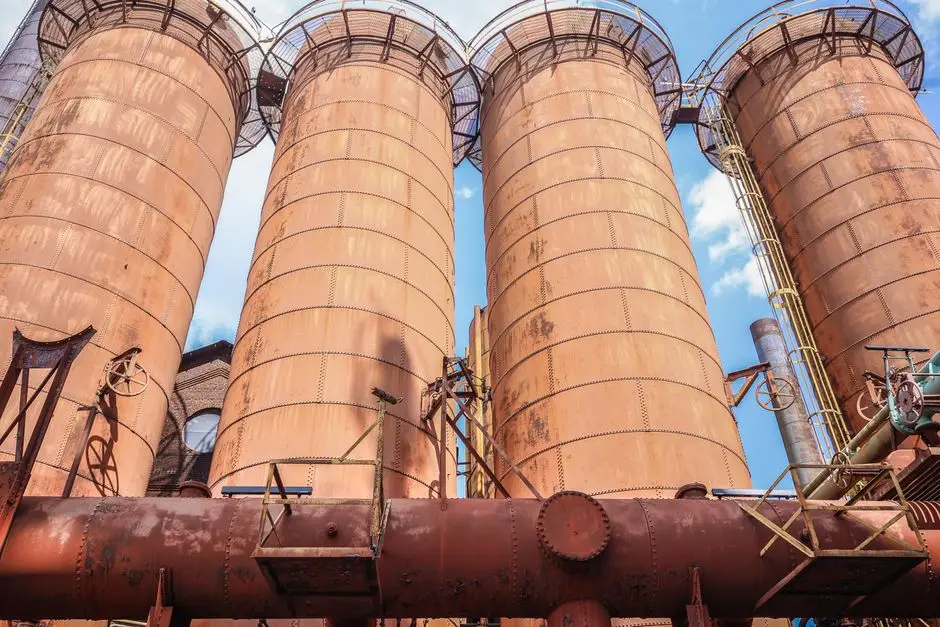
The full hydraulic train runs: bar screen → flow equalization → DAF unit upstream of ozone for fiber and fines → ozone contactor with thermal off-gas destruction → intermediate equalization → MBR polisher → optional RO skid for process-water reuse. The DAF is non-negotiable: sending fiber fines and colloidal resin into the contactor fouls the diffusers and wastes oxidant. The MBR downstream is required to consume the residual COD and the short-chain carboxylates left over after ozonation; PVDF MBR modules accept the post-ozone feed without modification.
The sludge line is the cleanest argument for ozone over Fenton on a wood-panel retrofit. There is no iron-bearing clarifier, no NaHSO3 quench tank, and no filter-press duty on chemical sludge — only the DAF float and the MBR waste activated sludge, both of which already exist on a biology-only plant. With an RO polish on MBR permeate, recovery lands at 65–75% on a two-pass RO skid, suitable for press steam, glue-blend make-up water, or yard service. Compared with the Fenton train documented in the Fenton oxidation system for plywood wastewater guide, the ozone block trades an iron clarifier for an off-gas destructor and a generator skid, and the reagent inventory collapses from FeSO4 plus H2O2 plus NaOH plus NaHSO3 down to LOX plus H2O2.
Ozone vs Fenton vs Electro-Fenton vs Bio-Only: 2026 Decision Matrix
Four options are realistically on a 2026 plywood-mill shortlist, and the choice is forced by which failure mode hurts the most. The matrix below covers the columns a procurement committee actually weighs: pre-bio COD removal, BOD/COD lift, sludge yield, off-gas or chemical-safety risk, capex complexity, and the OPEX driver that dominates month-to-month.
| Option | Pre-bio COD removal | Combined with MBR | Sludge yield | Risk driver | Capex complexity | OPEX driver |
|---|---|---|---|---|---|---|
| Bio-only (MBR / activated sludge) | 50–70% | 50–70% | WAS only | Load/temperature swings | Lowest | Aeration energy |
| Fenton (Fe²⁺/H₂O₂) | 70–85% | 90–97% | 2–4 kg DS/kg COD removed (Fe(OH)₃) | Iron sludge disposal, H₂O₂ inventory | Low–medium | H₂O₂ + FeSO₄ (USD 0.5–1.5/m³) |
| Ozone (O₃ or O₃/H₂O₂) | 60–80% | 90–96% | None chemical | Off-gas destruction; LOX supply | Medium (generator + destructor) | Power 4–8 kWh/kg O₃ + LOX |
| Electro-Fenton | 80–90% | 95–98% | Low (no Fe dosing) | Cathode scaling, electrode life | Highest (~2× Fenton) | Power + electrode replacement |
Decision rules: pick ozone when the discharge limit sits below 100 mg/L COD, when color or AOX is a permit line item, when iron-sludge disposal is constrained (no landfill capacity, no cement-kiln route), or when the plant already has LOX on site. Pick Fenton when OPEX simplicity, biology-led retrofit, and proven iron-sludge logistics dominate — the Fenton block uses commodity reagents and slots in front of an existing MBR with no off-gas package. Pick electro-Fenton only for plants above 5,000 m³/day with a reuse target and an operations team willing to own a cathode-replacement program. For a deeper side-by-side against a comparable end-to-end train, the ozone oxidation system for tannery wastewater article applies the same matrix to a different influent fingerprint.
Capex, Opex and Compliance Snapshot for a 1,000 m³/day Plywood Mill
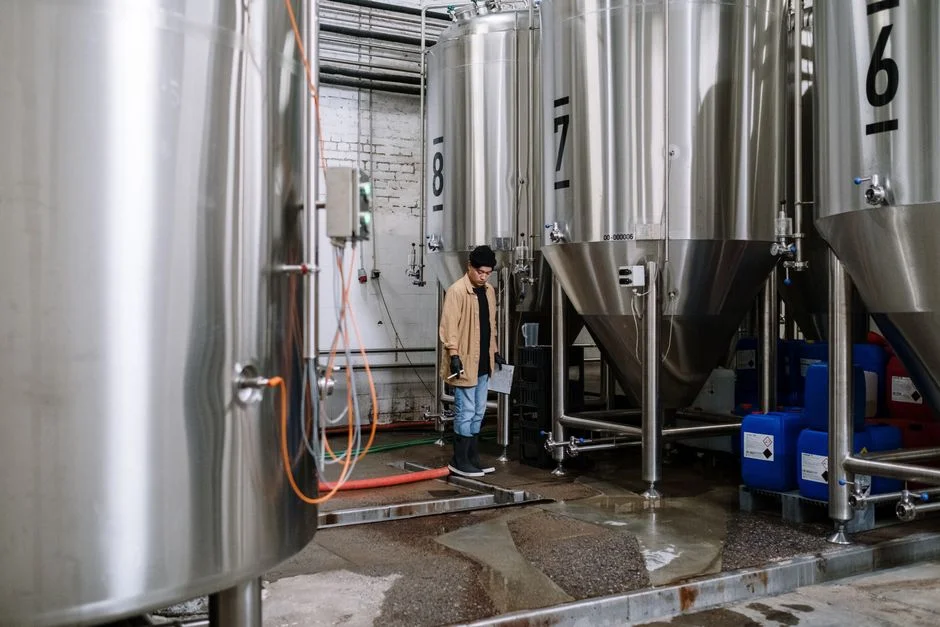
For a 1,000 m³/day plywood mill, the capex envelope for an ozone block — generator, SS316L contactor, peroxone skid, thermal off-gas destructor, and PLC — lands at USD 0.9–1.6M, within the same order as an equivalent Fenton block (HydropureWater 2026 estimate). Opex is dominated by O3 generation power at 4–8 kWh/kg O3 on oxygen feed, LOX supply at 6–12 wt% O3, H2O2 dosing at 0.3–0.7 mol/mol O3 for the peroxone variant, and scheduled catalyst replacement for the off-gas destructor. Compliance lines that the proposal has to defend: China GB 8978-1996 second-class discharge at COD ≤ 100 mg/L, India CPCB effluent limits, EU Directive 91/271/EEC for industrial discharges, and workplace air at the OSHA PEL of 0.1 ppm O3 or the EU 0.2 mg/m³ (HydropureWater Fenton guide, 2026).
The meaningful opex delta against Fenton is the elimination of the Fe(OH)₃ clarifier, the NaHSO3 quench stage, and the filter-press duty on chemical sludge; the corresponding Fenton iron-sludge line typically runs 2–4 kg DS per kg COD removed, which on a 1,000 m³/day plant at 5,000 mg/L COD and 80% removal produces 8–16 t/day of dewatered cake at 25–35% dryness. Net OPEX delta between ozone and Fenton usually lands within ±15% once iron-sludge disposal cost is included. The downstream RO skid for process-water reuse is the lever that tips the financial case when freshwater cost is non-trivial. For a broader pretreatment context on fiber and fines handling, the pulp and paper pretreatment guide covers the upstream decision in detail.
Frequently Asked Questions
What ozone dose (g O3/g COD) should I use for plywood press condensate?
Use 1.5–3.5 g O3 per gram of COD removed; lift toward 3.5 when the PF resin fraction is high and color or AOX is regulated (HydropureWater engineering practice, 2026). Pair with 20–40 min contactor HRT and a transfer efficiency of 85–95% to convert dose into actual removal.
How is unreacted ozone in the contactor off-gas destroyed?
Route the contactor vent to either a thermal destructor at 300–350 °C with 1.5–2 s residence time, or a thermal-catalytic unit with MnO2/Pd on alumina at 40–80 °C; both deliver ≥99.5% DRE and meet the OSHA PEL of 0.1 ppm and the EU workplace limit of 0.2 mg/m³ (HydropureWater engineering practice, 2026).
Which AOP variant — O3 alone, peroxone, or O3/UV — fits a plywood stream?
Peroxone (O3/H2O2 at 0.3–0.7 mol/mol) is the workhorse because the alkaline shift to pH 9–10 maximizes •OH yield on the phenolic-aromatic fraction (MDPI Processes 13(8):2331, 2025). O3/UV at 15–40 mJ/cm² is preferred when color and AOX targets are tight; standalone O3 is reserved for streams already near pH 9 with low carbonate alkalinity.
When does ozone win versus Fenton on a 2026 plywood retrofit?
Pick ozone when the discharge COD limit is below 100 mg/L, when iron-sludge disposal is constrained, or when color/AOX are regulated; pick Fenton when OPEX simplicity, commodity reagents, and existing iron-sludge logistics dominate — both routes reach 90–96% combined COD removal when paired with an MBR (HydropureWater Fenton guide, 2026).
Related Equipment
- ozone generator skid — specifications, capacity range, and technical data