Why Plywood Wastewater Is a Special Case for Fenton Oxidation
Plywood hot-press effluent is not a generic industrial wastewater, and treating it as one is the most common reason biological plants underperform at wood-panel mills. The press discharge carries a pollutant fingerprint that combines free formaldehyde (typically 50–500 mg/L in condensate), uncured phenol-formaldehyde (PF) resin, dissolved wood sugars from hemicellulose hydrolysis, tannins and lignin fragments, and suspended fiber fines. COD in the combined press and glue-blend stream routinely lands between 3,000 and 12,000 mg/L, while BOD rarely exceeds 1,500 mg/L, which drives the BOD/COD ratio below 0.3 (HydropureWater field data, 2026). When the ratio sits that low, the substrate is no longer tractable for heterotrophic bacteria — the population cannot sustain the oxidation-reduction rates needed to meet a 250 mg/L COD discharge target without a chemical boost.
Composite industrial wastewater studies confirm that the toxicity and variability of mixed process streams make conventional biological processes unreliable on their own (Suhan et al., Sci. Rep., 2024). Plywood plants amplify that problem because a single shift spans cold glue-blend tank cleanouts and hot-press condensates that can swing influent temperature by 20–30 °C and pH by 1–2 units. A chemical pre-treatment tolerates that variability, oxidizes the recalcitrant fraction in one pass, and lifts the BOD/COD ratio into the 0.4–0.5 range where a downstream biological polisher can finish the job.
Fenton Chemistry in Plywood Effluent: From H2O2 to Hydroxyl Radicals
The Fenton reaction is a homogeneous catalytic cycle that turns hydrogen peroxide into hydroxyl radicals (•OH) using dissolved ferrous iron. The core initiation step is Fe²⁺ + H₂O₂ → Fe³⁺ + •OH + OH⁻, with a standard one-electron redox potential near +0.77 V for the Fe³⁺/Fe²⁺ couple. The Fenton-like reduction Fe³⁺ + H₂O₂ → Fe²⁺ + •OOH + H⁺ regenerates the catalyst, so a small dose of iron keeps turning over peroxide until the organic load or the peroxide itself is consumed. Hydroxyl radical is the second-strongest aqueous oxidant after fluorine (E° ≈ +2.80 V vs NHE) and reacts at near-diffusion-limited rates with most organics, which is exactly the non-selective attack profile needed to break down formaldehyde, the phenolic rings in PF resin, and dissolved wood sugars in a single reactor (Suhan et al., 2024).
Fenton is uniquely suited to plywood effluent due to its three-function behavior: •OH provides oxidation, the Fe³⁺ produced in situ hydrolyzes to ferric hydroxide that acts as a coagulant, and the freshly precipitated Fe(OH)₃ floc adsorbs colloidal resin and fiber fines. That triple duty — oxidation plus coagulation plus adsorption in one tank — lets a Fenton block replace a standalone coagulant stage and an AOP stage in series. Because residual H₂O₂ leaving the Fenton reactor is biocidal to downstream biomass at concentrations above roughly 50 mg/L, a sodium bisulfite quench stage is mandatory before the stream reaches an MBR or activated-sludge polisher.
Design Parameters and Dosing Stoichiometry

Operating a Fenton reactor on plywood press wastewater is a constrained problem with a narrow working window. The pH window of 2.5–3.5 is non-negotiable: above pH 4 the iron precipitates as Fe(OH)₃ and catalysis stalls, while below pH 2.5 the peroxide is protonated to H₃O₂⁺ and the •OH yield drops sharply. The standard approach is sulfuric acid dosing in a static mixer upstream of the reaction tank, with online pH control via a PLC-controlled H₂O₂ and FeSO₄ dosing skid.
Dosing stoichiometry follows the Fe²⁺/H₂O₂ mass ratio of approximately 1:5, with the absolute H₂O₂ dose set at 0.3–1.0× the influent COD depending on the fraction of recalcitrant PF resin. Ferrous sulfate heptahydrate (FeSO₄·7H₂O) is the dominant Fe²⁺ source at industrial scale, paired with 30–50% technical-grade H₂O₂. Reaction time is 30–120 minutes at ambient to 40 °C; temperatures above 45 °C accelerate H₂O₂ decomposition to water and oxygen faster than they accelerate •OH generation, so most plants cap the Fenton reactor at 40 °C. Neutralization downstream uses NaOH to lift pH to 7–8 for iron precipitation and the biological polisher, and the target residual H₂O₂ before biology is below 50 mg/L (HydropureWater field data, 2026).
| Parameter | Working range | Control note |
|---|---|---|
| pH (reaction) | 2.5–3.5 | H₂SO₄ dosing; online probe in reactor |
| Fe²⁺/H₂O₂ mass ratio | 1:5 (typical) | FeSO₄·7H₂O + 30–50% H₂O₂ |
| H₂O₂ dose | 0.3–1.0× influent COD | Raise toward 1.0× when PF resin fraction is high |
| Reaction time (HRT) | 30–120 min | Two CSTRs in series for >90 min duty |
| Temperature | Ambient to 40 °C | Above 45 °C: peroxide decomposes faster than •OH forms |
| Residual H₂O₂ to biology | < 50 mg/L | Quench with NaHSO₃ if needed |
| Post-reaction pH | 7.0–8.0 | NaOH dosing; required for Fe(OH)₃ precipitation |
Where the Fenton Block Sits in the Plywood Wastewater Process Train
The Fenton reactor serves as a middle-of-train block, and its placement determines the performance of downstream units. Upstream, the stream passes a rotary bar screen for fiber and veneer chip removal, then a flow-equalization tank to dampen the 3–5× swings between cold glue-blend cleaning and hot-press discharge, then a DAF for primary solids removal before Fenton so the iron catalyst is not wasted on settleable fiber. The Fenton block itself is a pH-adjustment static mixer feeding a reaction tank (30–120 min HRT), followed by a neutralization tank, a lamella clarifier for Fenton sludge settling (or a second DAF for warm streams), and a bisulfite quench to strip residual H₂O₂.
Downstream of Fenton, the clarified stream enters an MBR for biological polishing after Fenton to consume the residual COD and any BOD that the Fenton block did not mineralize, and the MBR permeate can feed an RO skid if the plant's goal is process-water reuse rather than discharge. The iron-bearing chemical sludge underflow from the lamella clarifier is thickened and then dewatered on a filter press for iron-bearing chemical sludge before landfill disposal or cement-kiln co-processing. The full hydraulic train therefore runs: bar screen → equalization → DAF → Fenton reactor → neutralization/clarifier → MBR → (optional RO) → discharge or reuse, with the iron-sludge side-stream running in parallel to a filter press.
Fenton vs Biological-Only vs Ozone vs Electro-Fenton for Plywood Effluent
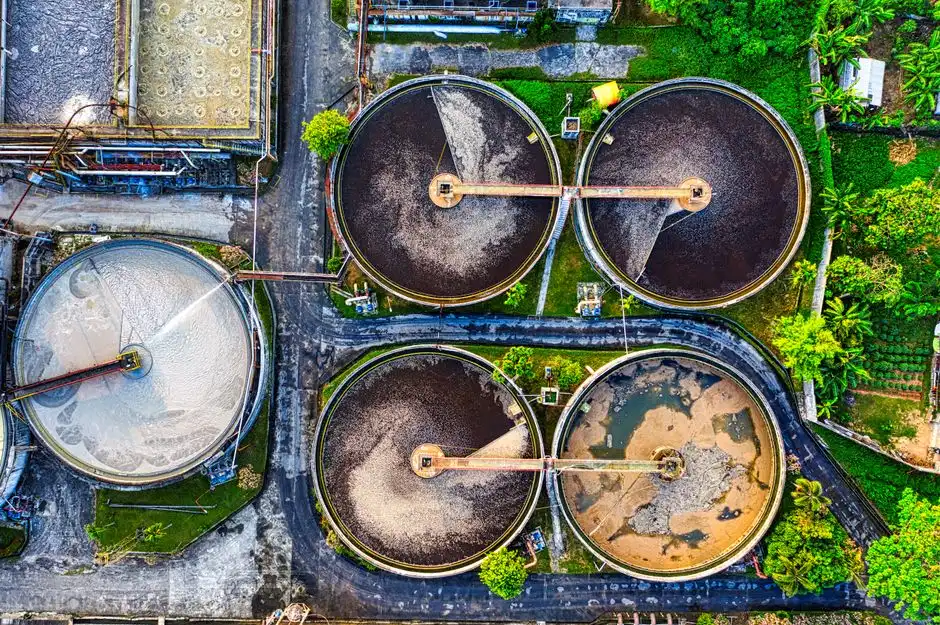
A procurement committee must evaluate Fenton against three realistic alternatives, each with a defined failure mode on plywood press wastewater. Biological-only trains (MBR or conventional activated sludge) have the lowest capex and simplest operations, but they plateau at 50–70% COD removal on PF resin and free formaldehyde and cannot tolerate temperature and load swings without buffering. Ozonation is a strong AOP with no sludge yield, but it lacks a coagulant function — colloidal resin and fiber fines pass straight through to the biology — and it requires an off-gas treatment unit for unreacted O₃ plus higher energy input per kg COD removed.
Homogeneous Fenton is the lowest-complexity AOP with simultaneous oxidation and coagulation, and it is the only option that uses standard reagent commodities (ferrous sulfate, hydrogen peroxide, sodium hydroxide) without specialty electrodes or ozone generators. Electro-Fenton generates H₂O₂ in situ at the cathode, which slashes chemical inventory and is attractive at very large plants or where stricter discharge limits (below 100 mg/L COD) apply, but it carries higher capex and tighter electrode maintenance. For a 2026 wood-panel plant retrofitting an existing biological train, Fenton as a chemical pre-treatment is usually the lowest marginal-capex path to 90%+ overall COD removal (HydropureWater field data, 2026).
| Option | COD removal on PF resin | Coagulation function | Capex vs Fenton | Key drawback |
|---|---|---|---|---|
| Biological-only (MBR / activated sludge) | 50–70% | None | Lower | Stalls on formaldehyde; BOD/COD ratio too low |
| Ozonation | 60–80% (on soluble COD) | None | Similar | Off-gas treatment; no colloid removal |
| Fenton (homogeneous) | 70–85% pre-bio; 90–97% combined | Yes — Fe(OH)₃ in situ | Baseline | Iron-bearing sludge yield |
| Electro-Fenton | 75–90% pre-bio | Yes | Higher | Electrode maintenance; cathode scaling |
Sludge, OPEX and ROI Considerations for a 2026 Plywood Plant
Iron-bearing sludge is the line item that requires accurate sizing in the capex submission. Dry sludge yield for a Fenton block on wood-panel effluent lands at roughly 2–4 kg dry solids per kg COD removed, dominated by Fe(OH)₃ from the neutralization step (HydropureWater field data, 2026). At a 5,000 mg/L COD influent and 80% removal across Fenton, a 1,000 m³/day plant produces on the order of 8–16 tonnes/day of dewatered chemical sludge at 25–35% dryness exiting the filter press, which dictates the dewatering skid size and the logistics for landfill or cement-kiln co-processing.
Reagent OPEX is dominated by 30–50% H₂O₂ and FeSO₄·7H₂O; sodium bisulfite for residual H₂O₂ quenching and NaOH for neutralization add a smaller share. Variable cost typically runs in the range of USD 0.5–1.5 per m³ of treated effluent for a mid-sized mill, depending on the H₂O₂-to-COD ratio selected. Pairing Fenton with downstream biology commonly lifts overall COD removal to 90–97%, which is the range needed for compliance against standards such as China GB 8978-1996 (COD ≤ 100 mg/L for second-class discharge), India CPCB effluent limits, and EU Directive 91/271/EEC for industrial discharges. A PLC-controlled H₂O₂ and FeSO₄ dosing skid keeps reagent consumption within ±5% of the stoichiometric target. Marginal ROI on a Fenton retrofit is driven by avoided discharge penalties, reduced freshwater intake from process-water reuse, and the deferral of a capacity expansion on the existing biological train. For a deeper view of biological polishing, see the Fenton for pharmaceutical wastewater engineering guide; for sludge handling economics, see the sludge handling and dewatering guide; and for a comparable end-to-end train at municipal scale, see the effluent treatment plant design guide.
Frequently Asked Questions
What is the optimal pH for a Fenton reactor treating plywood press wastewater?
The reaction pH window is 2.5–3.5
Frequently Asked Questions
What is the optimum Fe2+/H2O2 ratio for Fenton treatment of plywood wastewater?
For plywood wastewater, which is typically characterized by high concentrations of phenolic resins and formaldehyde, the optimum molar ratio of Fe2+ to H2O2 generally falls between 1:3 and 1:10. Achieving the highest mineralization efficiency usually requires a ratio of 1:5, though this must be fine-tuned based on the specific COD load, as excessive iron can lead to scavenging of hydroxyl radicals.
How much iron sludge does a Fenton system produce per kg of COD removed?
The production of iron sludge is a significant byproduct of the Fenton process, typically ranging from 0.5 to 1.5 kg of dry sludge per kg of COD removed. This volume is heavily dependent on the initial iron dosage required to reach the target oxidation state and the subsequent pH adjustment to 7.0–8.5 required for iron precipitation.
Can Fenton oxidation remove formaldehyde from wood-panel press effluent?
Yes, Fenton oxidation is highly effective at degrading formaldehyde, which is a common byproduct of urea-formaldehyde (UF) resin used in plywood production. Under optimal conditions (pH 3.0), the hydroxyl radicals generated by the Fenton reaction can achieve formaldehyde removal efficiencies exceeding 95%, effectively breaking down the aldehyde chains into smaller organic acids or CO2 and water.
Should Fenton be placed before or after biological treatment in a plywood wastewater plant?
Fenton oxidation is most effectively applied as a pretreatment step before biological treatment. By acting as a chemical pre-oxidation stage, it breaks down complex, non-biodegradable phenolic compounds and recalcitrant resins into smaller, biodegradable molecules, thereby increasing the BOD5/COD ratio and reducing toxicity to the downstream biomass in the biological reactor.
How is residual hydrogen peroxide controlled before the biological polishing stage?
Residual hydrogen peroxide must be neutralized before entering a biological stage, as concentrations exceeding 50–100 mg/L can be toxic to activated sludge. This is typically managed through catalytic decomposition using manganese dioxide, chemical reduction with sodium bisulfite (NaHSO3), or by providing a sufficient hydraulic retention time in a dedicated equalization tank to allow for natural decomposition before the effluent reaches the biological polishing unit.