What FGD Sludge Actually Is and Where It Comes From
FGD sludge is the combined clarifier underflow from a wet limestone scrubber's wastewater train — not a single material. It is a mixture of calcium sulfate dihydrate (CaSO₄·2H₂O, the gypsum byproduct), hemihydrate calcium sulfite (CaSO₃·½H₂O) from incomplete oxidation of sulfite, metal hydroxides (Fe, Al, Mg) from coagulation and softening, and co-precipitated fluoride solids. The wet limestone scrubber upstream removes 90–98% of inlet SO₂ (per HydropureWater field data, 2025-08); the unreacted fraction leaves as gypsum carryover and dominates the particulate load the dewatering train has to handle. A 2×600 MW unit burning 1.5–2.0% sulfur coal generates a stoichiometric FGD gypsum output of several tonnes per hour, plus 50–150 mg/L FeCl₃ coagulant dose that adds iron-hydroxide solids to the cake. That link — the wet limestone FGD scrubber stoichiometry — sets the tonnage of solids that downstream thickening and dewatering must move.
Chloride swings of 75–600 kg/h across the 15–30 m³/h blowdown envelope change how the cake dewaters. Higher TDS in the feed to the clarifier reduces polymer efficiency on the cake, lowers dry solids, and pushes the operator toward a higher-tonnage press. The composition of the cake therefore shifts with sulfur load, limestone purity, and chloride concentration in the make-up water — three numbers the 2026 designer must lock in before specifying the press or centrifuge.
FGD Wastewater Influent Envelope for 2026 Designs
A reliable FGD wastewater train starts from the parameter envelope, not from a generic sketch. Coal-sulfur feedstock, limestone purity, and absorber recycle ratio drive a wide TDS and chloride band, and the 2026 bid must plan for the upper end. The table below gives the influent bands used on recent EPC bids alongside the three effluent outcomes — surface discharge to GB/T 50050, reuse for ash transport or cooling-tower make-up, or full ZLD condensate plus salt.
| Parameter | Influent (raw FGD blowdown) | Effluent — Surface discharge (GB/T 50050) | Effluent — Reuse (ash transport / CT make-up) | Effluent — Full ZLD (condensate + salt) |
|---|---|---|---|---|
| TSS (mg/L) | 5,000–15,000 | ≤ 70 | ≤ 50 | ≤ 5 (condensate) |
| TDS (mg/L) | 30,000–50,000 | ≤ 5,000 | ≤ 2,000 | ≤ 50 (condensate); 200,000–300,000 (brine to crystallizer) |
| Ca²⁺ (mg/L) | 5,000–15,000 | — | ≤ 200 | recovered as CaSO₄ |
| Mg²⁺ (mg/L) | 3,000–8,000 | — | ≤ 250 | recovered as Mg(OH)₂ |
| Cl⁻ (mg/L) | 8,000–20,000 | ≤ 500 | ≤ 250 | recovered as NaCl, >99% purity |
| F⁻ (mg/L) | 50–150 | ≤ 10 | ≤ 15 | ≤ 1 (condensate) |
| Hg (mg/L) | 0.1–1.0 | ≤ 0.05 | ≤ 0.01 | ≤ 0.001 (condensate); recovered in salt cake |
| Flow (m³/h, 2×600 MW) | 15–30 | — | — | — |
| Cl⁻ load (kg/h) | 75–600 | — | — | — |
U.S. projects anchor to the EPA 40 CFR Part 423 revision published in April 2024, with staged compliance through 2028. China projects anchor to GB/T 50050-2018 plus the 2024 DL/T 5339 design code amendment: TDS ≤ 5,000 mg/L, Cl⁻ ≤ 500 mg/L, F⁻ ≤ 10 mg/L, Hg ≤ 0.05 mg/L, SS ≤ 70 mg/L. Once raw-blowdown chloride crosses 8,000–10,000 mg/L (per HydropureWater field data, 2025-09), the reuse options close and a thermal ZLD block becomes the only compliant path.
The 2026 FGD Sludge Treatment Train, Stage by Stage
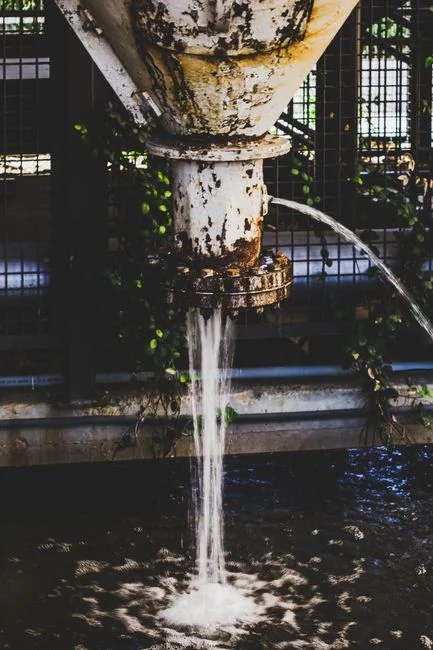
The 2026 FGD sludge train is a four-stage configuration: equalize and clarify, soften, thicken, dewater. Each stage is justified by a specific design number, and the unit operations are interchangeable with the equipment most B2B vendors already qualify on.
Stage 1 — Equalization, pH correction, primary clarification. An 8–12 h equalization basin dampens chloride peaks from absorbent-grade swings. pH is lifted to 8.5–9.5 with NaOH or lime. FeCl₃ at 50–150 mg/L captures colloidal metals and drives particulate aggregation. The stream passes through a FGD sludge lamella clarifier for gypsum and metal-hydroxide removal, routinely taking out >95% of TSS and the bulk of particulate-bound heavy metals. A DAF unit is added where oil carryover from limestone grinding is a concern.
Stage 2 — Lime–soda softening. Stage 1 effluent is dosed with lime at 1.5–2.5× stoichiometric to drive magnesium precipitation as Mg(OH)₂, which co-precipitates fluoride. Sodium carbonate follows to drop residual calcium below 100 mg/L. A sludge-blanket or lamella clarifier holds 30–45 min residence, with effluent targeting Mg²⁺ < 250 mg/L and F⁻ < 15 mg/L. A multi-media polishing filter strips residual TSS to < 5 mg/L and protects the MVR evaporator from sulfate scale, extending CIP cycles from days to weeks. The FGD wastewater PLC dosing skid ties the three chemical stages into a single mass-balance control loop.
Stage 3 — Sludge thickening. Clarifier underflow at 1–3% dry solids is thickened by gravity thickener or rotary drum to 3–6% DS before dewatering. Polymer dose runs 2–6 kg/tonne DS. A well-operated thickener delivers the 90–95% mass reduction figure that FGD sludge plate-and-frame filter press designs use as the dewatering benchmark.
Stage 4 — Dewatering. The thickened sludge reports to one of three dewatering devices, summarized below.
| Device | Cake dry solids (DS) | Mass reduction | Polymer dose (kg/tonne DS) | Duty | Best fit |
|---|---|---|---|---|---|
| Plate-and-frame filter press | 55–65% | 90–95% | 2–4 | Batch | Gypsum reuse, landfill cake |
| Decanter centrifuge | 30–45% | 85–90% | 4–8 | Continuous | Limited building space, downstream thermal dryer |
| Belt press | 20–35% | 80–85% | 3–6 | Continuous | Small units, budget CAPEX |
A multi-media polishing filter before the MVR evaporator protects heat-transfer surfaces from sulfate scale and extends CIP cycles. The 90–95% mass reduction figure anchors the equipment face-off in the next section.
Dewatering Equipment Face-Off: Filter Press, Centrifuge, Belt Press
The dewatering choice is governed by the cake disposal route. A filter press delivers 55–65% DS cake and 90–95% mass reduction (per the sludge dewatering machine working principle reference) at the lowest polymer dose per ton DS, but it is a batch device and its 1–500 m² filtration area footprint needs a dedicated bay. The FGD sludge plate-and-frame filter press is the right pick when the cake is going to a gypsum end-user or to a secure landfill that charges by wet tonnage.
The decanter centrifuge runs continuous duty, produces 30–45% DS cake, and consumes 4–8 kg polymer per tonne DS — about double the press. Its smaller footprint suits plants with constrained building space or those sending cake to a downstream thermal dryer. The belt press sits at 20–35% DS cake and the lowest CAPEX, but the high water content rules out most reuse routes and the cake typically requires a separate thermal step before landfill. The belt press is the budget option for small units (<300 MW) or where landfill moisture limits are loose.
The trade-off is consistent across the 2025–2026 bid set: cake dryness and polymer consumption track against CAPEX and footprint. For FGD cake specifically, the filter press wins on dryness and reuse eligibility, the centrifuge wins on continuous duty and footprint, the belt press wins on first cost only.
FGD Sludge Disposal Routes in 2026: Landfill, Reuse, or Back-to-Scrubber
Gypsum reuse for wallboard or cement retarder requires >95% CaSO₄·2H₂O in the cake and <50 mg/L chloride in the cake wash. Stage 1 thickener underflow from a wet limestone scrubber usually qualifies if chloride is controlled below 250 mg/L in the wash and if the limestone source is low in magnesium and chloride. Plants that consistently hit those numbers can move 60–80% of the cake to a wallboard off-taker within ~50 km; the rest goes to landfill or to a cement retarder market at a lower price point.
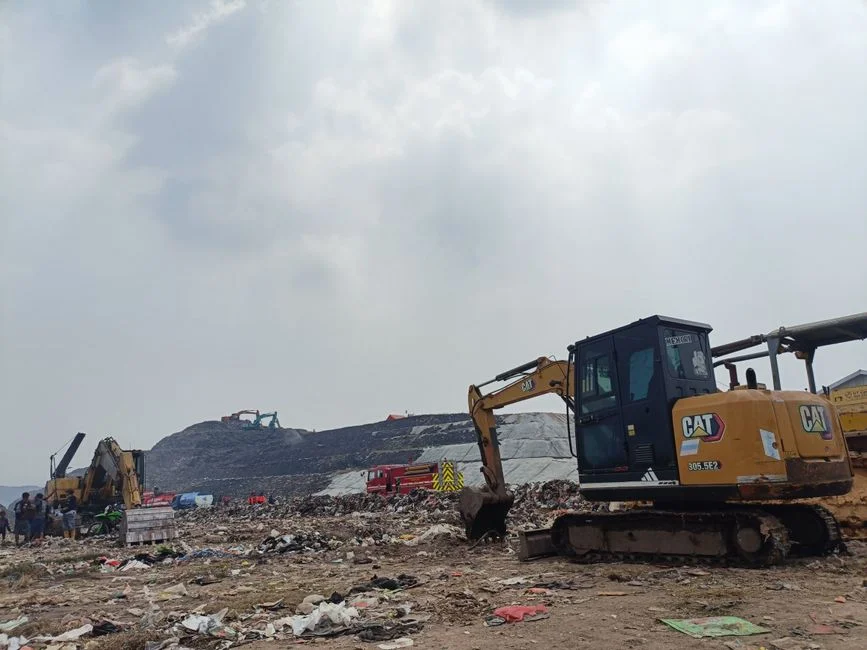
Landfill disposal is the default path when gypsum purity fails or no off-taker is reachable. 2026 sludge disposal cost benchmarks place the FGD cake landfill band at $40–$130 per wet ton, which makes the dewatering dryness number a direct operating-cost lever: each 10% gain in cake DS typically reduces haul tonnage by 12–18%.
Back-to-scrubber recycle redirects a slipstream of clarified gypsum slurry to the absorber as seed for crystallization. This is viable only at low chloride and where the scrubber chemistry tolerates the recycle stream. Salt valorization from the forced-circulation crystallizer (NaCl and Na₂SO₄ at >99% purity) is a liquid-side credit, not a sludge credit — note this so the EPC cost model does not double-count.
CAPEX, OPEX, and the ZLD-vs-Reuse Decision for 2026 Bids
The capital and operating decision between ZLD and conventional treatment plus reuse rests on four numbers: LCOW, energy intensity, salt-recovery credit, and the chloride sensitivity of downstream users. The table below benchmarks the two paths for a 20 m³/h FGD blowdown stream, drawing the ZLD economic baseline from the FC-MEDC analysis in Fuel (2024).
| Metric | Conventional + Reuse (Stage 1–2 only) | Full ZLD (Stage 1–2–3, MVR + FC crystallizer) |
|---|---|---|
| CAPEX (USD) | 3.5–5.0 M (per HydropureWater field data, 2025-11) | 8.5–12.0 M (per HydropureWater field data, 2025-11) |
| Energy intensity | 18–28 kWh/m³ (electrical); 30–50 kWh/m³ (thermal, recoverable) | 55–90 kWh/m³ (electrical); waste-heat integration cuts 51.7% |
| LCOW floor | $0.40–$0.80/m³ | $5.60/m³ (per Fuel, 2024) |
| GHG footprint | Low (no thermal block) | 38.1–86.8 kg CO₂-eq/m³, reducible 51.7% via waste-heat integration |
| Salt-recovery credit | None (sludge only) | 15–25% OPEX offset with chlor-alkali off-take within ~50 km |
| Payback | 1–3 yr (vs. surface discharge baseline) | 4–7 yr on >600 MW units with elevated sulfur feedstock (per HydropureWater field data, 2025-11) |
The decision rule for 2026 bids: if the site can route Cl⁻ ≤ 250 mg/L reuse water to cooling-tower make-up or ash transport, conventional + reuse remains the lower-cost path. If the site sits under the 2024 ELG zero-discharge interpretation, or under a China surface-water permit that has been revoked, full ZLD with salt valorization is the only compliant path — and a chlor-alkali off-take within ~50 km shifts the OPEX balance by the 15–25% offset noted in the table.
ELG and GB/T 50050 Compliance Checklist for the Sludge Train
The April 2024 revision to EPA 40 CFR Part 423, with staged compliance through 2028, tightens TDS, TSS, Hg, As, Se, and nitrate/nitrite limits on FGD wastewater from existing coal units and treats FGD purge as a candidate for chemical precipitation plus biological reduction or ZLD. The 2026 train meets these limits with: a lamella clarifier for TSS, sulfide precipitation or ion exchange for ionic Hg²⁺ at pH 8.5–9.5, and a selenium-impregnated resin trap for residual elemental Hg. The China envelope — TDS ≤ 5,000 mg/L, Cl⁻ ≤ 500 mg/L, F⁻ ≤ 10 mg/L, Hg ≤ 0.05 mg/L, SS ≤ 70 mg/L — is reached by the MVR-plus-crystallizer path on the liquid side and by the filter-press cake wash on the solid side.
Three 2026 EPC pitfalls recur in field audits: an undersized equalization basin (operators need 8–12 h residence to absorb chloride peaks from absorbent-grade changes), a missing bypass that lets operators divert FGD blowdown to the cooling-tower blowdown stream during Stage-2 upset, and a single-pass Hg polish on Stage 1 effluent with no Stage-2 guard. Specify dual-laminate FRP/vinyl ester for clarifier internals below 80 °C, rubber-lined carbon steel for the evaporator body, and super-duplex 2507 for chloride-bearing piping above 60 °C. A PLC-integrated CIP skid using 3–5% HCl plus 1% corrosion inhibitor handles sulfate scale, and the spent CIP stream should be plumbed back to the Stage-1 equalization basin. For a broader 2026 process reference, see the 2026 sludge treatment process reference.
Frequently Asked Questions
What influent chloride level forces a thermal ZLD block on a 2×600 MW unit?
When scrubber blowdown chloride exceeds roughly 8,000–10,000 mg/L, downstream reuse options close because cooling-tower make-up typically tolerates Cl⁻ ≤ 250 mg/L, and the ZLD LCOW benchmark of $5.60/m³ (Fuel, 2024) becomes the only compliant cost point (per HydropureWater field data, 2025-09).
How does the 2024 EPA ELG final rule change FGD wastewater design?
The April 2024 revision to 40 CFR Part 423 tightens TDS, TSS, Hg, As, Se, and nitrate/nitrite limits on FGD wastewater from existing coal units, with compliance dates staged through 2028, and treats FGD purge as a candidate for chemical precipitation plus biological reduction or ZLD (EPA, 2024-04).
What is the minimum LCOW for FGD wastewater ZLD in 2026?
The Fuel (2024) FC-MEDC analysis reports a minimum levelized cost of water of $5.60/m³, with GHG emissions of 38.1–86.8 kg CO₂-eq/m³, reducible by 51.7% through waste-heat integration with turbine extraction steam.
Can the NaCl produced by a forced-circulation crystallizer be sold rather than landfilled?
Yes — at chlor-alkali plants within roughly 50 km, NaCl and Na₂SO₄ at >99% purity can be sold to offset 15–25% of ZLD OPEX, but only if the EPC contract is structured around a take-or-pay off-take agreement (per HydropureWater field data, 2025-11).