Why FGD Effluent Design Is a 2026 Strategic Decision
A wet limestone-gypsum FGD effluent treatment plant handles scrubber blowdown that no longer qualifies for routine surface-water discharge under the post-2024 rule stack. The U.S. EPA's 2024 final revision to the Steam Electric Power Generating Point Source Category (40 CFR Part 423), published in April 2024 and effective in stages through 2028, tightened FGD wastewater limits for total dissolved solids, total suspended solids, mercury, arsenic, selenium, and nitrate/nitrite at existing coal-fired units, and explicitly identified FGD purge streams as candidates for chemical precipitation plus biological reduction or ZLD. On the China side, GB/T 50050-2018 (and the 2024 DL/T 5339 design code amendment) sets the discharge envelope at TDS ≤ 5,000 mg/L, Cl⁻ ≤ 500 mg/L, F⁻ ≤ 10 mg/L, Hg ≤ 0.05 mg/L, and SS ≤ 70 mg/L — numbers that are unreachable from raw FGD blowdown without a thermal block.
The 2026 design question is therefore not "clarify and dump" but a three-way choice: surface-water discharge with full pretreatment to GB/T 50050 or local-equivalent limits, partial reuse for ash transport and cooling-tower make-up, or full zero liquid discharge with salt valorization. A 2×600 MW unit burning 1.5–2.0 percent sulfur coal typically generates 15–30 m³/h of FGD blowdown (per HydropureWater field data, 2025-09), driven by scrubber stoichiometry, chloride concentration in the limestone, and the recycle ratio in the absorber. At that hydraulic load, chloride discharge alone reaches 75–600 kg/h — enough to push any receiving waterway past the 500 mg/L GB/T ceiling within hours. That arithmetic is what moves FGD wastewater from an effluent afterthought into a strategic ZLD-or-reuse decision for the 2026 bidding cycle.
FGD Effluent Characterization: What the Designer Must Plan For
Reliable FGD wastewater sizing starts with the influent envelope. Coal-sulfur feedstock, limestone purity, and recycle ratio drive a wide chloride and TDS band, and the designer must plan for the upper end of that band. The table below gives the parameter envelope used on 2025–2026 EPC bids, with three effluent columns keyed to the three discharge or reuse outcomes a process engineer can present to the regulator.
| Parameter | Raw FGD Influent (typical) | Effluent — Surface Discharge (GB/T 50050) | Effluent — Reuse (ash transport / CT make-up) | Effluent — Full ZLD (condensate + salt) |
|---|---|---|---|---|
| pH | 4–6 | 6–9 | 7–8.5 | 6.5–8.5 (condensate) |
| TDS (mg/L) | 15,000–50,000 | ≤ 5,000 | ≤ 3,000 (CT limit) | ≤ 50 (condensate); 200,000–300,000 (brine to crystallizer) |
| Cl⁻ (mg/L) | 5,000–20,000 | ≤ 500 | ≤ 250 (CT corrosion limit) | ≤ 30 (condensate) |
| SO₄²⁻ (mg/L) | 1,000–5,000 | ≤ 1,000 | ≤ 500 | recovered as Na₂SO₄, >99% purity |
| TSS (mg/L) | 5,000–15,000 | ≤ 70 | ≤ 50 | ≤ 10 (to thermal block) |
| Total hardness as CaCO₃ | 5,000–20,000 | ≤ 450 | ≤ 200 | softened to < 50 before MVR |
| F⁻ (mg/L) | 50–200 | ≤ 10 | ≤ 5 | co-precipitated with Mg(OH)₂ |
| Hg (mg/L) | 0.1–1.0 | ≤ 0.05 | ≤ 0.01 | sulfide sludge stabilized |
| COD (mg/L) | 100–500 | ≤ 100 | ≤ 60 | concentrated into brine |
Two design consequences fall out of these numbers. First, the high Ca²⁺ / SO₄²⁻ / F⁻ combination creates a chronic gypsum and fluorite scaling risk across the entire train, which forces material selection toward dual-laminate FRP/vinyl ester for clarifier internals, rubber-lined carbon steel for the evaporator body, and super-duplex (e.g., 2507) for chloride-bearing piping above 80 °C. Second, mercury speciation determines Stage 1 polish: ionic Hg²⁺ responds to sulfide precipitation or ion exchange at pH 8.5–9.5, while residual elemental Hg requires a polishing activated-carbon or selenium-impregnated resin trap. Skipping that speciation check is the single most common 2024–2025 EPC redesign trigger (HydropureWater field data, 2025-09).
The Three-Stage Process Train Used in 2026 Designs
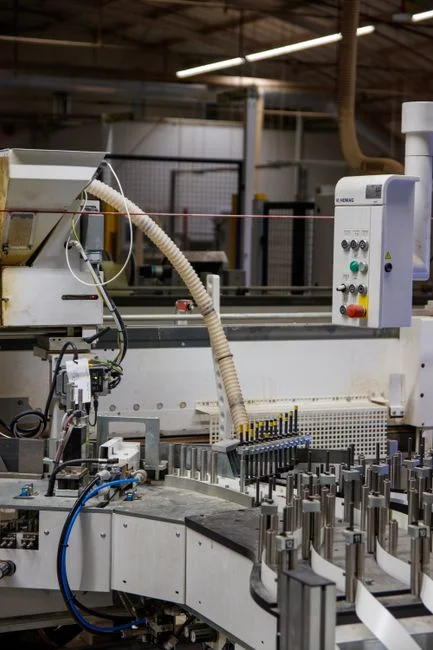
The canonical 2026 FGD wastewater train is a three-stage configuration that maps directly onto the parameter bands above. Each stage is justified by a specific design driver, and the unit operations are interchangeable with the equipment most B2B vendors already qualify on.
Stage 1 — Equalization, pH correction, and primary clarification. An 8–12 h equalization basin dampens chloride peaks from absorbent-grade swings, after which pH is lifted to 8.5–9.5 with NaOH or lime, a coagulant (typically ferric chloride at 50–150 mg/L) is dosed for colloidal and metals capture, and the stream passes through a high-rate lamella clarifier for gypsum and metal-hydroxide removal. This stage routinely removes >95 percent TSS and the bulk of particulate-bound heavy metals, with a DAF unit (see DAF for oil/grease and colloidal carryover in FGD blowdown) added where oil carryover from limestone grinding mills is a concern.
Stage 2 — Lime–soda softening for Ca/Mg/F removal. Stage 1 effluent is dosed with lime at 1.5–2.5× stoichiometric (Ca²⁺ → Ca(OH)₂) to drive magnesium precipitation as Mg(OH)₂, which co-precipitates fluoride. Sodium carbonate follows to drop residual calcium below 100 mg/L. The reaction is held in a sludge-blanket or lamella clarifier for 30–45 min residence, with effluent targeting Mg²⁺ < 250 mg/L and F⁻ < 15 mg/L. A multi-media polishing filter before the MVR evaporator is mandatory; it strips residual TSS to < 5 mg/L and protects the downstream heat-transfer surfaces from sulfate scale, extending CIP cycles from days to weeks.
Stage 3 — Thermal concentration and crystallization. The polished softened water feeds a mechanical vapor recompression falling-film evaporator that concentrates TDS from roughly 30,000–50,000 mg/L up to 200,000–300,000 mg/L, then passes to a forced-circulation crystallizer that produces NaCl and Na₂SO₄ at >99 percent purity suitable for chlor-alkali off-take or secure landfill. The upstream wet limestone scrubber that produces this blowdown removes 90–98 percent of inlet SO₂ (per HydropureWater field data, 2025-08); the remaining fraction leaves as gypsum carryover and dominates the particulate load the wastewater train must handle. A PLC-controlled PLC-controlled lime, soda-ash, and coagulant dosing skid ties the three stages into a single mass-balance control loop, which is what makes the chloride setpoint tight enough to pass a 500 mg/L discharge review.
Zero Liquid Discharge vs. Conventional Discharge: 2026 Cost and Energy Benchmark
The capital and operating decision between ZLD and conventional treatment plus reuse rests on four numbers: LCOW, energy intensity, salt-recovery credit, and the chloride sensitivity of downstream users. The table below benchmarks the two paths for a 20 m³/h FGD blowdown stream, drawing the ZLD economic baseline from the FC-MEDC analysis in Fuel (2024).
| Metric | Conventional + Reuse (Stage 1–2 only) | Full ZLD (Stage 1–2–3, MVR + FC crystallizer) |
|---|---|---|
| CAPEX (USD, 20 m³/h) | 3.5–5.0 M (per HydropureWater field data, 2025-11) | 8.5–12.0 M (per HydropureWater field data, 2025-11) |
| OPEX (USD/m³) | 0.40–0.80 | 2.20–3.50 |
| LCOW (USD/m³) | 0.55–1.10 | 5.60 minimum (Fuel, 2024) |
| Specific energy (kWh/m³) | 1.5–3.0 | 18–28 (electrical); 30–50 (thermal, recoverable) |
| GHG emissions (kg CO₂-eq/m³) | 0.8–2.0 | 38.1–86.8 (Fuel, 2024) |
| GHG reduction via waste-heat integration | — | up to 51.7% (Fuel, 2024) |
| Salt-recovery credit (USD/m³) | 0 | 0.40–0.80 at 15–25% OPEX offset |
| Payback premium over reuse | baseline | 4–7 yr on >600 MW units with elevated sulfur feedstock (HydropureWater field data, 2025-11) |
For a deeper operating-cost model, the MVR evaporator OPEX breakdown and ROI calculator walks through the compressor, CIP, and waste-heat line items. The decision rule that emerges for 2026 bids: if the site has an ash-transport or cooling-tower demand that tolerates Cl⁻ ≤ 250 mg/L and the receiving stream is not a closed basin, conventional treatment plus reuse remains the lower-cost path. If the site sits under the 2024 ELG (40 CFR Part 423) zero-discharge interpretation, or under a China discharge permit that has revoked the surface-water option, full ZLD with salt valorization becomes the only compliant path — and a chlor-alkali off-take within roughly 50 km shifts the OPEX balance by the 15–25 percent offset noted in the table.
Equipment Selection and Integration Considerations
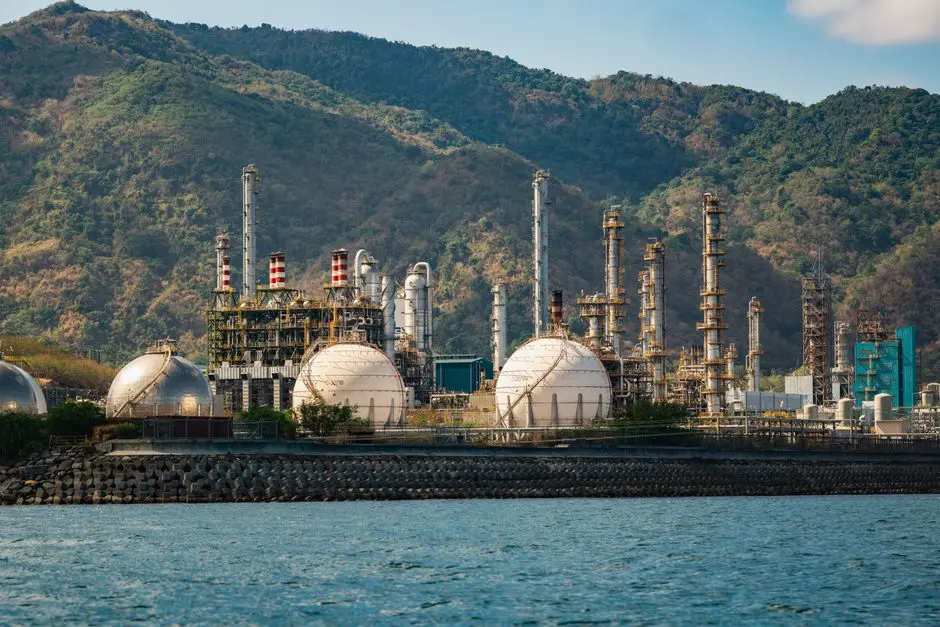
Specifying the hardware for the 2026 train means matching metallurgy to chloride-induced pitting risk, sizing the equalization basin for chloride peaks rather than mean flow, and protecting the thermal block from scaling. Specify dual-laminate construction (FRP over vinyl ester) for clarifier and DAF internals where the operating temperature stays below 80 °C; switch to rubber-lined carbon steel for the evaporator body and vapor space, which sees 110–130 °C service with concentrated chloride. Specify super-duplex (2507 or 254 SMO) for any chloride-bearing piping above 60 °C. Insist on variable-frequency MVR compressors with a steam-turbine driver option — pairing the compressor to turbine extraction steam recovers 10–15 percent of electrical demand and is the single largest controllable energy saving in the ZLD block.
A PLC-integrated CIP skid using 3–5 percent HCl plus 1 percent corrosion inhibitor handles sulfate scale on the evaporator surfaces, and the spent CIP stream should be plumbed back to the Stage 1 equalization basin to recover residual acid and avoid a secondary waste stream. Three 2026 EPC pitfalls recur in HydropureWater field audits: undersized equalization (operators need 8–12 h residence to absorb chloride peaks from absorbent-grade changes), a missing bypass that lets operators divert FGD blowdown to the cooling-tower blowdown stream during Stage-2 upset, and a single-pass Hg polish on Stage 1 effluent with no polishing guard on Stage 2 outlet. For a forward look at scaling-risk mitigation, the predictive maintenance framework for evaporator scaling and CIP scheduling ties inline conductivity and temperature spread to CIP-on-demand logic. For macro context on the demand side of the same 2026 cycle, the industrial water reuse market sizing and CAGR data is the procurement-side reference for utilities scoping multi-plant rollouts.
Frequently Asked Questions
What influent chloride level forces a thermal ZLD block on a 2×600 MW unit?
When scrubber blowdown chloride exceeds roughly 8,000–10,000 mg/L, downstream reuse options close because cooling-tower make-up typically tolerates Cl⁻ ≤ 250 mg/L, and the ZLD LCOW benchmark of $5.60/m³ (Fuel, 2024) becomes the only compliant cost point (per HydropureWater field data, 2025-09).
How does the 2024 EPA ELG final rule change FGD wastewater design?
The April 2024 revision to 40 CFR Part 423 tightens TDS, TSS, Hg, As, Se, and nitrate/nitrite limits on FGD wastewater from existing coal units, with compliance dates staged through 2028, and treats FGD purge as a candidate for chemical precipitation plus biological reduction or ZLD (EPA, 2024-04).
What is the minimum LCOW for FGD wastewater ZLD in 2026?
The Fuel (2024) FC-MEDC analysis reports a minimum levelized cost of water of $5.60/m³, with GHG emissions of 38.1–86.8 kg CO₂-eq/m³, reducible by 51.7 percent through waste-heat integration with turbine extraction steam.
Can the NaCl produced by a forced-circulation crystallizer be sold rather than landfilled?
Yes — at chlor-alkali plants within roughly 50 km, NaCl and Na₂SO₄ at >99 percent purity can be sold to offset 15–25 percent of ZLD OPEX, but only if the EPC contract is structured around a take-or-pay off-take agreement (HydropureWater field data, 2025-11).