Why EV and Auto Factory Wastewater Breaks the Usual DAF-vs-Clarifier Advice
Generic DAF-versus-clarifier comparisons assume a petrochemical or food-processing feed: relatively clean water, modest salinity, and oil that mostly floats. EV and tier-1 auto plants differ significantly. Five characteristic streams define the problem: e-coat (cathodic electrophoretic deposition) rinse, body-shop draw-off, machining coolant, press lubricant, and battery-cell electrolyte wash water. In each, oil droplet size, surfactant load, and dissolved salt vary enough that one blanket answer fails.
Salinity acts as the silent disruptor. E-coat rinse baths and electrolyte wash routinely run at 2,000-10,000 µS/cm conductivity; coastal plants and winter brine ingress push readings above 10,000 µS/cm. The South African refinery DAF optimisation study (S1) makes the trade-off explicit: inorganic coagulants (alum, ferric chloride) are cheaper but add conductivity and create a salt-rebound problem, while polymeric coagulants (PAC, Zetag-class) cost more per kilogram but keep ionic strength from drifting. Chemistry selection—not the float cell itself—decides whether DAF survives a high-salt feed.
Layer the droplet-size rule of thumb on top: free oil >50 µm favours gravity and lamella; emulsified oil <20 µm favours DAF; and most EV/auto lines carry both fractions in the same pipe. This overlap explains why a single "DAF is better" or "clarifier is cheaper" answer fails the moment a project manager walks onto the plant floor.
DAF and Lamella Clarifier: How Each One Actually Works in 2026
A DAF system recycles 10-40% of clarified effluent, saturates it with air at 3-6 bar, then depressurises through a needle valve to release 10-100 µm micro-bubbles (per SIGMADAF technical documentation, S5). Those bubbles attach to oil droplets and pre-formed floc, lifting them to the surface where a skimmer sweeps the float layer off. The clarified stream leaves below the sludge blanket. Saturation pressure, recycle ratio, and bubble size distribution—not the tank—are the levers an operator adjusts.
A HydropureWater high-efficiency sedimentation tank (lamella clarifier) works on Stokes' law inverted. Coagulated water flows upward between 45-60° inclined plates spaced a few centimetres apart, so the effective settling distance is collapsed from a metre-scale tank depth to a few centimetres. Sludge slides down the plate face and compacts at the bottom. Surface loading reaches 20-40 m/h—an order of magnitude higher than a conventional rectangular clarifier—which is why footprint shows up so heavily in the comparison below.
Each technology serves specific physics requirements. DAF excels at low-density, emulsified, and colloidal loads where the buoyant force of a micro-bubble is the only practical way to overcome Stokes' settling velocity. Lamella excels at denser suspended solids and free oil where settling velocity is high enough that the plate geometry alone finishes the job. The 2026 retrofit question many project leads now ask is whether nano-bubble enhancement is worth specifying. A 2025 sidestream study at an industrial WWTP (S3, Environments MDPI) measured roughly 40% faster fine-particle flotation kinetics for nano-bubble DAF versus conventional micro-bubble DAF—a real benefit, but vendor-specific and still a pilot-scale claim.
Saline Tolerance: Which System Holds Up When Conductivity Climbs
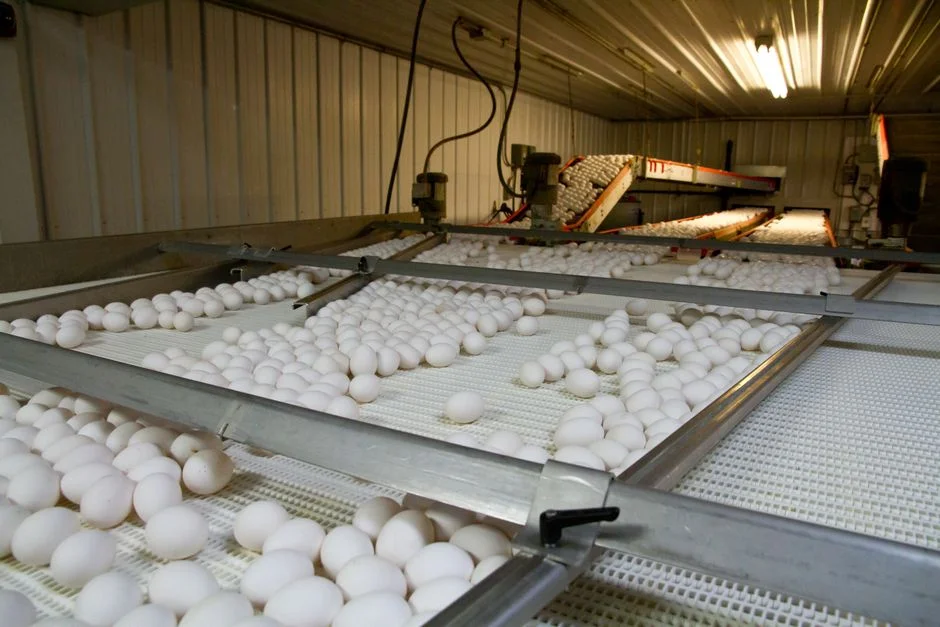
Pre-screen your site water against three conductivity bands before you do anything else:
- Low (<2,000 µS/cm) — typical municipal make-up or freshwater rinsing.
- Medium (2,000-10,000 µS/cm) — typical inland EV/auto plants, e-coat rinse, coolant blow-down.
- High (>10,000 µS/cm) — coastal sites, seawater-intrusion risk, winter brine ingress, electrolyte wash streams.
DAF tolerates high salinity well at the physical level because bubble-particle attachment is a surface-tension phenomenon, not a charge-driven one (S1). The salt-sensitive step is upstream: coagulant selection and dose. Inorganic coagulants add conductivity, so at high salinity the operator must switch to cationic polymers (PAC, Zetag32-class) to keep floc dense enough to ride the bubble to the surface.
Lamella clarifiers tolerate salinity only insofar as the floc still settles. High ionic strength compresses the electrical double layer around colloidal oil droplets; paradoxically, this can re-stabilise emulsions in some surfactant systems and crush effective settling rate. Field experience shows chemical dose must rise 30-50% to compensate. In the high band (>10,000 µS/cm), lamella performance drops off fast, and operators often reach for a PLC-controlled coagulant dosing skid to keep the clarifier in spec. If your conductivity is consistently in the high band, build the DAF case first and treat lamella as a downstream polishing step rather than the primary clarifier.
Side-by-Side Engineering Comparison for 2026
The table below scores the two technologies on the six axes a project engineer will be asked about in a vendor review meeting. Numbers reflect typical 2026 operating envelopes; site-specific jar testing is mandatory before any procurement decision.
| Parameter | DAF (dissolved air flotation) | Lamella clarifier (high-efficiency sedimentation tank) |
|---|---|---|
| Oil & grease removal | ≥95% on free and emulsified oil (S5) | 60-80% on free oil >50 µm; 30-50% on emulsified oil <20 µm |
| TSS removal | ~90% as primary step (S5) | 70-85% as primary step on settleable solids |
| Hydraulic loading | 4-6 m³/m²/h (S5) | 20-40 m/h (HydropureWater product 10) |
| Mass loading | 3-5 kg/m²/h (S5) | ~1-2 kg/m²/h typical for settleable sludge |
| Footprint (per 100 m³/h) | ~17-20 m² (1 m² per 5-6 m³/h) | ~3-5 m² (1 m² per 20-40 m³/h) — 4-6× more compact for TSS capture |
| Typical COD reduction | 20-50% as primary step (S5) | 10-25% as primary step; much higher downstream of DAF |
| Salt tolerance (qualitative, 1-5) | 4/5 — physical separation; chemistry is the soft spot | 2/5 at >10,000 µS/cm; 3/5 in the medium band |
Three patterns emerge. First, lamella wins decisively on footprint and hydraulic throughput—important in retrofit buildings where floor area is fixed. Second, DAF wins on oil-and-grease removal and salt tolerance, which is the EV/auto reality. Third, COD reduction is modest on either unit alone; both are primary-clarification steps. A hybrid DAF-MBR-RO-AOP train for fab wastewater is the only realistic path to reuse-grade effluent in 2026.
Decision Rule: When to Pick DAF, When to Pick a Lamella Clarifier
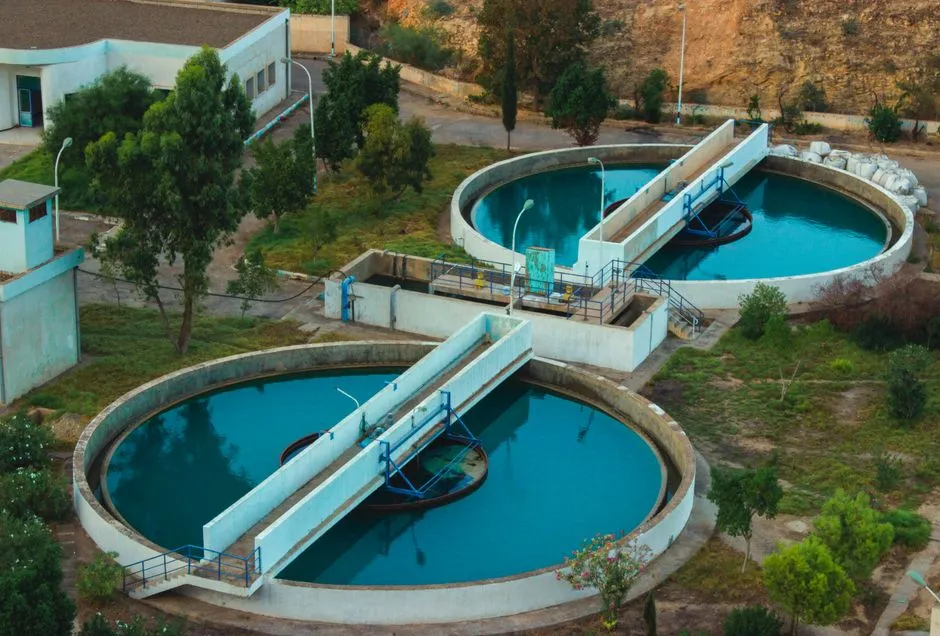
Run the five-question test below in order. Stop at the first question that gives a clear "yes" and follow its branch.
- Is free oil >50 µm the dominant stream? Default to a lamella clarifier. Lower capex, lower energy, and free oil rises in a conventional thickener within minutes.
- Is emulsified oil <20 µm present, or is e-coat rinse in the mix? Default to DAF. Surfactant-stabilised emulsions do not separate by gravity regardless of plate spacing.
- Is conductivity consistently >5,000 µS/cm? DAF wins on chemistry robustness, paired with a polymer programme around cationic PAC or Zetag32-class. Lamella will work, but dose climbs and sludge density falls.
- Is this a footprint-constrained retrofit inside an existing building? Lamella at 20-40 m/h loading saves floor space; reference the lamella clarifier troubleshooting guide for plate-spacing and sludge-blanket pitfalls before you lock the layout.
- Do you need sludge at 3-4% DM ready for a filter press? DAF delivers this directly (S5). Lamella sludge is wetter and needs a thickener first, which adds capex and a unit operation. Pair the chosen DAF with a plate and frame filter press for the cleanest downstream solids handling.
If a project answers "yes" to question 2 and "yes" to question 3, default to DAF without further analysis. If it answers "yes" to question 1 and "no" everywhere else, default to lamella. Mixed answers usually mean DAF as the primary step followed by a lamella polish—a configuration covered in any 2026 ETP buyer's guide for the UK and EU.
2026 Cost-per-Cubic-Metre Worked Example
Translate the decision into procurement language. Scope: 100 m³/h mixed EV line wastewater, medium salinity (~5,000 µS/cm), 16 hours/day operation, 2026 USD pricing.
DAF skid option. Equipment capex in 2026 typically lands in the upper band of primary-clarification equipment, driven by the saturator tank, recycle pump, and skimmer mechanism. The dominant opex line is the recirculation pump at 10-40% recycle pressurised to 4-6 bar (S5)—budget roughly 0.08-0.12 kWh/m³ for the recycle loop alone. Polymer programme cost (cationic PAC, Zetag32-class) is the second opex line; budget 30-50% higher than a freshwater DAF to hold dose against conductivity. Sludge exits at 3-4% DM and feeds a filter press directly.
Lamella clarifier option. Equipment capex is typically 40-60% of the equivalent DAF skid. No recycle pump means electrical load drops to mixing and sludge pumping only—order-of-magnitude lower than DAF's recycle energy. Chemical savings of up to 30% are achievable per lamella product data at low-to-medium salinity. The catch: lamella sludge is wetter, so the line item a budget often misses is the pre-thickener or additional sludge-storage volume before the filter press.
Five-year total cost of ownership (TCO). In a medium-salinity 100 m³/h EV/auto line, both options cluster in a similar 5-year TCO band once the lamella needs its pre-thickener and the DAF needs its downstream polishing (typically a lamella for TSS carryover before biological or membrane stages). The decision therefore pivots on chemistry, not cost. If your conductivity is medium-plus and your stream carries emulsified oil, DAF is the right baseline and the cost comparison is a tie. If your stream is genuinely free-oil-dominated and freshwater, the lamella saves real money.
Frequently Asked Questions
Can DAF handle high salinity?
Yes. The float cell is salt-tolerant because bubble-particle attachment is a physical adhesion step, not a charge-driven one. The salt-sensitive step is upstream chemistry: at high conductivity switch from inorganic coagulants (alum, ferric chloride) to cationic polymers such as PAC or Zetag32-class to keep floc dense and avoid the salt-rebound effect documented in refinery DAF optimisation work (S1).
Do I still need a clarifier if I install DAF?
Often, yes. DAF effluent frequently carries 30-100 mg/L TSS into a downstream process, and a lamella polish step is standard before a biological stage, MBR, or RO. The DAF does the heavy oil-and-grease lift; the lamella polishes the suspended solids the DAF cannot fully capture. This two-stage train is the default in 2026 ETP design for EV/auto lines.
How does a lamella
Related equipment and engineering reading
- Dissolved Air Flotation (DAF) System
- DAF or Clarifier for EV/Auto Wastewater in 2026: Which Should Factories Choose?
- DAF or Clarifier for EV/Auto Wastewater in Renton (2026 Guide)
- DAF or Clarifier for EV Wastewater in Boca Chica, TX: 2026 Factory Guide
- DAF or Clarifier for EV/Auto Wastewater in Chevrolet Silverado & GMC Sierra Plants: 2026 Factory Selection Guide