Why Renton EV and Auto Plants Face a Pretreatment Decision in 2026
The Seattle Metro Renton Water Reclamation Plant is the publicly owned treatment works (POTW) that receives sanitary and pretreated industrial discharge from most of Renton's industrial corridor, and the EPA case study on residuals use and energy conservation documents the facility alongside Boeing's use of reclaimed effluent for cooling-tower replacement (EPA case study S1, nepis.epa.gov). For an EV battery or auto parts plant discharging to the King County sewer, that means pretreatment performance is benchmarked against the supply chain Boeing already operates under — a constraint that shapes equipment selection in 2026.
A typical Renton EV/auto facility runs a heterogeneous wastewater mix: stamping lubricants and drawing compounds from body-in-white presses, phosphate and nickel conversion-coating rinse water, e-coat drag-out, paint overspray and booth water, plus trace lithium-bearing electrolyte from cell formation and formation vent scrubbers. Each stream carries a different particle-size distribution — free oil, emulsified oil, colloidal paint pigment, and settleable metal-hydroxide floc — which is why a single piece of equipment rarely solves the whole train. The King County Industrial Waste Program (KC IWP) requires pretreatment before discharge to the sanitary sewer that feeds the Renton plant, with local limits on oil and grease, TSS, pH, and several metals.
Between 2024 and 2026 the EV buildout in the Puget Sound region pushed a wave of new and expanded industrial-wastewater permits through KC IWP, and procurement teams in 2026 are now selecting equipment for trains that did not exist three years ago. These teams must evaluate specific performance metrics before choosing between dissolved air flotation and a clarifier for their treatment train. For a parallel case study on transportation-equipment pretreatment elsewhere in the region, see this transportation equipment pretreatment compliance near Spirit Lake writeup.
How a DAF System Works in an Automotive Wastewater Train
A dissolved air flotation (DAF) unit separates suspended matter by attaching micro-bubbles — typically 10–80 µm in diameter — to oil droplets or chemically conditioned floc, then floating that agglomerate to the surface for skimming. The mechanism is mechanical, not biological, which is one of the reasons it pairs so well with high-FOG, biologically hostile streams like stamping lubricant breakout and e-coat rinse water. The core components are a saturator pump, an air-injection rotameter, a pressurized saturation tank, and a pressure let-down (breakout) valve that releases the air-saturated recycle stream into the flotation cell, where the dissolved air comes out of solution as a fine bubble cloud.
Free oil rises slowly under gravity, and emulsified oil droplets in the 1–20 µm range do not rise at all because they are buoyantly neutral. A micro-bubble 10–80 µm across will attach to a droplet smaller than the bubble itself and drag the combined particle to the surface regardless of specific gravity, which is precisely the mechanism that allows DAF to outperform a clarifier on FOG. Per VanAire's published DAF design notes, the proprietary aeration skid and breakout valve produce "smaller, more abundant bubbles [that] float a finer floc," reducing chemical demand and improving TSS capture (VanAire, vanaireinc.com, accessed 2026). The same source flags DAF as a physical separation process with better energy efficiency than biological treatment for FOG-dominated streams, and warns that a 12–18 month window from PO to commissioning is realistic.
Packaged industrial DAF units, including the dissolved air flotation system range from roughly 4 to 300 m³/h per train, and the saturator skid plus air compressor and recycle loop can be retrofitted to an existing clarifier tank if a plant already owns concrete. For the upstream chemistry — coagulant and flocculant dosing that makes the bubble-floc attachment work — an automatic chemical dosing skid is typically co-specified.
How a Clarifier (Including Lamella/Plate Settler) Works for Auto Plant Waste
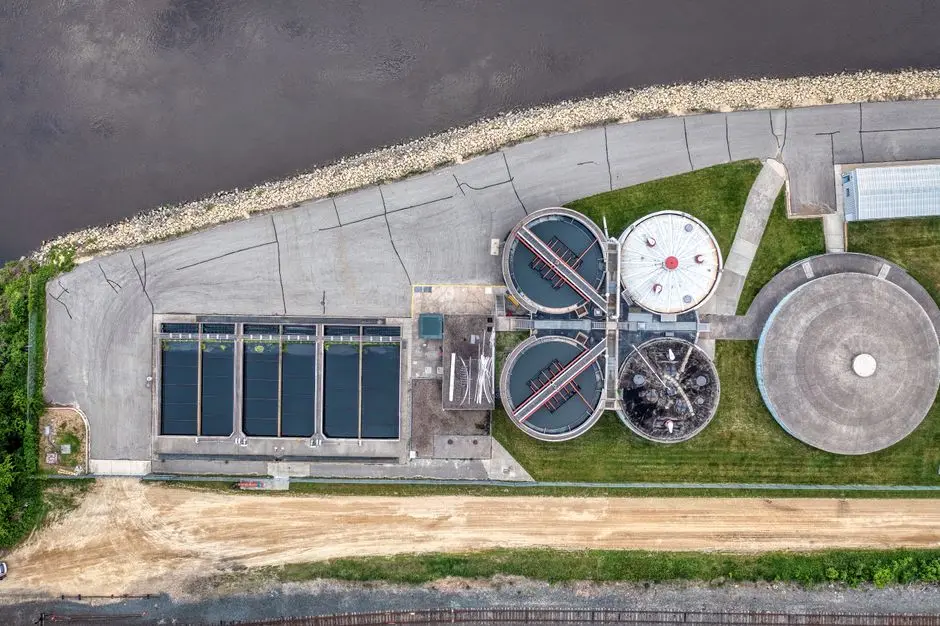
A clarifier separates suspended solids by gravity, and a lamella or inclined-plate clarifier multiplies the effective settling area by stacking parallel plates at 55–60° inside a compact tank. The result is a high surface-loading-rate separator in a footprint one-quarter to one-third of an equivalent conventional clarifier, which is why the design dominates industrial high-rate duty in 2026. Per HydropureWater's published HydropureWater high-efficiency lamella clarifier product data, the unit runs at surface loading rates of 20–40 m/h and cuts coagulant consumption by up to 30% versus a conventional basin because the clarified water travels a short, well-defined path between plates.
Clarifiers excel at settleable inorganic TSS — metal-hydroxide floc from phosphate and nickel conversion-coating rinse, stamping fines, and other heavy particulates that fall out of suspension. They are poor at emulsified oil, paint overspray pigment, and colloidal particles below roughly 20 µm, because those particles are buoyantly neutral or repelled by the same surface charge that keeps them dispersed. For an automotive paint-shop or coolant-leak stream, that mismatch is the single biggest reason a clarifier alone will not meet KC IWP FOG limits.
Phosphate-coating chemistry leaves calcium-phosphate scale on inclined plates, requiring lamella packs to undergo periodic acid wash (typically 1–4% hydrochloric or sulfamic, on a 3–6 month cadence depending on hardness and throughput). If the upstream phosphating line is the dominant load, build that wash downtime and the associated neutralization step into the OPEX sheet before the equipment is selected.
DAF vs Clarifier: Side-by-Side Comparison for EV/Auto Wastewater
The two technologies solve different problems in the same train. The table below compares the parameters a Renton engineer will be benchmarking against KC IWP discharge limits and the 2026 CAPEX envelope. TSS and FOG removal ranges reflect typical single-stage industrial performance.
| Parameter | DAF | Lamella / Inclined-Plate Clarifier |
|---|---|---|
| Typical TSS removal (single stage) | 80–95% | 50–85% (higher with coagulant) |
| Typical FOG removal (single stage) | 50–90% | 10–40% (poor on emulsified oil) |
| Emulsified oil / coolant handling | Strong — micro-bubble attachment | Weak — droplets do not settle |
| Paint overspray / pigment | Strong with coagulant | Weak — colloidal particles |
| Settleable metal-hydroxide sludge | Adequate | Strong |
| Surface loading rate | 5–25 m/h (hydraulic) | 20–40 m/h (HydropureWater lamella data) |
| Footprint per m³/h | Larger system envelope (cell + saturator skid + compressor) | Smaller floor area, taller profile |
| Surfactant / shock load sensitivity | Tolerant; chemistry can be trimmed online | Sensitive; deflocculation causes carryover |
| Sludge consistency | Thickened float (2–5% DS typical) | Thickened underflow (1–3% DS typical) |
| CAPEX order of magnitude | Higher unit cost (skid + compressor) | Lower for concrete basin, moderate for packaged lamella |
| OPEX drivers | Saturator pump energy, polymer, compressed air | Polymer, periodic acid wash of plates |
DAF wins on FOG, emulsion, paint, and shock-load tolerance; the lamella clarifier wins on settleable inorganic sludge, lower energy use, and lower chemical demand when the stream is oil-free. For a body-shop + battery-component plant in Renton, the FOG column is the one that usually drives the decision, because KC IWP's oil-and-grease limit is the parameter most often tripped by a clarifier-only design. The DAF hydraulic envelope in the table is typical for industrial units like the dissolved air flotation system; for a deeper process-flow view, the DAF system process flow diagram walkthrough covers the saturator, recycle loop, and sludge path in detail.
Which Technology Should Your Renton Plant Choose? A 2026 Decision Framework
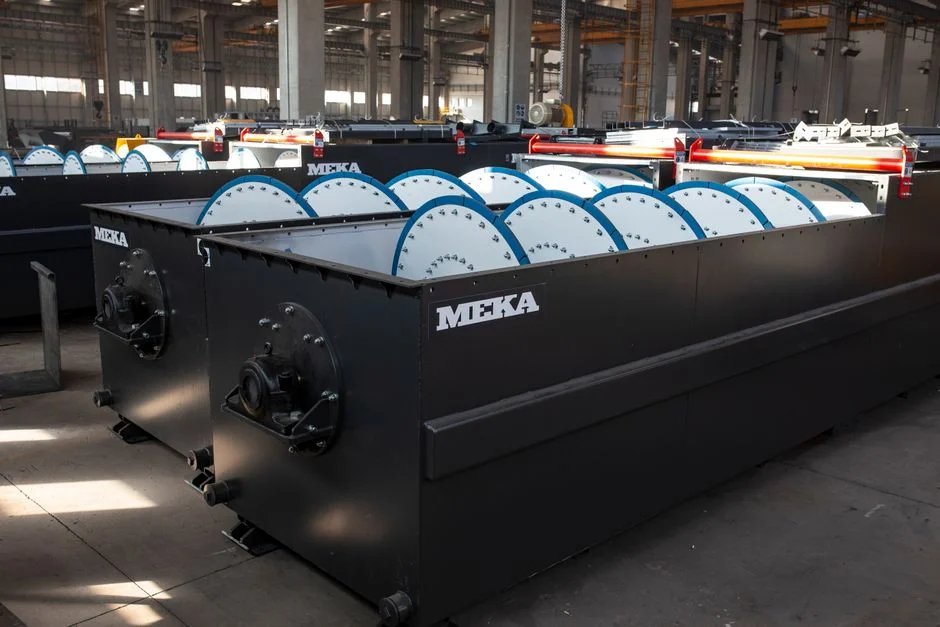
The three scenarios below cover the vast majority of 2026 Renton EV/auto permit applications, using parameters measurable on a weekly composite sample. Choosing the correct technology requires matching influent characteristics to the specific strengths of the separation mechanism.
| Scenario | Influent signature | Recommended primary | Optional second stage |
|---|---|---|---|
| Body shop / stamping dominant | FOG >50 mg/L, free or emulsified oil, TSS >150 mg/L, surfactant cleaners present | DAF (coagulated) | Lamella clarifier for TSS polish if KC IWP TSS limit is tight |
| Phosphate / e-coat line dominant | Oil <30 mg/L, settleable metal-hydroxide floc, orthophosphate 20–80 mg/L | Lamella clarifier (with coagulant) | DAF-polish only if downstream FOG creeps above 30 mg/L |
| Combined body + paint + battery trace | Mixed load, FOG 30–80 mg/L, paint overspray, trace Li/Ni from formation vent scrubber | DAF first for FOG and pigment | Lamella clarifier or second DAF-polish for TSS and metals coprecipitation |
Run DAF first whenever free oil is visible, FOG exceeds 50 mg/L, or emulsified coolant and surfactant cleaners are part of the flow. Run a clarifier first when the stream is dominated by phosphate or nickel conversion-coating rinse with metal-hydroxide floc and oil stays below 30 mg/L. For combined body-shop and phosphate lines, or any case where KC IWP limits are tighter than a single stage can deliver, run the two in series — DAF for FOG/paint, then clarifier for the residual TSS and metals.
The EPA case study on Seattle Metro's Renton Reclamation Plant (EPA S1) identifies Boeing as a co-discharger to the same POTW using reclaimed effluent for cooling via heat exchangers. A Renton EV/auto plant's compliance posture will be benchmarked against peers in the same watershed.
2026 Cost, Footprint, and Compliance Reality for Renton
Packaged DAF units typically carry lower installed CAPEX than a custom concrete clarifier of equal hydraulic capacity, because the DAF cell, saturator skid, and controls ship as a pre-engineered package. The reverse is true on OPEX once the stream is oil-free: a lamella clarifier has essentially zero process energy, no saturator pump, and no compressed-air load, while a DAF's saturator pump typically draws 0.3–0.5 kWh per m³ treated. If the stream carries oil or emulsion, the DAF's higher OPEX is usually the cheaper option because the alternative is heavier polymer dosing on a clarifier that still misses the FOG limit.
Any system discharging to the King County sewer must meet KC IWP local limits for pH, oil and grease, TSS, and metals — nickel from EV battery substrate production is the parameter that has drawn the most attention in 2025–2026 because of the cell ramp in the Puget Sound region. Confirm the current numeric limits against the KC IWP local limits table before final equipment selection, as 2026 permit revisions for new EV-industry discharges are active. Lead times on wastewater projects are significant, and a 12–18 month window from purchase order to commissioning is realistic for major equipment in 2026.
Frequently Asked Questions
When should a Renton EV/auto plant pick DAF over a clarifier?
Pick DAF whenever the wastewater contains free oil, emulsified lubricants, or paint overspray — concretely, FOG above 50 mg/L, TSS above 150 mg/L, or any visible surfactant/cleaner load. A clarifier cannot remove emulsified oil because
Frequently Asked Questions
Should an EV or auto plant in Renton choose DAF or a clarifier in 2026?
For modern EV and automotive facilities in Renton, DAF (Dissolved Air Flotation) is generally preferred over traditional gravity clarifiers due to the high concentration of emulsified oils, surfactants, and heavy metals inherent in automotive manufacturing processes. While clarifiers are effective for high-density inorganic solids, they struggle with the low-density suspended solids and oil-water emulsions common in 2026 automotive waste streams.
A DAF system provides superior removal efficiency for light-fraction contaminants, which is critical for meeting stringent local discharge requirements. If your facility produces high volumes of coolant, hydraulic fluids, or metal-working fluids, a DAF system is the industry-standard choice to ensure consistent compliance with local pretreatment regulations.
What influent FOG level requires DAF instead of a clarifier?
When influent FOG (Fats, Oils, and Grease) concentrations consistently exceed 100–150 mg/L, a DAF system is required to achieve effective separation. Gravity clarifiers typically fail to remove dispersed and emulsified oils at these levels, leading to operational upsets and potential discharge limit violations.
For automotive wastewater, where FOG levels can fluctuate rapidly due to batch cleaning or parts washing, a DAF system utilizes micro-bubbles to float these contaminants to the surface for mechanical skimming. This process reliably handles high-loading spikes that would otherwise overwhelm the hydraulic retention capacity of a standard clarifier.
How much does a packaged DAF system cost for a 50 m³/h auto plant?
A packaged DAF system designed for a 50 m³/h flow rate typically ranges from $180,000 to $350,000 USD, depending on the degree of automation, materials of construction (e.g., 304 vs. 316 stainless steel), and the complexity of the integrated chemical dosing skids. This estimate includes the flotation tank, air saturation system, and integrated sludge thickening mechanisms.
When budgeting for a 2026 installation in Renton, companies should also account for an additional 20–30% in capital expenditure for peripheral equipment, including equalization tanks, pH adjustment systems, and specialized instrumentation required for real-time monitoring and compliance reporting.
What are King County IWP discharge limits for oil and grease and TSS?
King County Industrial Waste Program (IWP) requirements generally mandate that oil and grease (O&G) concentrations remain below 100 mg/L for non-polar materials, though specific permits may impose lower limits based on the local sewer sub-basin capacity and treatment plant constraints. Facilities must strictly prevent the discharge of petroleum-based oils that could cause interference or pass-through at the regional wastewater treatment plant.
Total Suspended Solids (TSS) limits are typically governed by the facility's specific discharge permit, with many automotive sites required to maintain concentrations below 250–300 mg/L. Exceeding these thresholds can trigger significant surcharges or mandatory pretreatment upgrades to prevent sewer line blockages and downstream processing issues.
Can a DAF and a clarifier be used together in an automotive wastewater train?
Yes, a dual-stage approach using a clarifier followed by a DAF is highly effective for high-load automotive wastewater. The primary clarifier acts as a bulk solids separator, removing heavy grit, metal shavings, and large debris that could otherwise damage downstream pumps or clog the DAF nozzle distribution system.
By removing the dense particulate matter in the clarifier first, the subsequent DAF stage can operate at a higher efficiency, focusing specifically on the removal of emulsified oils, surfactants, and fine suspended solids. This series configuration is often recommended for large-scale EV manufacturing plants to extend the lifespan of the DAF components and reduce chemical consumption by minimizing the interference of heavy solids in the flotation process.