
Why a Quito Hotel MBR Is Not a Sea-Level MBR
Quito sits at roughly 2,850 m above sea level, where air density drops to about 0.74 kg/m³ versus 1.225 kg/m³ at sea level, and that single physics fact invalidates most packaged MBR data sheets sold into the Ecuadorian market. Standard oxygen-transfer curves assume 1.225 kg/m³; at Quito density you lose roughly 25–30% of fine-bubble oxygen transfer efficiency, which means a blower sized at sea level will under-aerate the same MBR tank by a quarter to a third. The fix is not "buy a bigger blower" — the fix is to specify aeration as kg O₂/h delivered at 0.74 kg/m³ air density and to derate biological kinetics for the cooler Andean mixed-liquor temperatures of 12–18 °C, versus 20–25 °C at sea level. Nitrification rates slow measurably in that band, but MBR's elevated mixed liquor suspended solids (typically 8,000–12,000 mg/L) partly offset the temperature penalty by retaining more biomass per unit volume than a conventional activated-sludge plant.
The compliance frame is Ecuador's national environmental authority MAATE, which applies TULSMA Libro VI Annex 1 discharge limits to any hotel discharging sewage to surface water or — more commonly in Quito — to the municipal sewer. A packaged MBR that delivers <1 μm filtrate, with BOD₅ and TSS routinely under 5–10 mg/L and near-complete coliform reduction, is the simplest way to land inside those limits without adding a third-party polishing stage. For a comparable sea-level hotel benchmark, an installed MBR system has been documented removing 90–95% of harmful substances from hotel wastewater and producing reuse-grade permeate (Imemflo hotel case, 200-bed luxury property at 250 m³/d) — that 90–95% removal is the floor a Quito MBR must still meet once altitude corrections are applied, not the ceiling. An integrated packaged MBR system sized against this Quito-corrected specification is the right starting point, not a generic sea-level selection.
Step 1 — Build the Design Flow the Right Way
Hotel wastewater sizing fails most often at the demand model, not at the unit selection. The benchmark for a full-service Andean hotel is 0.20–0.30 m³ per guest-night for bedroom occupancy alone; on top of that, add on-site laundry (typically 0.04–0.06 m³ per guest-night for hotels that wash in-house), kitchen prep and dishwash (0.02–0.04 m³ per cover), pool backwash (treat as an occasional 5–10% spike on backwash days), and spa or fitness effluent where present. Apply a peaking factor of 1.5–2.0× to the resulting average daily flow to capture simultaneous meal-service, conference, and event surges typical of a full-service property — anything below 1.5× will under-tank the equalisation zone.
Worked example for a 150-key full-service hotel at 65% average occupancy (98 occupied keys on average) with on-site laundry and a restaurant:
- Guest-night demand: 98 keys × 0.25 m³ = 24.5 m³/d baseline
- On-site laundry uplift: 98 × 0.05 m³ = 4.9 m³/d
- Kitchen (assume 150 covers/d at 0.03 m³): 4.5 m³/d
- Staff, public areas, pool backwash allowance: ~15 m³/d
- Average daily flow ≈ 49 m³/d baseline, or ~100–150 m³/d once gym, spa, and event load are added at the higher end of the 0.20–0.30 m³ band
- Peak day at 1.5–2.0× peaking factor: ~200–250 m³/d hydraulic peak
That 100–150 m³/d design point falls cleanly inside the PVDF flat-sheet MBR module capacity band of 32–135 m³/d per module, with a parallel second module available for the peaking envelope. The flow bands and correction factors are summarised below.
| Parameter | Benchmark value | Quito correction | Source / note |
|---|---|---|---|
| Guest-night demand | 0.20–0.30 m³/guest-night | Use upper end for full-service | Hotel industry benchmark |
| On-site laundry uplift | 0.04–0.06 m³/guest-night | Higher for in-house laundry | Operator survey |
| Peaking factor | 1.5–2.0× ADF | Use 1.8–2.0× for events | Engineering practice |
| Worked 150-key example | 100–150 m³/d ADF | 200–250 m³/d peak | This article |
| Packaged MBR unit band | 10–2,000 m³/d | Select next size up of peak | HydropureWater MBR catalogue |
| DF flat-sheet module band | 32–135 m³/d per module | Parallel modules for peaking | HydropureWater DF module |
Step 2 — Apply the Altitude and Temperature Derating
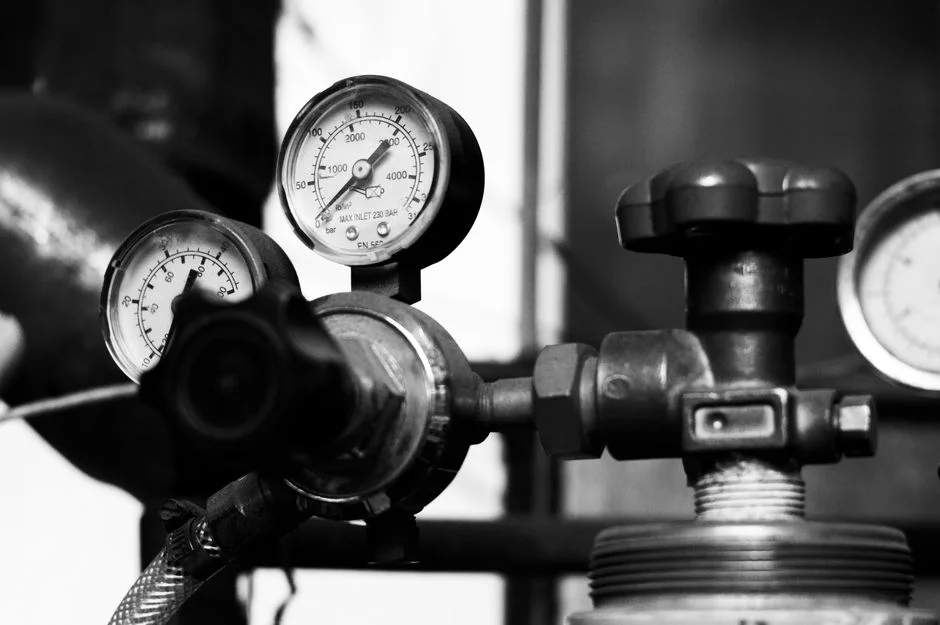
Once the design flow is fixed, every quoted performance number must be re-stated for Quito conditions, not for a sea-level data sheet. The single largest correction is aeration: a 25–30% derate on standard oxygen transfer means a vendor quoting a "5 kg O₂/h blower" at sea level is really delivering 3.5–3.75 kg O₂/h in Quito, and that is the figure that has to drive tank volume, SRT, and blower power. Spec language that closes this gap: "Unit must deliver X kg O₂/h at 0.74 kg/m³ air density and 15 °C mixed-liquor temperature." Membrane air-scour blowers also consume a meaningful share of plant energy at altitude — typically 30–40% of total MBR electrical load — and should be quoted as a separate line so the operator can see the cost.
Hydraulic retention time of 6–10 hours in the MBR zone and a sludge retention time of 20–40 days remain appropriate at altitude; the high MLSS of 8,000–12,000 mg/L is the buffer that lets SRT absorb the slower low-temperature kinetics without losing nitrification. Vendors that cannot hand you an altitude-corrected performance curve, with a kLa or SOTE value measured at 0.74 kg/m³, are quoting a different plant than the one you are buying.
| Parameter | Sea-level typical | Quito (2,850 m) target | Engineering basis |
|---|---|---|---|
| Air density | 1.225 kg/m³ | ~0.74 kg/m³ | ISA atmosphere model |
| Aeration derate | Baseline | −25 to −30% SOTE | ASCE fine-bubble correction |
| Mixed-liquor temperature | 20–25 °C | 12–18 °C | Quito annual range |
| MBR zone HRT | 6–10 h | 6–10 h (no change) | Standard design |
| MBR zone SRT | 20–40 d | 20–40 d (no change) | High MLSS compensates |
| MLSS | 8,000–12,000 mg/L | 8,000–12,000 mg/L | MBR design range |
| Membrane air-scour share of energy | 25–35% | 30–40% | Field data, MBR plants |
Step 3 — Match Technology to the Hotel: Packaged MBR vs Buried A/O vs MBBR
Three packaged options are routinely offered to Quito hotels, and they are not interchangeable. A true packaged MBR — submerged PVDF flat-sheet or hollow-fibre modules delivering <1 μm filtrate, factory-built into a 40-ft container format with pre-plumbed anoxic and MBR zones — produces near-reuse effluent in roughly 60% of the footprint of a conventional activated-sludge plant and removes the secondary clarifier entirely. Buried integrated A/O packages (the WSZ-style plant combining anoxic/oxic, sedimentation, and disinfection in a single buried tank) win on CAPEX and on visual impact — nothing to see above grade — but the effluent is typically not reuse-grade without a downstream polishing step, and a separate polishing train erases most of the buried-plant cost saving. MBBR, SBR, and conventional ASP packages are routinely quoted as cheaper alternatives for hotels (Imemflo references MBBR, SBR, and ASP as common hotel wastewater alternatives), but they are larger, harder to enclose, and rarely hit the TSS floor that MAATE enforcement looks for at a hotel outfall.
For a dense Quito site — and most 50–300-key hotels in the metropolitan area are dense — the footprint difference alone usually disqualifies anything that needs a separate clarifier. One pattern that recurs in hotel practice is a separate laundry grey-water sub-train, often installed because laundry wastewater is hot and surfactant-rich; the right move in an MBR-equipped hotel is to feed the laundry stream directly into the main MBR as a side stream rather than build a second plant. A buried A/O package plant still has a place where reuse is not on the table and footprint is the only constraint, but it is the wrong tool when the permeate has to flush toilets.
| Criterion | Packaged MBR | Buried A/O (WSZ-style) | MBBR / SBR / ASP |
|---|---|---|---|
| Effluent TSS / BOD₅ | <5 mg/L / <5 mg/L | ~20 mg/L / ~20 mg/L | ~30 mg/L / ~30 mg/L |
| Reuse-ready without polishing | Yes (toilet, irrigation, cooling) | No — needs separate polish | No — needs separate polish |
| Footprint vs CAS | ~40% (60% smaller) | ~50–60% | ~80–100% |
| CAPEX envelope | Higher | Lowest | Low–medium |
| Operator skill | Low (PLC + HMI) | Very low (buried, infrequent) | Medium |
| Quito fit (dense site, reuse goal) | Strong | Acceptable if no reuse | Weak for hotels |
| Altitude sensitivity | Manageable with derated spec | Same aeration penalty | Same aeration penalty |
Step 4 — Specify the Reuse Train That Pays for the MBR
The strongest commercial argument for MBR over a buried A/O at a Quito hotel is not compliance — both can pass TULSMA — it is reuse. Quito's intermittent supply, seasonal rationing, and high potable-water tariffs make non-potable reuse directly monetisable, and MBR permeate is the simplest feed for that loop. Realistic end-uses for a 150-key hotel: toilet flushing (largest single indoor reuse volume, typically 25–35% of total hotel demand), landscape irrigation of gardens and parking islands, cooling-tower make-up (where present), and — with a polish step — certain non-potable cleaning applications. MBR permeate at <1 NTU turbidity is clean enough that the reuse loop can skip a separate multimedia filter; the polish is normally a UV steriliser or, for sites with longer distribution piping, a chlorine dioxide generator for residual.
UV is the standard polish for reuse in hospitality because it is chemical-free, effective against chlorine-resistant pathogens such as Cryptosporidium and Giardia, and has a small footprint that fits inside a plant room. A UV steriliser for reuse water sized for the reuse flow, not the full permeate flow, is the right spec — only the volume actually being reused needs polishing. For sites with a long reuse distribution run and a stored reuse tank, a chlorine dioxide generator sized at 0.5–1.0 mg/L residual gives a stable, broad-spectrum disinfectant residual that UV cannot. The payback case is straightforward: water-cost savings plus avoided sewerage fees — a useful starting point for a developer pro forma, though specific Ecuadorean tariff numbers should be pulled from the local prestador before signing.
Vendor Shortlist Checklist Before You Sign
Five questions, asked in writing, that separate a Quito-capable vendor from one reselling a sea-level data sheet.
- Altitude-corrected performance: demand a performance curve with kg O₂/h stated at 0.74 kg/m³ air density and 15 °C mixed-liquor, not a generic sea-level SOTE.
- Membrane pedigree: confirm membrane type (PVDF flat-sheet or hollow-fibre), supplier (Toray, Mitsubishi, Suez, or equivalent), warranty terms in writing, and the in-place cleaning interval — flat-plate systems are typically cleaned once every six months without system interruption.
- Local service: PLC with Spanish-language HMI, remote monitoring over mobile network, and a service representative inside Ecuador — not a regional Latin America desk. Membrane delivery for a replacement should be <4 weeks, not 12.
- Pre-treatment integrity: a 3 mm automatic fine screen ahead of the MBR is non-negotiable for a hotel (kitchen FOG, hair, lint from on-site laundry); a rotary mechanical bar screen at 3 mm aperture and a DAF pre-treatment for kitchen FOG ahead of the biology tank is the standard configuration.
- MAATE documentation pack: the vendor should hand you a TULSMA Libro VI Annex 1 compliance statement, expected effluent quality at the discharge point, and a draft of the environmental permit submission — if they do not know what TULSMA is, the shortlist has just shrunk.
For peer-reviewed local context on a similar Andean hotel case, the Bogotá packaged MBR buyer's guide and the Medellín hotel MBR sizing guide walk the same altitude-corrected logic for comparable Colombian cities; a non-Andes counterpoint sits in the Calgary hotel wastewater guide. If commissioning goes wrong, the MBR troubleshooting playbook is worth reading before, not after, sign-off.
Frequently Asked Questions
What flow rate should I size a packaged MBR at for a Quito hotel?
Use 0.20–0.30 m³ per guest-night for bedroom occupancy, add on-site laundry, kitchen, and pool backwash, then apply a 1.5–2.0× peaking factor. A 150-key full-service hotel at 65% occupancy typically lands at 100–150 m³/d average daily flow and 200–250 m³/d peak, which sits inside the standard packaged MBR unit bands and one to two flat-sheet MBR modules.
How much does Quito altitude affect MBR blower and tank sizing?
At ~2,850 m the air density is roughly 0.74 kg/m³ versus 1.225 kg/m³ at sea level, which reduces standard oxygen transfer efficiency by about 25–30%. Specify aeration as kg O₂/h delivered at 0.74 kg/m³ air density and 12–18 °C mixed-liquor; otherwise the quoted blower and tank volume will under-perform in Quito by a quarter to a third.
What can the MBR permeate realistically be reused for at a hotel?
With UV or chlorine dioxide polish, MBR permeate at <1 NTU turbidity can flush toilets, irrigate landscape areas, top up cooling-tower make-up, and feed selected non-potable cleaning applications. The reuse loop typically skips a multimedia filter because MBR permeate is already low-turbidity, and UV disinfection handles chlorine-resistant pathogens without chemicals.
When is a buried A/O package plant a better choice than an MBR?
Choose a buried A/O when reuse is genuinely off the table, CAPEX is the binding constraint, and the site has space to bury the tank without conflicting with utilities or vehicle loads. If any reuse end-use is in scope — toilet flushing, irrigation, cooling-tower make-up — the buried A/O will need a downstream polishing train that usually erases its CAPEX advantage over an MBR.
What capacity does one flat-sheet MBR module cover for a hotel?
A single PVDF flat-sheet MBR module typically covers 32–135 m³/d, depending on the module size and the specific flux rating. The 100–150 m³/d design flow for a 150-key Quito hotel is therefore a one- to two-module system, with the second module handling the 1.5–2.0× peaking envelope without pushing either module to its flux ceiling.