What 40 CFR Part 437 Actually Requires from a Mining/Metals Indirect Discharger
40 CFR Part 437 caps toxic metals and total suspended solids (TSS) at the categorical effluent levels for the Ore Mining and Dressing point source category, and the parallel Centralized Waste Treatment (CWT) category applies once a nonferrous metals plant ships its wastewater off-site for recovery or to a publicly owned treatment works (POTW). For Theodore-area plants discharging to a local POTW, EPA set pretreatment standards for the primary lead and primary zinc subcategories equal to the BAT effluent limits, per the 1985 Kennecott v. EPA decision that upheld the rule on the basis of lime-settle-and-filtration with sulfide precipitation as an added compliance technology (source: Kennecott v. United States EPA, 1985-12-26). The same decision imposed zero discharge on the blast furnace slag granulation step because existing primary lead plants were already recycling 100 percent of that wastewater stream.
The numerical ceiling a designer in the Mobile–Theodore corridor must hit is summarized in the table below. Daily-maximum values are the never-to-exceed ceiling; monthly-average values are calculated across normal operating days and form the basis for the 40 CFR Part 437 baseline monitoring report (BMR) that a new or substantially modified indirect discharger files within 90 days of discharge commencement.
| Parameter | Daily Maximum (mg/L) | Monthly Average (mg/L) | Notes |
|---|---|---|---|
| Lead (Pb) | 0.69 | 0.43 | Primary lead, primary zinc subcategories |
| Zinc (Zn) | 1.31 | 0.79 | All subcategories |
| Cadmium (Cd) | 0.69 | 0.36 | Plant-by-plant permit writer determination |
| Arsenic (As) | 1.10 | 0.66 | Ore mining subcategory |
| Copper (Cu) | 1.62 | 0.96 | Primary copper subcategory |
| Total Suspended Solids (TSS) | 60 | 30 | All subcategories |
| pH | 6.0–9.0 | 6.0–9.0 | Continuous within range at all times |
The Mobile or Theodore-area POTW can impose local sewer-use ordinance limits equal to or stricter than Part 437, and a 2026 plant upgrade should be designed to the lower of the two numbers. The categorical ceiling is the floor — not the target.
The Typical Pollutant Fingerprint at a Theodore-Area Metals Plant
The 1985 Kennecott record found that U.S. nonferrous metals plants were discharging more than 3 million pounds per year of toxic metals — lead, cadmium, arsenic, antimony, and zinc — into navigable waters (source: Kennecott v. United States EPA, 1985-12-26). Forty years on, the pollutant fingerprint at a Mobile–Theodore corridor plant still maps to the same species, plus a few Gulf-Coast-specific additions.
Total suspended solids in the raw wastewater typically run 500–3,000 mg/L from crushing, milling, and slag-handling washdown. Dissolved metals — Pb, Zn, Cd, Cu — concentrate in acid-leach raffinate and froth-flotation overflow at 5–200 mg/L each. Gold and silver circuits occasionally add weak-acid dissociable (WAD) cyanide complexes that must be oxidized before metal precipitation. Rolling and forming contribute free and emulsified oil at 50–500 mg/L, which the pretreatment train has to skim or break before clarifier performance collapses. pH swings between 2.0 and 11.0 are normal for batch operations.
Two parameters decide whether a plant can discharge to a Gulf-Coast POTW after metals are gone: total dissolved solids (TDS) and sulfate. Most local POTW ordinances reject sulfate above 500–1,000 mg/L, which is why a Theodore-area plant often stacks reverse osmosis (RO) downstream of the metals train. If your influent matches the envelope above, the rest of this article is directly applicable.
Equalization and Redox Control as the Front End of the Train
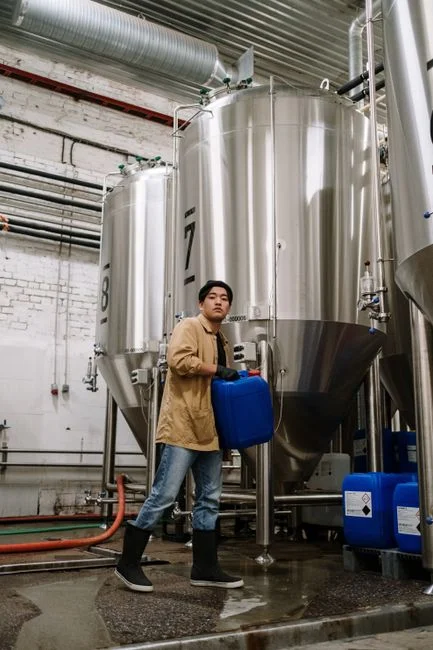
Equalization and oxidation–reduction potential (ORP) control are the cheapest two unit operations in the train, and they decide whether every downstream step actually works. An equalization basin sized at 8–24 hours of hydraulic retention damps pH spikes from batch leaching and flow surges from mill startups, holding the mixed reactor pH inside a band tight enough that precipitation chemistry behaves predictably.
ORP is the second front-end variable. The train is held at roughly –200 to –300 mV (versus Ag/AgCl) so that hexavalent chromium reduces to trivalent chromium and so that sulfide, when dosed, stays in the S²⁻ form rather than escaping as gaseous H₂S. Redox control is delivered through a PLC-controlled chemical dosing skid that handles sodium hydrosulfide (NaHS) or ferrous sulfate (FeSO₄) feed, with redundant online ORP and pH probes, automatic valve trim, and alarms on the human-machine interface (HMI). The same skid drives lime or caustic for pH trim and polymer for flocculation, so the front end of the plant is one integrated control loop rather than three isolated chemical pumps.
Precipitation Chemistry: Hydroxide vs Sulfide for Heavy-Metal Removal
Two precipitation chemistries sit on the Part 437 menu: hydroxide precipitation (lime or NaOH at pH 8–11) and sulfide precipitation (NaHS or Na₂S at pH 6–9). EPA added sulfide precipitation during the 1985 rulemaking in response to industry comments that the originally proposed hydroxide-based limits were unachievable, and the Kennecott court upheld the addition as a reasonable exercise of agency discretion (source: Kennecott v. United States EPA, 1985-12-26). The reason sulfide survives in the menu is performance: sulfide precipitation routinely drives dissolved metals 10–100× lower than hydroxide alone, which is the difference between hitting 0.43 mg/L monthly-average lead and missing it.
| Metal | Hydroxide Ksp (as log) | Hydroxide Optimum pH | Sulfide Ksp (as log) | Typical Dissolved Residual, Sulfide Process |
|---|---|---|---|---|
| Lead (Pb) | –14.9 | 9–10 | –27.5 | < 0.05 mg/L |
| Zinc (Zn) | –16.9 | 9–10 | –24.7 | 0.05–0.20 mg/L |
| Cadmium (Cd) | –14.4 | 10–11 | –27.0 | < 0.02 mg/L |
| Copper (Cu) | –19.3 | 8–9 | –35.1 | < 0.05 mg/L |
| Arsenic (As) | Insoluble as As(V) with Fe(III) at pH 7–8 | 7–8 | Limited; requires Fe co-precipitation | 0.05–0.20 mg/L as As(V) |
| Mercury (Hg) | –25.4 | 8–9 | –52.4 | < 0.005 mg/L |
Sulfide chemistry is not free. NaHS and Na₂S release H₂S below pH 7, and the engineering response is sealed reactors with continuous H₂S monitoring (typically 0–50 ppm range with alarms at 10 ppm and evacuation at 20 ppm), redundant caustic scrubbers, and a documented management-of-change procedure for any reagent swap. Coagulants such as ferric chloride or polyaluminum chloride and a low-charge anionic flocculant (typically 0.5–2.0 mg/L) bridge the fine metal-sulfide colloids so the next clarification step actually sees them. A properly tuned PLC-controlled chemical dosing skid delivers both reagents in the right stoichiometric window and logs every batch to the compliance file.
Solids Separation: Lamella Clarifier, DAF, or Both
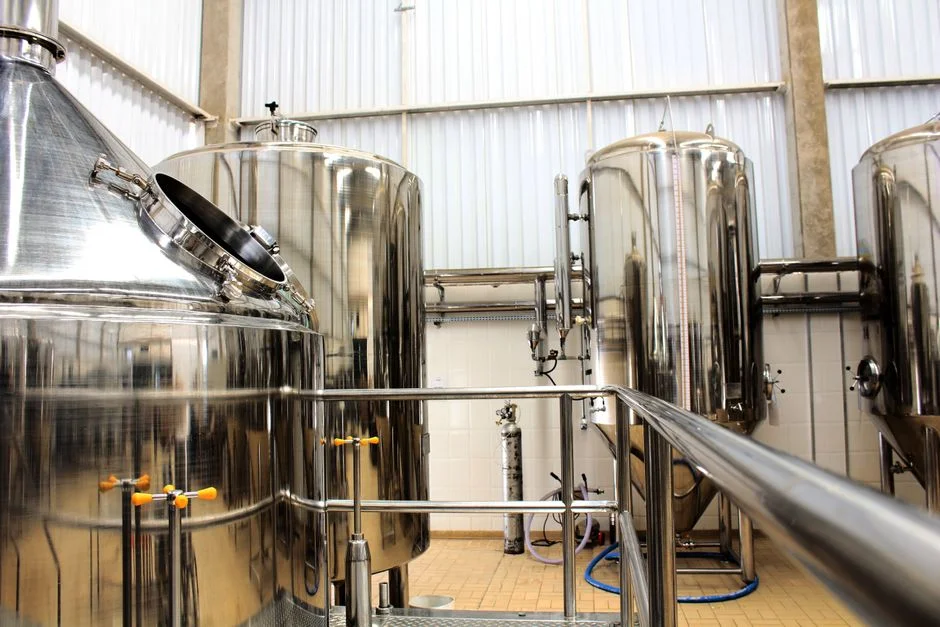
Once metals are precipitated, the next decision is the clarification step. Two technologies dominate mining pretreatment: high-rate lamella clarifiers and dissolved air flotation (DAF) units. The decision is not religious — it is driven by sludge density, footprint, and the particle-size distribution of the precipitate.
| Criterion | High-Rate Lamella Clarifier | DAF Unit |
|---|---|---|
| Surface loading | 20–40 m/h equivalent | 4–300 m³/h hydraulic |
| Typical TSS out | 30–60 mg/L | 20–40 mg/L |
| Best for | Coarse hydroxide sludge, high TSS feeds | Fine metal-sulfide colloids, oil-laden feeds |
| Footprint | Small (inclined plates) | Larger (open tank) |
| Recycle | None | Saturator recycle at 20–50% of forward flow |
| Sludge density | 2–5% dry solids | 3–8% dry solids |
A common 2026 hybrid for a 200 m³/d mining pretreatment skid uses a high-rate lamella clarifier as the primary solids-separation step, followed by a dissolved air flotation unit as a polish to capture colloidal carryover and any emulsified oil that survived the API separator. The lamella handles the bulk mass load at high surface loading; the DAF cleans up the 30–60 mg/L of fine particles that the lamella misses, dropping total TSS to 20–40 mg/L in a single pass and removing the free oil that would otherwise foul the downstream multimedia filter. For a 500 m³/d plant, two parallel DAF cells typically replace the lamella entirely because the saturator recycle cost is more than offset by the better TSS and the smaller clarifier footprint.
Polishing with Multimedia Filtration and Ceramic-Membrane Ultrafiltration
The last 5 mg/L of TSS is the most expensive. Multimedia filtration (anthracite over sand over garnet) is the workhorse that takes the DAF or clarifier effluent from 20–40 mg/L down to 10–20 mg/L. It is a backwashable, low-pressure unit, and for many Theodore-area plants it is enough on its own to meet the 30 mg/L monthly-average TSS ceiling in 40 CFR Part 437.
When the POTW sewer-use ordinance is tighter — local limits of 10 mg/L TSS or less are not unusual in Gulf-Coast jurisdictions — or when downstream RO is in the train for sulfate reduction, a ceramic-membrane ultrafiltration skid at 0.1–0.03 µm pore size earns its place. Ceramic silicon-carbide UF delivers TSS below 5 mg/L, turbidity below 1 NTU, and a silt density index (SDI) below 3, which is the standard ceiling for RO or ion-exchange feed (per LiqTech's published mining reference design). Compared with polymeric UF, ceramic tolerates pH swings during clean-in-place (CIP), runs at higher flux (typically 500–1,000 LMH versus 50–150 LMH for polymeric), and lasts 10+ years against 3–5 years for polymeric. The capital premium is real; the lifecycle cost is usually lower at mining flows because of the longer membrane life and the lower chemical demand during CIP. Replacement membrane elements are stocked as a 5–10% annual replacement budget line.
Sludge Dewatering and Residuals Handling
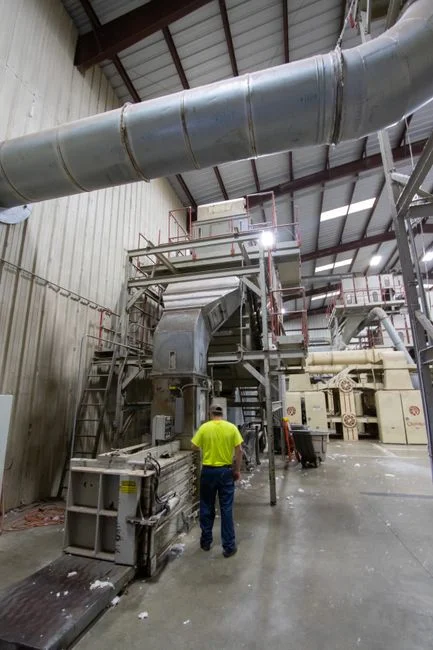
Closing the mass balance means accounting for the solids. Sulfide precipitation generates 5–15 kg of dry solids per cubic meter of treated wastewater, and a 200 m³/d plant will produce 1–3 t/d of wet sludge at 2–5% solids. The standard dewatering step is a plate-and-frame filter press operated at 6–9 bar, producing cake at 30–45% dry solids that is friable enough to truck. Filtrate is recycled back to headworks, which means a closed loop on water but also a recycle load on the precipitation reactor that the engineer must size for.
Under the Resource Conservation and Recovery Act (RCRA), metal-sulfide sludges from primary lead and primary zinc operations are typically classified as hazardous waste by toxicity characteristic (TC) for lead and cadmium, with characteristic leaching procedure (TCLP) results frequently above the 5 mg/L regulatory level. The compliant disposal route is a permitted treatment, storage, and disposal facility (TSDF). Treat the TSDF tipping fee as a recurring OPEX line item, not a one-time project cost.
2026 CAPEX and OPEX Bands for a 50–500 m³/d Mining Pretreatment Skid
Procurement needs a defensible number. The 2026 planning envelope for a complete mining pretreatment skid — equalization, chemical dosing, sulfide precipitation, lamella clarifier, DAF polish, multimedia filter, UF polish, plate-and-frame press, and PLC controls — is USD 380,000 to USD 1,600,000 in capital, with operating cost in the USD 0.45–1.20 per cubic meter treated band (HydropureWater field data, 2026). The dominant OPEX lines are sulfide reagent (NaHS), lime or NaOH, polymer, filter cloth replacement, and electricity for the DAF saturator and UF feed pumps. Sulfide chemistry adds 15–25% to OPEX over hydroxide alone because of reagent cost and the H₂S monitoring instrumentation.
| Capacity | 50 m³/d | 200 m³/d | 500 m³/d |
|---|---|---|---|
| Equipment CAPEX (USD) | 220,000–380,000 | 620,000–900,000 | 1,100,000–1,600,000 |
| Installation & instrumentation (USD) | 80,000–140,000 | 180,000–260,000 | 320,000–460,000 |
| Buildings, civil, permitting (USD) | 80,000–140,000 | 160,000–240,000 | 280,000–420,000 |
| Total CAPEX (USD) | 380,000–660,000 | 960,000–1,400,000 | 1,700,000–2,480,000 |
| 2-year OPEX (USD) | 16,000–44,000 | 66,000–175,000 | 164,000–438,000 |
| OPEX per m³ treated (USD) | 0.45–1.20 | 0.45–1.20 | 0.45–1.20 |
For a defensible internal justification, escalate the upper OPEX number by 25% to cover sulfide chemistry and a 10% contingency, then add a USD 30,000–60,000 line for H₂S safety instrumentation per reactor.
Permitting, Commissioning, and Ongoing Compliance on the Gulf Coast
A 2026 retrofit in the Mobile–Theodore corridor follows a defined sequence. First, the operator files an Alabama Department of Environmental Management (ADEM) NPDES pretreatment permit application (Form 7P for industrial users) and submits a slug-control plan and best management practices (BMP) program to the local POTW for sewer-use permit issuance under the local sewer-use ordinance. Second, the operator files the 40 CFR Part 437 baseline monitoring report (BMR) within 90 days of discharge commencement, including the analytical results from at least four daily-composite samples for every regulated parameter. Third, the operator transitions to quarterly self-monitoring for the lifetime of the discharge, with results reported on the standard ADEM Discharge Monitoring Report (DMR) form (per EPA's industrial wastewater framework).
Commissioning follows a four-step protocol: clean-water hydraulic testing on every unit; chemical shakedown on the precipitation reactor to confirm stoichiometry and sludge settleability; a 30-day performance test against the Part 437 daily-maximum and monthly-average limits with samples analyzed by an ADEM-certified laboratory; and operator training including an H₂S safety drill and documented lockout–tagout procedures. The Theodore-area POTW typically sends a pretreatment coordinator to witness the 30-day performance test, and the BMR is filed only after that test passes. A 2026 plant upgrade that has cleared all four steps is, in practice, a permit-ready facility.
Frequently Asked Questions
What is 40 CFR Part 437 and which mining and metals subcategories does it cover?
40 CFR Part 437 is EPA's categorical effluent guideline for the Ore Mining and Dressing point source category, covering active and abandoned ore mining, ore dressing, and the Centralized Waste Treatment (CWT) subcategory that handles off-site metal-bearing wastewater. It applies to direct and indirect discharges from primary copper, primary lead, primary zinc, and a long list of other nonferrous metals operations. The full regulatory umbrella is documented on the EPA NPDES industrial wastewater page (per EPA's industrial wastewater framework).
How does sulfide precipitation compare with hydroxide precipitation for lead, zinc, and cadmium removal?
Sulfide precipitation routinely drives dissolved lead, zinc, and cadmium 10–100× lower than hydroxide precipitation at the same molar dose, which is why EPA added sulfide chemistry to the Part 437 menu during the 1985 rulemaking (source: Kennecott v. United States EPA, 1985-12-26). The trade-off is the H₂S safety envelope: sealed reactors, continuous H₂S monitoring, and redundant scrubbers are non-negotiable. Most Theodore-area plants run sulfide on the metals that drive the daily-max ceiling (Pb, Cd, Hg) and hydroxide on the bulk metals (Zn, Cu) to balance performance and operating risk.
Can a Theodore-area plant meet Part 437 limits with a DAF plus multimedia filter alone, or is UF required?
DAF plus multimedia handles most Part 437 cases, delivering 10–20 mg/L TSS — well below the 30 mg/L monthly-average ceiling. UF is required when the local POTW sewer-use ordinance imposes a TSS limit below 10 mg/L, when downstream RO is added for sulfate reduction, or when colloidal metal breakthrough during slug events is a documented risk. The standard trigger to add UF is an SDI above 5 on the multimedia-filtered water, which indicates a fouling load the RO cannot tolerate.
What is the realistic 2026 cost to retrofit a 200 m³/d mining pretreatment train?
A 200 m³/d sulfide-precipitation pretreatment train lands in the USD 960,000–1,400,000 CAPEX band in 2026 (HydropureWater field data, 2026), with OPEX of USD 0.45–1.20 per cubic meter treated. The biggest variable in that band is the OPEX contribution from sulfide reagent and H₂S safety instrumentation, which adds 15–25% to OPEX over a hydroxide-only design.
Are metal-sulfide sludges hazardous waste under RCRA?
Most metal-sulfide sludges from primary lead and primary zinc operations are classified as hazardous waste under RCRA, typically by toxicity characteristic (TC) for lead and cadmium. The TCLP leachate from these sludges regularly exceeds the 5 mg/L regulatory level, which routes the material to a permitted treatment, storage, and disposal facility (TSDF). A 2026 retrofit must include TSDF tipping fees in the OPEX model, not just the dewatering equipment line.