Why Whitehall Fabricated Metals Shops Hit the DAF-or-Clarifier Question in 2026
A typical Whitehall, PA fabricated-metals job shop discharges a mixed stream that includes stamping lubricants, drawing compounds, water-soluble and straight cutting fluids, rust preventatives, quench oils, parts-washer rinses, and tramp oil from hydraulic sumps. When a small plating line is present, the same floor drain also carries hexavalent chromium, nickel, cadmium, and lead rinsewater. The federal ceiling for this stream is 40 CFR Part 437 (Metal Products) with daily-maximum limits of 26 mg/L O&G and 60 mg/L TSS (per 40 CFR Part 437). The technical problem is two-phase: free oil rises on its own, but emulsified oil — 1-20 µm droplets stabilized by the surfactants in synthetic and semi-synthetic coolants — does not settle under gravity, slips over a clarifier weir, and lands on the Monday-morning DMR. PA DEP Chapter 92a and the receiving POTW (typically the Whitehall Township Authority or the Lehigh County wastewater authorities) layer local limits on top, which is why a clarifier-only legacy decision no longer holds in 2026 (per PA DEP Chapter 92a).
The Two Unit Operations: Flotation vs Settling
A dissolved air flotation unit saturates a pressurized side-stream recycle with air at 60-80 psig, then releases that stream through a needle-valve or micro-bubble generator into the flotation cell. The pressure drop flashes the dissolved air into a cloud of fine bubbles — 20-40 µm on the DAF Corp FC Maximizer, 30-50 µm on the SigmaDAF USA standard unit (sources: dafcorp.com, 2026; clearwaterind.com, 2026). Those bubbles attach to oil droplets and chemically conditioned floc and lift them in roughly 3 minutes of hydraulic retention. A paddle skimmer sweeps the float into a sludge hopper; DAF float exits at 2-4% solids on the FC Maximizer and the Supracell design, so no thickener is needed downstream (sources: dafcorp.com, 2026; Wang & Wang, Lenox Institute, 2022).
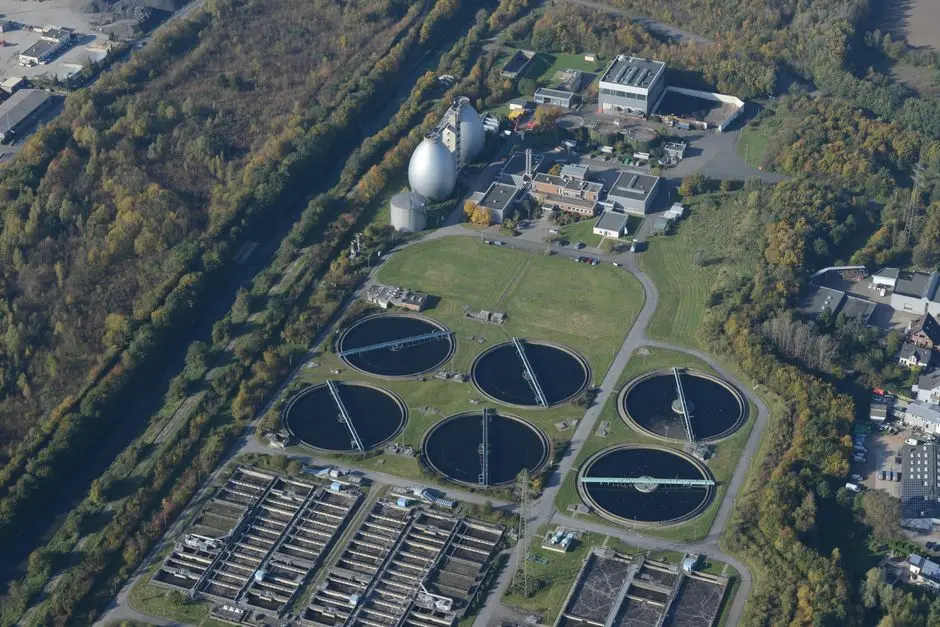
A gravity clarifier — circular, rectangular, or lamella-plate — relies on quiescent settling. Suspended solids heavier than water drop to the bottom; clarified supernatant overflows a peripheral weir. A lamella clarifier uses inclined plates at 55-60° to multiply effective settling area, achieving 20-40 m/h surface loading in a footprint one-quarter to one-fifth of an equivalent conventional basin (HydropureWater lamella product data, 2026). Clarifiers handle settleable metal fines and grinding swarf well, but retention is 1-3 hours, hydraulic capacity per square foot is 10-20× lower than DAF, and sub-50 µm emulsified oil passes straight through to the DMR. Underflow exits at 1-2% solids, which is why a thickener or filter press is almost always required downstream.
40 CFR Part 437 and Part 433: The Compliance Frame Whitehall Plants Actually Face
Whitehall stamping and machining shops without a plating line fall under 40 CFR Part 437 (Metal Products), which sets daily-maximum O&G at 26 mg/L and TSS at 60 mg/L. The moment a chrome, nickel, cadmium, or lead rinse line is added, the same shop also triggers 40 CFR Part 433 (Metal Finishing) PSES — and Part 433 is where the metals limits bite. Designers should size the train to the Part 433 numbers from day one, because the local POTW surcharge structure will be built around them.
| Pollutant | 40 CFR Part 433 PSES Daily Max (mg/L) | 40 CFR Part 437 Daily Max (mg/L) | PA DEP / Local POTW Practical Target |
|---|---|---|---|
| TSS | 60 | 60 | ≤30 at clarifier outlet |
| O&G | 52 | 26 | ≤15 at DAF outlet |
| Hexavalent Chromium | 0.31 | — | ≤0.15 at clarifier outlet |
| Total Chromium | 2.61 | — | ≤1.30 at clarifier outlet |
| Cadmium | 0.69 (0.11 NSPS/PSNS) | — | ≤0.35 at clarifier outlet |
| Lead | 0.69 | — | ≤0.35 at clarifier outlet |
| Nickel | 3.98 | — | ≤2.00 at clarifier outlet |
Sources: 40 CFR Part 433.13 (PSES) and 433.15 (NSPS/PSNS); 40 CFR Part 437; PA DEP Chapter 92a. The 50%-of-limit clarifier-outlet target is the practical rule a single upset should not push the daily maximum over the line. Note that the cadmium limit is asymmetric: PSES allows 0.69 mg/L daily maximum while NSPS/PSNS tighten that to 0.11 mg/L daily maximum — any plant planning a new or substantially modified plating line in 2026 should size to the lower number from day one rather than retrofit in 24 months (per 40 CFR 433.13 and 433.15).
DAF vs Clarifier: Side-by-Side Engineering Parameters
The table below consolidates the engineering parameters a Whitehall procurement engineer will paste into the capex memo. Cost figures are illustrative 2026 USD bands for a 50-200 GPM mid-size job shop; exact pricing depends on chemistry integration, tank material, and site conditions.
| Parameter | DAF (FC Maximizer / SigmaDAF) | Lamella Clarifier |
|---|---|---|
| TSS removal | 85-98% (FC Maximizer 92-98%) | 50-80% on metal-bearing wastewater |
| FOG removal | 85-95%; effluent 15-30 mg/L | <50% on emulsified oil; free oil skim only |
| Particle size handled | ~1-50 µm via microbubble attachment | >50-100 µm only; sub-50 µm passes through |
| Hydraulic retention | ~3 minutes | 1-3 hours |
| Surface loading / footprint | 4-5 GPM/ft² | 20-40 m/h; 1/4 to 1/5 the footprint of a conventional basin |
| Sludge consistency | 2-4% cake, no thickener | 1-2% slurry, thickener typically required |
| CAPEX (50-200 GPM turnkey) | $120K-$280K + $15K-$40K chemistry | $40K-$180K |
| OPEX (chemistry, per 1,000 gal) | $0.30-$1.20 polymer/coagulant + $0.05-$0.15 power | $0.20-$0.80; sludge pumping & hauling dominates |
| Effluent vs federal ceiling | Typical TSS 20-30 mg/L; O&G 15-30 mg/L — meets Part 437 | Marginal alone; usually needs polish step for FOG and metals |
| Best-fit stream | Emulsified coolants, free oil, FOG, low-density fines, plating rinse interference | Settleable metal fines, grinding swarf, grit, sand |
Sources: DAF Corp product literature (2026); SigmaDAF USA via Clearwater Industries (2026); Wang & Wang, Lenox Institute, STEAM Vol. 4 No. 7C, July 2022; HydropureWater lamella product data (2026). The clarifier's 5-10× footprint advantage disappears the moment emulsified coolant enters the stream — that is the operational reason EPA's 2016 Preliminary Study of the Metal Finishing Category still names clarification as the BAT basis but explicitly includes oil-removal (typically DAF) as a pretreatment step for oily wastes. A properly specified HydropureWater DAF system or a HydropureWater high-efficiency sedimentation tank covers most of this parameter envelope out of the box.
Sizing a 150 GPM Whitehall Job Shop: Worked Example
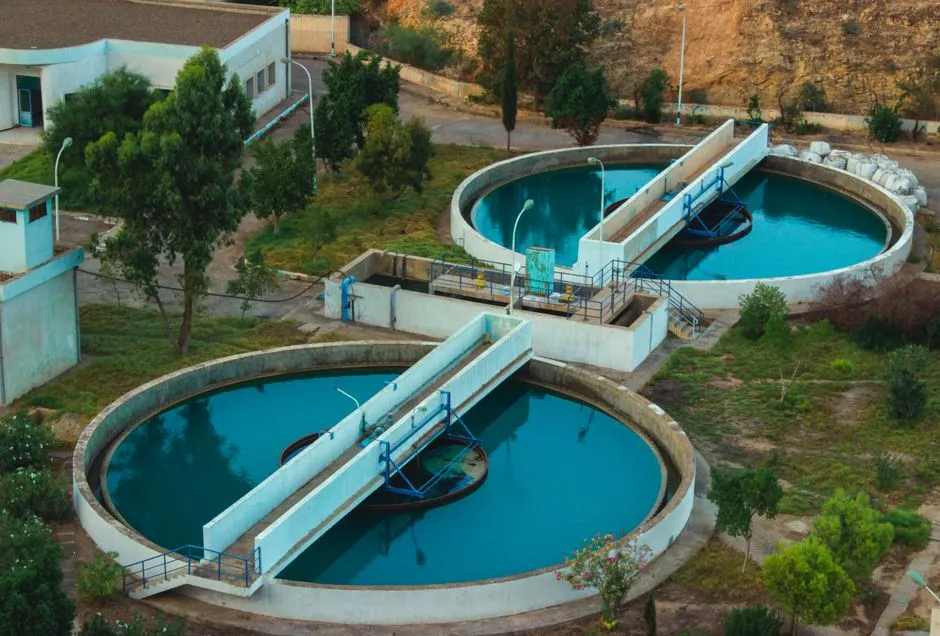
Design basis: 150 GPM forward flow, 500-2,000 mg/L TSS, 50-200 mg/L FOG, pH 6-9, intermittent metals from a small plating rinse line. Specify the DAF as a HydropureWater DAF system at ~34 m³/h, which sits in the mid-range of the 4-300 m³/h envelope across 13 standard models; 10-12 ft diameter skid; saturator at 75 psig; recycle ratio 25% of forward flow; micro-bubble generator compatible with FC Maximizer-class 20-40 µm bubble size. Specify the lamella polish as a HydropureWater high-efficiency sedimentation tank at 30 m/h surface loading, 55-60° plate angle, 50-80 mm plate spacing; footprint roughly 25% of an equivalent conventional basin. Specify the chemistry as an automatic polymer and coagulant dosing skid (5-15 mg/L polymer, 50-150 mg/L coagulant) with PLC trim on streaming current, integrated with the DAF controls. Specify the back end as a 1-500 m² plate and frame filter press for combined DAF float and clarifier underflow, targeting 25-35% DS cake for direct hauling.
This train pairs naturally with the broader DAF system USA 2026 engineering guide for spec-side detail, the sludge dewatering equipment USA 2026 guide for the press sizing, and the fabricated metals pretreatment compliance 2026 guide for the regulatory mechanics of the upstream train.
The 2026 Decision Rule: DAF Only, Clarifier Only, or DAF + Lamella
Pick DAF alone when free oil exceeds 50 mg/L, emulsified coolant exceeds 30 mg/L, or TSS exceeds 500 mg/L with significant FOG — covers most Whitehall stamping, machining, parts-washer, and coolant-sump streams. A skid-mounted DAF in the 48-450 GPM range (DAF Corp FC Maximizer, 6-15 ft diameter) installs in days rather than the months a civil clarifier build requires (source: dafcorp.com, 2026). Pick a clarifier alone when the stream is dominated by settleable metal fines from grinding, lapping, or polishing, with FOG under 30 mg/L, and the site has the footprint for a 1-3 hour retention basin — lamella geometry makes this viable even on a constrained lot. Pick DAF followed by a lamella polisher when TSS exceeds 2,000 mg/L and FOG exceeds 200 mg/L — the DAF Corp FC-150 is documented at 500 GPM and 2,000 PPM loading clarified to 50 PPM in a single cell, which is the operating envelope where a polish step becomes optional rather than mandatory (source: dafcorp.com, 2026). Pick DAF as a retrofit on an existing clarifier when the legacy basin is breaching FOG or O&G limits; DAF Corp explicitly offers new and retro-fit installations, and the skid geometry drops into an existing hydraulic envelope (source: dafcorp.com, 2026).
2026 CAPEX, OPEX, and Payback for a Whitehall 50-200 GPM Plant
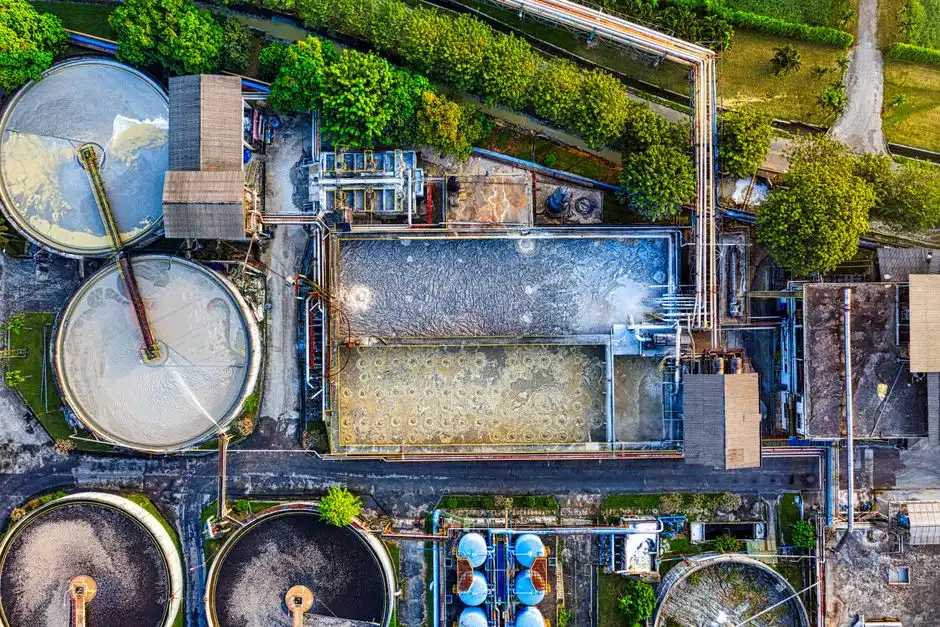
CAPEX bands in 2026 USD: skid-mounted DAF $120K-$280K turnkey for 50-200 GPM (add $15K-$40K for the chemistry package); lamella clarifier $40K-$180K for the same flow; full DAF + lamella + press train $250K-$800K. OPEX drivers split into chemistry, power, and hauling. The DAF premium is most often recovered in the hauling line: a 2-4% DAF cake versus 1-2% clarifier slurry typically cuts hauled volume by 30-50%, paying back the DAF premium in 12-24 months for any plant hauling more than 5 yd³/week.
| Line Item | DAF Only | Lamella Clarifier Only | DAF + Lamella + Press Train |
|---|---|---|---|
| CAPEX (50-200 GPM, turnkey) | $120K-$280K + $15K-$40K chemistry | $40K-$180K | $250K-$800K |
| Chemistry ($/1,000 gal) | $0.30-$1.20 | $0.20-$0.80 | $0.40-$1.50 combined |
| Power ($/1,000 gal) | $0.05-$0.15 | $0.02-$0.06 | $0.08-$0.20 combined |
| Sludge consistency | 2-4% cake | 1-2% slurry | 25-35% DS press cake |
| Typical payback at 200 GPM, 200 mg/L FOG | 18-36 months via hauling savings | Baseline; no DAF savings | 12-24 months via hauling + surcharge avoidance |
Payback example: a 200 GPM Whitehall stamping plant with 200 mg/L FOG influent spends roughly $90K-$150K per year on sludge hauling and FOG surcharges; a $180K DAF + lamella retrofit recovers that in 12-24 months under typical Whitehall POTW tariff structures. The dissolved air flotation system covers 4-300 m³/h (≈18-1,320 GPM) across 13 standard models, so most Whitehall duties sit on a single skid without paralleling (HydropureWater product data, 2026).
Frequently Asked Questions
Can a DAF alone meet 40 CFR Part 437 O&G and TSS limits for a Whitehall stamping or machining shop?
Yes. A properly sized and chemically conditioned DAF delivers 85-98% TSS removal (FC Maximizer 92-98%) and effluent FOG in the 15-30 mg/L band, well below the 40 CFR Part 437 daily-maximum TSS and O&G limits of 60 mg/L and 26 mg/L respectively (sources: dafcorp.com, 2026; EPA 40 CFR Part 437). Dissolved metals (hexavalent chromium, nickel, cadmium, lead) typically require a separate precipitation step after the DAF, because DAF removes the oils that interfere with precipitation but does not precipitate dissolved metals itself.
When does a Whitehall shop also trigger 40 CFR Part 433 on top of Part 437?
The moment a chrome, nickel, cadmium, or lead rinse line is added, the shop crosses from 40 CFR Part 437 (Metal Products) into 40 CFR Part 433 (Metal Finishing) PSES, which sets daily-maximum metals limits of 0.31 mg/L hex chrome, 2.61 mg/L total chromium, 0.69 mg/L cadmium, 0.69 mg/L lead, and 3.98 mg/L nickel (per 40 CFR 433.13). Any new or substantially modified plating line in 2026 should also size to the NSPS/PSNS cadmium limit of 0.11 mg/L from day one.
What is the defensible 2026 CAPEX and payback for a 150 GPM Whitehall job shop?
For a 150 GPM Whitehall job shop, a 2026 turnkey DAF + lamella + press train typically lands at $250K-$800K depending on tank material (304L standard, 316SS upgrade ~15-25%) and chemistry integration. A $180K DAF + lamella retrofit on a 200 GPM plant with 200 mg/L FOG influent typically recovers $90K-$150K per year in reduced sludge hauling and avoided FOG surcharges, for a 12-24 month payback under typical Whitehall Township Authority tariff structures (HydropureWater field data, 2026).
Can an existing clarifier be retrofit with a DAF instead of replaced?
Yes. DAF Corp explicitly offers new and retro-fit installations on DAF Clarifiers, and the Supracell/FC Maximizer skid geometry (48-450 GPM, 6-15 ft diameter, 1,000+ global installations) is designed to drop into an existing hydraulic envelope (sources: dafcorp.com, 2026; Wang & Wang, 2022). The typical retrofit installs the DAF upstream of the existing clarifier, with the clarifier demoted to a polish basin for settleable fines. The most commonly under-scoped line item is chemistry integration with an automatic polymer and coagulant dosing skid — budget it explicitly.