
Why LA Pretreatment Limits Are the Real Engineering Constraint in 2026
Los Angeles fabricated metals plants discharging to the Hyperion Water Reclamation Plant or the LA-Glendale Water Reuse Plant now face copper, zinc, nickel, and total chrome local limits in the 1-5 mg/L band and oil & grease caps at 100-200 mg/L, tightened across the 2024-2026 enforcement window (HydropureWater, 2026). Those numbers are tighter than the federal 40 CFR 433 Metal Finishing categorical standards that most equipment datasheets still quote, so a control authority running a load check against LA local limits will reject a system that "passes" against the federal floor. LASAN, the LA-Glendale plant, and Burbank each enforce separately, which means an engineer must confirm current local limits, sampling location, and slug-control provisions with the receiving POTW before final equipment sizing (sanitation.lacity.gov, 2026-04-29). The 2026 California POTW trend is toward tighter zinc and emerging PFAS parameters, so any system spec that ignores the local override will be obsolete by the next permit cycle. For a side-by-side reading of how these limits stack up against federal categorical numbers, the DAF vs clarifier decision guide for LA fabricated metals walks through the same enforcement shift.
The Wastewater Profile That Drives the Flow Sheet
The influent matrix that arrives at an LA fabricated metals equalization tank is not the clean stream vendor brochures assume. A stamping or machining cell pushes free and emulsified oil from cutting fluids and stamping lubricants into the tank; a passivation line drops hexavalent chrome into the same stream; a plating rinse dump lands as a slug load on top of the continuous machining flow (HydropureWater, 2026). Swarf and grinding dust contribute a settleable solids fraction, and dissolved Cu, Zn, Ni, and Cr add a hydroxide-precipitation problem that must be solved with chemistry, not hydraulics. Temperature swings of 25-45°C across day and night shifts alter the oil-in-water equilibrium, and pH excursions between 5.5 and 9.0 are routine in small job shops without tight chemistry control. That combination of variable flow, emulsified oil, and dissolved metals is the operating envelope any primary separator must survive, and it is the reason a clarifier alone falls short once emulsified oil enters the matrix.
Pretreatment Flow Sheet: From Equalization to Sewer-Compliant Discharge
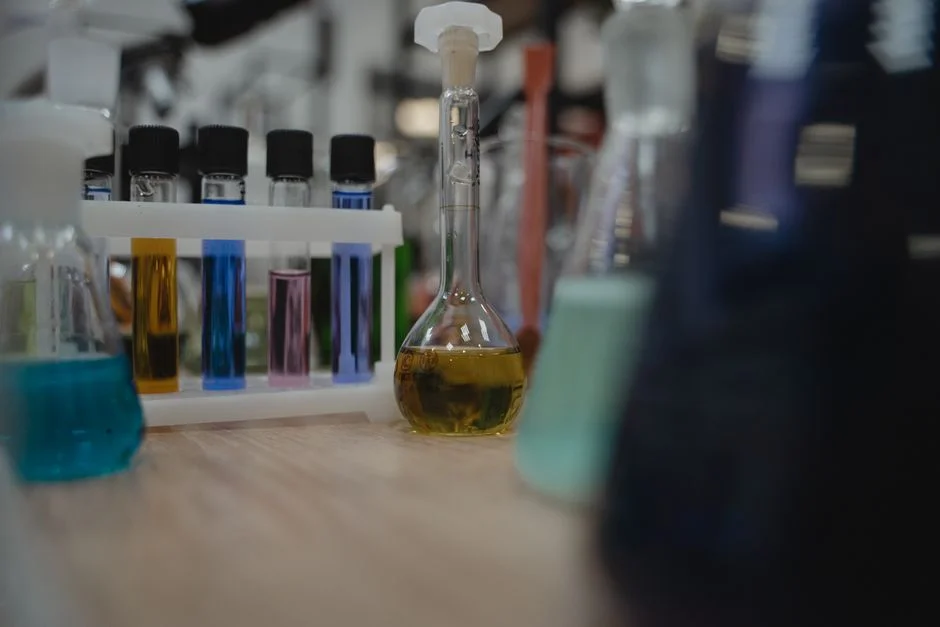
A defensible LA flow sheet runs in seven stages, with residence time and chemistry setpoints that any control authority can audit line by line.
- Equalization (8-24 hr HRT). Dampens slug loads from batch rinse dumps and stabilizes pH before chemistry tanks. Sized for peak daily flow plus one batch dump.
- Coarse oil-water separation. A plate interceptor or API-style skimmer pulls free oil before chemistry tanks, protecting downstream pH probes and dosing pumps from fouling.
- Hexavalent chromium reduction (HRT 20-45 min). pH held at 2.0-3.0 with sulfuric acid; sodium metabisulfite or ferrous sulfate dosed at 1.5-3.0× the stoichiometric Cr6+ demand; ORP held in the +200 to +300 mV reducing band by a PLC-controlled chemical dosing skid.
- pH raise to 8.5-9.5 (HRT 15-30 min). Caustic (NaOH) precipitation of Cu(OH)2, Zn(OH)2, Ni(OH)2, and Cr(OH)3 as a fine floc.
- Coagulant and flocculant feed. Typically a cationic coagulant (alum or PAC) followed by an anionic flocculant, dosed in-line just before the DAF to build a floatable floc.
- Dissolved air flotation (HRT 20-40 min). Saturation tank pressurized to 60-80 psig; 20-40 micron micro-bubbles released through a relief valve into the flotation cell. In plating-heavy LA shops the DAF sits downstream of reduction and precipitation so the float captures both oil and metal hydroxide floc (HydropureWater, 2026). A representative skid for this duty class is the dissolved air flotation system.
- Optional lamella polish or multimedia filter. Captures carry-over floc and protects against slug events that briefly exceed DAF solids capacity.
| Stage | Unit Operation | Key Setpoint | Typical HRT |
|---|---|---|---|
| 1 | Equalization | pH 6-9, T <45°C | 8-24 hr |
| 2 | Oil-water interceptor | Free oil removal >80% | 10-30 min |
| 3 | Cr6+ reduction | pH 2.0-3.0, ORP +200 to +300 mV | 20-45 min |
| 4 | pH raise / precipitation | pH 8.5-9.5 | 15-30 min |
| 5 | Coag + flocculant | Inline mix, 30-60 sec | 2-5 min |
| 6 | DAF | 60-80 psig, 20-40 µm bubbles | 20-40 min |
| 7 | Lamella / multimedia polish | Surface loading 20-40 m³/m²·h | 15-30 min |
DAF vs Lamella Clarifier: Why Flotation Wins on Emulsified Oil Streams
Gravity settling is bounded by Stokes' law: a 20-micron oil droplet rises too slowly to be captured in a standard clarifier residence time. A 20-40 micron air bubble provides the buoyancy to lift that same droplet in seconds, and that is the structural advantage flotation has over settling on any stream carrying free or emulsified oil (HydropureWater, 2026). On round DAF units the practical result is 92-98% TSS removal with effluent TSS consistently below 20 ppm and float thickened to 2-4% solids; rectangular units land at 85-90% (DAF Corp, vendor spec cited via the Santa Ana pretreatment guide, 2025). A conventional or lamella clarifier ceiling sits at 50-70% on swarf streams and collapses to 20-40% once emulsified oil enters the matrix, because oil droplets rise too slowly for the upward overflow rate to capture them. Lamella plates compress equivalent settling area into a small footprint at surface loading rates of 20-40 m³/m²·h and 55-60° plate angle, but they do not solve the oil-droplet physics problem; they only compress the area over which a slow-rising droplet has the same slow rise.
| Parameter | Round DAF (e.g., DAF Corp FC Maximizer) | Rectangular DAF (e.g., DAF Corp RC UniMax) | Lamella / Conventional Clarifier |
|---|---|---|---|
| TSS removal on oily stream | 92-98% | 85-90% | 50-70% swarf; 20-40% emulsified oil |
| Effluent TSS | <20 ppm typical | <20 ppm typical | 30-80 ppm on metals streams |
| Flow range | 48-450 GPM skid; up to 11,000 GPM engineered | Similar bands | Similar bands; chemistry-limited |
| Footprint per 100-450 GPM | Aeration skid ~6 ft × 4 ft × 6 ft tall plus tank | Larger plan area, lower height | Compact with plates; taller tank depth |
| Sludge output | Float 2-4% solids, lower hauling volume | Float 2-4% solids | Underflow 1-2% solids, higher hauling volume |
| Best fit | Oily, variable-flow fabricated metals | Same chemistry, space-constrained | Low-oil swarf settling; polish after DAF |
The decision rule is short: pick DAF as primary when the stream carries free or emulsified oil, when flow varies with batch dumps, or when discharge TSS must land below 100 mg/L on the first pass. Pick a lamella clarifier only as polish after DAF or on genuinely low-oil streams. A clarifier alone is acceptable only on a dedicated grinding swarf settling duty where oil is not in the matrix.
CAPEX, OPEX, and the Mobile Pilot Option for 2026 LA Buyers
Packaged 50-100 GPM DAF skid CAPEX lands in the $150,000-$350,000 range complete with chemistry feed, controls, and installation; engineered 300+ GPM DAF systems move into the $400,000-$900,000+ band depending on materials and instrumentation (HydropureWater, 2026). A lamella clarifier of equivalent hydraulic capacity is 40-60% cheaper upfront, but it does not solve the emulsified oil problem and will frequently trigger permit non-compliance on the first batch dump. The LA installation adder runs 30-50% over base price for seismic anchoring, industrial plumbing, electrical permitting, and BMS integration, so a $250,000 skid can land installed at $325,000-$375,000. OPEX swings with float consistency: DAF float at 2-4% solids versus clarifier underflow at 1-2% solids means roughly half the hauling volume, worth $20,000-$80,000 per year at a 200 GPM LA shop (HydropureWater, 2026). A plate and frame filter press downstream takes float or underflow to 25-35% cake solids before hauling, which compounds the disposal savings. The 2026 buying tactic no top competitor frames clearly: a mobile DAF rental at $8,000-$15,000 for a 4-week pilot (excluding mob/demob and chemicals) lets a shop validate removal numbers against actual Hyperion or LA-Glendale local limits before committing capital. Single-day deployment on a 47'-6" to 51'-7" trailer footprint is documented (WesTech, 2025), and the data generated goes straight into a permit filing.
Permit Class, Receiving POTW, and What to Confirm Before You Buy
Permit class dictates which numeric limits apply, and getting this wrong is the most common CAPEX-killing mistake. An industrial user discharging less than 25,000 gpd of process wastewater and not subject to a federal categorical standard is a Local Industrial User (LIU) bound only by city local limits; at or above 25,000 gpd, or if subject to a federal categorical standard, the discharger becomes a Significant Industrial User (SIU) (sanitation.lacity.gov, 2026-04-29). Federal Categorical Industrial Users (CIUs) - including electroplating shops - are subject to both 40 CFR 433 categorical standards and city local limits; whichever number is tighter controls. 40 CFR 403 General Pretreatment Regulations are the federal floor, with California delegated oversight since 1989 and Regional Water Boards conducting annual inspections and five-year audits (waterboards.ca.gov, 2026). POTWs over 5 mgd design flow with industrial inputs are required to run a pretreatment program; smaller plants only if warranted. Before any equipment purchase, an LA engineer should confirm current local limits, slug control provisions, and sampling location with the receiving POTW (Hyperion, LA-Glendale, Burbank, or LASAN), because the limits and the enforcement posture differ across agencies and they change year to year. For a planning-stage checklist on station layout and permit sequencing, the planning-stage treatment station design guide maps the same decisions for new industrial facilities. For broader context on how 2026 COD limits interact with these metals and O&G caps, the 2026 COD discharge limit guide covers the global standards side.
Frequently Asked Questions
What metals and oil & grease limits does LA enforce in 2026?
Hyperion Water Reclamation Plant and the LA-Glendale Water Reuse Plant enforce copper, zinc, nickel, and total chrome local limits in the 1-5 mg/L range and oil & grease caps at 100-200 mg/L, tightened across 2024-2026 and tighter than the 40 CFR 433 federal categorical numbers (HydropureWater, 2026). Always confirm with the receiving POTW before sizing equipment.
Why does a clarifier alone fail on emulsified oil streams?
Emulsified oil droplets in the 5-20 micron band rise too slowly under Stokes' law to be captured in a standard clarifier residence time, which collapses TSS removal to 20-40% on oily fabricated metals streams (HydropureWater, 2026). DAF solves the problem by attaching 20-40 micron air bubbles to the droplets, lifting them in seconds.
Where does the DAF sit relative to the Cr6+ reduction tank?
The DAF must sit downstream of hexavalent chromium reduction and subsequent pH raise. Cr6+ is first reduced to Cr3+ at pH 2.0-3.0 with sodium metabisulfite or ferrous sulfate, then pH is raised to 8.5-9.5 to precipitate Cr(OH)3; the DAF then floats the precipitated metal hydroxide floc and any residual oil (HydropureWater, 2026).
What is the CAPEX range for a 50-100 GPM packaged DAF in LA?
A turnkey 50-100 GPM packaged DAF skid lands at $150,000-$350,000 for the system with chemistry feed, controls, and installation; engineered 300+ GPM systems run $400,000-$900,000+ (HydropureWater, 2026). LA installation adder is 30-50% over base price for seismic anchoring, industrial plumbing, electrical permitting, and BMS integration.
Is mobile DAF rental available locally, and what does a 4-week pilot cost?
Mobile DAF trailers are available for rent in the LA basin; a 4-week pilot typically costs $8,000-$15,000 excluding mobilization, demobilization, and chemical consumables (HydropureWater, 2026). The pilot generates real effluent data against the actual receiving POTW local limits before any capital commitment.