Why Birmingham Food and Beverage Plants Are Rethinking Primary Clarification in 2026
A 1950s-era gravity clarifier was built to settle heavy inorganic grit, not to handle a 2026 Birmingham ready-meal, dairy or brewery effluent that is mostly light, emulsified and organic. The mismatch now shows up directly on the bill from Severn Trent. Trade-effluent consents in the West Midlands are charged on volumetric load plus strength parameters, and the per-m³ surcharge scales with COD, suspended solids and oil/grease strength. A typical Birmingham food and beverage line runs 2,000–10,000 mg/L COD, 500–3,000 mg/L TSS, and 200–1,500 mg/L oil and grease, with frequent batch slug loads from CIP cycles that double those numbers for 30–90 minute windows (HydropureWater field data, 2026).
Removing FOG and TSS at source therefore has direct commercial value, not just compliance value. The 2026 UK Environment Agency food and drink expectations continue to push producers toward on-site primary removal that protects downstream biological capacity and, where feasible, enables water reuse on non-product lines such as yard wash, CIP pre-rinse and boiler feed. For a Severn Trent trade-effluent customer, the practical decision is no longer "clarifier or DAF" in the abstract — it is "which primary unit cuts my B, C and OG strength numbers fastest, on the smallest plot, with the lowest polymer bill and the fewest sludge tankers per year." That framing runs through the rest of this article.
How a DAF and a Clarifier Actually Work — and Why That Decides the Outcome
A dissolved air flotation (DAF) unit is an active separation system. A pressurised recycle stream — typically 10–30% of the forward flow — is saturated with air at 4–6 bar inside a saturator vessel. When that recycle re-enters the flotation tank at atmospheric pressure, the dissolved air comes out of solution as a cloud of 20–100 µm micro-bubbles. Coagulant and polymer, dosed upstream, have already neutralised surface charges and bridged fine particles into flocs. The micro-bubbles attach to those flocs and lift them to the surface in 15–45 minutes of hydraulic retention, where a chain-and-flight or rotary skimmer sweeps the float into a hopper. DAF on food and beverage effluent delivers up to 99% FOG removal, up to 95% TSS removal, 60–85% BOD removal and 50–80% COD removal (S1).
A gravity clarifier is a passive vessel. Wastewater enters a quiescent tank, sits for 2–4 hours, and relies on particles having a specific gravity greater than 1.0 so that they sink to the floor as underflow sludge. FOG, emulsified oil, proteins and starch granules have specific gravities at or below 1.0, so they largely pass straight through to the next stage. Per the S1 comparison table, FOG performance on a gravity clarifier is "weak — FOG does not settle" while DAF performance is "excellent — micro-bubbles lift oil to surface".
A lamella clarifier is the compact middle ground: a bundle of inclined plates at 55–60° lifts the effective settling area and pushes surface loading to 20–40 m/h, which is why it is the go-to where land is tight. But the plates do nothing to address emulsified oil or light FOG, so on a Birmingham food line a lamella is best deployed as a polishing or solids-recovery step downstream of a DAF, not as the primary oil-removal unit. The engineering contrast above is the one we keep returning to, and it is laid out in more detail in our 2025 DAF engineering efficiency guide.
DAF vs Clarifier vs Lamella: 2026 Comparison Matrix for F&B Effluent
The table below is the engineering baseline for the rest of the article. Footprint, sludge dryness, polymer demand and capex band all come from the S1 commercial spec sheet and the S4 HydropureWater engineering reference, with UK energy and Severn Trent context layered on top.
| Parameter | Dissolved Air Flotation (DAF) | Gravity Clarifier | Lamella Clarifier |
|---|---|---|---|
| FOG removal | Excellent — up to 99% | Weak — FOG does not settle | Limited — plates do not address emulsified oil |
| TSS removal | Up to 95% | Strong on dense inorganic TSS only | Strong on medium-density settleable solids |
| BOD / COD removal | 60–85% BOD, 50–80% COD | Low, limited to settleable organics | Low to moderate |
| Hydraulic retention time | 15–45 minutes | 2–4 hours | 30–60 minutes effective |
| Surface loading rate | 5–15 m/h | 1–2 m/h | 20–40 m/h |
| Footprint vs DAF | Baseline | ~4–5× the DAF footprint | Comparable to DAF on plan area |
| Sludge solids | 3–7% float (drier, easier to dewater) | 1–2% underflow (wet, bulky) | 2–4% underflow |
| Chemical use | 0.5–5 mg/L polymer + coagulant | Low (because it does little chemistry) | Low to moderate |
| Energy use | 0.2–0.5 kWh/m³ (recycle pump, saturator) | Low (no aeration) | Low to moderate |
| Capex band (4–300 m³/h) | £40,000–£400,000 (≈ $50k–$500k) | Cheaper on civils, but land-hungry | Mid-range, compact civils |
| Best-fit stream | FOG, emulsified oil, proteins, starches | Heavy grit, sand, dense inorganics | Polishing after DAF, settleable TSS |
For typical Birmingham F&B lines, DAF wins on FOG, BOD, COD, footprint, sludge dryness and Severn Trent surcharge leverage. A lamella is the right pick only when the stream is genuinely settleable and FOG-light, and a conventional clarifier is defensible only on heavy grit streams upstream of a DAF — for example, soil-laden root-crop washwater. See the dissolved air flotation (DAF) system for the standard 4–300 m³/h envelope and the HydropureWater high-efficiency lamella clarifier for the compact polishing option.
Which F&B Sub-Sectors in Birmingham Should Choose DAF — and Which Can Still Use a Clarifier
The matrix turns into a real procurement decision once you map it onto a specific line. Birmingham hosts dairy processors in the Aston and Washwood Heath area, breweries and craft beverage sites around the Jewellery Quarter and Digbeth, and meat/ready-meal plants on the industrial fringes near Witton and Castle Bromwich — and the right primary unit is not the same for all three.
| Birmingham F&B sub-sector | Typical effluent signature | Primary unit recommended | Why |
|---|---|---|---|
| Dairy (milk, whey, CIP) | Milk fats, whey proteins, lactose, alkaline CIP | DAF (lamella only for settleable polishing) | 50–80% COD cut and up to 99% FOG capture; recovered milk fat can go to rendering or anaerobic digestion (S1) |
| Breweries and craft beverage | Sugars, starches, spent grain fines, CIP | DAF as primary; lamella as polishing only if land is plentiful and effluent is weak | DAF protects downstream MBBR/MBR from sugar slug loads; 60–85% BOD cut directly reduces Severn Trent Mogden-derived surcharge |
| Meat, poultry, ready-meal | Blood, animal fats, proteins, fine bone fragments | DAF after 1–3 mm screening (clarifier not recommended) | FOG fraction dominates; a clarifier lets emulsified fat pass to the biological stage and risks consent breach |
| Vegetable, fruit, seafood | Fibres, starches, sugars, oils | DAF as default | Same FOG-and-starch logic as meat, with easier chemistry |
| Heavy-grit washwater (root crop, soil-laden lines) | Sand, soil, dense inorganics | Grit clarifier upstream of DAF | Prevents abrasive grit from damaging the DAF recycle pump and nozzles; keeps DAF chemistry stable |
The per-segment calls above track S1's verdict verbatim: FOG, emulsified oil and protein removal is "excellent" on DAF, "weak" on gravity settling and "limited" on lamella. So for any Birmingham line that contains emulsified oil, milk fat, blood, brewery trub or sauce starches, DAF is the default primary. A conventional clarifier survives only on the heavy-grit front end of a wash line, where its cheapness and simplicity still earn their place. The DAF-vs-clarifier logic for chemical plants is laid out in our 2026 DAF vs clarifier guide for chemical plants, which sets a useful comparator for the same capital-request workflow.
2026 Cost, Footprint and ROI Snapshot for a Birmingham F&B Plant
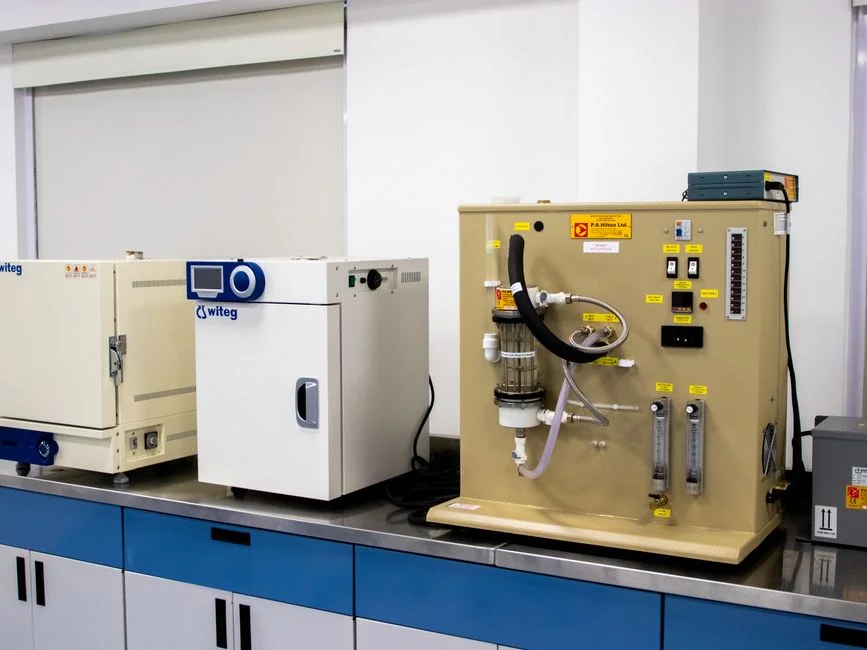
Procurement and finance directors will sign off on this decision only with numbers, so below is a snapshot for a representative 20 m³/h Birmingham line. Treat the figures as an order-of-magnitude envelope; site-specific pricing depends on materials (SS304 vs SS316L), automation level and the civils envelope.
| Metric (20 m³/h F&B line, 2026) | DAF | Conventional gravity clarifier | Lamella clarifier |
|---|---|---|---|
| Indicative CAPEX (UK installed) | £90,000–£180,000 | £60,000–£110,000 civils-heavy | £70,000–£130,000 |
| Installed footprint (m²) | ~20 m² (≈ 4.65 × 2.7 m skid envelope, S1) | ~80–100 m² civils + tank | ~25–30 m² |
| Annual power OPEX (UK 28–32 p/kWh) | £4,000–£9,000/yr | £1,000–£2,000/yr | £1,500–£3,000/yr |
| Annual polymer + coagulant OPEX | £6,000–£14,000/yr | £1,000–£3,000/yr | £3,000–£6,000/yr |
| Indicative payback vs baseline | 1.5–3 years (S4) | Baseline (cheapest CAPEX) | 2–4 years |
| Sludge volume (annual, 50% DS reduction) | 50–70% fewer tankers than clarifier | Baseline wet sludge 1–2% | Modest improvement |
The headline numbers come from the S4 1.5–3 year ROI benchmark and the $50,000–$500,000 DAF CAPEX band for 4–300 m³/h units, translated into 2026 UK sterling at typical EPC mark-ups. The sludge lever is where DAF pays back fastest: float at 3–7% solids versus clarifier underflow at 1–2% means roughly 50–70% fewer tankers per year, plausibly £25,000–£45,000 saved on disposal for a medium site (consistent with the S4 ~$40,000/yr saving cited for a medium-sized food plant).
The Severn Trent angle sits on top of that. Each 1,000 mg/L reduction in COD and each 100 mg/L reduction in oil/grease cuts the per-m³ trade-effluent charge on a high-strength consent, and a 50–80% COD cut from DAF on a dairy orbrewery line is the lever to bank on in the 2026 capital request. Add the soft benefits — reduced risk of consent breach, lower load on a downstream MBR or activated sludge stage, and reuse potential on non-product lines — and the 1.5–3 year payback holds for most Birmingham F&B plants. Pairing the DAF with a plate and frame filter press for DAF float sludge pushes float to 25–35% cake solids, which further slashes haulage and is covered in our sludge dewatering machine selection guide.
Selecting and Installing a DAF in the West Midlands: 2026 Checklist
- Jar-test the actual effluent. Run coagulant screens (alum, PAC, ferric chloride) plus anionic and cationic polymers on site-specific samples. The 95% TSS headline is meaningless without the right chemistry — the jar test is what unlocks it (S1).
- Hold pH in the 6.5–8.0 window using an automatic polymer and pH dosing skid. Outside that band the floc is too weak to survive the bubble plume, and removal collapses.
- Protect the DAF upstream. Fit a GX series rotary mechanical bar screen at 1–3 mm on every line, and add a grit removal stage on meat or root-vegetable lines. Then size the DAF at 5–15 m/h surface loading with a 10–30% recycle at 4–6 bar saturator pressure (S1, S4).
- Size the sludge line for 3–7% float. Route it to a plate and frame filter press for further dewatering to 25–35% cake solids, and confirm the haulage contract can take the lower volume.
- Lock down electrical and consenting. Specify 380 V, 3-phase, 50 Hz with CE marking (S1), and engage the local Severn Trent consenting team early so the trade-effluent permit lines up with the new discharge profile. For fish and seafood lines, follow the pretreatment sequencing in our 2026 fish stickwater pretreatment guide.
Frequently Asked Questions
DAF or clarifier for food and beverage wastewater — which should a Birmingham factory choose in 2026?
Choose a DAF. On F&B effluent, DAF delivers up to 99% FOG removal and up to 95% TSS removal at a 15–45 minute hydraulic retention time, versus a gravity clarifier whose FOG performance is "weak" because emulsified oil and light FOG do not settle. The typical ROI against a baseline clarifier is 1.5–3 years once Severn Trent trade-effluent surcharges and sludge-disposal savings are counted (S4).
When is a conventional clarifier still the better choice for a food or beverage plant?
A conventional gravity clarifier is still the right primary unit for heavy, dense, inorganic streams — sand, grit, soil-laden washwater, and metalworking swarf — where sedimentation is genuinely fast and cheap. A lamella clarifier is the compact middle ground for settleable, medium-density solids, but on emulsified oil and FOG it is "limited" and should be used as polishing downstream of a DAF, not as the primary oil-removal unit (S1).
How much smaller is a DAF than a clarifier, and what are the civil-work implications?
A DAF occupies roughly 20–25% of the footprint of an equivalent conventional clarifier and 30–50% less than a conventional clarifier on plan area (S4, S1), with a 15–45 minute HRT against the clarifier's 2–4 hours. For a Birmingham site with a tight yard, that is the difference between a packaged skid on an existing concrete pad and a civils-heavy tank that eats car-parking spaces.
What is the 2026 ROI and Severn Trent angle for a mid-sized Birmingham F&B plant?
For a 20 m³/h line, expect a 1.5–3 year payback (S4), CAPEX in the £90,000–£180,000 installed band, and sludge-disposal savings of £25,000–£45,000 per year from float at 3–7% solids versus clarifier underflow at 1–2%. On a Severn Trent high-strength trade-effluent consent, every 1,000 mg/L reduction in COD and every 100 mg/L reduction in oil/grease trims the per-m³ surcharge, and DAF's 50–80% COD cut on dairy and brewery lines is the commercial lever.
Does DAF handle brewery, dairy and meat effluent differently?
The hardware is the same, but the chemistry, screening and downstream targets differ. Dairy lines target recovered milk fat for rendering or AD, with a 50–80% COD cut. Brewery lines target sugar-slug protection on the downstream MBBR or MBR, with 60–85% BOD removal. Meat and ready-meal lines pair DAF with 1–3 mm rotary screening to handle blood, animal fats and fine bone, and they are the segment where a clarifier is most clearly the wrong tool.
Related equipment and engineering reading
- Dissolved Air Flotation (DAF) System
- DAF or Clarifier for Food & Bev Wastewater in Fresno: 2026 Buyer's Guide
- DAF or Clarifier for Food & Bev Wastewater in Norfolk: 2026 Guide
- DAF or Clarifier for Food & Bev Wastewater in Cedar Rapids, IA (2026 Guide)
- DAF vs Clarifier for Food & Beverage Wastewater in Grand Forks (2026 Guide)