Why Fresno food and beverage plants are rethinking primary treatment in 2026
For most Fresno food and beverage plants in 2026, a dissolved air flotation (DAF) system outperforms a conventional clarifier: it removes 92–97% of TSS and up to 95% of FOG at surface loading rates of 5–15 m/h, occupies only 20–25% of the footprint, and produces 3–5% float solids versus 1–2% clarifier underflow. A conventional clarifier only wins for heavy inorganic grit streams.
The pressure to switch is local and specific. The Fresno County food and beverage corridor — dairy, fruit and vegetable processing, meat, beverage, and rendering — generates raw effluent typically running 200–3,000 mg/L FOG and 500–5,000 mg/L TSS, with hourly swings as CIP cycles, batch cooks, and rendering cookers dump slug loads into the sewer. The City of Fresno Industrial Wastewater Ordinance and POTW pretreatment surcharges penalize exactly this discharge profile, which is why food plants across the region are replacing aging primary clarifiers with flotation-based systems ahead of their next permit cycle.
A local precedent already exists: the rendering trade press documents California By-Products in Fresno as a long-running flotation installation, and the broader rendering industry recycles over 50 billion pounds of animal by-products annually while generating wastewater with FOG and protein loads that no gravity basin can settle economically (per Render Magazine via CWT-Global). The 2026 driver is straightforward: tighter FOG enforcement combined with rising tipping fees makes sludge volume reduction financially decisive, not optional. Plants that wait another renewal cycle pay twice — once in surcharges, once in hauling.
DAF vs clarifier at a glance: the 2026 comparison matrix
Procurement readers want the trade-off in 30 seconds, so the matrix below is the core asset of this guide. Numbers reflect typical operating bands for food and beverage streams; verify against jar testing and vendor proposals before locking a P&O.
| Parameter | Dissolved air flotation (DAF) | Conventional gravity clarifier |
|---|---|---|
| TSS removal | 92–97% on food streams | 40–70% on heavy inorganics; <50% on FOG |
| FOG removal | Up to 95% | <50% on buoyant contaminants |
| Footprint (relative) | 20–25% of a clarifier at equal flow | 1.0× reference (large rectangular or circular basin) |
| Hydraulic retention | Minutes | 2–4 hours |
| Surface loading rate | 5–15 m/h | <2 m/h |
| Sludge solids | 3–5% float | 1–2% underflow |
| Energy use | 0.2–0.5 kWh/m³ (recycle pump + air compressor) | No aeration energy; minimal pumping |
| CAPEX band (4–300 m³/h) | $50K–$500K (SS304/SS316) | Lower if existing concrete basin; new build often comparable when civil work is included |
| Primary OPEX driver | Polymer (0.5–5 mg/L) and energy | Sludge hauling (large dilute volume) |
The single most decisive number for a space-constrained Fresno plant is surface loading rate: 5–15 m/h for DAF versus <2 m/h for a clarifier. On a 50 m³/h dairy wash stream, that gap is the difference between a 15 m² DAF skid and a 200 m² concrete basin — and most Central Valley food plants do not have 200 m² of unused pad near the sewer tie-in.
Why gravity clarifiers lose to FOG-heavy food effluent
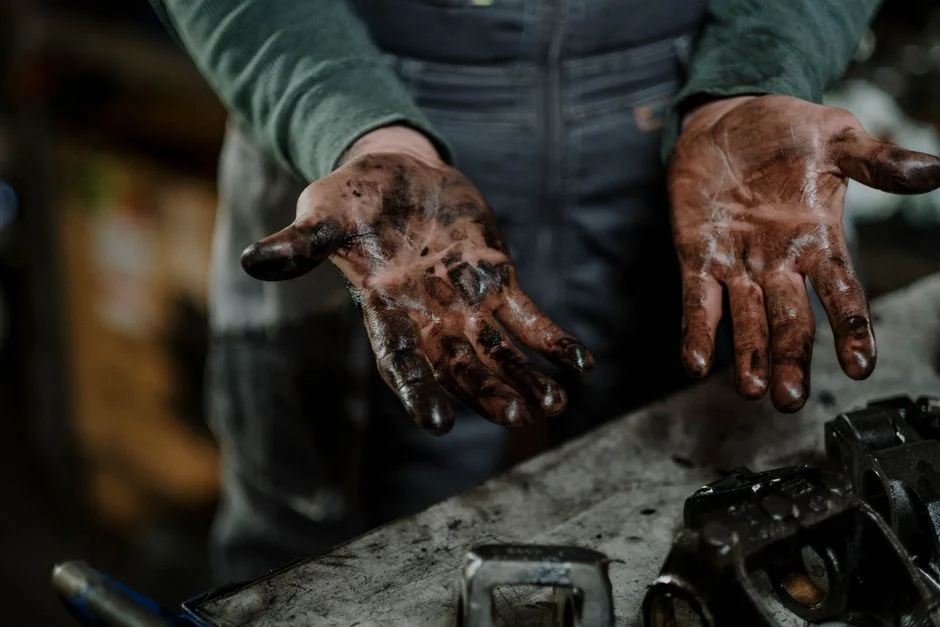
Clarifiers do not fail because they are old technology. They fail because the particles in a food plant stream often refuse to sink. FOG, fruit pulp, blood proteins, and fine cellulose fibers have specific gravity near or below 1.0; left alone, they will not settle, so clarifier efficiency collapses to <50% on FOG streams (per HydropureWater field data, 2025). The physics is unforgiving: Stokes' law says a 50-μm fat globule with a density differential of 0.02 g/cm³ against water needs hours of quiescent retention to drop a single meter.
Clarifiers need 2–4 hours of retention to do their job; DAF separates in minutes by attaching 20–100 μm micro-bubbles to flocculated particles and floating them upward. To force a clarifier to settle FOG, operators over-dose coagulants — typically 3–5× the polymer a DAF would need — driving up OPEX and producing voluminous 1–2% underflow that is expensive to dewater and haul. The S2 source puts it bluntly: for light solids and emulsified contaminants, DAF outperforms conventional clarifiers by 20–30% in efficiency.
The operational consequences show up in three places on a Fresno plant's monthly report: higher POTW surcharges on TSS and FOG, higher polymer consumption than the DAF would need, and a much larger volume of liquid sludge to truck out. The clarifier is not the wrong tool — it is the wrong tool for this stream.
How a DAF actually works: the four-stage process
Operator confidence drops when the inside of a DAF skid looks unfamiliar. Demystifying the four stages makes the technology boring again, which is what you want from primary treatment.
Stage 1 — Coagulation and flocculation. Cationic or anionic polymers at 0.5–5 mg/L bridge colloids into "buoyant aggregates" inside a serpentine or mix-tank reactor. The automatic chemical dosing skid meters polymer by flow-proportional signal and trims on a streaming-current probe, which is now standard on 2026-era units.
Stage 2 — Air dissolution. 10–30% of clarified effluent is pressurized in a saturation tank at 4–6 bar, achieving 85–95% saturation efficiency. The recycle stream is the heart of the system: too little recycle and there are not enough bubbles; too much and turbulence shears the flocs.
Stage 3 — Bubble–particle attachment. When the recycle stream depressurizes through needle valves orifices, dissolved air comes out of solution as micro-bubbles. HydropureWater and SigmaDAF cite a 20–100 μm bubble band, with 30–50 μm being the most common target because that range gives the right surface-area-to-buoyancy ratio without violent rising velocities. Bubbles nucleate on the preformed flocs from Stage 1, building air-filled aggregates.
Stage 4 — Flotation and skimming. Float is scraped at 3–5% solids; heavy settleables drop into a bottom collection zone and are augered out. The four dials an operator actually turns are recycle ratio, saturation pressure, polymer charge and dose, and pH — held in the 6.5–8.5 window where most flocculants work.
2026 specs that matter when sizing a DAF for a Fresno plant
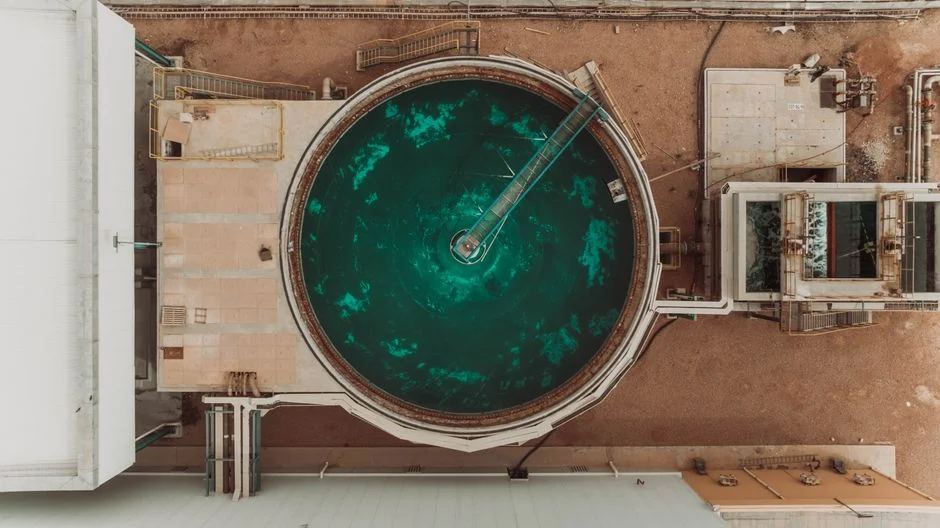
The matrix tells you what a DAF does; the spec table tells you what to put on the requisition. The 2026 update is a wider flow band and broader automation, but the underlying sizing rules have not changed.
| Spec | 2026 value / range | Why it matters for a Fresno food plant |
|---|---|---|
| Flow band | 4–300 m³/h across 13 standard DAF system models | Covers a small craft beverage line through a large dairy or rendering plant |
| Surface loading rate | 5–15 m/h | Undersizing causes float carryover; oversizing wastes CAPEX |
| Materials | SS304 standard; SS316 for high-chloride or hot washwater; PP/alloys on request | Pickup CIP caustics, fruit acids, and rendering cook condensate demand SS316 in many cases |
| Saturation pressure | 4–6 bar at 85–95% efficiency | Pressure vessel must be sized with a real recycle ratio, not a nameplate |
| Bubble size | 20–100 μm; 30–50 μm typical | Nozzle design must resist fouling from hair, bone, and fruit solids |
| Automation | PLC-controlled skimmer speed, polymer dose, pressure setpoints | Required for 2026 labor-light operations; supports remote alarming |
The three most common sizing mistakes on Fresno projects: (1) using nameplate flow rather than peak hourly flow, (2) ignoring temperature — winter effluent at 10 °C carries less air than summer effluent at 35 °C, so saturation efficiency drifts, and (3) underspecifying the upstream screen, which lets hair and fruit solids clog recycle nozzles within weeks.
CAPEX, OPEX, and ROI: a 2026 worked example for Fresno food and beverage
Engineers do not buy equipment; they buy payback periods. The worked example below uses a representative 50 m³/h dairy washwater stream with 1,500 mg/L TSS and 600 mg/L FOG — typical of a mid-sized Central Valley dairy or cheese plant discharging to the Fresno POTW.
| Line item | Assumption / calculation | 2026 estimate (USD) |
|---|---|---|
| CAPEX — DAF mid-range, SS304 | 50 m³/h unit, PLC, dosing skid | $120,000–$180,000 |
| Energy OPEX | 0.2–0.5 kWh/m³ × 50 m³/h × 8,000 h/yr × $0.14/kWh (CA industrial tariff) | $11,000–$28,000 / yr |
| Polymer OPEX | 0.5–5 mg/L × 50 m³/h × 8,000 h = 200–2,000 kg/yr × $4–$8/kg | $1,000–$16,000 / yr |
| Sludge disposal (DAF float at 3–5% solids) | ~50–70% lower volume than clarifier underflow | Savings of $40,000+ / yr vs. clarifier (per HydropureWater 2025) |
| Net payback | Sludge savings − energy − polymer, divided into CAPEX | 1.5–3 years for most high-FOG Fresno sites |
The payback compresses further once avoided POTW surcharges and water-reuse soft benefits are counted. A jar test on the actual influent should always precede the polymer dose lock — the gap between best- and worst-case polymer OPEX in the table above is $15,000/yr, which is wider than the entire annual maintenance budget on most mid-sized plants.
When a clarifier is still the right call
Credibility comes from naming the cases where DAF is overkill. A clarifier remains the better answer for:
- Heavy inorganic streams — sand, grit, metal shavings, produce-wash soil — settle well under gravity and do not justify DAF CAPEX. A lamella plate unit is the lower-CAPEX pick here.
- Very low-FOG, low-TSS streams (under 200 mg/L each), where the 92–97% TSS removal of DAF is over-spec and a simple basin does the job.
- Existing concrete clarifier basins being repurposed — retrofitting a DAF into a rectangular sedimentation basin is rarely hydraulically compatible; the surface-loading math is upside down.
- Mixed streams — a coarse rotary mechanical bar screen plus a high-efficiency sedimentation tank ahead of the DAF is still standard practice to protect nozzles and recycle pumps from hair, bone, and fruit solids.
Outside those four cases — and outside small-flow, low-strength side streams — the DAF wins on every metric that matters to a Fresno food plant operator.
The 2026 decision rule for Fresno food and beverage operators
For a CAPEX-ready plant, the rule reads as follows: default to DAF — specify a DAF system sized to 5–15 m/h surface loading, in SS304 or SS316, with PLC automation and a paired automatic chemical dosing skid. Upstream, install a rotary mechanical bar screen to protect the recycle nozzles; downstream, install a plate-and-frame filter press to push float solids to 25–35% and reach roughly 98% total solids removal across the primary-plus-dewatering train (HydropureWater field data, 2025).
Confirm polymer selection with jar testing on real influent, and lock pH at 6.5–8.5 before the floc tank. Re-evaluate the DAF default only if the waste stream shifts to heavy inorganics or if an existing clarifier basin is being retrofitted at low CAPEX. Always verify site-specific design values against current City of Fresno discharge limits, POTW surcharges, and the final equipment proposal before signing a PO. For broader context on the downstream biological step, the MBR vs MBBR comparison and the industrial sludge dewatering guide cover the train beyond primary clarification.
Frequently Asked Questions
Is DAF or a clarifier better for high-FOG food wastewater?
DAF. It removes up to 95% of FOG versus less than 50% for a gravity clarifier on buoyant contaminants, because FOG, pulp, blood proteins, and fine fibers have specific gravity near or below 1.0 and will not settle under gravity within a practical retention time.
How much does a DAF system cost in 2026?
For 4–300 m³/h DAF units, CAPEX typically falls between $50,000 and $500,000 depending on material (SS304 versus SS316), automation level, and whether a chemical dosing skid is integrated. A 50 m³/h mid-range SS304 unit generally lands in the $120,000–$180,000 band.
What is the ROI on a DAF for a Fresno food plant?
Typically 1.5–3 years from sludge-disposal savings and avoided POTW surcharges. Sludge volume reduction alone saves a medium-sized food plant over $40,000 per year in hauling fees (per HydropureWater 2025); adding avoided FOG and TSS surcharges compresses payback further on high-strength streams.
What flow rate can a DAF handle?
The DAF line covers 4–300 m³/h across 13 standard models at surface loading rates of 5–15 m/h. That range covers everything from a small craft beverage line to a large dairy or rendering plant discharging to a municipal POTW.
Can a DAF replace a clarifier in an existing plant?
Usually yes for the primary treatment step, but verify hydraulic compatibility, available footprint, and downstream sludge handling. A rectangular sedimentation basin is rarely a hydraulic match for a DAF retrofit, and the recycle pump room, saturation vessel, and chemical skid all need real estate. For an existing clarifier being kept in service, a DAF add-on as a polish step ahead of it is often the lowest-risk path.