Why Carpet Manufacturing Wastewater Is a Special Case for Electrocoagulation
Carpet manufacturing generates four chemically distinct dirty streams that rarely mix at the drain: face-yarn dye-bath wash-off, latex and SBR backing-coat rinse, size/PVA removal wash water, and post-installation carpet cleaning effluent. Each carries a different mix of anionic surfactants, disperse dyes, latex solids, and sizing polymers, and the combined load routinely overruns a municipal wastewater treatment plant's consent. The published influent envelope to anchor your own sampling is COD 229–1,446 mg/L, MBAS 25–353 mg/L, turbidity 137–2,250 NTU, pH 7.7–8.2, and conductivity 250–1,890 µS/cm, drawn from carpet cleaning and related wash-water datasets compiled in the Shakeri et al. 2021 study (Desalination & Water Treatment 227, 163–176). Surfactants and disperse dyes resist conventional biological treatment because MBAS foam strips oxygen from the biomass and azo/chromophore bonds break down only under anaerobic conditions. Conventional chemical coagulation with alum or polyaluminium chloride partially removes color but leaves a high-aluminum supernatant that downstream DAF cannot polish further. Electrocoagulation, generating coagulant species in situ at the anode, sidesteps both issues: no chloride dosing, no sulfate dosing, no imported cationic polymer, and the H₂ micro-bubble sweep floats floc to the surface for easy mechanical removal.
| Stream | Dominant Pollutants | Typical Concentration Envelope | Conventional Treatment Gap |
|---|---|---|---|
| Face-yarn dye-bath wash-off | Disperse/acid dyes, leveling agents, carrier residues | COD 400–1,200 mg/L; color 1,000–4,000 Pt-Co | Biological COD reduction stalls; color passes through |
| Latex/SBR backing-coat rinse | Styrene-butadiene latex, CaCO₃ filler, surfactants | TSS 500–2,000 mg/L; COD 800–1,500 mg/L | Latex fouls DAF and MBBR media; polymer dosing high |
| Size/PVA removal wash | Polyvinyl alcohol, starch, sizing oils | COD 1,000–2,500 mg/L; BOD/COD < 0.2 | Poorly biodegradable; high polymer demand |
| Post-installation carpet cleaning | Anionic surfactants, soil, trace dyes | MBAS 25–353 mg/L; turbidity 137–2,250 NTU | MBAS foam strips aeration basin oxygen |
How an Electrocoagulation System Actually Works
An electrocoagulation system treats carpet manufacturing wastewater by dissolving sacrificial aluminum or iron anodes, generating coagulant species in situ that remove surfactants, dyes, suspended solids and COD. An electrocoagulation-flotation (ECF) reactor adds cathodic hydrogen bubble generation to the same cell, so the floc is floated rather than settled. The state-of-the-art review by Hashim et al. (Water Cycle, 2023) describes the mechanism as sacrificial anode dissolution, cathodic H₂ bubble flotation, and hydroxide floc formation; that is, at the anode, Al → Al³⁺ + 3e⁻ (or Fe → Fe²⁺ + 2e⁻), and at the cathode, 2H₂O + 2e⁻ → H₂ + 2OH⁻. The released Al³⁺ hydrolyses to polymeric hydroxide flocs (Al(OH)₃, Al(OH)₄⁻, Al₁₃ complexes) that sweep colloidal dye, latex particles, and emulsified MBAS from the bulk solution. The H₂ micro-bubbles attach to the lighter floc fraction and carry it to the surface as a float layer that a mechanical scraper can remove continuously. The four levers the operator controls are pH, current density, electrolysis time, and electrolyte conductivity — the same set the review identifies as the dominant performance drivers, and the same set the Shakeri 2021 RSM-CCD study varied when it optimized the carpet-cleaning case.
Operating Window: The Shakeri 2021 RSM-CCD Optimum
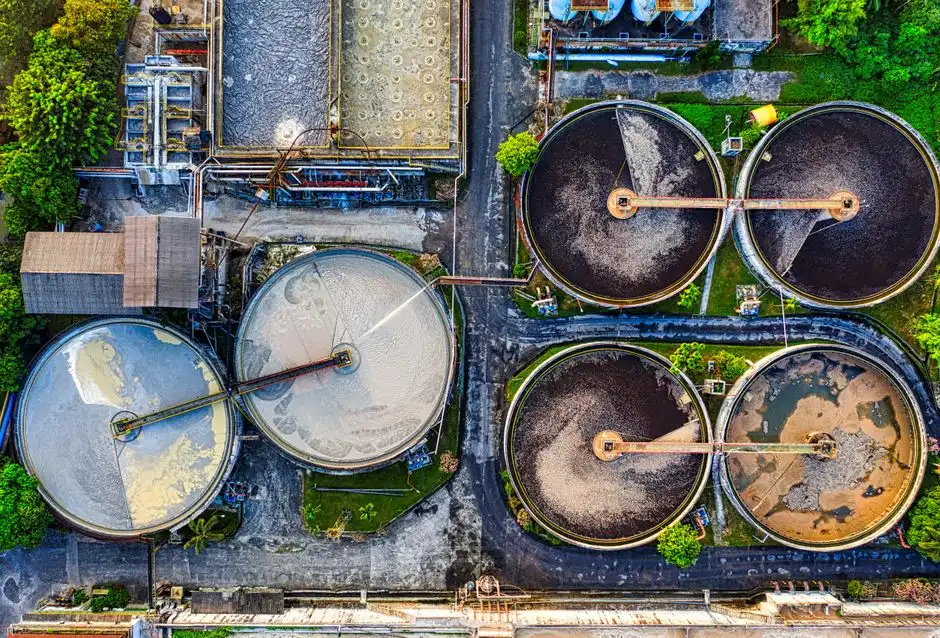
Shakeri et al. 2021 (Desalination & Water Treatment 227, 163–176) ran a four-monopolar parallel aluminum electrode ECF reactor, followed by 30 minutes of sedimentation, and used response surface methodology under central composite design to optimize the system. The experimental envelope was pH 3.64–10.36, current 0.66–2.34 A, and electrolysis time 9.55–110.45 min. The RSM-CCD optimum sat at pH 5.1, current 2 A, and electrolysis time 53.5 min, where the model predicted 83.56% MBAS, 82.54% COD, 88.14% turbidity, and SSV₆₀ 226.22 mL/L; actual measured values were 85.5%, 84.4%, 90.5%, and 240.17 mL/L respectively. The lab-scale operating cost at this optimum was 0.673 USD/m³, dominated by sacrificial electrode mass and kWh. The Khorram & Fallah textile cross-check (cited in S5) found 40% COD and 98% dye decolorization at pH 5.5, 15 mA/cm², and 23 min — a useful data point for plants whose primary target is color stripping rather than MBAS, where lower current density and shorter time favor dye complexation. The WHO aluminum-residual ceiling of 0.2 mg/L acts as a downward constraint on the reactor: the cell can drive soluble Al to very low values at pH 6–7, but going below 0.2 mg/L needs a polishing barrier such as UF or ion exchange, not the EC cell alone.
| Parameter | Experimental Envelope | RSM-CCD Optimum | Measured at Optimum | Notes / Source |
|---|---|---|---|---|
| pH | 3.64–10.36 | 5.1 | 5.1 | Slightly acidic favors Al³⁺ over Al(OH)₄⁻ |
| Current | 0.66–2.34 A | 2.0 A | 2.0 A | Approx. 15–20 mA/cm² at lab scale |
| Electrolysis time | 9.55–110.45 min | 53.5 min | 53.5 min | Hydraulic retention time target |
| MBAS removal | — | 83.56% (predicted) | 85.5% | Shakeri et al. 2021 |
| COD removal | — | 82.54% (predicted) | 84.4% | Shakeri et al. 2021 |
| Turbidity removal | — | 88.14% (predicted) | 90.5% | Shakeri et al. 2021 |
| SSV₆₀ | — | 226.22 mL/L (predicted) | 240.17 mL/L | Sludge settles; plate-and-frame feasible |
| Operating cost | — | — | 0.673 USD/m³ | Lab-scale, Al + electricity |
Aluminum vs Iron Electrodes: Choosing the Right Anode
Electrode material should follow the dominant pollutant, not vendor habit. The carpet-cleaning literature in Shakeri et al. 2021 reports 90.39% anionic surfactant removal with aluminum at pH 3 and 90 min reaction time, which is the right anchor for plants whose MBAS load dominates. Iron anodes, as the Hashim et al. 2023 review notes, favor phosphate precipitation through Fe³⁺-PO₄ complexes and faster color kill through Fe³⁺-dye chelation — the better choice when the stream is dye-heavy and surfactant-light, and when phosphate from latex backing-coat rinse is a discharge concern. The trade-off is operational: aluminum gives lower sludge volume (Al(OH)₃ floc is roughly half the dry mass of Fe(OH)₃ per equivalent charge passed) and a clearer supernatant, while iron gives faster color kill, a tighter pH window of approximately 2–4, and visibly red-brown sludge that is harder to dewater and is restricted for landfill in some jurisdictions. For plants that swing between dye-bath batches and surfactant-dominant batches on the same line, the Emamjomeh textile ECF work cited in S5 demonstrates a hybrid Al/Fe array where the two metals are mounted as alternating anodes; this lets the operator bias the cell toward color or MBAS by changing which electrodes are energized.
| Criterion | Aluminum Anode | Iron Anode | Hybrid Al/Fe Array |
|---|---|---|---|
| Best-fit pollutant | MBAS, turbidity, COD | Dyes, phosphate, sulfide | Mixed dye + surfactant batches |
| MBAS removal ceiling | 90.39% (S5 citation) | 70–85% typical | 85%+ with longer time |
| Dye/color kill | Moderate; floc sweep only | Fast via Fe³⁺-dye complex | Bias by selecting active anodes |
| Optimal pH window | 5–7 (wide) | 2–4 (narrow) | 3–6 |
| Sludge mass | Lower; ~ Al(OH)₃ | Higher; Fe(OH)₃ plus colored | Intermediate |
| Residual metal risk | Al ceiling 0.2 mg/L (WHO) | Fe ceiling 0.3 mg/L (WHO, aesthetic) | Need to monitor both |
| Rectifier polarity switching | Optional for descaling | Mandatory for passivation control | Required for hybrid operation |
Process Train: From Electrocoagulation to Reusable Water
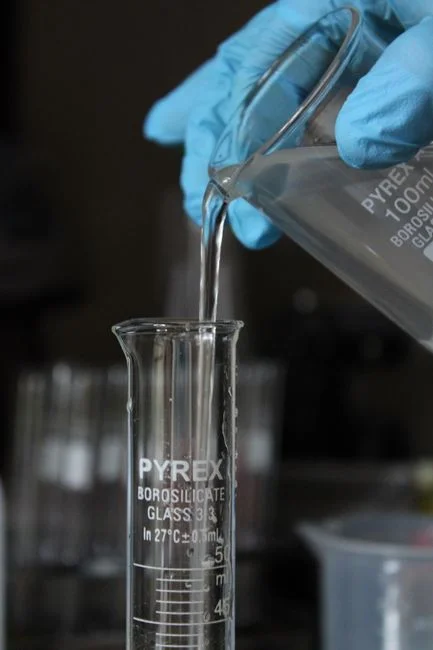
EC is rarely a stand-alone box on a 2026 carpet plant P&ID. The Shakeri 2021 train itself is ECF followed by 30 min sedimentation, and that is the minimum. A defensible 2026 train for carpet wash water runs: equalization (24 h HRT for surge and surfactant load leveling) → fine screening (1 mm wedge wire to protect the cell from latex fiber) → ECF reactor with aluminum electrodes at pH 5–6 → lamella sedimentation or a DAF polishing cell after the EC reactor for the floated/settled sludge separation → multi-media filter downstream of the DAF for residual turbidity guard → UF for water reuse, or carbon adsorption for residual color if the stream is being discharged. The Shakeri 2021 sludge-settling result of SSV₆₀ 240.17 mL/L is dense enough to feed a plate-and-frame filter press for the EC + DAF sludge at 6–8 bar, yielding a cake of 18–25% dry solids suitable for off-site disposal or, in some jurisdictions, cement-kiln co-firing. The Hashim et al. 2023 review's "less sludge vs other techniques" line is worth quoting to procurement: EC typically generates 30–60% less dry sludge than chemical coagulation at equivalent COD removal, which directly reduces disposal cost and plant footprint. If the treated water is being routed back into dye-bath make-up rather than discharged, residual aluminum and any non-biodegradable dye fragments need a polishing barrier (UF at 0.01–0.1 µm, or RO at 200–400 psi) — the EC cell alone will not deliver reused water of dye-bath quality.
Operating Cost and Sizing Logic for a 2026 Plant
The 2026 OPEX anchor is 0.673 USD/m³ at the Shakeri 2021 lab optimum, dominated by sacrificial electrode mass and electricity. Three OPEX drivers matter in priority order: (1) sacrificial electrode mass in kg/m³, driven by Faraday's law (M = I·t·Mw / (n·F·V) — at 2 A for 53.5 min on Al, theoretical Al dissolution is ~0.11 kg/m³, so the electrode line item is real); (2) kWh/m³, which scales with current and voltage drop across the cell; and (3) sludge disposal $/m³, which scales with the SSV₆₀ and cake dry solids from the filter press. The scaling rule of thumb from a 1 L lab reactor to an industrial m³/h cell is to hold hydraulic retention time at 50–60 min and current density at 10–20 mA/cm², the same band Khorram & Fallah used for textile EC. This translates into a rectifier sized at approximately 1.2–1.5× the design average current, with anode surface area sized to keep current density in band at peak flow. Pilot testing on actual plant effluent is non-optional: carpet dye chemistry and surfactant formulations vary widely between tufted woven lines, needle-punched lines, and face-yarn piece-dye operations, and lab results from a different plant's effluent are not transferable without a 4–8 week on-site pilot.
Selecting an Electrocoagulation System in 2026: A Buyer's Checklist
A 2026 vendor qualification should be a written checklist, not a coffee meeting. Electrode material warranty: Al 6061 or Al 1100 for sacrificial anodes, with a guaranteed kg-Al/m³ rate at the design current density. Rectifier sizing: ≥150% of design current to handle peak surges and passivation recovery. PLC with pH and current-density interlocks, plus a PLC-controlled pH-correction dosing skid for acid/caustic trim. Sludge removal automation: float scraper on the ECF cell, automatic sludge pump-down to the filter press feed tank, and dry-solids readout on the cake discharge. ATEX/IECEx rating for any cell located near solvent-based latex backing lines, where VOC accumulation is a real ignition source. Vendor qualification asks in priority order: (1) documented pilot on carpet or textile wastewater with third-party removal data on COD, MBAS, and turbidity; (2) electrode replacement cost quoted in USD/m³, not USD/kg; (3) reference plants of comparable m³/h; (4) compliance with the buyer's discharge consent, typically COD < 250 mg/L, TSS < 50 mg/L, MBAS < 5 mg/L, and residual Al < 0.2 mg/L per the WHO drinking-water guideline as a conservative floor.
Frequently Asked Questions
Which electrode material should a carpet plant choose, aluminum or iron?
Aluminum is the default when MBAS dominates the load, because Shakeri et al. 2021 (Desalination & Water Treatment 227, 163–176) and prior car-wash data report 85–90% anionic surfactant removal with Al at pH 3–5 and 53–90 min. Iron is the better choice when dye color and phosphate are the priority, as Fe³⁺ forms strong complexes with chromophores and phosphate. A hybrid Al/Fe array is justified for plants that swing between dye-bath and surfactant-dominant batches on the same line.
How is the EC sludge handled downstream?
The Shakeri 2021 optimum produces a sludge with SSV₆₀ of 240.17 mL/L, which settles and dewaters readily in a plate-and-frame filter press at 6–8 bar, yielding a cake of 18–25% dry solids. EC typically generates 30–60% less dry sludge than chemical coagulation, per the Hashim et al. 2023 review, which directly cuts disposal cost and plant footprint.
Can EC effluent be reused in the dye-bath?
Only with a polishing barrier. EC alone reliably hits MBAS < 5 mg/L and COD < 250 mg/L, but residual Al must stay under 0.2 mg/L (WHO guideline) and any non-biodegradable dye fragments need UF at 0.01–0.1 µm or RO at 200–400 psi before the water can re-enter dye-bath make-up. For discharge to a municipal sewer, the EC + DAF + multimedia train is usually sufficient.
What compliance limits should a 2026 carpet plant target on the EC effluent?
Typical discharge consents are COD < 250 mg/L, TSS < 50 mg/L, MBAS < 5 mg/L, and residual Al < 0.2 mg/L. Iran, India, Turkey, and Uzbekistan each publish their own effluent tables, but those numbers are a defensible conservative floor across the major carpet-manufacturing jurisdictions, and the Shakeri 2021 RSM-CCD optimum clears them all at lab scale.