The 2026 Compliance Frame: Why the Local POTW, Not EPA, Sets the Real Limit
Clean Water Act §307(b) and 40 CFR Part 403 delegate pretreatment enforcement to the local POTW through its sewer-use ordinance, which means a mining or metals plant near Gulliver is sized to a municipal number, not a federal one (per 40 CFR 403.1 et seq.). The categorical standards at 40 CFR Part 437 (Ore Mining and Dressing) and 40 CFR Part 433 (Metal Finishing) are the floor; the local limit is the binding number when it is more stringent, and on zinc, copper, lead, and ammonia it almost always is. Most Upper Peninsula operations also carry an NPDES permit (CWA §402) for surface-water discharges from stormwater outfalls, but the sewer path is what controls the treatment train because the audit cadence, sampling protocol, and penalty structure are all tighter on that pathway. Conflating the two is the single most common reason a plant invests in equipment sized to the wrong number. Three 2024–2026 EPA developments are reshaping what counts as compliant right now: the Lead and Copper Rule Revisions (LCRR) are pushing lead action levels toward 10 µg/L and forcing POTWs to re-derive local limits at much lower numbers; the 2024 Multi-Sector General Permit (finalized 2024-09) added PFAS monitoring for PFOS, PHOA, PFHxS, and PFNA in sectors that include metal mining; and the 2025 ore-mining BAT revisions tightened the cost-benefit envelope on total recoverable metals. Treat all three as the next permit-cycle risk in 2026 and verify each against the receiving POTW ordinance before any equipment is ordered.
| Parameter | 40 CFR Part 437 Daily Max (mg/L) | 40 CFR Part 437 Monthly Avg (mg/L) | Typical Local POTW Limit (mg/L) |
|---|---|---|---|
| Zinc | 1.0 | 0.5 | 0.3–1.0 monthly avg |
| Copper | 1.0 | 0.5 | 0.3–0.5 monthly avg |
| Lead | 0.6 | 0.3 | 0.1–0.2 monthly avg (LCRR tightening toward 0.01) |
| Total Chromium (Part 433) | 2.77 | 1.71 | 0.5–1.0 monthly avg |
| pH | 6.0–9.0 | 6.0–9.0 | 6.5–9.0 instantaneous |
| TSS | 50 | 30 | 20–30 monthly avg |
Plants running plating, pickling, or anodizing lines must additionally hit the 40 CFR Part 433 copper daily-max of 3.38 mg/L and monthly-average of 2.07 mg/L, plus total chromium at 2.77 / 1.71 mg/L (per 40 CFR 433.15).
Gulliver-Area Influent Signature: What the Local Stream Actually Carries
Iron-ore and low-sulfide hard-rock operations in Michigan's Upper Peninsula produce a distinctly different wastewater signature than the Trapper Creek-style hard rock with cyanide described in competing articles — the local signature is dominated by iron, manganese, and occasional arsenic from sulfide inclusions in the ore body, with WAD cyanide typically below the analytical action level (per USGS Bulletin 1756-A analog methods). Raw acid mine drainage and spent process solutions arrive at the gatehouse at pH 2–4, with total suspended solids in the hundreds to several thousand mg/L, dissolved Pb/Cu/Zn/Cd/Ni/As, and elevated sulfate and TDS in leach-pad runoff and brine streams. The contaminant set is narrower than a Wyoming uranium/copper operation but the iron and manganese loading is higher, which directly drives the hydroxide-sludge volume in the clarifier and the dewatering load downstream. Three stream families must be separated at the gatehouse because each demands a different first unit operation: contact stormwater (first flush carries the highest metals load and needs diversion to equalization), process wastewater (continuous, pH 2–4, needs immediate pH correction and precipitation), and sanitary or employee flows (low metals, can bypass the precipitation train). The only defensible way to lock the metals-precipitation pH window before sizing any reagent system is jar testing on at least four 24-hour composite samples taken across a complete mill cycle — vendor literature on optimum pH is a starting point, not a design basis.
Equalization and pH Correction: The Two Unit Ops That Decide Everything Downstream
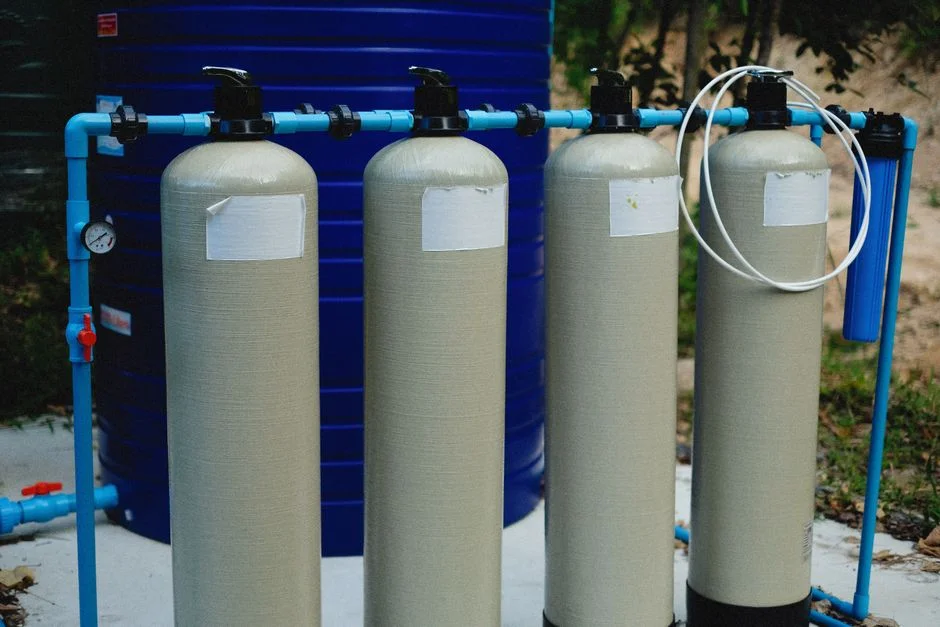
The equalization basin is the most undersized piece of equipment in most mining pretreatment plants and the most expensive to retrofit. Spec the basin at 8–24 hours of average daily flow to dampen batch discharges from shift changes, dump-leach cycles, and mill clean-outs; a 4-hour basin passes every spike straight into the clarifier and overwhelms it. Target pH 6.5–9.0 to satisfy virtually every POTW's instantaneous range, and stage the dosing in two reactors if the influent swings more than 2 pH units. The downstream consequence of sloppy pH control is severe: each 1 pH unit away from the metals-precipitation optimum can cut removal efficiency by an order of magnitude, sending zinc from <1 mg/L to 10+ mg/L with no other change in chemistry (HydropureWater field data, 2026). Lime (Ca(OH)₂) is cheaper per ton but generates 3–5× more sludge than NaOH; on high-TDS mining streams the higher NaOH reagent cost is usually offset by lower sludge handling expense downstream. A PLC-controlled chemical dosing skid holds pH inside a ±0.2 band, which is the difference between meeting and missing a 0.3 mg/L zinc monthly average. A rotary bar screen on the inlet channel protects downstream pumps and valves from rags, plastics, and tramp metal that arrive with contact stormwater and dump-leach flows.
Metals Precipitation: Hydroxide, Sulfide, or Both
Hydroxide precipitation with NaOH or lime is the default — reagent is cheap, chemistry is well understood, and properly controlled systems routinely achieve 85–95% total metals removal (Fluence, 2024-11). Sulfide precipitation (NaHS, FeS, Na₂S) is reserved for streams where residual metal must drop below 0.1 mg/L; sulfide residuals are typically 0.01–0.05 mg/L for Cu, Zn, Cd, and Ni — an order of magnitude lower than hydroxide. The trade-off is cost: sulfide reagent runs 2–4× higher than hydroxide and operators must control H₂S off-gassing with sealed reactors and scrubbed vents. For most mining flows, hydroxide precipitation with sulfide polishing on a slipstream is the cost-effective compromise when the local limit sits below 0.3 mg/L. The optimum pH window is parameter-specific and must be locked with jar testing rather than vendor curves, because the same ore body can shift the optimum by 0.5–1.0 pH units between wet and dry seasons. A polymer coagulant aid dosed at 0.5–3 mg/L flocs the metal hydroxide particles fast enough for the clarifier to operate at 20–40 m/h hydraulic loading without carryover, and reduces TDS bleed by collapsing the colloidal fraction before settling.
| Metal | Hydroxide Optimum pH | Hydroxide Residual (mg/L) | Sulfide Residual (mg/L) | When to Use Sulfide |
|---|---|---|---|---|
| Zinc (Zn) | 9.0–10.0 | 0.5–1.0 | 0.01–0.05 | Local limit <0.3 mg/L |
| Copper (Cu) | 8.0–10.0 | 0.5–1.0 | 0.01–0.05 | Local limit <0.3 mg/L |
| Cadmium (Cd) | 10.0–11.0 | 0.5–2.0 | 0.01–0.05 | Local limit <0.3 mg/L |
| Nickel (Ni) | 10.0–11.0 | 0.5–2.0 | 0.05–0.10 | Local limit <0.5 mg/L |
| Lead (Pb) | 9.0–10.0 | 0.3–0.5 | 0.01–0.05 | Local limit <0.2 mg/L (LCRR) |
Clarifier Selection: DAF vs Lamella for Gulliver-Area Streams
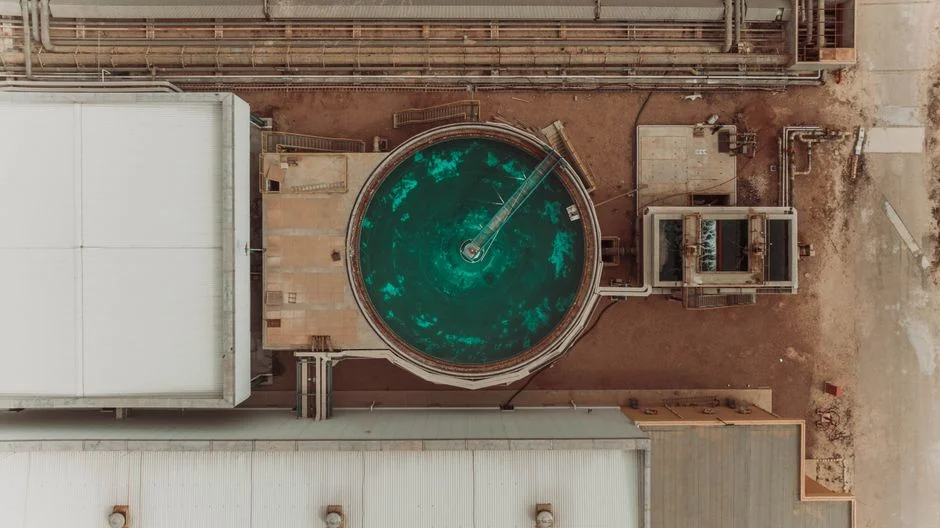
The clarifier decision is the one most engineers actually face on a real project — both work, neither is universally better. A DAF system operates at 5–25 m/h hydraulic loading, floats oil-coated and colloidal particles with microbubbles, and achieves 90–98% TSS removal and 85–95% oil/grease removal in mining and metal-finishing service. Standard DAF units cover 4–300 m³/h across 13 models, which fits most plant scales without civil redesign; below 10 m³/h packaged skid systems are common. A lamella clarifier operates at 20–40 m/h surface loading in roughly one-third the footprint of a conventional clarifier, has lower chemical consumption because the sludge blanket is denser, and handles heavy metal-hydroxide flocs very well — but does not remove free oil or colloidal fines as effectively as DAF. Above 100 m³/h, multiple DAF trains in parallel or a single lamella typically becomes more economical than a single oversized DAF, and above 200 m³/h the lamella's smaller footprint and denser sludge blanket usually win on total installed cost unless oil/grease loading is significant. For a side-by-side procurement matrix, the DAF vs clarifier decision guide walks through the same selection logic with cost numbers attached.
| Selection Criterion | Choose DAF | Choose Lamella |
|---|---|---|
| Flow band | <200 m³/h | >100 m³/h |
| Stream character | Oil, grease, colloidal fines | Metal-hydroxide sludge, no FOG |
| Hydraulic loading | 5–25 m/h | 20–40 m/h |
| Footprint constraint | Moderate | Tight site, prefer 1/3 area |
| Sludge density target | 2–4% dry solids | 3–6% dry solids |
| Indicative CAPEX band (2026) | $180K–$650K | $220K–$780K |
Polishing, Disinfection, and Sludge: The Last 10% That Catches Auditors
A multimedia filter (anthracite over sand over garnet) at 1–2 m/h filtration rate strips residual TSS to <10 mg/L and provides a buffer for the days when the clarifier underperforms because of a polymer mis-dose or a hydraulic surge. Size the filter for the backwash cycle, not the average flow, so backwash does not slam the head of the plant. A chlorine dioxide generator dosed at 1–5 mg/L provides the residual the POTW asks for without forming the regulated trihalomethanes that chlorine produces; UV is the chemical-free alternative for sites that prohibit oxidant residuals in the sewer line. Metal-precipitation sludge routinely fails TCLP for Pb, Cd, or As and must be managed as characteristic hazardous waste under 40 CFR 261.24, routed to a TSDF or dewatered on-site. A plate and frame filter press dewaters the sludge to 25–35% dry solids, producing a stackable cake that can be hauled to a Subtitle-D landfill or, when metals are recoverable, sent to a smelter. Filtrate from the press returns to the head of the plant, so the filter-press hydraulic load has to be carried in the equalization-basin sizing from day one. For a regional analog, the Skiatook pretreatment guide covers a similar polishing and dewatering sequence for a different ore body.
2026 Sampling, Self-Monitoring, and Audit Defense
Self-monitoring has to be defensible at the next compliance audit, which for most POTWs is a comprehensive review every five years with annual compliance inspections in between. The minimum record set is 24-hour flow-proportional composite sampling for the full metals and cyanide panel, continuous pH and ORP recording on the discharge line, calibration logs for all in-line probes, chemical dose logs from the dosing skid, and sludge manifests for any waste leaving the site. Reports go to the Control Authority on the schedule written into the POTW's NPDES permit — typically monthly for pH, flow, and TSS, and quarterly for the full metals and cyanide panel. A single missing calibration log is the most common audit finding that escalates to a Notice of Violation, then to stipulated penalties of roughly $10,000–$25,000 per violation per day, and civil penalties under CWA §309 can reach $25,000/day per violation. The LCRR-driven lead action level (toward 10 µg/L), the 2024 MSGP PFAS suite (PFOS, PFOA, PFHxS, PFNA), and the 2025 ore-mining BAT revisions are the three permit-cycle risks to plan for in 2026 — verify each against the specific POTW ordinance before sizing equipment. Design for the peak 2-hour flow with 20–30% turndown capacity, and treat to the local POTW's sewer-use ordinance, not just to the federal categorical standard, because the penalty structure under CWA §309 is enforced against the local number. For biological polishing comparisons relevant to ammonia/nitrate reduction downstream, the MBR vs CAS comparison covers the membrane option in detail.
| Parameter | Frequency | Method | Holding Time | Report Cadence |
|---|---|---|---|---|
| Flow | Continuous | Magmeter / Parshall flume | Real-time | Monthly |
| pH | Continuous | In-line probe, calibrated weekly | Real-time | Monthly |
| TSS | Daily composite | SM 2540D | 7 days (4 °C) | Monthly |
| Total Metals (Pb, Cu, Zn, Cd, Ni) | 24-hr flow-proportional composite | EPA 200.8 / 6010 | 6 months (HNO₃, 4 °C) | Quarterly |
| Arsenic | 24-hr composite | EPA 200.8 | 6 months (HNO₃, 4 °C) | Quarterly |
| WAD Cyanide | 24-hr composite | ASTM D7237 / OIA-1677 | 14 days (4 °C, NaOH) | Quarterly |
| PFAS (PFOS, PFOA, PFHxS, PFNA) | Quarterly grab | EPA 533 / 537.1 | 28 days (4 °C) | Quarterly |
| ORP | Continuous | In-line probe | Real-time | Monthly |
Frequently Asked Questions
Do the 2024 MSGP PFAS requirements apply to a facility that discharges to a sewer, not surface water?
Yes, indirectly. The 2024 Multi-Sector General Permit (finalized 2024-09) added PFAS monitoring for PFOS, PFOA, PFHxS, and PFNA in sectors that include metal mining, and local Control Authorities are adopting the same analytical suite in their sewer-use ordinances even when the receiving POTW does not have an industrial PFAS limit yet. Verify against the specific POTW ordinance before assuming sewer discharge exempts the plant from PFAS reporting.
What is the LCRR lead action level and how does it change local limits in 2026?
The Lead and Copper Rule Revisions are driving the lead action level toward 10 µg/L at the tap, which forces receiving POTWs to re-derive their local lead limits at significantly lower numbers. Plants that historically passed at 0.3–0.5 mg/L monthly-average lead can see their local limit drop to 0.1–0.2 mg/L or lower, which moves lead precipitation from a hydroxide-only operation to a hydroxide-plus-sulfide polishing train.
When should a mining plant choose DAF instead of a lamella clarifier?
Use DAF when the stream carries oil, grease, or fine colloidal metals — DAF operates at 5–25 m/h hydraulic loading and achieves 90–98% TSS and 85–95% oil/grease removal. Use a lamella clarifier at 20–40 m/h surface loading when the stream is primarily a metal-hydroxide sludge at high flow (>100 m³/h) and footprint is constrained. Below 10 m³/h, packaged DAF skids are common; above 200 m³/h, lamella usually wins on total installed cost unless FOG loading is significant.
What is the realistic penalty exposure for a single missed pretreatment excursion?
Civil penalties under Clean Water Act §309 can reach $25,000 per day per violation, and stipulated penalties under 40 CFR 403.8 enforcement actions typically run $10,000–$25,000 per violation per day. A single missed monthly-average zinc excursion that triggers pass-through at the POTW can therefore cost a six-figure sum before any cleanup or capital retrofit is added.