
Why Metal Finishing Sludge Is a Compliance and Cost Problem
Discharging untreated metal finishing wastewater to a POTW in 2026 requires meeting categorical daily maximums for seven regulated metals (cadmium, chromium, copper, lead, nickel, silver, and zinc) plus cyanide, oil and grease, TSS, and pH under 40 CFR Part 433. On-site hydroxide precipitation hits those limits by concentrating regulated metals into a low-volume sludge, making the disposal route—not the discharge concentration—the primary financial exposure. The compliance problem shifts from meeting daily maximums at the outfall to classifying the filter cake correctly and paying the appropriate tipping fee.
The sludge originates from wet processes along the plating line: rinse waters carrying drag-out, spent process baths, anodizing seal baths, PCB etchant rinses, and chromate conversion dumps. Each stream adds different metals to the homogenization tank, creating a mixed-metal hydroxide floc that the dewatering step must process. POTW surcharges for high TSS, metals loadings, and pH excursions stack on top of non-compliance penalties, which is why most shops running multiple rinse tanks build in-house treatment systems rather than paying surcharges and hauling bills.
The 2026 pretreatment compliance guide for metals plants details the permit-side calculations for plants hitting 2026 pretreatment limits.
The Four-Stage Treatment Train Used in 2026
The canonical 2026 treatment train for hydroxide sludge generation consists of four stages: equalization, chemical pretreatment, coagulation/flocculation, and solid–liquid separation, followed by mechanical dewatering to convert clarifier underflow into a disposable cake. This flow path is well-established, and most plating shops follow a near-identical sequence regardless of size (per Met-Chem, 2026).
- Equalization. All rinse streams, drag-out, and batch dumps collect in a homogenization tank that smooths flow and concentration swings. Without EQ, a single dump of a chromate bath can blow pH and ORP past the control band of the next stage.
- Chemical pretreatment. Two-stage pH adjustment with caustic or lime drives dissolved metals out of solution as insoluble hydroxides. Chromium-bearing streams require a reduction step (Cr⁶⁺ → Cr³⁺ at low pH), and cyanide-bearing streams require alkaline chlorination upstream of the pH sweep; failing to reduce hex chrome first prevents clean precipitation in the hydroxide stage.
- Coagulation and flocculation. Polymer is dosed in a flocculation tank to build a settleable or filterable floc. Jar testing determines the appropriate charge (cationic vs. anionic), molecular weight, and dose band for the specific mixed-metal stream.
- Solid–liquid separation. A clarifier, plate-and-frame filter press, or rotary vacuum precoat filter (e.g., an Auto-Vac-style 1-micron precoat drum) processes the flocculated slurry into clear effluent and a concentrated solids stream. A sludge thickener positioned between the clarifier and the press reduces press loading.
For low-flow shops with intermittent discharge, atmospheric or thermal evaporation serves as a legitimate alternative to the clarifier-plus-press train, eliminating liquid hauling and paying for itself in years when waste volume is the dominant cost (per Met-Chem, 2026). Plants handling cyanide destruction alongside metal precipitation should review the cyanide wastewater treatment system engineering specs for hybrid DAF-RO-MBR configurations that combine destruction with metals recovery.
Sludge Characteristics and Process Parameters You Can Design Around
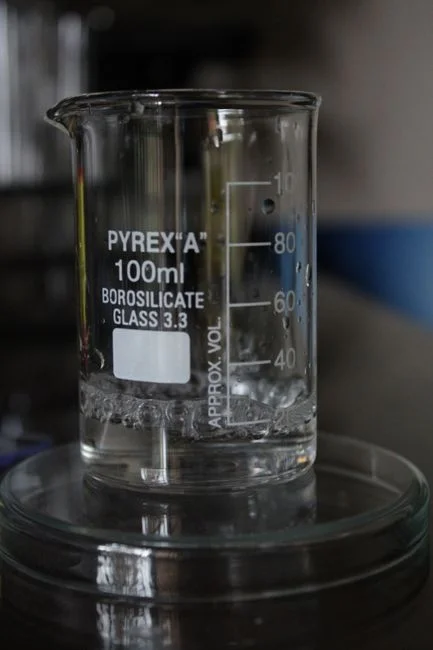
Mixed-metal hydroxide sludge from a plating clarifier typically lands in the 1–3% dry solids range as underflow, which the filter press must process into a stackable, disposable cake. The following table outlines the engineering envelope for design; exact parameters must be confirmed by jar testing and a pilot run on the actual waste stream (HydropureWater field practice, 2026).
| Parameter | Typical design range | Notes |
|---|---|---|
| Clarifier underflow solids | ~1–3 wt% | Depends on floc density and clarifier hydraulic loading |
| Mixed-metal sweep pH | 8.5–9.5 | Wide enough to drop most divalent metals; keep below the zinc redissolution threshold |
| Trivalent chromium pH | ~8.0–8.5 | Cr(OH)₃ minimum solubility near pH 8; higher pH risks amphoteric redissolution |
| Amphoteric metals (Zn, Al) | Cap at ~9.0–9.5 | Above ~9–10, zinc and aluminum redissolve as zincate and aluminate, respectively |
| Polymer dose (cationic flocculant) | Low single-digit mg/L range, confirmed by jar test | Overdose restabilizes the colloid; underdose gives cloudy filtrate and slow press cycles |
| Filter press feed solids target | ~2–4 wt% (thickened) | Sludge thickener between clarifier and press; reduces press cycle time and cake moisture |
| Cake dryness target | Highest practical, confirmed in pilot | Each 5 points of dry solids roughly halves hauled water mass |
| Rotary vacuum precoat (1 µm) | Single-pass, landfill-ready solids | Benchmark for "dry, disposable" — eliminates clarifier, sludge dryer, and oil-separator stages (per ALAR, 2026) |
Mixed-metal sludges are harder to dewater than single-metal sludges because the floc structure varies with the metal mix, resulting in a wider pore-size distribution. Staged precipitation—sweeping one metal at its optimal pH before raising pH for the next—improves clarifier clarity, cake washability, and reduces the polymer dose required for a pressable floc. For a lamella-style clarifier upstream of the press, the lamella clarifier reference provides typical hydraulic loading rates for hydroxide floc.
Comparing Dewatering Technologies for Hydroxide Sludge
Four mechanical options are common in metal finishing bids: plate-and-frame filter press, rotary vacuum precoat drum, belt filter press, and decanter centrifuge. These options involve trade-offs regarding capital cost, footprint, polymer demand, and cake dryness, with the optimal choice depending on flow regime, mixed-metal variability, and TCLP requirements. The table below summarizes qualitative trade-offs for preselection (HydropureWater field data, 2026; cross-referenced with ALAR engineering data, 2026).
| Technology | Typical cake dryness | Polymer demand | Capital cost | Footprint | Mixed-metal sensitivity | Operating mode |
|---|---|---|---|---|---|---|
| Plate-and-frame filter press | High (deep cake, low moisture) | Moderate | Moderate | Moderate (batch, plate stack) | Robust to mixed-metal variability | Batch — fill, press, dump |
| Rotary vacuum drum precoat (1 µm) | High; landfill-ready dry solids in one pass | Little to none | Higher | Compact, skid-mounted | Self-cleaning knife handles variable feed | Continuous, single-pass |
| Belt filter press | Moderate; cake typically wetter than press cake | Higher (polymer-intensive) | Lower | Large, open frame | Sensitive to feed solids swings | Continuous |
| Decanter centrifuge | Moderate; lower dry solids than filter press | Moderate to high | Moderate to high | Compact, enclosed | Better for oily or fibrous sludges | Continuous |
The plate-and-frame press remains the standard for hydroxide sludges, as it pairs with the clarifier-thickener train to produce a dense, stackable cake that passes TCLP more predictably (per Met-Chem, 2026). The rotary vacuum precoat drum eliminates the need for separate clarifiers, sludge dryers, and oil separators, making it the preferred choice when footprint and labor are constraints (per ALAR, 2026). Belt presses and decanter centrifuges are more suitable for larger continuous plants where throughput justifies the polymer overhead. For the canonical clarifier-plus-press configuration, the plate-and-frame filter press reference provides the standard operating envelope.
Sludge Classification, Disposal Routes and Cost Levers
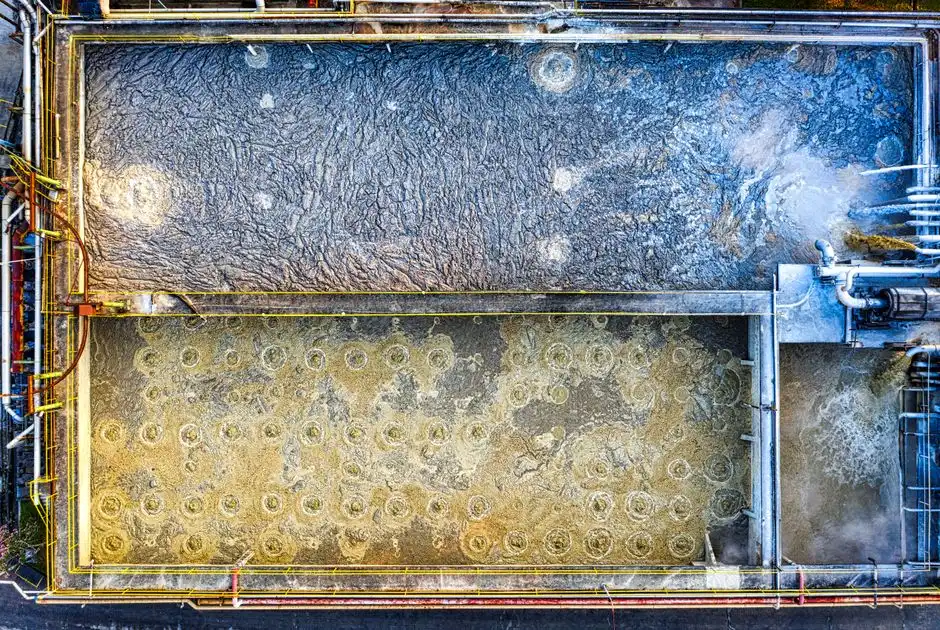
Metal finishing hydroxide sludges are classified for disposal under RCRA based on the toxicity characteristic leaching procedure (TCLP) for the seven metals regulated at the outfall. If cake leachate exceeds the TCLP threshold for any metal, the waste typically falls under the F006 (electroplating waste) code and requires disposal at a hazardous-waste landfill; otherwise, it may be sent to a non-hazardous industrial facility (per EPA RCRA guidance). This classification dictates tipping fees, and the difference between hazardous and non-hazardous disposal rates represents the single largest OPEX swing in the plant.
Dewatering performance is the dominant cost lever rather than chemistry, as each additional 5 points of dry solids in the cake roughly halves the hauled water mass. On-site dewatering is more cost-efficient than off-site hauling for almost every flow rate that justifies in-house treatment (per ALAR, 2026). For very low flows, atmospheric or thermal evaporation sidesteps the landfill question by producing a concentrated brine or solid, with equipment payback realized through avoided hauling costs (per Met-Chem, 2026). A DAF system can be inserted upstream of the clarifier to float oils and reduce the metal-loaded solids load on the press.
Designing the 2026 Right-Sized System for Your Shop
The following decision framework applies flow rate and chemistry to equipment selection based on the primary drivers of system performance.
- Intermittent flow, < a few m³/h. Use batch chemical treatment in a single EQ/react tank, a small filter press, or a packaged evaporation unit. Skip the clarifier and emphasize chemistry and TCLP risk over throughput.
- Continuous flow, > ~10 m³/h. Use equalization, continuous chemical treatment (two-stage pH, chromium reduction, cyanide destruction as needed), a clarifier with sludge thickener, and a plate-and-frame filter press; or a rotary vacuum precoat train in a single skid when footprint and labor dominate.
- Upstream chemistry gates. Hex-chrome reduction and cyanide destruction must occur before the pH sweep. Oil and grease removal must occur before the floc tank to prevent blinding the press cloth.
- Pilot before you buy. Run a jar test to confirm polymer brand and dose, and conduct a pilot on the actual press or precoat drum to confirm cake moisture and cycle time. Vendor guarantees depend on these results, not catalog specifications.
Before sizing equipment, verify target metals, influent concentrations, daily flow peaks, available footprint, target cake disposal route, and local POTW limits. An automatic chemical dosing system provides essential insurance against pH/ORP excursions that would otherwise turn a treatable stream into hazardous waste. For shops running biological or membrane polishing downstream of the clarifier, trade-offs are detailed in the MBR vs conventional activated sludge for fabricated metals wastewater comparison.
Frequently Asked Questions
What metals are regulated under 40 CFR Part 433 for metal finishing discharges?
The categorical pretreatment standard regulates seven metals — cadmium, chromium, copper, lead, nickel, silver, and zinc — plus cyanide, total toxic organics (TTO), oil and grease, total suspended solids, and pH (per EPA 40 CFR Part 433, 2026).
What does a plate-and-frame filter press do in a metal finishing treatment train?
It dewaters thickened clarifier underflow via pressure filtration, producing a high-dry-solids filter cake for disposal and a filtrate that is recycled to the head of the plant or discharged. It is the final dewatering step in the conventional clarifier-based
Frequently Asked Questions
What is the standard process for metal finishing wastewater sludge treatment?
The standard treatment process involves chemical precipitation followed by dewatering. Wastewater is first pH-adjusted to the solubility minimum of the specific metals present, typically between pH 8.5 and 10.5, to induce the formation of metal hydroxides. Coagulants and flocculants are then added to aggregate these precipitates into larger, settleable flocs, which are separated from the water via gravity clarification or dissolved air flotation before the resulting slurry is pumped to a mechanical dewatering device.
Which heavy metals are regulated under 40 CFR Part 433 for metal finishing?
Under 40 CFR Part 433, the EPA establishes categorical pretreatment standards for the metal finishing industry specifically regulating total toxic organics (TTO) and the following heavy metals: cadmium, chromium, copper, lead, nickel, silver, and zinc. Facilities must ensure that their effluent concentrations do not exceed the daily maximum or monthly average limits established for these specific metallic constituents.
How dry is the cake from a filter press dewatering metal finishing sludge?
A standard recessed chamber filter press typically produces a filter cake with a solids content ranging from 25% to 40%. The final dryness is highly dependent on the chemical composition of the sludge, the specific metal hydroxides present, the use of filter aids, and the final air blow-down duration employed at the end of the filtration cycle.
When should a metal finishing shop choose a rotary vacuum filter instead of a filter press?
A rotary vacuum filter is generally chosen over a filter press when the operation requires continuous, high-volume sludge processing rather than the batch-processing nature of a filter press. This technology is preferred in facilities generating massive quantities of dilute sludge where labor costs for manual plate cleaning would be prohibitive, though it typically results in a wetter cake (often 15% to 25% solids) compared to high-pressure filter presses.
Is metal finishing hydroxide sludge hazardous waste?
Metal finishing hydroxide sludge is generally classified as hazardous waste under RCRA (Resource Conservation and Recovery Act) if it exhibits the characteristic of toxicity, specifically under the Toxicity Characteristic Leaching Procedure (TCLP) for metals like cadmium, chromium, or lead. Most metal finishing sludges fall under listed waste codes such as F006, which covers wastewater treatment sludges from electroplating operations, regardless of the specific concentration of leachable metals.