

Why Denim Wash Sludge Is a 2026 Engineering Problem
Raw denim finishing effluent leaves the wash line at pH 11.8 with a heavy organic load — Springer (2024) recorded 11.8 as the inlet pH for a Ca(OH)₂ coagulation train, dropping to 7.7 after garnet filtration. Coagulation–flocculation with Ca(OH)₂ is the dominant control step, removing 59.0% total organic carbon (TOC), 20.5% chemical oxygen demand (COD) and 28.6% colour from the same dataset. Those numbers set the engineering target a 2026 plant must hit before discharge or reuse, and they dictate how much calcium-rich sludge the dewatering line must absorb.
Rinse-water cascading will not make the sludge problem disappear. The May 2026 Scientific Reports WQI study on six denim finishing stages reports WQI reductions of up to ~70% per rinse stage and freshwater savings of nearly two-thirds when cascades are fully implemented — but the wash stages themselves still produce a concentrated solids stream that has to be thickened, dewatered and disposed of. That makes the downstream dewatering train the rate-limiting step, not the rinse loop. The work also explicitly frames its framework as supporting SDG 6 (clean water) and SDG 12 (responsible production), which most buyer-facing briefs now require in writing.
Operating a denim mill in 2026 means meeting local discharge rules (typically pH 6.5–9.0, COD <250 mg/L, suspended solids <100 mg/L for discharge to municipal sewer in Pakistan, Bangladesh and Türkiye), handling a Ca(OH)₂-laden sludge that does not behave like a municipal biosolid, and justifying the disposal route to management. The sludge stream is alkaline, rich in calcium carbonate and hydroxide, low in volatile solids relative to municipal biosolids, and often stained with residual indigo. None of the standard "biological sludge" design factors apply directly.
Sludge Generation Across the Denim Finishing Train
Mapping sludge to its source is the first procurement decision. The Sci Reports 2026 WQI study breaks denim finishing into six stages — desizing, bio-polishing/enzyme wash, stone/abrasion, neutralization, bleaching (typically hypochlorite or permanganate spray) and softening — and the solids profile changes sharply across them. Indigo dye, hydrolysed starch from desizing, and pumice/stone dust are the three main solid contributors in a typical South Asian finishing laundry.
Enzymatic desizing contributes a high-BOD, biodegradable load (hydrolysed starch, residual indigo), which behaves more like a food-processing sludge — it dewaters easily but generates odours if held warm. Stone-wash effluent is dominated by inorganic silt and pumice fines; it is non-biodegradable, settles fast, and tends to blind filter cloth if sent directly to a filter press without prior thickening. Almazán-Sánchez et al. (2016, 2017) and the broader bibliography in the Springer 2024 paper characterise indigo solids as finely divided, hydrophobic particles that respond well to Ca(OH)₂ flocculation once pH is forced above the isoelectric point of the dye.
The practical consequence: equalization must precede chemistry. A combined equalization tank sized for 6–12 hours of wash-line flow smooths the swing between enzyme-bolus events and stone-wash pulses, and it gives the operator a stable feed to dose against. Without equalization, a Ca(OH)₂ dose set for average conditions overdoses during dilute rinse events and underdoses during peak desizing discharge — both failure modes show up as poor floc, poor cake, and a filter press that chokes.
| Finishing stage | Main solids contributor | Sludge character | Pre-treatment implication |
|---|---|---|---|
| Desizing (enzymatic) | Hydrolysed starch, indigo wash-down | High BOD, biodegradable, odours if stored | Equalize; avoid long warm holding times |
| Bio-polishing / enzyme wash | Cellulose fragments, residual dye | Moderate BOD, fine particulates | Coagulation with Ca(OH)₂ at pH >10.5 |
| Stone / abrasion wash | Pumice dust, cotton lint | Inorganic, fast-settling, abrasive | Pre-thicken via lamella before filter press |
| Neutralization | Acid-neutralized Ca(OH)₂, salts | High Ca²⁺, gypsum-like | Drives cake dryness ceiling |
| Bleaching (hypochlorite / permanganate) | Oxidized dye, salts | High TDS, residual oxidant | Reduce residual Cl₂/O₃ before biology |
| Softener rinse | Quaternary surfactants, dye trace | Low solids, FOG-bearing | DAF skimming if FOG >50 mg/L |
Coagulation–Flocculation: Dosing, pH and Removal Performance
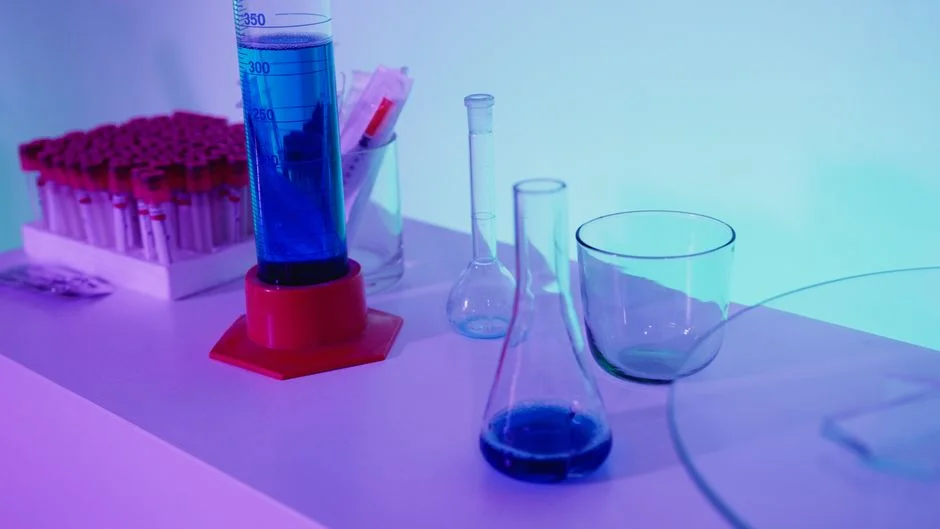
Ca(OH)₂ is the workhorse alkali in 2026 denim-mill coagulation trains. It is cheap, locally available in South Asia and Türkiye, and it doubles as a pH adjuster for the downstream Fe-garnet polishing step. The Springer 2024 study shows the pH window that operators must hold: inlet 11.8, outlet 7.7 after garnet filtration, with 59.0% TOC, 20.5% COD and 28.6% colour removal as the realistic design values to lock into a process guarantee.
Dose control is the single biggest lever. Under-dosing leaves colloidal indigo in suspension; over-dosing wastes reagent, pumps excess Ca²⁺ into the discharge, and forces the filter press to handle more inorganic mass per kilogram of dry solids. For typical denim wash water (TSS 800–2,500 mg/L, colour >1,000 Pt-Co units), a Ca(OH)₂ dose range that delivers the Springer removal figures sits in the 1.5–4.0 g/L band as a working envelope — the actual set point must be tuned jar-test-by-jar-test on the live mill feed, because indigo concentration and competing ions (chloride from bleaching, sulfate from neutralization) shift the optimum by ±30%.
Polyacrylamide (PAM) flocculant demand for indigo floc is typically 2–10 mg/L, with cationic PAM preferred when the upstream stream is enzyme-rich and anionic PAM preferred when the stream is dominated by hydrolysed starch. HydropureWater field experience shows the dose must follow a charge-demand titration, not a fixed recipe. A PLC-controlled coagulant and polymer dosing skid with online pH and streaming-current feedback holds the dose within the narrow band that delivers 55–60% TOC removal consistently; manual dosing drifts, and the filter press cake dryness drifts with it.
| Parameter | Target / range (2026 design) | Source |
|---|---|---|
| pH after Ca(OH)₂ dosing | 10.5–11.5 (downstream of floc); 7.5–8.0 after garnet | Springer 2024 (S3): 11.8 → 7.7 |
| Ca(OH)₂ dose | 1.5–4.0 g/L (jar-test dependent) | Engineering range for Ca(OH)₂ textile floc |
| Cationic / anionic PAM dose | 2–10 mg/L | Typical textile-floc range |
| TOC removal | 59.0% | Springer 2024 (S3) |
| COD removal | 20.5% | Springer 2024 (S3) |
| Colour removal | 28.6% | Springer 2024 (S3) |
| Polishing | Fe-garnet filtration to reuse-grade water | Springer 2024 (S3) |
Thickening the Floc Stream: DAF vs Lamella Clarifier
Choice of thickener is driven by upstream solids character, not by brand preference. A DAF pre-thickener for indigo wash effluent is the right call when the flow carries FOG, surfactants from the softener stage, or floatable fibre lint — the air-bubble blanket lifts these to the surface, and the skimmings feed a filter press more cleanly than gravity underflow when the target cake dryness is below 65% moisture. DAF units in the standard 2026 industrial range cover 4–300 m³/h, and the heavy-duty skimming geometry tolerates the abrasive pumice fines from stone-wash lines that would scour a lamella plate pack.
For a chemical-floc stream already conditioned with Ca(OH)₂ and polymer, a lamella clarifier for chemical floc streams typically wins on chemical efficiency and footprint. Lamella surface-loading rates of 20–40 m/h are achievable on conditioned floc, and the inclined-plate geometry reduces coagulant demand by up to 30% relative to a conventional clarifier because the sludge slides back into the hopper rather than resuspending. The trade-off is that lamella underflow at 2–4% dry solids is thicker than DAF subnatant but wetter than DAF skimmings, so the downstream filter press must be sized for the higher volumetric feed.
Çapa et al. (2022), cited in the Springer 2024 bibliography, frames the choice through life-cycle assessment: DAF carries an energy penalty from the saturator and recycle pump, lamella carries a chemical penalty from the higher polymer demand at higher underflow rates. For a mill already running Fenton or MBR downstream — both referenced in the same Springer bibliography for textile polishing — DAF skimmings integrate more cleanly because they have less impact on the biological step's dissolved-oxygen budget. The decision framework below maps the dominant feed condition to the right thickener.
| Selection criterion | DAF | Lamella clarifier |
|---|---|---|
| Best upstream feed | FOG, surfactants, floatable lint >500 mg/L TSS | Already-conditioned Ca(OH)₂ floc, low FOG |
| Surface loading / hydraulic range | 4–300 m³/h, 13 model sizes | 20–40 m/h surface loading |
| Underflow / skimmings DS | 3–6% (skimmings) | 2–4% (underflow) |
| Chemical demand effect | Neutral | Up to 30% chemical reduction vs. conventional clarifier |
| Feed to filter press | Skimmings feed cleanly to <65% moisture cake | Underflow requires more press capacity |
| Energy signature | Higher (saturator + recycle pump) | Lower (gravity-driven) |
Mechanical Dewatering with a Plate and Frame Filter Press
The plate and frame filter press is the 2026 workhorse for denim-mill sludge, and the selection envelope a procurement engineer can act on is narrow: 1–500 m² filtration area, with manual, hydraulic, or fully automatic PLC operation depending on sludge volume. Plants above ~20 m³/d of sludge should specify automatic PLC operation to control cycle time, manage cake-release hydraulics, and reduce operator exposure to a strongly alkaline, indigo-stained cake.
For Ca(OH)₂-conditioned denim sludge, expected cake dryness from a properly operated plate and frame press is 55–65% dry solids (DS). That range is a function of the inorganic fraction of the sludge — calcium carbonate and hydroxide hold water differently from a biological floc, and the press cycle must be long enough to drive the secondary compression phase without over-pressurising the filter cloth. A typical cycle on a 30-chamber, 50 m² press runs 90–180 minutes including feed, squeeze (where fitted), and cake discharge. Throughput on a denim-mill feed at ~3% feed DS lands in the 4–8 kg DS/m²·h band.
Filtrate quality matters because it recirculates back to the equalization tank. A well-conditioned Ca(OH)₂ floc on a plate press returns filtrate with TSS typically <100 mg/L — clean enough to send back upstream rather than to the polishing step, which protects garnet media life. For longer-term disposal alternatives, Djandja et al. (2021), cited in the Springer 2024 bibliography, reviews hydrothermal treatment of sewage sludge; the same logic is being trialled in textile contexts to convert the press cake into a lower-moisture char, though that remains a forward-looking option for denim mills rather than a 2026 default. The HydropureWater plate and frame filter press for denim sludge dewatering covers the full 1–500 m² envelope and ships with PLC recipe control for Ca(OH)₂-conditioned feeds.
Sludge Reuse, Valorization and Compliant Disposal
The Springer 2024 study tested the Ca(OH)₂-flocculated sludge in Lactuca sativa seed germination and reported positive results — a credible proof-of-concept that the calcium-rich fraction behaves as a soil conditioner rather than a hazardous waste. That is the single most quotable piece of evidence a mill can put in front of management when arguing for a valorization route rather than a landfill contract.
Valorization is not automatic, and the gatekeeping is real. Before any agricultural or landscaping reuse, the cake must be screened for residual indigo (which can suppress germination at high loadings), for heavy metals leached from the cotton (Cu, Cr, Cd are the usual suspects in denim effluent), and for pH — a 55–65% DS cake straight off a Ca(OH)₂ train will read pH 9–11, which is too high for direct soil application without blending. A blended application rate, informed by a local agricultural extension service and the receiving soil pH, is the minimum engineering due diligence. The pharmaceutical API sludge treatment comparison walks through a similar heavy-metal and pH screening logic for a different waste stream, and the same screening framework applies here.
Where screening fails, the disposal route is landfill of the 55–65% DS cake with leachate management as the residual liability. Modern Pakistani, Bangladeshi, and Turkish hazardous-waste landfills will accept dewatered industrial sludge at this dryness, but transport cost is significant — another reason to maximize cake DS and to treat the upstream rinse cascade (~two-thirds freshwater savings, per the May 2026 Sci Reports study) as a sludge-mass-reduction lever, not just a water-saving one. Less wash water in means less sludge out, and the filter press cycle count drops with it.
Frequently Asked Questions
What cake dryness can a plate and frame filter press realistically hit on Ca(OH)₂-conditioned denim sludge?
For a properly conditioned Ca(OH)₂ floc with PAM, a plate and frame press returns 55–65% DS, with the upper end achievable only when the press cycle includes a full secondary squeeze phase and the feed DS is at least 3%. Below 50% DS the cake is still handleable but transport cost to landfill rises sharply.
Is Ca(OH)₂-flocculated denim sludge safe to spread on agricultural land?
The Springer 2024 study demonstrated positive Lactuca sativa seed-germination response, but reuse is conditional on heavy-metal and pH screening. Cu, Cr, Cd, and residual indigo must each pass the receiving-soil regulatory limits; cake pH must be neutralized or blended before application. Without screening, the default disposal route is secured landfill.
How does upstream rinse-water reuse change the sludge mass the dewatering line has to handle?
The May 2026 Scientific Reports WQI study reports freshwater savings of up to ~70% WQI reduction per rinse stage and nearly two-thirds total freshwater reduction under full cascade reuse. The dewatering line still has to process the wash-stage concentrate, but the absolute sludge mass generated per kilogram of finished denim drops proportionally — a useful lever when sizing a plate and frame filter press for denim sludge dewatering.
Which is the better thickener upstream of the press — DAF or lamella?
DAF is the right pick when the flow carries FOG, surfactants from the softener stage, or floatable fibre lint above ~500 mg/L TSS, and DAF skimmings feed the press more cleanly to a <65% moisture cake. A lamella clarifier for chemical floc streams wins on chemical efficiency (up to 30% reagent reduction) and footprint when the feed is already-conditioned Ca(OH)₂ floc with low FOG. The full textile dyeing wastewater treatment fundamentals reference covers the broader train context.