
Why API Wastewater Sludge Is a 2026 Mass-Balance Problem
API manufacturing is a documented point source of pharmaceutical contamination distinct from the diffuse municipal load carried in sewage (USGS, 2018, as cited in HydropureWater, 2026). That point-source framing now drives permit writing on three continents: the EU has tightened BAT-AELs for pharmaceutical waste under the 2024–2026 BAT revision cycle, India's CPCB has issued state-level directions requiring API-specific effluent limits, and China's GB 21904 (chemical APIs) and GB 39731 (pharma effluents) discharge standards are the de facto benchmark for any plant exporting into Chinese supply chains (HydropureWater, 2026). The operational consequence for the environmental engineer is that the mass balance no longer closes at the effluent outfall — it closes on the cake conveyor.
A 2026 API MBR or SBR operating at MLSS 8,000–12,000 mg/L and SRT 30–60 d removes 60–95% of influent COD depending on biodegradability, with chemical-synthesis mother-liquor streams at 20,000–80,000 mg/L COD driving the high-VS wasted stream (HydropureWater, 2026). What is not oxidised in the basin — and a meaningful fraction of residual API including the EU WFD watch-list compounds diclofenac, 17-β-estradiol (E2) and 17-α-ethinylestradiol (EE2) — partitions onto wasted activated sludge and concentrates in the dewatered cake. UK CIP1/CIP2 monitoring across 25–45 WwTWs found that API removal efficiency varies widely between and within plants, meaning biosolids loading is not a constant and must be measured, not assumed (CIP1/CIP2, as cited in sciencedirect.com, 2017).
Three questions follow for the engineer specifying a 50–500 m³/d plant: how much API is sorbed on the cake, what disposal pathway will the 2026 regulator accept, and which dewatering unit fits the mass load? The sections below answer each in turn.
Sludge Characterization: Sorption, MLSS Wasted, and Biotoxicity
Wasted activated sludge from an API plant is not a generic municipal biosolid. It carries the sorbed hydrophobic-API fraction, a high VS/DS ratio, and frequent toxic-shock history. The characterization table below is the design baseline for the dewatering line.
| Source stream | Typical DS% | VS/DS | Indicative API load on solids | Volume per 100 m³/d influent |
|---|---|---|---|---|
| DAF float (FOG, colloids) | 2.0–5.0% | 0.75–0.90 | High (sorbed solvents, surfactants) | 0.2–0.8 m³/d |
| MBR/SBR wasted MLSS (SRT 30–60 d) | 0.5–1.0% | 0.55–0.80 | Hydrophobic APIs (log Kow > 3) partition onto solids; hydrophilic APIs (log Kow < 1) remain aqueous | 0.5–2.5 m³/d at MLSS 10,000 mg/L, SRT 40 d |
| Lamella underflow | 1.5–2.5% | 0.65–0.85 | Moderate (settled suspended API) | 0.3–1.2 m³/d |
| Chemical-synthesis mother-liquor precipitated sludge | 2.0–4.0% | 0.70–0.90 | Highest (refractory organics, residual solvents) | 0.1–0.6 m³/d (batch) |
The competitive-inhibition kinetic basis for this sorption behaviour was characterised by Siripattanakul-Ratpukdi (2014) on a phenolic API surrogate system: Vmax 220 mg/L/hr, KI 200 mg/L, with 7–100% phenol removal across 10–100 mg/L initial concentrations and 23–94% COD removal. The same kinetic frame governs both COD removal and how APIs partition between the aqueous and solid phases — hydrophobic APIs (log Kow > 3) including diclofenac, E2 and EE2 (sciencedirect.com, 2017) accumulate on the solids, while hydrophilic APIs exit in the centrate.
Monitoring must reflect this. The 2026 Toxics review (Toxics, doi 10.3390/toxics14050395, May 2026) proposes a perception–cognition–response architecture for biotoxicity management that maps cleanly onto the sludge line: perception is a daily online TOC of wasted MLSS as a first-pass anomaly screen; cognition is a weekly effect-based verification using respirometry or algal toxicity; response is automatic diversion of toxic batches to a quarantine sludge thickener and centrate divert. PNECs for some APIs sit below 1 ng/L in receiving water (sciencedirect.com, 2017), and the same PNEC logic now applies when the cake is land-applied or sent to a non-hazardous landfill — biosolids-PNEC is the 2026 deliverable.
Wasted Sludge Handling Train: Thickening, Stabilization, Dewatering
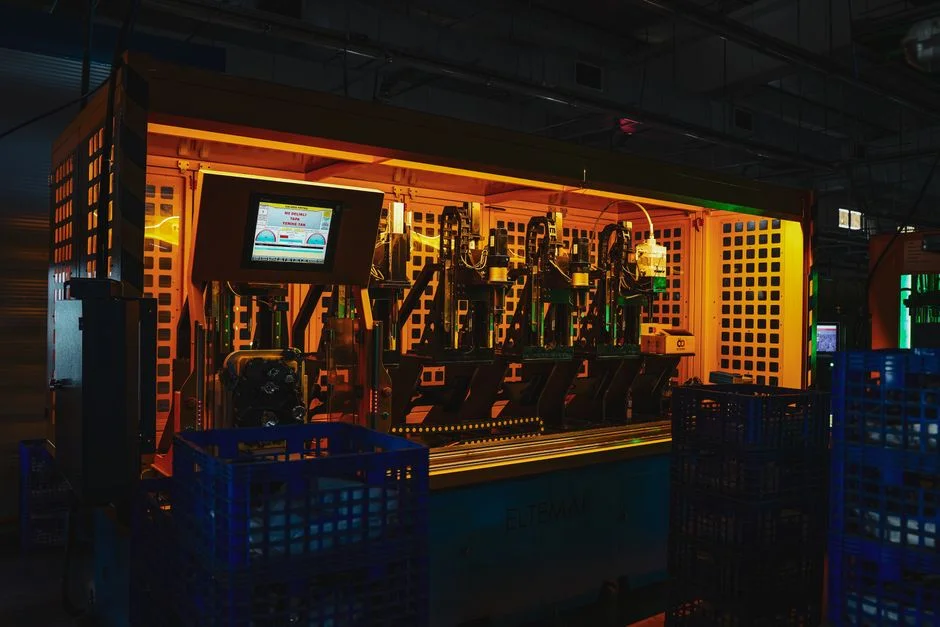
The unit operations between the MBR/SBR waste line and the disposal truck follow a fixed sequence in 2026 API plants: MBR waste at 0.5–1.0% DS is thickened on a gravity belt thickener or rotary drum to 4–8% DS, held in a 12–24 h equalization tank, conditioned with polymer, dewatered, and the cake routed to stabilization or direct disposal. The combined API plant influent runs 2,000–25,000 mg/L COD and 500–6,000 mg/L BOD; chemical-synthesis mother-liquor streams at 20,000–80,000 mg/L COD drive the high-VS, high-sorbed-API fraction of the wasted stream and must be kept segregated from fermentation/biologicals waste (HydropureWater, 2026).
Conditioning is cationic polyacrylamide (PAM) at 0.1–0.5% preparation, 5–15 kg/tonne dry solids — the PAM dosing system design criteria cover prep-tank sizing, maturation time and polymer-selection logic. Stabilization for non-hazardous disposal is lime addition to pH ≥ 12 for 2 h; aerobic or anaerobic digestion is uncommon at API plants because of biotoxicity risk to digester biota and the EU/India direction toward measurable destruction rather than biological transfer. Cake dry-solids targets set the dewatering-unit specification: 22–35% for filter press, 18–25% for screw press, 25–40% for decanter centrifuge — these are the bands the next section compares head-to-head.
Dewatering Equipment for API Biosolids: Filter Press, Centrifuge, Screw Press
Procurement evaluations at 50–500 m³/d API plants in 2026 still come down to a plate-and-frame filter press versus a decanter centrifuge versus a screw press, with thermal destruction reserved for segregated cytotoxic or hormonal mother liquors. The matrix below is sized to API biosolids and reflects current CAPEX/OPEX bands.
| Equipment | Cake DS% | Polymer dose (kg/t DS) | CAPEX (USD per m³/d sludge) | Footprint (m² per m³/d) | OPEX (USD/t DS) | Best-fit API-plant scenario |
|---|---|---|---|---|---|---|
| Plate-and-frame filter press (1–500 m²) | 22–35% | 3–8 | USD 600–1,500 per m² filtration area | 1.5–3.0 | USD 8–18 | 50–200 m³/d plants; PNEC-driven permits demanding max cake dryness for off-site incineration |
| Decanter centrifuge | 25–40% | 5–12 | USD 4,000–9,000 per m³/d | 0.4–0.8 | USD 12–28 | High-solvent waste streams; hazardous-waste routing; enclosed vapour-tight operation |
| Screw press | 18–25% | 2–5 | USD 1,500–3,500 per m³/d | 0.8–1.5 | USD 5–12 | Low-toxicity fermentation/biologicals streams with limited CAPEX; intolerant of API-toxicity shocks |
| Rotary drum (pre-thickening only) | 4–8% | 0–2 | USD 800–2,000 per m³/d | 0.3–0.6 | USD 3–6 | Pre-thickening ahead of press or centrifuge; not a standalone dewatering unit at API plants |
The plate-and-frame filter press (1–500 m²) delivers the highest cake DS and the lowest polymer demand, with batch operation that fits PNEC-driven permits specifying DS ≥ 30% for off-site incineration. The decanter centrifuge runs 24/7, is enclosed and vapour-tight (a hard requirement for high-solvent mother-liquor streams), and produces 25–40% DS at the cost of higher polymer and energy draw. The screw press is the lowest-CAPEX option at 0.5–2 kWh/m³, but its intolerance to toxicity shocks rules it out for chemical-synthesis waste streams. A simple decision rule: specify a filter press if the cake must go to non-hazardous landfill or incinerator and DS ≥ 30% is in the permit; specify a centrifuge if the plant handles volatile solvents or runs continuous shift; specify a screw press only for low-toxicity biologicals streams with limited CAPEX. The lamella clarifier upstream of the thickener protects the dewatering unit from primary-solids overload.
Biotoxicity and Sorbed-API Management on the Sludge Line
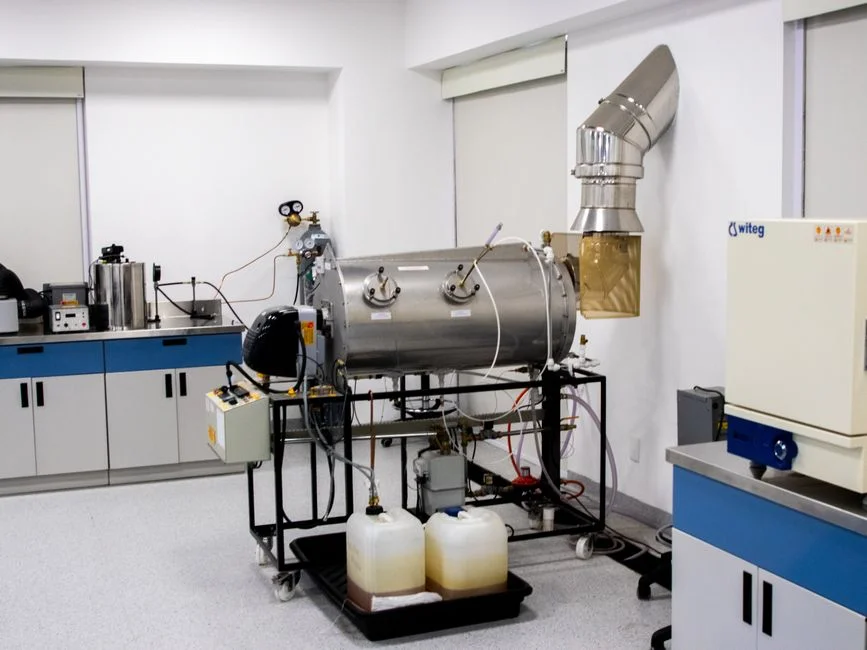
Operationalizing the 2026 perception–cognition–response framework (Toxics, doi 10.3390/toxics14050395) on the dewatering line is straightforward: install online TOC on the feed sludge and centrate return loop for the perception tier, run respirometry on a side-stream for cognition, and use automatic polymer-dose trim plus centrate divert as the response intervention. The counter-intuitive trade-off the engineer must size against is SRT: a high-SRT MBR at 30–60 d (HydropureWater, 2026) generates more sorbed-API mass per kg DS than a low-SRT CAS system because longer mean cell residence time gives hydrophobic APIs more contact time with the biomass. That makes the dewatering cake drier and easier to handle, but it raises the biosolids-PNEC monitoring burden.
The 2026 EU BAT-AEL pharma revision now references biosolids-API monitoring as a permit deliverable for plants above 50 m³/d; India CPCB state directions and China GB 21904 follow the same logic, and on-line TOC on the centrate return loop remains the lowest-cost biotoxicity proxy for a 50–500 m³/d plant. For plants operating multiple products in CDMO mode, the perception tier also has to be routed to a batch-tracking system so a flagged high-toxicity waste batch can be quarantined at the thickener rather than contaminating the dewatering skid.
2026 Cost, Compliance, and Disposal Pathway for API Biosolids
The 2026 CAPEX band for the dewatering and cake-handling skid sits at USD 800–3,500 per m³/d greenfield and USD 400–1,800 per m³/d retrofit, with the sludge line typically absorbing 12–20% of total WWTP CAPEX (HydropureWater, 2026). OPEX runs USD 0.45–1.80 per m³ treated, dominated by polymer, electrical (centrifuge or press feed pumps), and cake transport/disposal. Cake-disposal routing is now a permit decision, not a logistics one.
| Pathway | Operating envelope | 2026 regulatory anchor | Cake-API test required |
|---|---|---|---|
| On-site thermal destruction (800–1,200 °C) | Segregated cytotoxic or hormonal mother-liquor streams; PNEC-driven permit floor | EU BAT-AEL pharma 2024–2026; China GB 21904 | Continuous emission monitoring; no cake-API test required (destroyed on site) |
| Off-site hazardous-waste incineration | High-sorbed-API cake; centrifuge or filter-press cake with documented API load above non-hazardous threshold | EU Waste Framework Directive hazardous criteria; India CPCB HW rules; US RCRA Subtitle C | Full API scan including diclofenac, E2, EE2, plus batch-specific actives |
| Non-hazardous landfill | Biosolids API load below the regulator's biosolids-PNEC threshold | EU WFD watch list trigger compounds; India CPCB state directions | Biosolids-PNEC monitoring programme; quarterly verification |
The EU WFD watch-list compounds diclofenac, 17-β-estradiol and 17-α-ethinylestradiol (sciencedirect.com, 2017) are the trigger analytes a 2026 cake-monitoring programme should track at minimum, with batch-specific actives added per product. A plate-and-frame filter press (1–500 m²) upstream of the disposal route, paired with a lamella clarifier on the primary side, is the typical 2026 reference arrangement for 50–500 m³/d API plants targeting off-site incineration or on-site thermal destruction.
Frequently Asked Questions
What MLSS and SRT range does a 2026 API MBR operate at to keep sorbed API on the sludge line manageable?
MLSS 8,000–12,000 mg/L with SRT 30–60 d is the 2026 API MBR operating band (HydropureWater, 2026). The trade-off is that longer SRT improves COD removal and cake dryness but increases sorbed-API mass per kg DS, so the dewatering line must be sized against the biosolids-PNEC monitoring burden.
Is a plate-and-frame filter press or a decanter centrifuge better for an API plant biosolids stream?
Plate-and-frame filter press delivers 22–35% DS at 3–8 kg/t DS polymer and batch operation suited to PNEC-driven permits. Decanter centrifuge delivers 25–40% DS continuously and is enclosed and vapour-tight, which is the decisive advantage for high-solvent or hazardous-waste streams.
Which APIs on the EU watch list should we monitor in the cake?
Diclofenac, 17-β-estradiol and 17-α-ethinylestradiol are the EU WFD watch-list trigger compounds the 2026 BAT deliverable requires, with biosolids-PNEC monitoring now a permit deliverable for plants above 50 m³/d.
What is the 2026 CAPEX for an API WWTP sludge line?
Greenfield CAPEX runs USD 800–3,500 per m³/d, with the sludge line absorbing 12–20% of total WWTP CAPEX (HydropureWater, 2026). Retrofits land at USD 400–1,800 per m³/d depending on existing civil and blower assets.
Can API biosolids be land-applied?
Only where biosolids API load is documented below the regulator's biosolids-PNEC threshold; otherwise route to hazardous-waste incineration or on-site thermal destruction at 800–1,200 °C.